

This article was automatically translated from the original Turkish version.
+1 More
Type of Geographical İndication | Mahreç Sign | ||||||||
|---|---|---|---|---|---|---|---|---|---|
Application Date | 11.04.2017 | ||||||||
Registration Number | 340 | ||||||||
Registration Date | 10.04.2018 | ||||||||
Product / Product Group(s) | Handicraft products other than carpets kilims and textiles | ||||||||
Province(s) | Aydın | ||||||||
Applicant/Registrant(s) | Söke Municipality | ||||||||
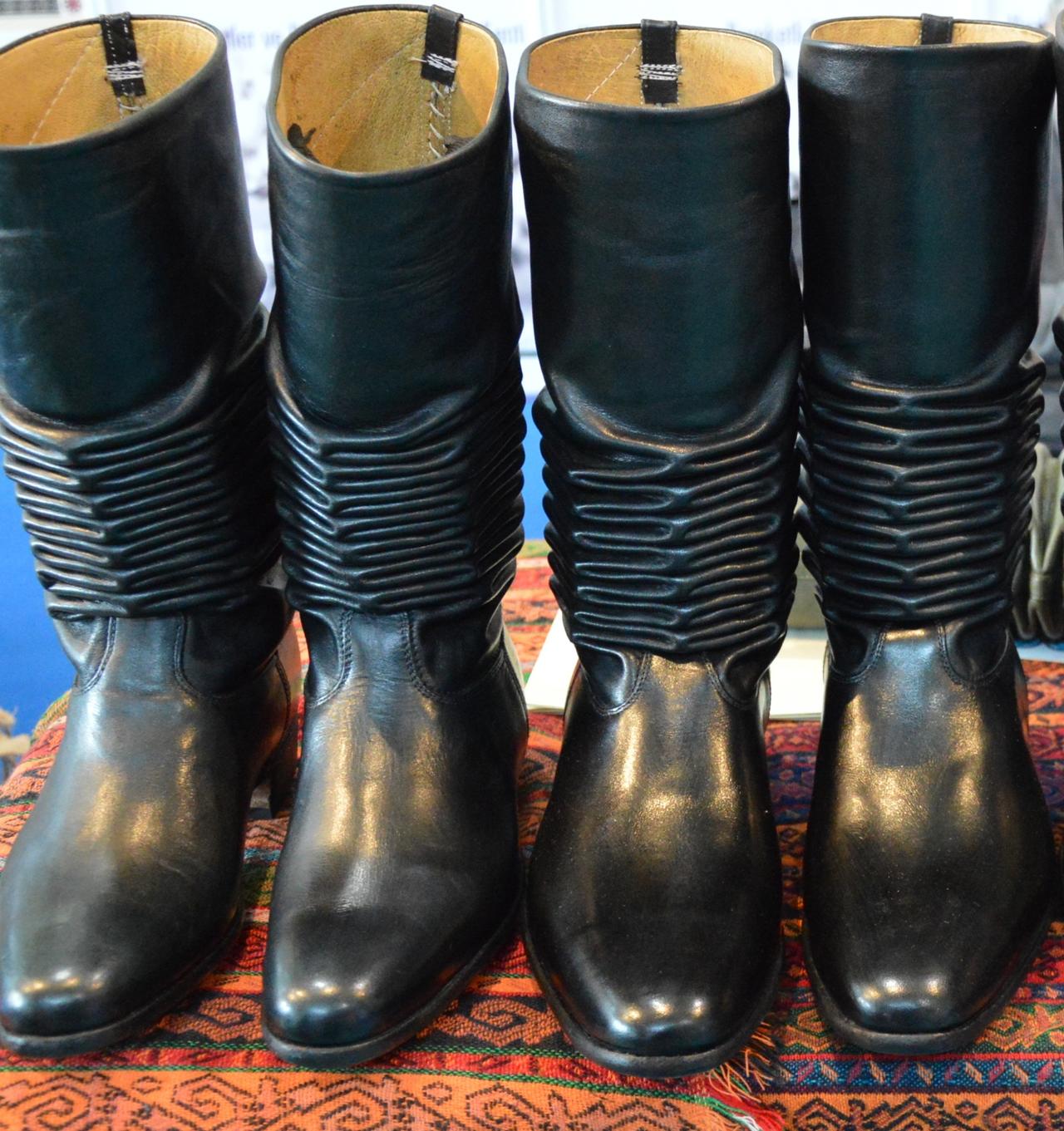
The Söke Bellows Boot is one of the cultural heritage elements of the Aegean Region, occupying a unique position within both traditional craft practices and clothing culture due to its production techniques and formal characteristics. Made entirely by hand using natural materials such as calf leather, goat leather, and sole leather, this boot is defined by its original bellows constructions known as “baklava bellows” and “straight bellows.” In 2018, it was officially registered as a geographical indication under the Mahreç Mark system, and its production is now regulated exclusively within the boundaries of the Söke district.
The presence of the Söke Bellows Boot in the region began after the population exchange, through Hüseyin Rıfat Oral (Usta Sağır), who brought the craft from Crete. Oral’s introduction of bootmaking to Söke led to its adoption particularly among local landowners and aristocrats. Factors such as year-round comfort, suitability for horseback riding, and the distinctive “creaking” sound produced while walking contributed significantly to its popularity.
From before the War of Independence onward, bellows boots became widespread among efes, eventually becoming an inseparable component of zeybek costumes. Usta Sağır’s original boot model featured a form known as “mixed bellows,” shaped by the natural creases of the bellows. In the 1950s, master craftsman Mehmet Yüksel interpreted this model and developed the distinctive contemporary “baklava” and “straight” bellows forms. These designs were disseminated by Söke masters to neighboring provinces and districts.
The distinguishing features of the Söke Bellows Boot are as follows:
Production begins with a custom order. Foot measurements are taken, leather pieces are cut and stitched, then fitted onto a last. After the upper components are softened with water, the bulge, fort, and insole are completed using sole leather. The gıcırdak assembly, fixation of the sole leather, and heel elevation are carried out sequentially. After the bellows are shaped and creased, the boot is polished and made ready for wear.
Special tools used during production include:
The product, registered by the Söke Municipality, is protected under the Mahreç Mark system. Its geographical boundary is limited to the Söke district. An example label is affixed to the inner surface of each boot’s bellows to indicate its place of origin.
The production process and materials used are monitored by an eight-member oversight board coordinated by the Söke Municipality. Inspections are conducted every six months, with ad hoc inspections possible when needed. The craftsmanship involved in producing “baklava” bellows is subject to special scrutiny to ensure authenticity and quality.
The Söke Bellows Boot is not merely a footware item; it is regarded as a tangible representation of regional identity and efes culture. The gıcırdak sound asserts presence in space, the bellows creases provide an aesthetic posture, and the use of natural materials demonstrates the sustainability of local craftsmanship. This boot functions as a symbol within Söke’s cultural memory, preserving and sustaining the legacy of traditional handcrafts.
T.C. Güney Ege Kalkınma Ajansı. "Söke Körüklü Çizmesi: Heybet ve Asaletin Simgesi". Kültürel Tanıtım Kitapçık Serisi GEKA Yayın No 005. Denizli: T.C. Güney Ege Kalkınma Ajansı https://www.kalkinmakutuphanesi.gov.tr/assets/upload/dosyalar/koruklu-cizme.pdf
Turkish Patent and Trademark Office. Söke KörüklüÇizmesi Coğrafi Indication Registration Information. Registration No: 340. Registration Date: April 10, 2018. Accessed July 5, 2025. https://ci.turkpatent.gov.tr/cografi-isaretler/detay/38264

Type of Geographical İndication | Mahreç Sign | ||||||||
|---|---|---|---|---|---|---|---|---|---|
Application Date | 11.04.2017 | ||||||||
Registration Number | 340 | ||||||||
Registration Date | 10.04.2018 | ||||||||
Product / Product Group(s) | Handicraft products other than carpets kilims and textiles | ||||||||
Province(s) | Aydın | ||||||||
Applicant/Registrant(s) | Söke Municipality | ||||||||
No Discussion Added Yet
Start discussion for "Söke Körüklü Çizmesi" article
Historical Origins
Technical Features
Production Process
Geographical Indication and Oversight
Cultural Significance