

This article was automatically translated from the original Turkish version.
+1 More
Length(s) | ~ 3.9 m | ||||||||
|---|---|---|---|---|---|---|---|---|---|
Weight(s) | ~ 540 kg | ||||||||
Range(s) | 275 km [150 nmi] | ||||||||
Guidance | Automatic Target Detection Image-Referenced Navigation System Earth-Referenced Navigation System Global Positioning System Inertial Navigation System | ||||||||
Warhead Type | Armor Piercing High Explosive Fragmentation | ||||||||
Warhead Weight | ~ 140 kg | ||||||||
Seeker Head | Infrared Imaging Seeker | ||||||||
Platform(s) | F-16 F-35 [JSF] | ||||||||
Speed | High Subsonic | ||||||||
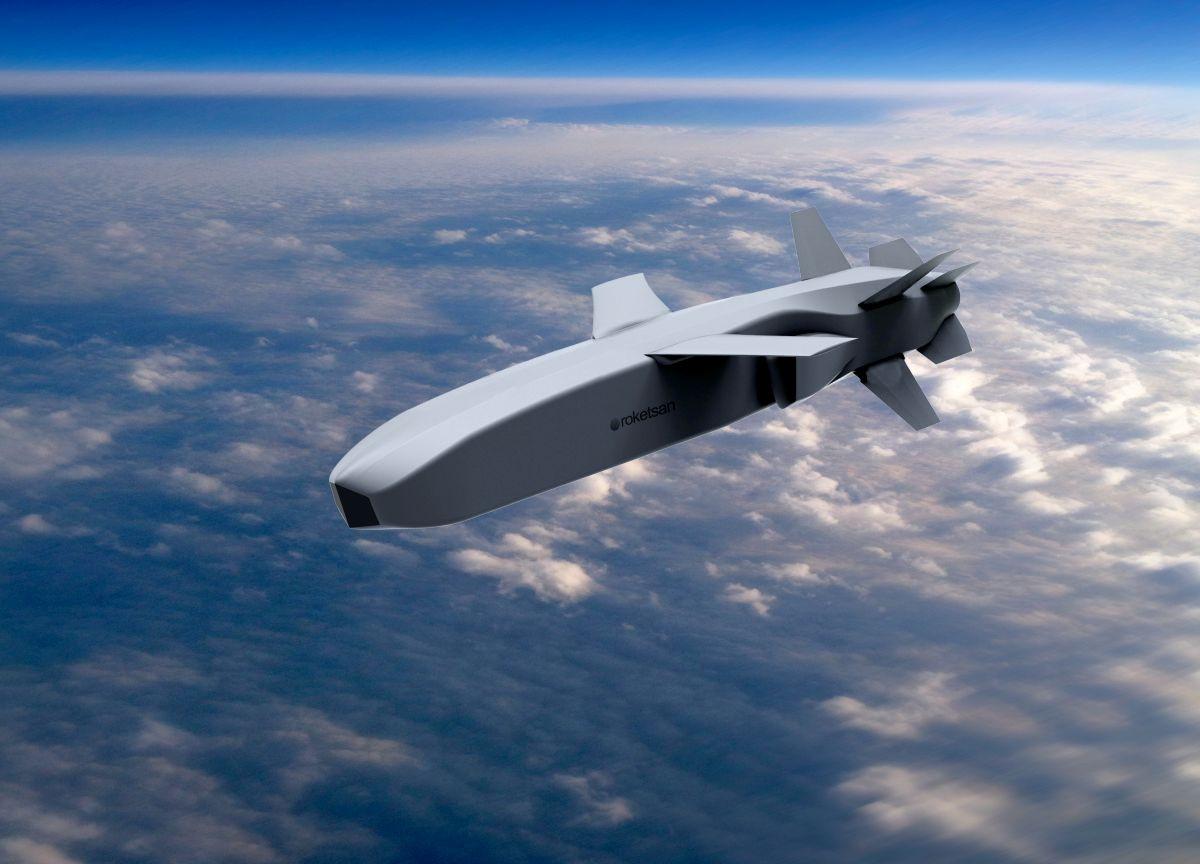
SOM-J, a precision-guided air-to-surface munition designed for deployment on internal weapon bays or underwing stations of aircraft, is intended for use against heavily protected land and sea targets.【1】
In recent years, the SOM-J Cruise Missile, one of the most significant projects of Türkiye's defense industry, has drawn global attention through its domestic and national development initiatives. Representing a major success story, SOM-J demonstrates Türkiye’s advancement in modern warfare technologies. As an air-launched cruise missile developed by ROKETSAN and TÜBİTAK SAGE, SOM-J stands out for its low radar signature, high precision, and multi-role capability.
A member of the SOM (Stand-Off Munition) family, SOM-J is specifically designed to fit within the internal weapon bays of fifth-generation fighter aircraft such as the F-35 Lightning II. The SOM series was developed to enhance Türkiye’s ability to conduct precise long-range strikes against strategic targets. As a more compact and advanced variant of the series, SOM-J aims to ensure survivability against modern air defense systems while effectively neutralizing high-value land and sea targets.
The missile weighs approximately 275 kilograms and has a range of up to 250 kilometers. One of its most notable features is its low radar cross section (RCS), which makes detection extremely difficult. This characteristic provides a stealth advantage against modern air defense systems. Additionally, its data link system enables post-launch target updates, making SOM-J a highly effective weapon in dynamic combat environments.
The first variant of the SOM series, SOM-A, was initially designed by TÜBİTAK SAGE in 2006 and entered service with the Turkish Air Force in 2011. While SOM-A and the SOM-B1/B2 variants are larger and heavier, SOM-J emerged as a more compact solution specifically tailored for integration with the F-35.
ROKETSAN served as the prime contractor for the SOM-J project, while TÜBİTAK SAGE developed critical components such as the guidance systems and software architecture. Throughout development, both technical and operational requirements were carefully considered. The missile provides survivability in modern battlefields through its low radar signature and high maneuverability, while also being designed as a cost-effective solution. Funding for the project was largely provided by the Presidency of Defense Industries (SSB) and implemented through collaboration among domestic firms.
SOM-J offers flexibility against various target types through multiple warhead options. For instance, an armor-piercing warhead can effectively engage hardened bunkers or maritime targets, while a fragmentation warhead is effective against personnel or lightly armored vehicles in open areas. The missile’s guidance system enables precise target acquisition even under complex terrain conditions. The infrared imaging (IIR) system operates effectively during nighttime and adverse weather conditions.

First Launch Test of SOM-J Cruise Missile Against a Surface Target (Defence Türk)
SOM-J plays a critical role in Türkiye’s defense strategy as a multi-role weapon usable at both tactical and strategic levels.
Strategically, the integration of SOM-J with the F-35 strengthens Türkiye’s position within NATO. Furthermore, the missile’s export potential is significant. Thanks to its compact design and advanced technology, SOM-J is positioned to compete internationally with systems such as the Joint Strike Missile (JSM).
Bodur, Ayşe Böcüoğlu. "SOM-J Seyir Füzesi, Su Üstü Hedefini İlk Test Atışında Başarıyla Vurdu." Anadolu Ajansı, 2025. Accessed March 26, 2026. https://www.aa.com.tr/tr/savunma-sanayisi/som-j-seyir-fuzesi-su-ustu-hedefini-ilk-test-atisinda-basariyla-vurdu/3516239#
Demirören Haber Ajansı. "SOM-J Seyir Füzesinden, Su Üstü Platformdaki Hedefe Tam İsabet." 2025. Accessed March 26, 2026. https://www.dha.com.tr/gundem/som-j-seyir-fuzesinden-su-ustu-platformdaki-hedefe-tam-isabet-2605083
Hürriyet. "SOM-J'den Hedefe Tam İsabet." Accessed March 26, 2026. https://bigpara.hurriyet.com.tr/haberler/genel-haberler/som-jden-hedefe-tam-isabet_ID1609367/
Millisavunma. "SOM Seyir Füzesi." 2016. Accessed March 26, 2026. https://www.millisavunma.com/som-seyir-fuzesi/
ROKETSAN. "SOM-J Stand-Off Mühimmatı." Accessed March 26, 2026. https://www.roketsan.com.tr/tr/urunler/som-j-stand-muhimmati
SavunmaSanayiST. "SOM-J Füzesi Sessizliğini İşte Böyle Bozdu." 2025. Accessed March 26, 2026. https://www.savunmasanayist.com/som-j-fuzesi-sessizligini-iste-boyle-bozdu/
TÜBİTAK SAGE. "Caydırıcılığın Yeni Adı: SOM-J." Accessed March 26, 2026. https://www.sage.tubitak.gov.tr/caydiriciligin-yeni-adi-som-j/
Türk Silahlı Kuvvetlerini Güçlendirme Vakfı. "SOM-J: Seyir Füzesi F-35 Entegrasyonu." 2024. Accessed March 26, 2026. https://tskgv.org.tr/savunmasanayiigundem/som-j-seyir-fuzesi-f-35-entegrasyonu
Yılmaz, Olgun. "SOM-J'den Tam İsabet." Defence Turk, 2025. Accessed March 26, 2026. https://www.defenceturk.net/som-jden-tam-isabet.
[1]
ROKETSAN. "SOM-J." Youtube. Access date: 27 March 2026. https://www.youtube.com/watch?v=hrc86S4lzy0.


Length(s) | ~ 3.9 m | ||||||||
|---|---|---|---|---|---|---|---|---|---|
Weight(s) | ~ 540 kg | ||||||||
Range(s) | 275 km [150 nmi] | ||||||||
Guidance | Automatic Target Detection Image-Referenced Navigation System Earth-Referenced Navigation System Global Positioning System Inertial Navigation System | ||||||||
Warhead Type | Armor Piercing High Explosive Fragmentation | ||||||||
Warhead Weight | ~ 140 kg | ||||||||
Seeker Head | Infrared Imaging Seeker | ||||||||
Platform(s) | F-16 F-35 [JSF] | ||||||||
Speed | High Subsonic | ||||||||
No Discussion Added Yet
Start discussion for "SOM-J Cruise Missile" article
Development Process
System Features
Technical Specifications
Strategic Importance