


This article was automatically translated from the original Turkish version.
+4 More
Welding technology is the process of joining two or more materials, typically metals or thermoplastics, using heat, pressure, or both. One of the oldest manufacturing methods in human history, welding has evolved from simple forging techniques of the Iron Age to today’s high-tech automated systems. These technologies create structures that behave as single pieces by permanently bonding materials through a metallurgical connection. As one of the foundational pillars of modern manufacturing industry, welding technologies play a critical role in countless sectors ranging from automotive to aerospace, energy to construction. With technological advancement, more precise, faster, efficient, and versatile welding methods capable of joining diverse materials have emerged.
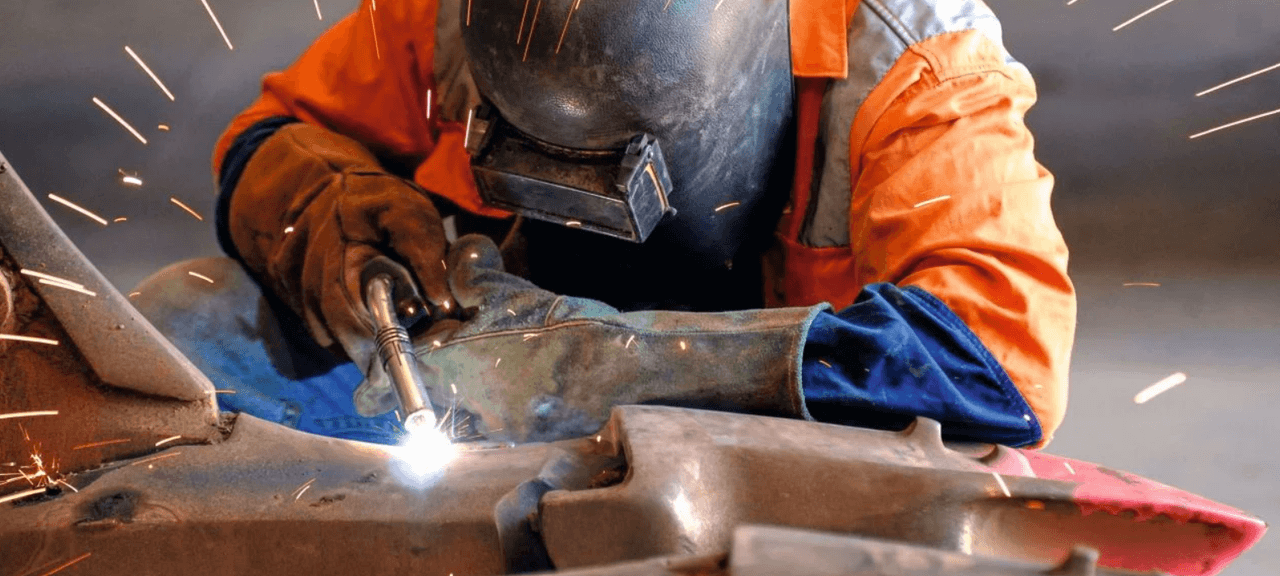
Welding Technician Performing a Welding Operation on a Steel Component (Source materials)
Welding methods vary according to the type of energy used and the joining mechanism. Some traditional and widely used basic welding processes form the foundation of modern technologies.
Electric Arc Welding: In this method, the high heat generated by an electric arc between an electrode and the base material melts the metals to join them. Shielded metal arc welding is one of the most well-known types.
Gas Metal Arc Welding (MIG/MAG): Also known as Metal Inert Gas (MIG) or Metal Active Gas (MAG) welding, this process uses a consumable wire electrode and a shielding gas to protect the weld zone from adverse atmospheric effects. It is highly prevalent in manufacturing due to its high efficiency. Different transfer modes such as short-circuit, spray arc, and pulsed arc are available.
Tungsten Inert Gas (TIG) Welding: In this process, a non-consumable tungsten electrode is used and the weld pool is protected by an inert gas. An additional filler metal is typically fed manually. It is preferred for materials such as stainless steel, aluminum, and titanium where high-quality, clean weld seams are required.
Resistance Welding: This method joins materials by generating heat through electrical resistance when a high current passes through them. Spot welding, widely used in the automotive industry to join sheet metals, is the most well-known application of this category.
The increasing demands of modern industry—for higher precision, speed, material variety, and automation—have led to the development of advanced welding technologies. These technologies surpass the limitations of conventional methods and open new design and production possibilities.
Laser Welding: This process involves focusing a high-intensity laser beam to melt and join materials. Developed after the invention of the laser in the 1960s, it uses CO₂, Nd:YAG, or fiber lasers. Key advantages include micron-level precision, low thermal distortion due to a narrow heat-affected zone (HAZ), and speed increases of up to 50–70% compared to conventional methods. Despite high equipment costs, it is widely used in precision fields such as automotive (body panels, battery packs), electronics (microconnections), and medical (surgical instruments).
Plasma Arc Welding (PAW): This method melts metals using an arc formed by ionized gas (plasma) reaching temperatures up to 20,000°C. Developed in the 1950s, this technology stands out for its ability to achieve deep penetration in a single pass, especially with thick materials. It provides high weld quality and stable arc control. It is used in aerospace (turbine blades), energy (pipelines, pressure vessels), and marine industries. Its historical use by NASA in the Apollo program to join spacecraft components demonstrates its significance.
Friction Stir Welding (FSW): Developed in 1991, this innovative solid-state welding process joins materials without reaching their melting point. A rotating tool (pin) is pressed against the interface of the parts to be joined. The frictional heat generated plasticizes the material, and as the tool advances, the materials are mechanically mixed and bonded. Since no melting occurs, the internal structure of the material remains intact, resulting in joints with very high strength and low distortion. It is environmentally friendly as it requires no shielding gas or filler metal. It is primarily used for materials that are traditionally difficult to weld, such as aluminum, magnesium, and copper alloys. It has revolutionized industries such as aerospace (Boeing 787 body panels, SpaceX Falcon 9 fuel tanks) and electric vehicles (battery casings).
Electron Beam Welding (EBW): This process is performed in a vacuum environment by directing a beam of high-energy electrons at the material to melt and join it. The vacuum prevents atmospheric contamination, enabling extremely pure and deeply penetrating welds. It is preferred in critical and high-precision sectors such as aerospace and nuclear energy.
Ultrasonic Welding: This method creates a solid-state bond between materials by applying high-frequency (20–40 kHz) mechanical vibrations under pressure. It is especially used for joining thin foils, wires, and dissimilar metals such as aluminum-copper. The process completes in less than a second and produces a very clean joint. It is widely used in electronics (battery terminals, cable connections) and medical (medical devices) industries.
The automation of welding operations using industrial robots is a fundamental component of modern manufacturing. Robotic welding, which became widespread in the automotive industry in the 1980s, has now been integrated with AI-assisted sensors and image processing systems. A robotic arm moves the welding torch (MIG/MAG, laser, etc.) along a programmed path. These systems are 3–5 times faster than manual welding and ensure continuous, consistent quality by eliminating human error. They also enhance workplace safety by protecting operators from hazardous environments involving fumes and radiation. They are used across a wide range of applications, from automotive chassis production to steel bridge components. Auxiliary automation equipment such as welding positioners and column-and-boom systems enable efficient welding of large and complex parts.
Automatic Laser Welding Machine (STYLECNC)
Welding technologies are an indispensable production method across a vast industrial spectrum. Major application areas include:
The complexity and critical importance of welding technology have created a demand for qualified personnel in this field. In Türkiye, two-year associate degree programs in Welding Technology at universities train “welding technicians” to meet industry needs. Students in these programs take theoretical and practical courses in welding techniques, materials technology, thermal cutting methods, computer-aided design (CAD) and manufacturing (CAM), welded construction and design. Mandatory internships provide students with professional experience. Graduates assume responsibilities such as managing welding processes, performing quality control, and assisting welding engineers. Additionally, national and international certifications that validate welders’ proficiency in specific methods and materials—such as those issued by the Vocational Qualifications Authority (MYK)—hold significant importance in the industry.
Welding technology is in constant development. Research and development activities focus on more efficient, intelligent, and environmentally friendly solutions. Some trends expected to shape the future of the sector include:

No Discussion Added Yet
Start discussion for "Source Technologies" article
Basic Welding Processes
Advanced Welding Technologies
Automation and Robotic Welding
Industrial Application Areas
Welding Technology Education and Certification
Future Trends and Innovations
