


This article was automatically translated from the original Turkish version.
Chirikçılık (woodturning / haratlık) is a traditional craft with historical roots extending to ancient times, based on woodworking. This profession, initially developed in connection with textile production, gradually evolved into the art of woodturning and was used to produce a wide variety of items ranging from household goods to toys.
The term “çıkırık” refers to a hand-cranked wheel used for spinning yarn; chirikçılık, on the other hand, denotes the skill of craftsmen engaged in the production of this and similar wooden tools.

Chirikçılık (Go Konya)
Initially serving textile production, this tool became more functional over time through successive technological improvements. Varied types of chirikçılık tools, supported by mechanical mechanisms, became precursors to modern manufacturing methods. Chirikçılık tools are classified into three main types: large chirikçılık, double-wheel chirikçılık, and pedal-operated chirikçılık.
Konya is one of the key centers in Türkiye where the profession of chirikçılık has been traditionally maintained. Since the Ottoman period, chirikçılık has persisted for five generations in the Bedesten and its surroundings, the commercial heart of the city. Çıkrıkçılar Caddesi, located southeast of the Central Post Office, reflects the profession’s place in the city’s collective memory and its historical significance. Craftsmen who once worked using traditional methods gradually shifted toward electric woodturning machines; although this transition accelerated production, it diminished the uniqueness of the craft.
Chirikçılık was not only used to produce weaving tools but also a wide range of everyday items such as tables, anvils, rakes, cradles, children’s toys, spindles, vases, and flower holders. In addition to delicate decorative patterns created on the products using turning machines, especially children’s toys gained aesthetic value through painting.
The woodworking process begins with the removal of surface splinters using a knife called “gürez,” followed by shaping with various chisels, sanding, and final finishing. The coordination of the craftsman’s hands and feet during this process makes chirikçılık a labor-intensive yet distinctive craft.
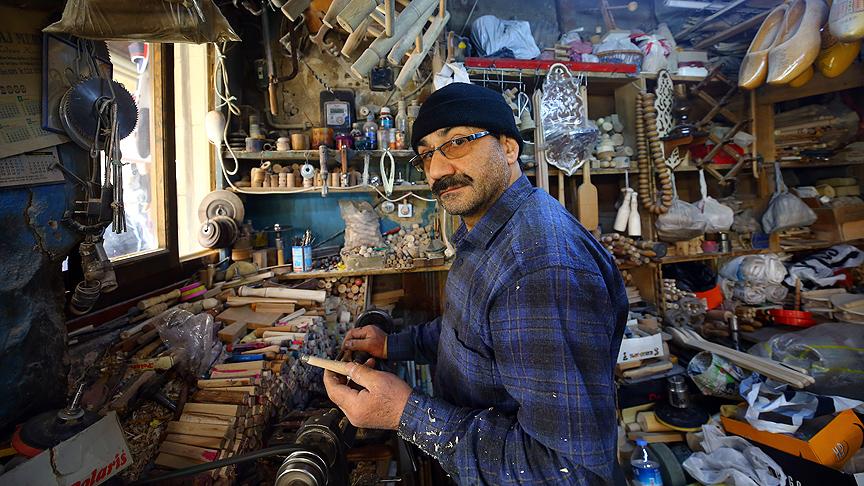
Chirikçılık (AA)
Like many other traditional crafts based on manual labor, chirikçılık has been overtaken by technology; its functionality and economic viability have declined in the face of modern production techniques. Difficulties in obtaining timber, the failure to train apprentices, and declining social demand have placed the profession under threat.
The value of handcrafted products is often overlooked in comparison to mass-produced goods, making it harder for craftsmen to sustain their commitment to the trade. The lack of interest from younger generations in such professions has cast uncertainty over the future of this ancient craft.

Technical Development
The Chirikçılık Tradition in Konya
Chirikçılık as a Handicraft
Current Status and Future Prospects