


This article was automatically translated from the original Turkish version.
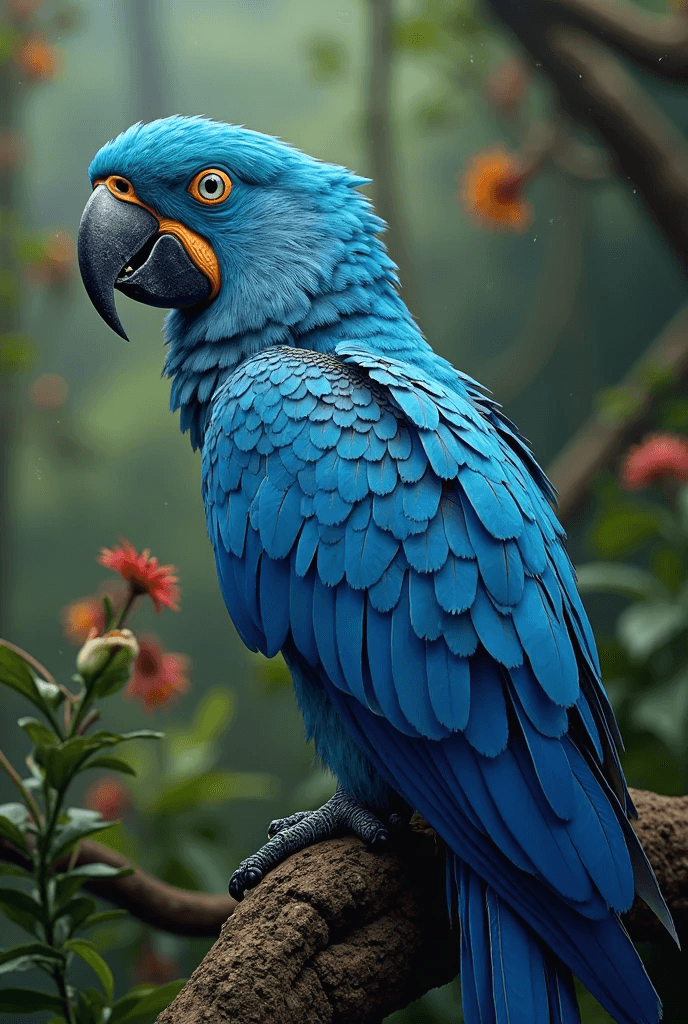
Spix's Macaw
Scientific Name(s) | Cyanopsitta spixii | ||||||||
|---|---|---|---|---|---|---|---|---|---|
Conservation Status | Extinct in the wild (IUCN) | ||||||||
Natural Habitat | Caatinga region, Brazil | ||||||||
Length(s) | Approximately 56 cm | ||||||||
Weight(s) | Approximately 300 grams | ||||||||
Diet(s) | Seeds and fruits | ||||||||
Breeding Season | November - March | ||||||||
Spix’s macaw (Cyanopsitta spixii) is a medium-sized parrot species native to northeastern Brazil, characterized by blue-toned plumage. It is considered extinct in the wild due to habitat destruction and illegal poaching. However, through international conservation efforts, the goal is to reintroduce the species into the wild using individuals bred in captivity.
The Spix’s macaw measures approximately 56 cm in length and weighs around 300 grams. Its feathers are grayish-blue on the head, light blue on the underparts, and bright blue on the upper body. Males and females are visually similar, though females are generally slightly smaller. The face features a bare gray skin area and the beak is dark gray.
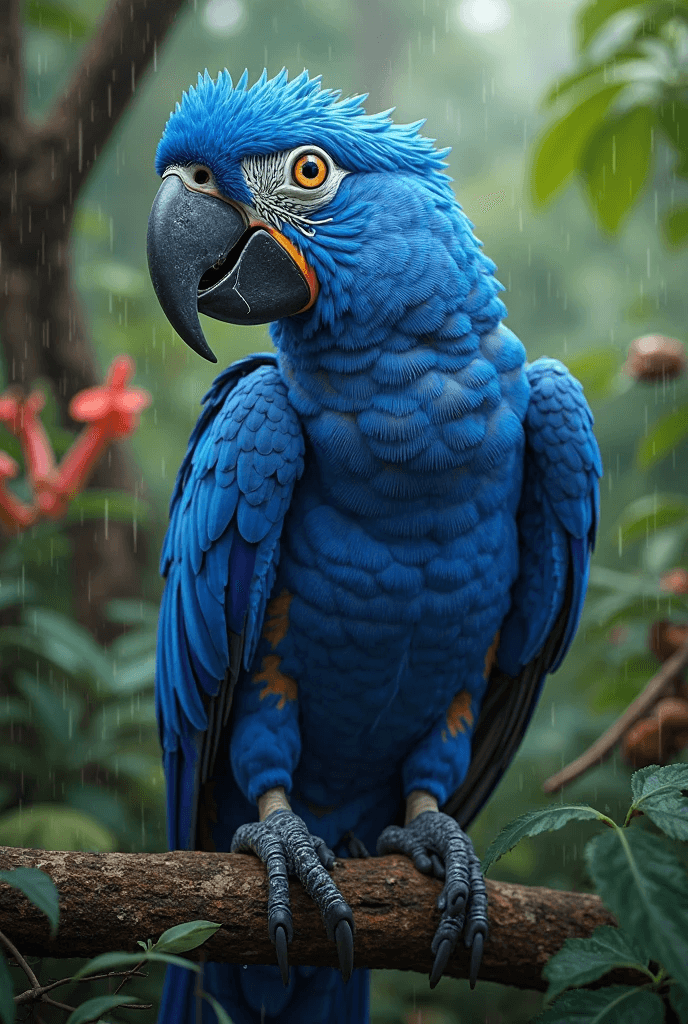
Spix’s Macaw (Generated by Artificial Intelligence)
This species historically inhabited gallery forests in the Caatinga region of northeastern Brazil, particularly where Tabebuia caraiba (caraibeira) trees were abundant. These trees were critical for nesting, feeding, and resting.
Spix’s macaws typically move in pairs or small family groups. Their diet consists mainly of seeds from plants in the Euphorbiaceae family and fruits of the Tabebuia caraiba tree. The breeding season occurs between November and March, during which they usually lay two to three eggs.
The last known wild individual of the Spix’s macaw disappeared in 2000, and the species was classified as “extinct in the wild” by the IUCN in 2019. The primary causes of its extinction in the wild include habitat loss and illegal trapping.
As part of conservation efforts, the number of individuals bred in captivity has been increased, and in 2022, 20 birds were released into the wild. Approximately 58.3 percent of these individuals survived their first year. Additionally, in 2023, the presence of chicks born in the wild was confirmed. However, environmental factors such as climate change and drought continue to threaten the species’ successful reintroduction.
American Bird Conservancy. "Spix's Macaw." American Bird Conservancy. Accessed May 3, 2025. https://abcbirds.org/bird/spixs-macaw/.
Animal Diversity Web. “Cyanopsitta spixii: INFORMATION.” Animal Diversity Web. Accessed May 3, 2025. https://animaldiversity.org/accounts/Cyanopsitta_spixii/.
BirdLife International. “Spix's Macaw (Cyanopsitta spixii) – Species Factsheet.” BirdLife International. Accessed May 3, 2025. https://datazone.birdlife.org/species/factsheet/spixs-macaw-cyanopsitta-spixii.
Loro Parque Fundación. “Cyanopsitta spixii, Spix's Macaw.” Loro Parque Fundación. Accessed May 3, 2025. https://www.loroparque-fundacion.org/en/portfolio/cyanopsita-spixi-spixs-macaw/.
Mongabay. “For 'Extinct' Spix's Macaw, Successful Comeback Is Overshadowed by Uncertainty.” Mongabay. Accessed May 3, 2025. https://news.mongabay.com/2024/07/for-extinct-spixs-macaw-successful-comeback-is-overshadowed-by-uncertainty/.
Spix's Macaw Association. “Spix's Macaw Re-Introduction Project.” Spix's Macaw Association. Accessed May 3, 2025. https://spixsmacaw.org/.

Spix's Macaw
Scientific Name(s) | Cyanopsitta spixii | ||||||||
|---|---|---|---|---|---|---|---|---|---|
Conservation Status | Extinct in the wild (IUCN) | ||||||||
Natural Habitat | Caatinga region, Brazil | ||||||||
Length(s) | Approximately 56 cm | ||||||||
Weight(s) | Approximately 300 grams | ||||||||
Diet(s) | Seeds and fruits | ||||||||
Breeding Season | November - March | ||||||||
No Discussion Added Yet
Start discussion for "Spix's Macaw (Cyanopsitta spixii)" article
Physical Characteristics
Habitat and Distribution
Behavior and Ecology
Extinction and Conservation Efforts