


This article was automatically translated from the original Turkish version.
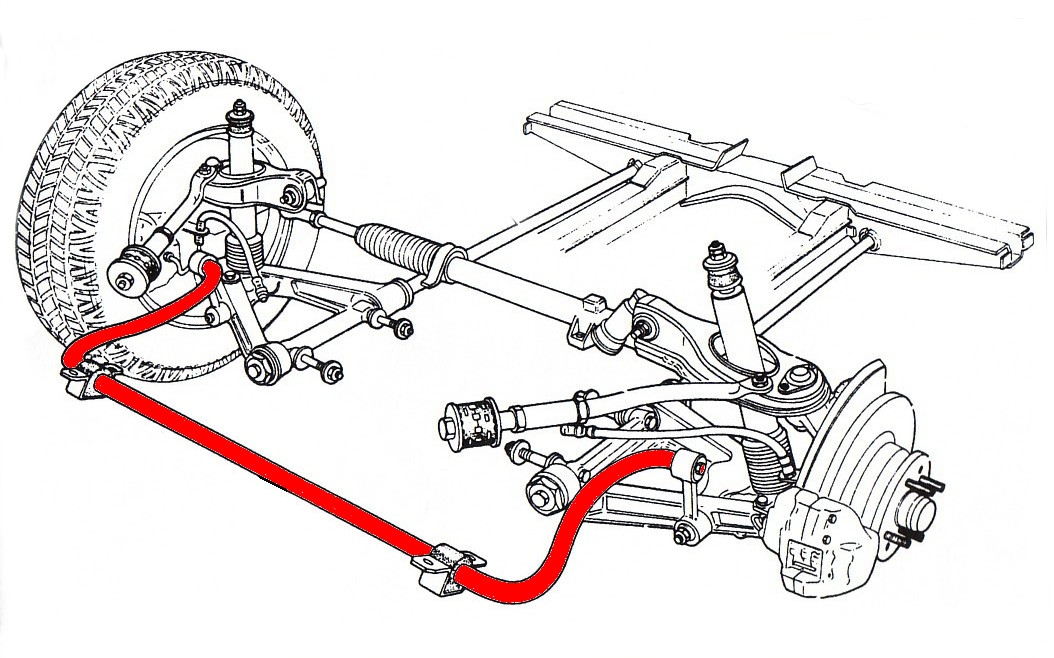
The stabilizer bar is a metal rod used in vehicle suspension systems to connect the movement of the left and right wheels, thereby reducing body roll during cornering. This system helps maintain vehicle stability during turns while enhancing ride comfort and road grip.
The stabilizer bar is typically made of high-strength steel formed in a spring-like shape. Both ends are connected to the suspension arms via stabilizer links (stabilizer ends), while the central portion is attached to the chassis using clamps.
During a turn, one wheel moves upward while the opposite wheel moves downward. The stabilizer bar resists this difference by twisting, generating a counteracting force. This limits body roll and results in more balanced cornering performance.
Minimizes the height difference between the two wheels by counteracting torsional forces during cornering.
Transmit forces from the bar to the suspension mounting points. They are typically equipped with plastic bushings or ball joints.
Secure the central portion of the bar to the chassis. Bushings absorb vibrations and reduce friction.
During maintenance, the stability of the bar, the condition of the bushings for cracks, and the tightness of the connecting links should be inspected. These components should also be evaluated during routine suspension checks.

Structure and Operating Principle
Components
Stabilizer Bar (Main Rod)
Stabilizer Links (End Links)
Clamps and Bushings
Functions
Failure Symptoms and Maintenance