
This article was automatically translated from the original Turkish version.
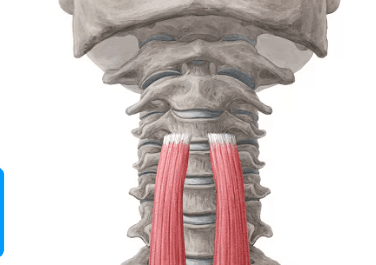
Function(s) | Pulls down the hyoid bone to produce depression. | ||||||||
|---|---|---|---|---|---|---|---|---|---|
Artery | Supplied by the superior thyroid artery and the sternocleidomastoid artery. | ||||||||
Nerve | Innervated by the ansa cervicalis (C1-C3). | ||||||||
Sternohyoid Muscle is a thin, ribbon-like muscle located in the anterior region of the neck that connects the hyoid bone to the sternum. It is a member of the infrahyoid muscle group and is responsible for the depression (downward movement) of the hyoid bone.
The sternohyoid muscle, as part of the infrahyoid muscle group, is situated in the anterior neck and plays a key role in controlling the position of the hyoid bone. The muscle originates from the posterior surface of the manubrium sterni, the upper portion of the sternum, as well as from the posterior surface of the sternoclavicular ligament and the medial end of the clavicle. The muscle fibers ascend upward and attach via short, flat tendons to the inferior border of the hyoid bone. This arrangement gives the sternohyoid muscle a superficial and elongated appearance, establishing it as a prominent anatomical landmark on the anterior neck wall.
The sternohyoid muscle is innervated by the ansa cervicalis, a nerve loop arising from the cervical plexus. This loop is formed by the union of the ventral rami of spinal nerves C1, C2, and C3. These branches of the ansa cervicalis provide motor innervation to the muscle, enabling control of the downward movement of the hyoid bone. This neural stimulation allows the muscle to participate in functional activities such as swallowing and speech. Vascularly, the blood supply to the sternohyoid muscle is primarily provided by small branches of the superior and inferior thyroid arteries. The superior thyroid artery arises from the external carotid artery, while the inferior thyroid artery originates from the thyrocervical trunk, a branch of the subclavian artery. These arterial branches meet the metabolic demands of the muscle, ensuring its structural integrity and functional continuity. This dual arterial supply represents an important anatomical feature that must be considered during surgical interventions and vascular assessments.
The sternohyoid muscle develops from myogenic precursor cells derived from the paraxial mesoderm of the cervical somites. These cells migrate to the neck region and contribute to the formation of the infrahyoid muscle group. The sternohyoid muscle arises from the ventral (anterior) muscle mass and is therefore functionally classified among the flexor group muscles. Its innervation is provided via the ansa cervicalis (C1–C3), a branch of the cervical plexus. Considering its embryological development and innervation pattern, the sternohyoid muscle is regarded as one of the superficial infrahyoid muscles located in the anterior neck that regulate the position of the hyoid bone.
The primary function of the muscle is to depress the hyoid bone, thereby stabilizing its position during swallowing and speech. Indirectly, it contributes to the fixation of the larynx and the regulation of laryngeal movements during phonation. Depression of the hyoid bone helps ensure a smooth transition between phases of swallowing by limiting its upward movement during deglutition. The sternohyoid muscle serves as an important anatomical landmark in numerous surgical procedures involving the anterior neck, particularly thyroid and parathyroid surgeries. In procedures such as tracheostomy, access to the trachea is typically achieved through the natural plane between the sternohyoid and sternothyroid muscles. The muscle exhibits various anatomical variations; it may be bifid (split into two parts) or entirely absent. In some individuals, an accessory muscle fiber originating from the clavicle (cleidohyoideus) may be present alongside the sternohyoid. Additionally, transverse fibrous bands may be observed along the muscle; these structures typically consist of connective tissue extending between the internal muscle fibers.
Accessed November 26, 2025.
Accessed November 26, 2025.
Choi, Jeong-Woo, Sang Hyun Park, and Hyun Kim. “Control of the Sternohyoid Muscle for an Electrolarynx.” ResearchGate, 2016. Accessed July 26, 2025. https://www.researchgate.net/publication/296199895_Control_of_the_Sternohyoid_Muscle_for_an_Electrolarynx.
O’Halloran, R. L., D. J. Hoffman, and D. D. Fuller. "Effects of Sustained Hypoxia on Sternohyoid and Diaphragm Muscle during Development." ResearchGate, 2013. Accessed July 26, 2025.
Yang, Yan, Jie Chen, and Jian Zhang. "A Unique Muscle Bridge between Sternohyoid and Sternothyroid Muscles." ResearchGate, 2018. Accessed July 26, 2025.

Function(s) | Pulls down the hyoid bone to produce depression. | ||||||||
|---|---|---|---|---|---|---|---|---|---|
Artery | Supplied by the superior thyroid artery and the sternocleidomastoid artery. | ||||||||
Nerve | Innervated by the ansa cervicalis (C1-C3). | ||||||||
Anatomical Structure
Morphology and Attachment Points
Neural and Vascular Supply
Embryological Origin and Classification
Functional and Clinical Relevance