


This article was automatically translated from the original Turkish version.
+2 More
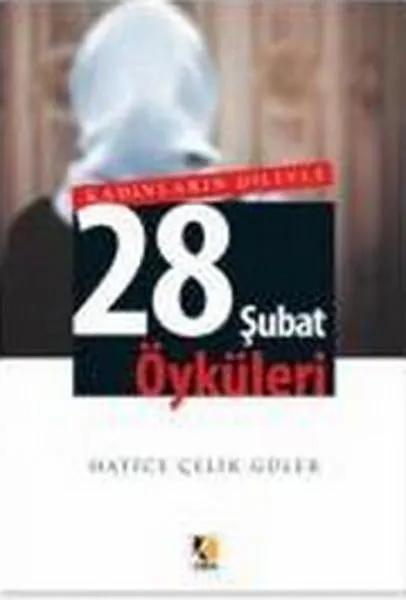
Stories of February 28 in Women's Language
Author(s) | Hatice Çelik Güler | ||||||||
|---|---|---|---|---|---|---|---|---|---|
Publisher(s) | Çıra Yayınları | ||||||||
Type(s) | Research-Investigation | ||||||||
Number of Pages | 400 pages | ||||||||
28 February Stories in Women’s Voice is a collection of short stories written by Hatice Çelik Güler and published in 2014 by Çıra Yayınları. The work examines the social, psychological, and cultural impacts of Turkey’s 1997 postmodern coup process on women, narrating their struggles and resistance through fifteen stories. By addressing themes such as headscarf bans, societal pressure, and individual resistance, the book captures the reflections of the 28 February process from a female perspective.
The book focuses on the experiences of women during the postmodern coup process that began in February 1997 with decisions by the National Security Council and left deep impressions on Turkey’s religiously observant communities. Each story portrays different female characters confronting issues such as headscarf restrictions, dismissal from employment, barriers to education, and social exclusion. The narratives reflect the emotional and social conflicts women endured during this period, alongside examples of solidarity and resistance.
The work centers on themes such as female solidarity, societal pressure, religious identity, the struggle for freedom, and individual resistance. The impact of the 28 February process—particularly on women who wore headscarves—is examined in both personal and societal dimensions. By objectively portraying women’s efforts to preserve their identities and the discrimination they faced, the book sheds light on the socio-political atmosphere of the era.
While writing the book, Hatice Çelik Güler drew inspiration from the real-life experiences of women during the 28 February process. The stories are constructed based on testimonies and documents from the period, yet adopt a generalized narrative through individual accounts. The author aims to amplify women’s voices and reveal lesser-known aspects of this period.
The book is written in a simple and fluent style, employing a realist narrative approach. The stories balance emotional intensity with social critique, offering readers both intimate personal narratives and a reflection of the broader atmosphere of the time. The narration focuses closely on the inner worlds of the female characters.
The collection consists of fifteen stories, each addressing a distinct experience faced by women during the 28 February process. Topics include students denied university admission due to headscarves, teachers dismissed from their jobs, family conflicts, and social exclusion. The titles and contents of the stories emphasize women’s narratives of resistance and solidarity.
28 February Stories in Women’s Voice is one of the literary works that narrate the effects of the 28 February process on women. By objectively addressing the controversial policies of the era and the impact of headscarf bans on individual lives, the book contributes to the collective memory of Turkish society.
Güler, Hatice Çelik. Kadınların Diliyle 28 Şubat Öyküleri. İstanbul: Çıra Yayınları, 2014.

Stories of February 28 in Women's Language
Author(s) | Hatice Çelik Güler | ||||||||
|---|---|---|---|---|---|---|---|---|---|
Publisher(s) | Çıra Yayınları | ||||||||
Type(s) | Research-Investigation | ||||||||
Number of Pages | 400 pages | ||||||||
No Discussion Added Yet
Start discussion for "Stories of February 28 in Women's Language (Book)" article
Subject and Themes
Summary
Themes
Writing and Publication
Literary Features and Content
Literary Style
Stories and Content
Impact and Reception