
This article was automatically translated from the original Turkish version.
Date(s) | 12 September 1980 | ||||||||
|---|---|---|---|---|---|---|---|---|---|
Place | Throughout Türkiye | ||||||||
Planners | Commander of the Gendarmerie General Sedat Celasun Commander of the Navy Admiral Nejat Tümer Commander of the Air Force General Tahsin Şahinkaya Commander of the Army General Nurettin Ersin Chief of the General Staff General Kenan Evren | ||||||||
Goal | transfer of state administration to military rule dissolution of parliament Overthrow of political power | ||||||||
Background | short-lived governments economic crisis terrorist incidents increasing left-right conflicts Political polarization | ||||||||
Implementation | martial law was declared the Grand National Assembly of Türkiye was dissolved political parties were closed The Turkish Armed Forces seized power | ||||||||
Results | acceleration of the neoliberal transformation in the economy closure of parties and banning of their leaders drafting and adoption of the 1982 Constitution suspension of trade unions and political organizations arrest of nearly 650000 people Establishment of the National Security Council | ||||||||
The September 12, 1980 Coup was a military coup carried out by the command hierarchy of the Turkish Armed Forces at the time. The coup effectively concentrated executive and legislative powers under the National Security Council (NSC), significantly restricting fundamental rights and freedoms under a state of emergency regime. Within this framework, Türkiye’s political structure, legal order, and institutional architecture entered a profound process of restructuring during the first half of the 1980s.
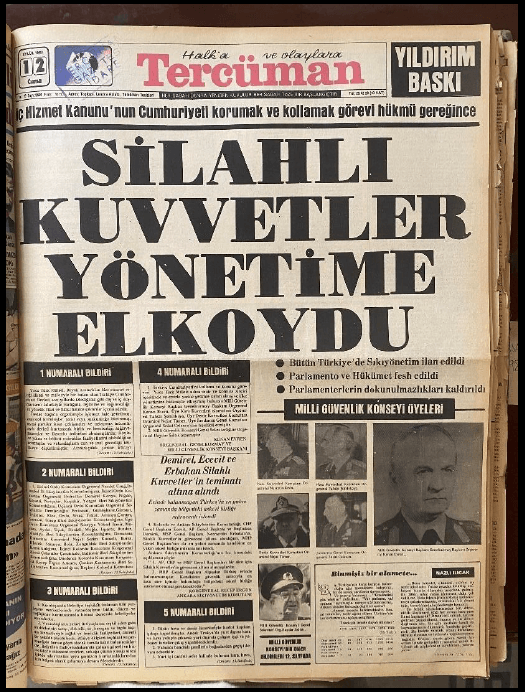
Front Page of Tercüman Newspaper on September 12 (Aslı Solak Şener)
In the aftermath of the coup, comprehensive restrictions were imposed on political parties and civil society organizations; numerous individuals were arrested, widespread purges were carried out in public administration, and judicial proceedings were conducted under emergency regime rules.【1】 The NSC and its affiliated administrative structures guided the preparation of a new constitutional framework through the Consultative Assembly and implemented institutional transformations in various fields, notably higher education and the media.
Documentary on September 12 (TRT Archive)
The September 12 process affected not only political institutions but also economic policies, social organization, and ideological orientations. The implementation framework of the January 24 decisions was strengthened; trade union activities and collective bargaining mechanisms were significantly curtailed; the university system was restructured with the establishment of the Higher Education Council; and the relationships between religion, state, and society, as well as the official ideological framework, were redefined. This restructuring took institutional form with the adoption of the 1982 Constitution and subsequent elections.
The coup and the years that followed generated extensive debate regarding allegations of human rights violations, prison conditions, and judicial procedures. At the same time, narratives related to the coup experience became prominent in literature, cinema, and other cultural productions; in collective memory, September 12 became a turning point shaping the political and cultural perceptions of successive generations.
The 1970s were a period marked by the fragmentation of the party system and a weakened culture of consensus. In parliament, major actors such as the CHP, AP, MSP, and MHP were joined by smaller parties and independents, creating a fragmented structure that reduced the capacity to form majorities and resulted in a fragile balance dependent on coalitions. Governments formed after the 1973 and 1977 general elections proved short-lived, as executive policy-making power became trapped in fragmented coalition negotiations. The option of a “grand coalition” between the CHP and AP occasionally emerged in public opinion as a solution, but it was never implemented.
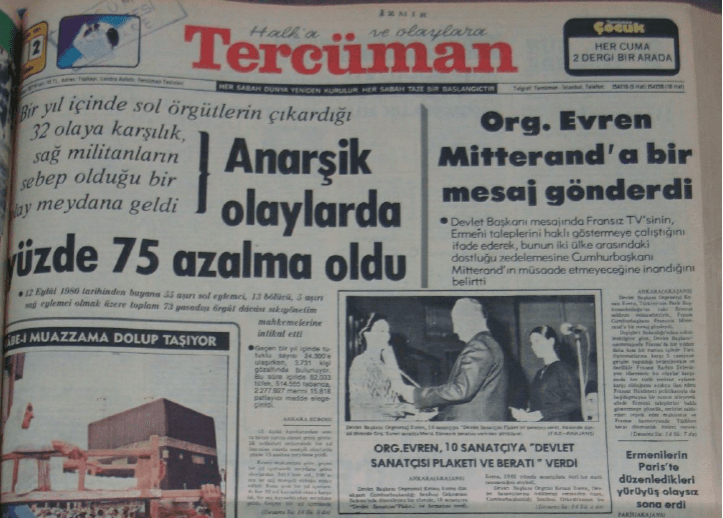
Propaganda Text Claiming Stability Was Restored After the Coup (Ezgi Gürses)
Political deadlock became evident in 1980 when the Grand National Assembly failed to elect a president; the uncertainty surrounding the head of state weakened executive authority and slowed decision-making processes.【2】 The lack of coordination between the legislature and the executive delayed essential appointments, budget laws, and administrative regulations; tensions between central and local administrations intensified. The influence of political patronage on public resource allocation and appointments became more apparent, deepening debates about the neutrality of the bureaucracy.
On the social level, polarization sharpened along the left-right axis; universities, trade unions, professional associations, and neighborhoods became arenas of ideological competition. Political violence incidents increased; public debates on security, freedom of assembly and demonstration, and campus safety became widespread.
State of emergency measures were implemented in various provinces; extraordinary security measures narrowed daily life and political activity. This environment strengthened perceptions that “state authority had weakened” and made the narrative of “restoring order” a dominant theme in political centers.
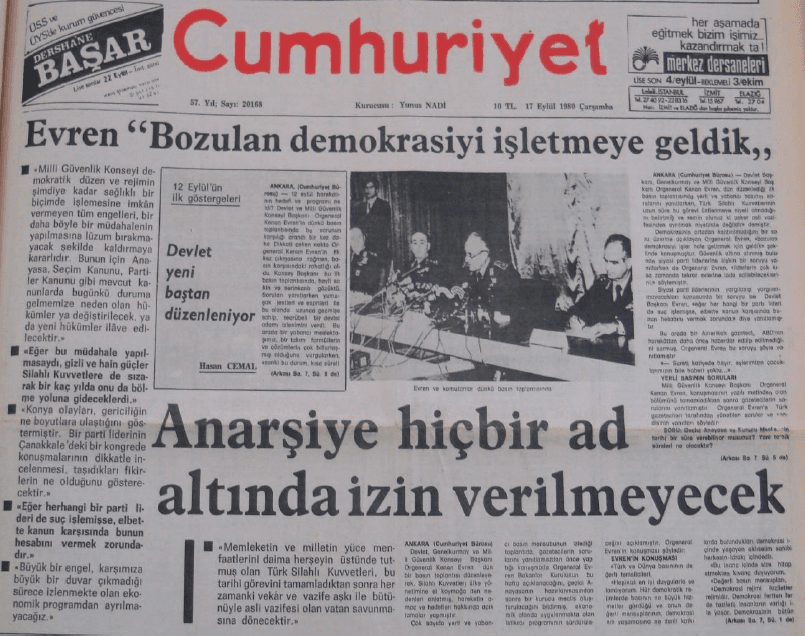
News Text Stating Anarchy Would Be Suppressed After the Coup (Ezgi Gürses)
Reflections of polarization were also visible within security institutions.【3】 Ideological purification debates emerged within the police force through professional associations; the organization’s capacity to ensure internal security and its adherence to the principle of neutrality came under scrutiny. As a result, criticisms intensified regarding delays in judicial processes and the effectiveness of investigations and prosecutions.
The intensification of political competition was reflected in the media language; press organs became platforms where ideological camps established clear rhetorical frontlines. The intensity of party polemics further complicated coalition and negotiation prospects during election periods; even after elections, governments with low capacity to produce “stability” emerged. Ultimately, confidence in the impartial and effective functioning of state institutions eroded; the relationship between central authority and social strata settled on a fragile foundation.
In the second half of the 1970s, the economy entered a contraction phase characterized by structural bottlenecks and short-term management crises. As the import substitution model reached its efficiency limits, the trade deficit expanded, foreign exchange shortages became chronic, and the balance of payments deteriorated. Difficulties in securing fuel and intermediate goods increased production costs; irregularities in energy supply reduced industrial capacity utilization. This situation led to rising inflationary pressures and made price instability a persistent problem.
Economic Crises in Türkiye (Day 32)
Imbalances in public finances deepened. Growing budget deficits, mounting financial needs of state economic enterprises, and subsidy burdens pressured monetary policy; a vicious cycle emerged between credit expansion and general price levels. Unregulated price controls and administrative measures contributed to a contraction in market supply; rationing systems and queues for basic consumer goods became widespread. The informal economy and black markets became particularly prominent in sectors such as fuel and products with high import dependency.
In the labor market, real wages fluctuated, unemployment rose, and youth unemployment became a significant social problem. Rapid internal migration increased pressure on housing, infrastructure, and public services in growing cities. In shantytowns, lack of employment security and social protection intensified; urban poverty became intertwined with informal work arrangements. Trade union activities, including collective bargaining and strikes, became more frequent; workplace tensions, influenced by political polarization, sometimes escalated into security issues.
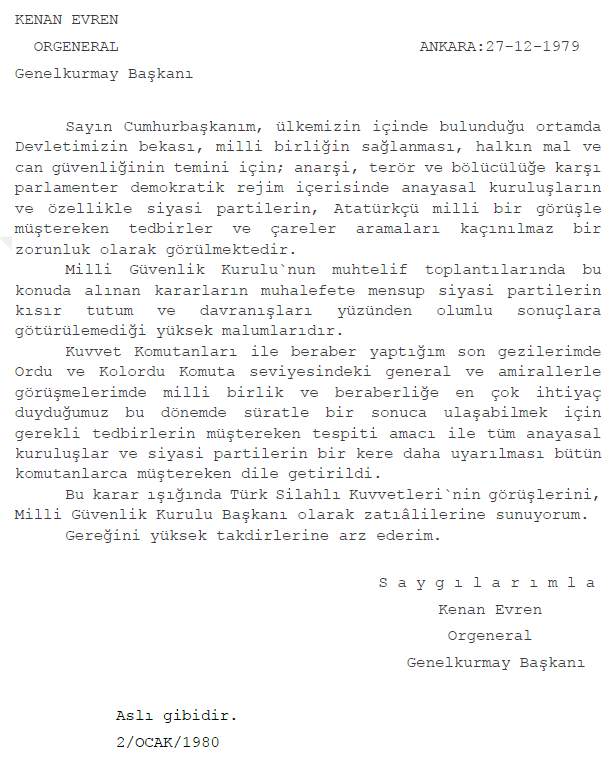
Letter from the Military to the Government (Taylan Maral)
External economic conditions reinforced internal imbalances.【4】 Global oil price spikes and rising international financing costs tested Türkiye’s capacity to service foreign debt. Uncertainties in foreign credit flows and difficulties in meeting short-term obligations encouraged administrative measures to restrict and prioritize imports. These measures disrupted input supply in production chains and deepened supply shocks.
In this context, the January 24, 1980 decisions were designed as a comprehensive stabilization and transformation program encompassing currency adjustment, an export-oriented growth target, simplification of the price-subsidy regime, and export incentives. However, political fragmentation and executive weakness made the program’s implementation inconsistent and controversial. Administrative capacity struggled to coordinate income policy and fiscal discipline. Although program components were enacted, their comprehensive and lasting impact was undermined by increasing public order debates and governance crises.
Household welfare, particularly among fixed-income groups, showed a clear erosion of purchasing power. The share of basic food and energy expenditures in household budgets increased; consumption patterns contracted toward essential goods. Credit restrictions and price volatility exacerbated sustainability problems for small traders and artisans. In rural areas, rising input prices and market access problems affected production decisions; irregularities emerged in agricultural-industrial supply chains.
During the period leading up to September 12, the political system experienced severe institutional paralysis. Despite prolonged voting rounds, the Grand National Assembly failed to achieve the constitutional majority required to elect a president; the election process remained unresolved for months. This uncertainty weakened the perceived legitimacy of executive authority and slowed decision-making. The presidential vacancy was temporarily addressed through legal provisions for acting presidents, but this state of suspension at the highest level of the state encouraged cautious behavior among bureaucrats and demonstrated the limited consensus capacity of political actors.
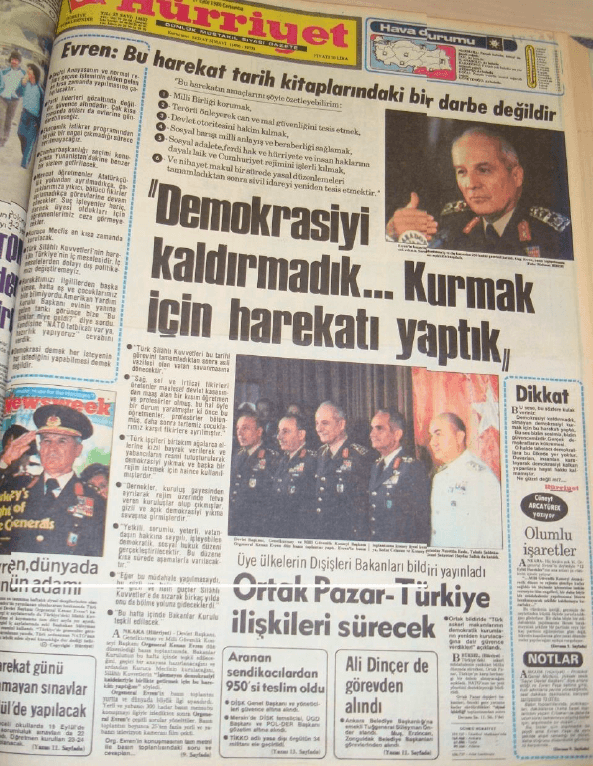
News Highlighting Political Powerlessness Before the Coup (Ezgi Gürses)
Legislative-executive coordination weakened due to intensified coalition negotiations and the fragile arithmetic of parliament.【5】 Governments experienced delays in passing essential regulations, budgets, and investment programs through parliament; frequent blockages occurred along the committee-plenary line.
Regulations in economic and internal security areas were pursued through fragmented and short-term solutions due to conflicting priorities among parties; this increased secondary legislation and reduced implementation consistency. The executive increasingly turned to decrees and regulations to expand its operational scope; however, limited political support weakened the institutional durability of these steps.
Administrative capacity also came under simultaneous pressure. Central administration failed to ensure stability in senior appointments due to frequent cabinet reshuffles; frequent rotations occurred in directorates, general directorates, and affiliated institutions. Management board compositions of state economic enterprises changed at short intervals; continuity problems emerged in investment and procurement decisions. Planning and budgeting cycles had to be conducted amid unpredictable supplementary appropriations and mid-year revisions. Changes in governor and district governor postings increased; continuity and coordination of services at the local level suffered.
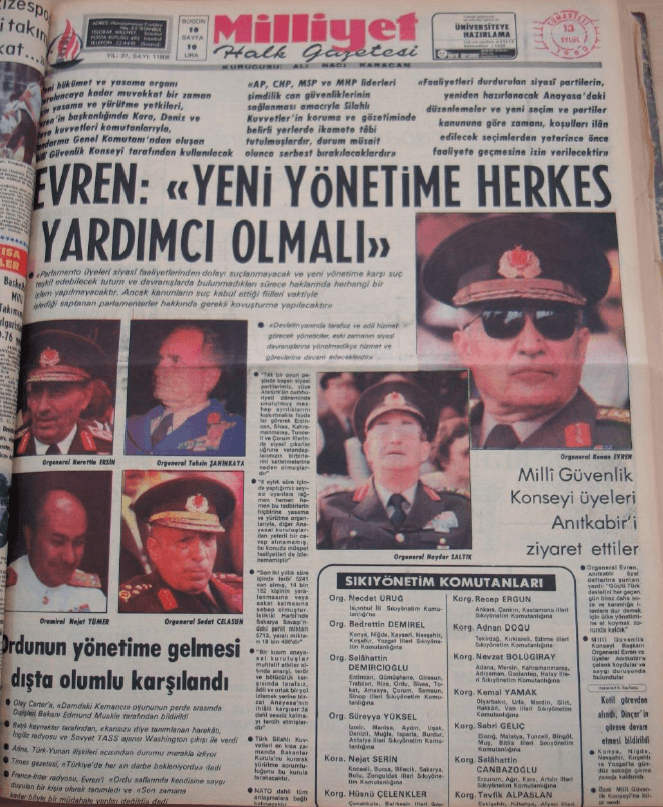
News on Kenan Evren’s Request for Public Support (Ezgi Gürses)
The dual structure between ordinary legal order and emergency measures created uncertainties in administrative decision-making and procedures.【6】 As the powers of emergency commanders expanded, the command-instruction chain within the civil administration–security–judiciary triangle became complex; in some provinces, multiple authorities intervened on the same issue. This dual framework generated ambiguity among citizens regarding accountability and complaint mechanisms; the perception of administrative accountability eroded. Simultaneously, the growing caseload in judicial organs and mass trials strained the principle of timely judicial resolution; prolonged detention periods intensified public debate.
Institutional legitimacy debates deepened in the relationship between press, politics, and bureaucracy. Different political arenas sharply diverged in their assessments of the presidential election and government actions; this divergence created fluctuating indicators of public trust in state institutions. The erosion of trust between political parties further limited the parliament’s minimum capacity for common ground production; the supervisory function of constitutional institutions failed to operate as expected.
The arms embargo imposed by the U.S. Congress on December 30, 1974 and implemented on February 5, 1975 following the 1974 Cyprus Operation created serious ruptures in Ankara–Washington relations. The government annulled the 1969 Defense Cooperation Agreement on July 25, 1975 and halted the operations of U.S. facilities outside İncirlik.
Documentary on the 1980 Coup (BBC Turkish)
Prime Minister Süleyman Demirel’s meetings with President Gerald Ford in Helsinki in 1975 and President Jimmy Carter in London in 1977 yielded no results; the embargo was lifted only in 1978. This period directly affected Türkiye’s external supply and security architecture.
Greece’s withdrawal from NATO’s military wing and discussions on its return increased pressure channels directed at Türkiye, fostering an perception that responsibility for problems was unfairly assigned to Ankara. This situation narrowed Türkiye’s maneuvering space within the alliance.
Terrorist waves accompanying the external security agenda targeted Turkish diplomatic missions. ASALA, which became active in 1973 and publicly announced itself in 1975, killed 34 foreign ministry officials and injured 10 through bombings and assassinations between the mid-1970s and 1980s. These attacks directly affected Türkiye’s diplomatic network and public opinion.
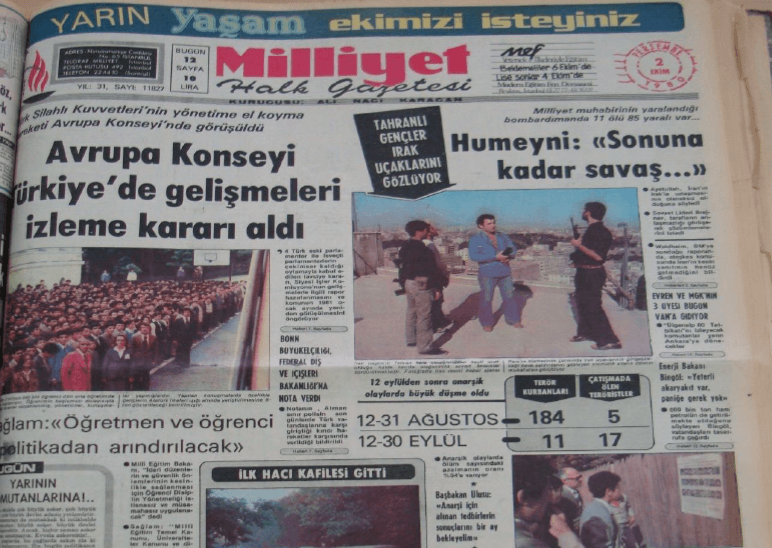
News on the Council of Europe Decision After the Coup (Ezgi Gürses)
Economic relations with the Soviet Union developed during the same period.【7】 Soviet credits and technical cooperation enabled heavy industrial investments such as İskenderun Iron and Steel and Seydişehir Aluminum. A mutual trade volume of $288.79 million was projected for 1978. This axis provided Türkiye’s industrialization agenda with an alternative source and market continuity.
Global Cold War shocks intensified external pressures on Türkiye. The 1979 Iranian Revolution and the Soviet invasion of Afghanistan weakened U.S. regional military and intelligence capabilities, elevating Türkiye’s strategic position as a “key ally.” These assessments created a discourse environment fueling claims of U.S. involvement in the September 12 coup; however, these theories remained controversial in the literature.
Similarly, U.S. reservations regarding its “Rapid Deployment Force” planning in Türkiye generated friction within the alliance; decision-makers were forced to address this issue alongside the Aegean, NATO command-and-control, and return issues.
Economically, the January 24, 1980 Stabilization Program included drastic measures such as a 40 percent devaluation, elimination of multiple exchange rates, public price adjustments, and wage freezes; Turgut Özal played a decisive role as an implementer in shaping and presenting these decisions. Özal personally briefed the Chief of the General Staff and force commanders on the rationale behind the decisions.
Türkiye After the Coup (BBC Turkish)
These external and economic dynamics narrowed the maneuvering space of governments led by the Justice Party (AP), Republican People’s Party (CHP), National Salvation Party (MSP), and Nationalist Movement Party (MHP); cabinets under Demirel and Ecevit had to simultaneously manage external pressures and internal blockages.
However, this entire conjuncture did not legally or politically legitimize the September 12, 1980 coup; the coup is almost universally evaluated in academic literature as an intervention that interrupted the democratic order and imposed a change of power through extra-legal means.
Under the leadership of Chief of the General Staff General Kenan Evren, the command team composed of Army Commander General Nurettin Ersin, Air Force Commander General Tahsin Şahinkaya, Navy Commander Admiral Nejat Tümer, and Gendarmerie Commander General Sedat Celasun carried out coup preparations in 1980 summer within an institutional plan; the operation’s code name was “Operation Flag.”
At a meeting held at the General Staff Headquarters on August 26, 1980, the method, date options, roles for civilians, locations and methods of monitoring party leaders, and the process for handling the constitution were detailed. The initial date considered was September 5; however, due to the new commander of Ankara’s State of Emergency taking office and the government receiving a vote of confidence, the date was postponed to mid-September. During planning, Navy Commander E. Admiral Bülend Ulusu’s term ended, and Fleet Commander Admiral Nejat Tümer was appointed as Navy Commander; Ulusu was later appointed prime minister after the coup.
This planned process was designed as a top-down coup structure within the chain of command. A critical element of the preparations was control over communication and media infrastructure. On the evening of September 11, TRT General Director Doğan Kasaroğlu and PTT General Director Fikri Çağlar along with their assistants were brought to the General Staff; broadcasting and communication systems were organized to remain under continuous Turkish Armed Forces control. It is noted that the then-MİT Director was informed approximately 48 hours before the intervention but did not inform the Prime Minister. These measures aimed to ensure that the synchronized operation planned for 03:00 on September 12 would proceed without any resistance through key nodes such as PTT, TRT, and the Police.
Regarding Preparations Before the Coup (TRT Archive)
The command team also pre-decided details regarding the management of the political sphere. Plans were made to remove party leaders from their homes accompanied by close associates, to list personnel for use in civil bureaucracy and media management, and to define the framework of the initial security-administrative order. Indeed, Nahit Menteşe was assigned to apprehend Süleyman Demirel, while E. Hv. Org. İrfan Özaydınlı was assigned to apprehend Bülent Ecevit.
The commanders intended to cite Article 35 of the Turkish Armed Forces Internal Service Law as justification for their actions; it was assumed that this article could provide a “legal” legitimacy basis for the coup. On the final night of preparations, while the Council of Ministers held its regular meeting, the top echelon of the civilian government received no official confirmation of the coup possibility; by midnight, police guards at the Prime Minister’s residence were replaced and telephone lines were cut, effectively disabling civilian authority.
The preparation phase was completed within a centralized command structure under the military hierarchy, without informing political decision-makers, with communication and media infrastructure under preventive control, and with the first day’s security-administrative architecture planned step by step. This framework enabled the operation to begin at 03:00 and the announcement of the NSC’s No. 1 Declaration via TRT at 04:00.
TRT General Director Doğan Kasaroğlu was taken to the General Staff Headquarters; shortly afterward, PTT General Director Fikri Çağlar and his two assistants were brought to the same location, and the broadcasting-communication chain was effectively placed under control. This arrangement aimed to ensure uninterrupted broadcast flow on the morning of the coup.
At around 02:00, the police guard at Prime Minister Süleyman Demirel’s residence on Güniz Street was replaced, and immediately afterward, the telephone line was cut. At 02:05, the electricity at the General Staff Headquarters was turned off, unit movements began, and personnel inside the headquarters confirmed that the operation had officially commenced. TRT announcer Mesut Mertcan was pre-prepared to read the declaration.
The operation plan was executed, and key institutions nationwide along with police-communication lines were simultaneously brought under control. This hour is recorded in literature as the official start of the operation.
The NSC’s No. 1 Declaration was broadcast on radio. General Kenan Evren announced that the Turkish Armed Forces had taken control of governance within the chain of command, outlined the reasons and objectives, and stated that a detailed explanation would be provided later that day.
A nationwide curfew was imposed; it was announced that the curfew would last “until a second order.” Simultaneously, the dissolution of parliament and government, the removal of parliamentary immunity, and a ban on leaving the country were announced.
Political party leaders were subjected to arrest or detention. Bülent Ecevit (OR-AN), Süleyman Demirel (Güniz Street), and Necmettin Erbakan were brought to Etimesgut Military Air Base. On the same day, Erbakan was transferred to Uzunada; Demirel and Ecevit were moved to Hamzakoy. After Alparslan Türkeş failed to comply with the call to surrender, a separate notice was issued.
The NSC’s No. 2 Declaration divided the country into 12 State of Emergency responsibility zones and named the appointed commanders (General Necdet Uruğ, General Bedrettin Demirel, General Selahattin Demircioğlu, etc.). This arrangement aimed to standardize military-civil coordination on the ground.
Evren delivered a lengthy speech on radio and television, reiterating the reasons and goals of the coup and explaining current operational principles. Subsequent declarations issued the same day detailed administrative rules such as bakeries operating at full capacity, healthcare personnel remaining at their posts, and the continuation of food and fuel transport.
Consecutive NSC declarations were issued on the same day; priority was given to public order and the continuity of public services. Shortly afterward, a text clarifying the legal personality and composition of the NSC was announced; the declarations emphasized the goal of “no disruption in daily life.”
The No. 1 Declaration, issued at 04:00 on the morning of September 12 via TRT, announced that the Chief of the General Staff, General Kenan Evren, had taken control of governance within the chain of command of the Turkish Armed Forces; the reasons cited were the rhetoric of “anarchy and terrorism,” the collapse of state authority, and the paralysis of constitutional institutions.
The text attempted to establish a legitimacy basis by referencing the Turkish Armed Forces Internal Service Law; on the same day at 13:00, Evren reiterated the objectives and principles in a detailed speech. These texts were constructed as opening statements of a regime that dissolved the elected government.
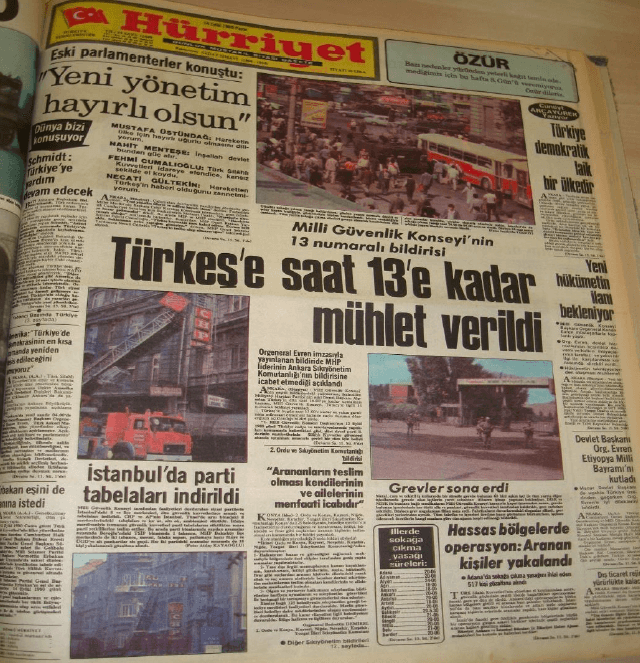
Time Given to Türkeş to Surrender After the Coup (Ezgi Gürses)
The No.【8】 2 Declaration, issued the same day, divided the country into “12 State of Emergency responsibility zones”; the 1st Army Commander General Necdet Uruğ (Istanbul), the 2nd Army Commander General Bedrettin Demirel (Konya-Niğde-Kayseri-Nevşehir-Yozgat), the 3rd Army Commander General Selahattin Demircioğlu (Eastern Black Sea and Central Anatolia provinces), and other army, corps, navy, and tactical air commanders were assigned as State of Emergency commanders. This arrangement aimed to standardize military-civil coordination on the ground.
The No. 3 Declaration detailed administrative rules to ensure the continuity of public services. Municipalities were declared primarily responsible for public health and order; bakeries and flour mills were ordered to operate at full capacity; hoarding in food sales was prohibited; healthcare personnel were required to remain at their posts; and mandatory transportation services were to continue during the curfew. Citizens were instructed to strictly comply with decisions issued by State of Emergency commanders. These rules served as implementation directives aimed at ensuring the continuity of daily life on the first day of the coup.
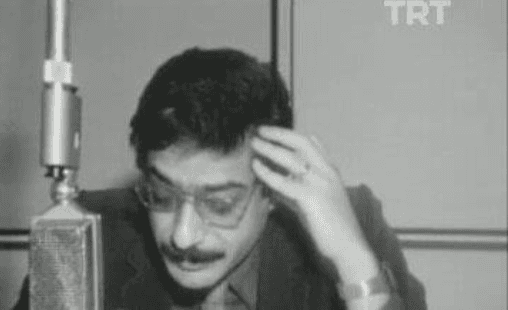
Mesut Mertcan Reading the Coup Declaration (Faruk Selahattin Yolcu)
The No.【9】 4 Declaration explained the council and its structure; it was evident that the priority sequence was first establishing public order and announcing the responsible commanders, followed by revealing the identity of the NSC. Thus, the first three declarations regulated daily administrative-security operations, and the fourth formally made the NSC visible.
Declarations issued on the same day and the following days defined the new hierarchy and delegation of authority in public administration alongside provisions such as the curfew, closure of parliament, and suspension of political activities; citizens were requested to comply with the declarations.
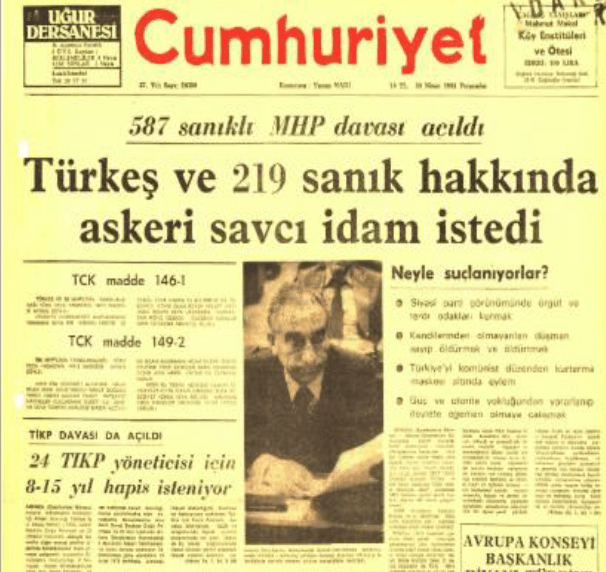
News on Demand for Execution of Türkeş (Ezgi Gürses)
Special announcements to the public were also issued.【10】 Declaration No. 13 called on Alparslan Türkeş to report to the nearest garrison command by 13:00 on September 14, 1980; it was declared that failure to comply would place him in a “guilty status” for violating NSC orders. This text clearly demonstrated the personal freedom restrictions imposed on party leaders and the authoritarian scope of the council’s authority.
Details regarding the drafting of the declarations were also made public. It was reported that the draft of Declaration No. 1 was prepared by Adnan Başer Kafaoğlu and Coşkun Kırca and that the phrase regarding the closure of political parties was removed from the text; nevertheless, the NSC quickly began using heavy powers such as appointing judges and prosecutors in State of Emergency courts and extending detention periods.
On the morning of September 12, 1980, executive and legislative powers were concentrated in a five-member council chaired by Chief of the General Staff General Kenan Evren. The council consisted of Army Commander General Nurettin Ersin, Air Force Commander General Tahsin Şahinkaya, Navy Commander Admiral Nejat Tümer, and Gendarmerie Commander General Sedat Celasun. The Grand National Assembly and the Senate were dissolved, political parties’ activities were suspended, and the state of emergency was extended nationwide. The council effectively assumed state power as the supreme decision-making body of the “temporary government”; decision-making processes were conducted through NSC declarations and laws issued by the council.
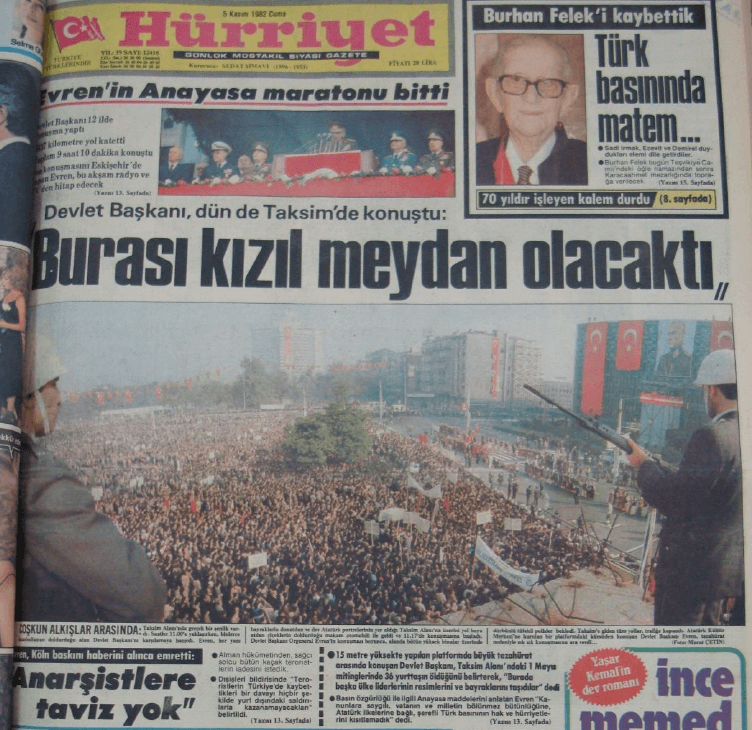
Government Statements Regarding the Threat of Communism (Ezgi Gürses)
In the first week, the council appointed a cabinet to continue the daily operations of the executive branch.【11】 Retired Admiral Bülend Uluso was appointed prime minister, and the Council of Ministers operated under the political responsibility of the NSC. This arrangement ensured that the executive branch was directed by council decisions and that essential regulations required council approval. Final authority on budgets, foreign borrowing, senior appointments, management of state economic enterprises, and security-administrative measures was centralized in the council.
The NSC determined the geographical division and jurisdiction of State of Emergency commanders; decisions such as the curfew, prohibition of meetings and demonstrations, suspension of trade union activities, and cessation of strikes and lockouts were implemented nationwide. Press and media censorship and broadcast bans were expanded; communication and broadcasting flows under the administrative control of TRT and PTT were reorganized according to security priorities. This framework aimed to operate public order within a centralized hierarchy under NSC directives.
The council also defined the main outlines of the path to the Constituent Assembly. Quotas and selection procedures for the Consultative Assembly were defined; the timetable for the draft constitution and fundamental political laws (political parties, elections, trade unions, and collective bargaining, higher education, etc.) prepared by the assembly was approved. Texts approved by the Consultative Assembly became “laws” after NSC approval; thus, the legislative process was placed under council supervision.
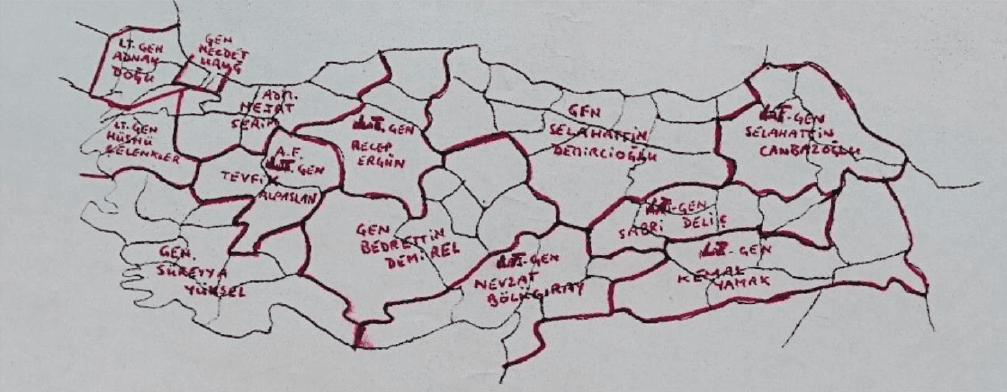
Map of Geographical Division by the NSC (Uğur Ersinadım)
Regarding judicial oversight, the council period established a regime in which ordinary balance and oversight mechanisms were suspended.【12】 The ruling that regulations issued by the council and the Consultative Assembly were not subject to judicial review became the fundamental basis of the period’s legal architecture. State of Emergency courts were granted extensive powers; detention and arrest regimes were hardened; and numerous mass trial processes were initiated. This structure institutionalized a coup regime incompatible with democratic rule of law principles.
The NSC enacted numerous fundamental laws with lasting impacts in areas such as higher education, trade unions, association law, public personnel regime, and media regulation. The establishment of the Higher Education Council, the rewriting of political party and election legislation, strict restrictions on trade unions and collective labor relations, and centralization trends in public administration took shape during this period. These steps became the main frameworks determining the subsequent political-institutional landscape alongside the 1982 Constitution and its implementation.
From the first declarations issued on the morning of September 12, the country was divided into 12 State of Emergency responsibility zones, State of Emergency commanders were appointed, and the civil-administrative structure was reorganized to operate in coordination with the military hierarchy. The initial order declared the curfew “until a second order”; curfew hours were adjusted according to provinces. Checkpoints were established at city entrances and exits; identity checks and vehicle searches became routine; intercity travel was made conditional on permits and necessity criteria.
Meetings, demonstrations, and all types of outdoor activities were banned; political parties’ rallies and organizational activities were suspended. General assemblies of associations were postponed or suspended by administrative decision; trade union activities, including strikes and lockouts, were halted, and collective bargaining processes were temporarily restricted. University campuses and student dormitories were placed under military-administrative control; entry and exit to campuses, posting of notices, and meeting arrangements required prior permission from State of Emergency commanders.
Pre-censorship and broadcast bans were introduced in the press and media; content deemed damaging to public order or “inciting” in news, commentary, announcements, and advertisements was confiscated. Radio and television broadcasts, primarily TRT, were standardized according to State of Emergency orders; telegraph, telephone, and fax traffic through PTT were subjected to surveillance and restriction measures. Designated blocks for corrections and official announcements became widespread in newspaper pages.
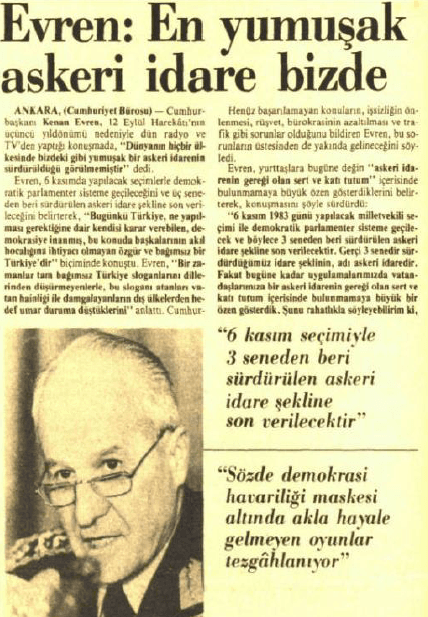
Propaganda Text on State of Emergency Measures (Ezgi Gürses)
Search, seizure, and arrest powers were expanded under State of Emergency legislation.【13】 Preventive searches in homes and workplaces became more frequent; rapid seizure of weapons, publications, and documents was permitted. Detention periods were extended under the emergency regime; standard procedures were established for mass detentions and mass trial files. State of Emergency courts were granted broad powers to judge civilians; allegations of rights violations regarding the balance between defense and prosecution and the proportionality of detention intensified.
On the economic and municipal services front, detailed administrative rules were enacted to maintain public order: bakeries and flour mills were ordered to operate at full capacity; healthcare personnel were required to remain at their posts; the uninterrupted distribution of basic food and fuel was ensured; and official transportation and mandatory transit services continued under curfew exemptions. Price and stock controls were intensified to combat hoarding and black markets; municipalities were assigned collective responsibility to ensure uninterrupted sanitation, lighting, and water services.
Public officials and senior appointments were made subject to State of Emergency authorities’ approval; rotations were carried out in governorships, police, national education, higher education, and press-media bureaucracies. Within this framework, the chain of command from center to periphery was strictly observed; in ambiguous situations, written directives from State of Emergency commanders were considered binding.
In terms of human rights, extended detentions, allegations of torture, restrictions on access to lawyers and communication freedoms, became subjects of intense debate. Postal and telephone surveillance and broadcast bans narrowed freedom of expression; arrests and detentions of journalists, writers, and academics became widespread. The State of Emergency practice was carried out within an antidemocratic and extra-legal framework that effectively suspended the separation of powers and judicial oversight; a climate of fear and self-censorship emerged in civil society.
After September 12, a two-chamber structure was created under the name Constituent Assembly. Decision-making authority was centralized in the NSC, while the Consultative Assembly was designed as an advisory body to produce texts for the constitution and fundamental political laws. The Constituent Assembly’s mandate was defined as preparing the new constitution and submitting it to a referendum, and enacting laws on political parties and elections; it was anticipated that it would carry out legislative functions until the reopening of the Grand National Assembly.
The number of members of the Consultative Assembly was set at 160; 120 were selected by the NSC from candidates nominated by provincial governorships, and 40 were directly appointed by the NSC. Eligibility conditions included being at least 30 years old, a Turkish citizen, having completed higher education, and not having been a member of any political party as of September 11, 1980; it was noted that the direct appointees of the NSC were exempt from the higher education requirement.
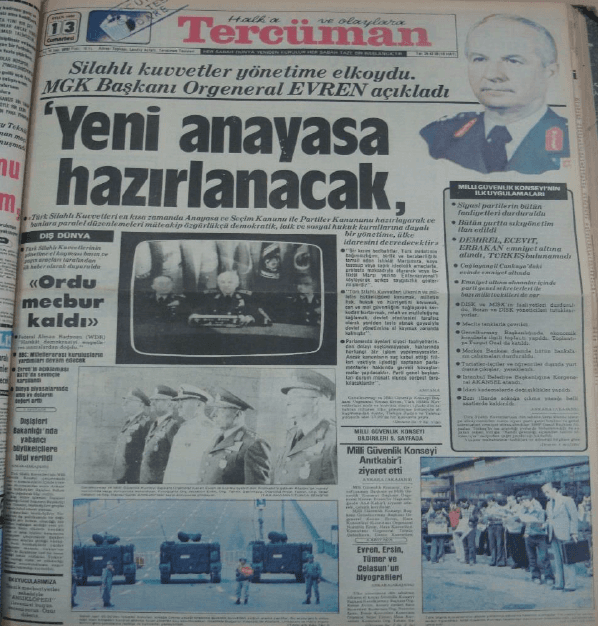
News on the New Constitution (Ezgi Gürses)
The assembly composition consisted of 155 men and 5 women; jurists, political scientists, military officers, economists, and engineers/architects predominated.【14】 A significant portion of the membership had a background as public officials; this composition strengthened assessments that the assembly offered limited social representation.
The Consultative Assembly held its first session on October 23, 1981 under the chairmanship of the eldest member, Professor Sadi Irmak; a presidium was subsequently formed. The Constitution Commission was established on November 23, 1981 with 15 members; Professor Orhan Aldıkaçtı was appointed chairman and Professor Şener Akyol deputy chairman. The commission’s work was largely conducted in closed sessions; in addition to academic jurists, members from various professional backgrounds were included.
The commission completed the draft text by July 17, 1982. The draft was discussed in the General Assembly of the Consultative Assembly and then adopted in its final form under the final authority of the NSC. This relationship reinforced the hierarchical subordination of the Consultative Assembly to the NSC and the decisive role of NSC approval in norm-setting.
Procedures and timelines for the referendum were determined; it was announced that the constitution would be submitted to a referendum on November 7, 1982. During this period, Kenan Evren traveled nationwide to promote the constitution and made speeches requesting approval; the constitution was accepted by a high vote percentage in the referendum.
Regarding the 1982 Constitution (Day 32)
The transitional provisions included regulations on the presidency and NSC members, as well as political bans; the executive branch, particularly the presidency, was granted extensive powers. The constitution established a unicameral structure, strengthened the executive and the National Security Council, and adopted restrictive provisions regarding rights and freedoms.
The entire process was conducted in a political climate devoid of pluralistic competition; debates took place under conditions where political parties were banned, pre-censorship and bans on press and media were in place, and the state of emergency continued; this demonstrated limited societal participation. The sociological composition and working methods of the Consultative Assembly were evaluated as primary factors weakening the democratic foundation of the text.
After September 12, the mechanism for approving and carrying out death sentences was restructured within the temporary legal order established by the coup. Approvals were carried out during the NSC period from September 12, 1980 to October 25, 1981, during the Consultative Assembly period from October 25, 1981 to October 14, 1983, and after November 6, 1983 during the Grand National Assembly period. Executions were effectively suspended from 1984 onward. Executions were carried out based on both “political” and “criminal” cases.
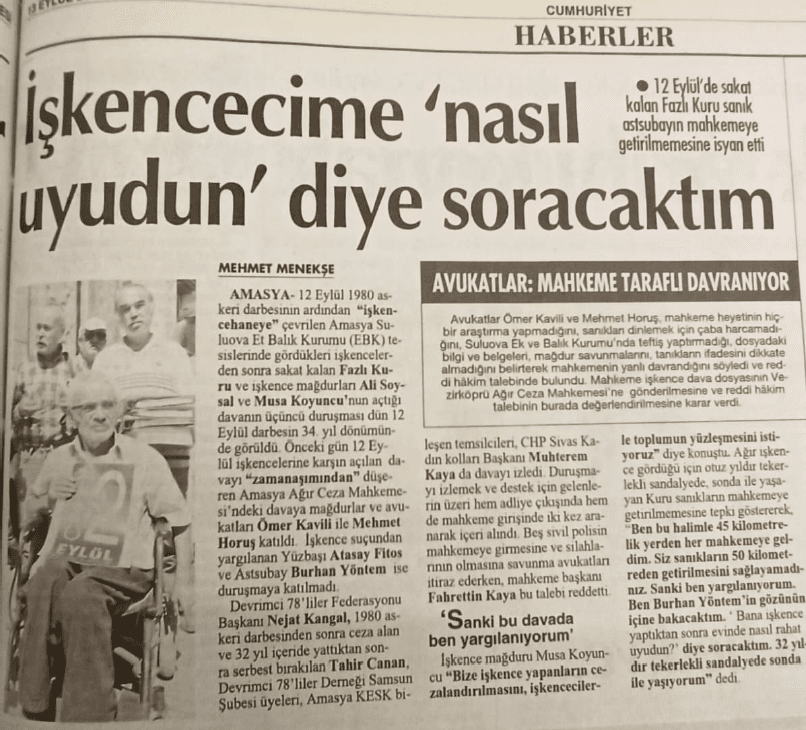
Memoirs on Torture During the Coup Period (Bünyamin Uzun)
The execution schedule indicates that the first executions occurred in Ankara in the fall of 1980.【15】 Necdet Adalı (October 7, 1980, Ankara) and Mustafa Pehlivanoğlu (October 7, 1980, Ankara) were executed within the same week. This was followed by Serdar Soyergin (October 25, 1980, Adana) and Erdal Eren (December 13, 1980, Ankara), whose execution generated widespread public reaction. In 1981, numerous executions were carried out in cases with both political and criminal characteristics. Cevdet Karakaş (June 4, 1981, Elazığ), Veysel Güney (June 10, 1981, Gaziantep), Ahmet Saner and Kadir Tandoğan (June 25, 1981, Istanbul), and Mustafa Özenç (August 20, 1981, Adana) were among those executed.
1983 was a year in which both political and criminal cases were executed simultaneously in different provinces. The execution of Levon Ekmekçiyan (ASALA) on January 28, 1983, in Ankara was a highly publicized execution. In the same month and subsequent months, executions of political prisoners such as Ramazan Yukarıgöz, Ömer Yazgan, and Erdoğan Yazgan were carried out in İzmit. In criminal cases, executions followed one another in centers such as Akşehir, Keşan, Kilis, Edirne, Nazilli, Isparta, and Ordu. On June 5, 1983, Halil Esendağ and Selçuk Duracık were executed in İzmir on the same day.
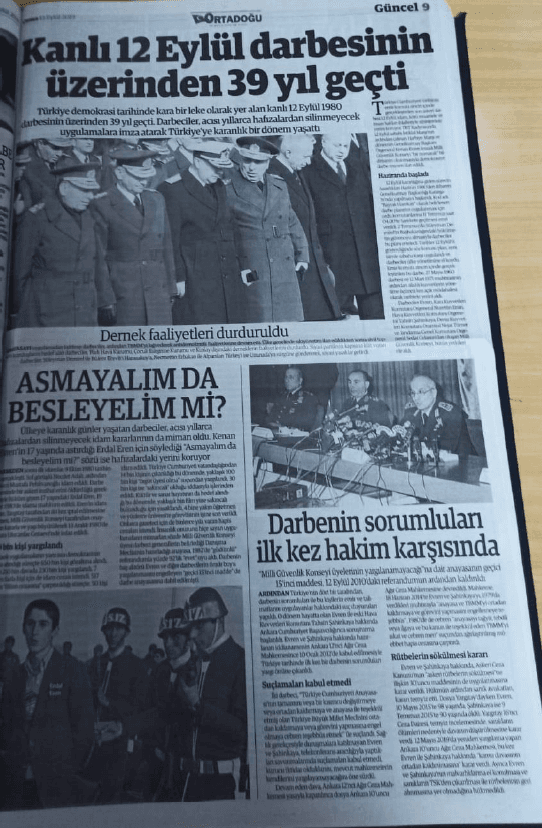
Trial Proceedings Regarding the September 12 Executions (Bünyamin Uzun)
1984 emerged as the year marking the end of executions.【16】 Ilyas Has’s execution was carried out on October 6, 1984, in İzmir. The same schedule shows that Hıdır Aslan was executed in İzmir on October 24, 1984. After this date, it is understood that the practice of executions effectively ended and the death penalty was not applied in subsequent years. In terms of procedure and trial, the processes leading to executions were conducted under State of Emergency courts and extraordinary procedures. Significant debates occurred regarding the extension of detention periods, mass trial files, collection and evaluation of evidence, and access to defense rights in some executions.
After September 12, political party activities were first suspended by NSC Declaration No. 7 and then all parties (including AP, CHP, MSP, MHP) were collectively dissolved by Law No. 2533 dated October 16, 1981, titled “Law on the Dissolution of Political Parties.” The law was published on the same day in the Extraordinary Issue of the Official Gazette.
Article 1 of the law declared that all parties established and active before September 12, 1980, along with their central and peripheral organizations and subsidiary bodies, were dissolved; Article 2 specified that all movable and immovable assets would pass to the Treasury. Article 3 transferred the administrative responsibility entrusted to the CHP regarding the implementation of Atatürk’s will to the Office of the Presidency General Secretariat. This arrangement was recorded as an exceptional practice that eliminated parties through administrative-military measures rather than judicial means.
The political justification for the dissolution was presented as preventing the resurgence of politics through the actors of the “old order.” Indeed, the NSC approved the law on October 15, 1981, and published it on October 16, 1981, immediately enforcing the collective closure of parties and the liquidation of their assets. Prior to this, broad bans on political debate, meetings, and publications were introduced through Declarations No. 31 and especially No. 52; thus, the path to dissolution was paved through a gradual restriction regime.
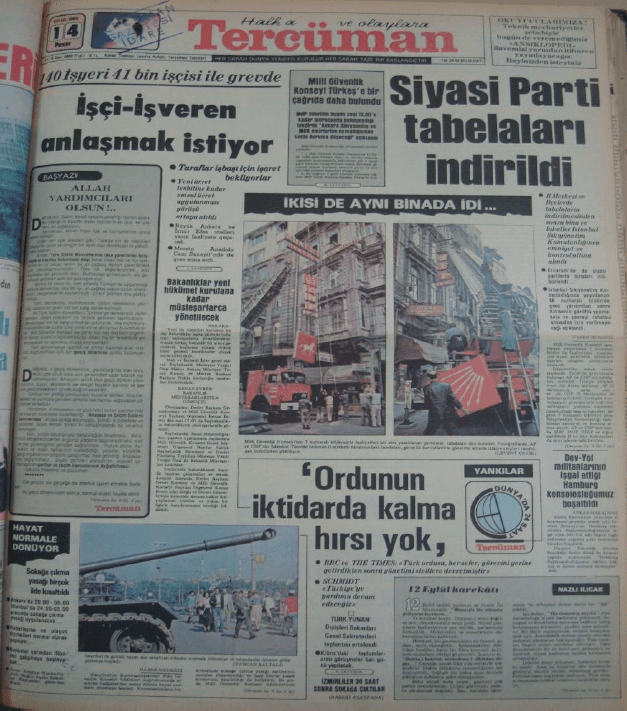
Regarding the Dissolution of Political Parties (Ezgi Gürses)
Newly established parties were made subject to NSC vetoes through the “Transitional Article 4” of the Political Parties Law and related election provisions; a party’s eligibility to participate in elections required approval of its founding list by the NSC; unsuitable founders were requested to be replaced, and parties whose lists were rejected were effectively disqualified.【17】 In the summer of 1983, hundreds of vetoes were applied to founding lists; for example, significant portions of the founding lists of SODEP and DYP were rejected, preventing these parties from participating in elections.
This mechanism operated as an elimination tool that shaped political competition through administrative vetoes rather than judicial oversight. The first initiative of the old center-right stream, the Great Türkiye Party (BTP), was closed on May 31, 1983, by NSC Decision No. 79 on the grounds that it was considered a continuation of dissolved parties; during the same period, the “Zincirbozan” isolation policy was applied against banned former leaders and cadres, and new party initiatives were caught in administrative restrictions. This example demonstrated that politics remained under administrative oversight even after the dissolution.
The political bans accompanying the dissolution were comprehensive. Through the 1982 Constitution and related regulations, a 10-year political ban was imposed on the general chairmen and managers of parties dissolved on October 16, 1981; the ban was partially lifted by the referendum on September 6, 1987. Thus, leading politicians of the 1970s were able to return to active politics gradually after 1987. This entire framework was evaluated as the most prominent manifestation of the antidemocratic and extra-legal nature of the coup period in the field of political organization.
The 1982 Constitution, prepared by the Consultative Assembly under the Constituent Assembly framework and approved in a referendum on November 7, 1982, transformed the post-coup temporary legal architecture into a permanent framework. The text was shaped by provisions strengthening the executive, transforming the National Security Council into a constitutional body, and establishing a broad regime of restrictions on fundamental rights and freedoms. The process was conducted under conditions of suspended free political competition, banned parties, and ongoing state of emergency; thus, its democratic legitimacy remained contested.
Regarding the 1982 Constitution (TRT News)
The executive architecture was clearly centralized. The President was granted extensive powers, including convening parliament, returning laws, appointing members of judicial organs, and chairing the NSC. The Council of Ministers was granted secondary regulatory authority through decree-laws. Although the parliamentary system appeared preserved, the center of gravity of the executive shifted toward the presidency. These choices elevated the coup period’s “strong executive” priority to the constitutional level.
The NSC’s constitutional status went beyond its consultative function under the 1961 Constitution. Its composition and mandate were strengthened with the authority to produce recommendations considered “primarily to be taken into account” in the fields of security and foreign policy; thus, the influence of military authority on civilian decision-making was institutionalized.
The legislative structure was re-established as a unicameral system. The election and political party regime was bound by strict rules through the Political Parties Law and Election Law; internal party democracy, organization, financing, and alliance possibilities were subjected to strict limitations. This area was reduced to a narrow corridor that defined the core of political competition throughout the 1980s.
The judicial system was reorganized both institutionally and in terms of extraordinary courts. The executive’s weight increased in the mechanism for appointing members of the Constitutional Court; the composition and working procedures of the High Council of Judges and Prosecutors (then known as the High Council of Judges and Prosecutors) were designed to be susceptible to executive influence through the Minister of Justice and the Undersecretary. State Security Courts were provided with a constitutional basis; special judicial channels parallel to the State of Emergency/State of Emergency regime were established for trials of politically motivated charges. The military judiciary was maintained broadly; the distinction between civil and military justice deepened contrary to the principle of judicial unity.
The section on fundamental rights and freedoms was framed by comprehensive general restriction grounds and emphasis on duties and responsibilities. Strict restrictions were imposed in areas such as personal security, freedom of expression and press, assembly and demonstration, association, trade union-strike-lockout relations, and university autonomy. Pre-censorship and ban mechanisms in the press and media were strengthened through administrative decisions; the autonomy of public broadcasting under legal personality was weakened. In the field of universities, the constitutional framework created a centralized superstructure supporting the 1981 YÖK structure.
The Process of the 1980 Coup (Day 32)
The transitional provisions secured the pillars of the coup regime. The transition of the presidency (Kenan Evren) to the presidency, the exclusion of NSC members and decisions made during the coup period from judicial review, the application of political bans for ten years, and the barriers imposed on structures considered continuations of dissolved parties strengthened the permanence of this transitional regime. The exclusion of norms issued by the Consultative Assembly and the NSC from judicial review weakened the rule of law and balance-oversight principles.
In terms of implementation and outcomes, the 1982 Constitution accompanied the transition to a civilian government through the November 6, 1983 elections; however, the executive-heavy architecture, the institutional influence of the NSC, political bans, and extraordinary judicial channels ensured the continuation of the post-coup order. Despite numerous partial amendments in the 1990s, the founding logic of the 1982 Constitution continued to determine Türkiye’s political-institutional life for a long time.
After September 12, detention, investigation, and arrest processes became an exceptional regime outside ordinary law. Tens of thousands of people were detained nationwide through widespread operations; according to the official figure provided by the General Staff State of Emergency Coordination Board, 18,134 people were arrested between September 12, 1980, and July 23, 1982. The overall picture of the period indicated that widespread detention practices reached 650,000 people; it was claimed that records were kept on 1,683,000 individuals.
These figures revealed that mass detentions and widespread investigation practices were systematically operated as tools during the coup. A regulation enacted on September 22, 1980, extended the detention period to 30 days, with the possibility of three extensions; in practice, numerous cases recorded detentions lasting 45 and 90 days.
Operations were often conducted as raids; search and seizure procedures were carried out along the chain of command, detached from the principle of judicial authorization. The principle that evidence obtained illegally could not be accepted as evidence was suspended in practice; operations by security forces concentrated in police stations, command centers, and directorates.
Regarding the Consequences of the September 12 Process (Day 32)
Defense rights were restricted. Access to legal assistance was only possible in many places after detention had turned into arrest; access to defense lawyers to the indictment was difficult. Private meetings between defendants and lawyers were narrowed; threats were recorded that defendants would be subjected to torture again if they recounted what happened in court. Additionally, requests for recusal of judges were restricted, detention periods were extended in mass crimes, and regulations were introduced allowing trials without defendants. This situation undermined the independence of trials and guarantees of fair trial.
Allegations of torture also became widespread. Narratives about the systematic use of physical and psychological violence in investigations multiplied; statements obtained under “confession” pressure were accepted as evidence. Even in a decision by Ankara No. 1 State of Emergency Court, the reasoning that “if torture occurred as alleged, incorrect information was not obtained, and correct information was obtained” opened the door to the legal validity of statements obtained through torture.【18】
Allegations of death and disappearance during detention were often classified in official statements as “suicide,” “attempted escape,” or “natural death”; however, the circumstances of the incidents strengthened the perception that a policy of deterrence and intimidation was followed. Deaths occurring during police interrogations became public; although some security personnel faced military prosecution, criticisms persisted that investigations failed to produce deterrent outcomes.
It was observed that mistreatment continued after individuals entered prison. Mamak Military Prison, Metris, and Diyarbakır emerged as the symbolic three prisons of the September 12 period; practices such as mass hair cutting, imposition of military training, uniform clothing, isolation/cell confinement, and beatings/threats during transport to trials were frequently reported. Testimonies and confessions regarding practices in the command chain at Mamak became public; assessments that mistreatment had become an “institutional culture” increased.
Diyarbakır Prison No. 5, after the coup, was integrated into the State of Emergency chain and became an institution notorious for severe human rights violations during the first half of the 1980s. Prison administration was linked to military authority; control and discipline were operated within a centralized and harsh regime based on State of Emergency orders. The institution’s architecture was designed to enable continuous control along isolation-surveillance-discipline lines; internal administration within the cells was maintained through a strict internal hierarchy and “discipline officers.”
Prisoners and convicts were forced to wear uniform clothing; military rituals such as tekmil, içtima, and nizam became central elements of daily routine. Rights to visitation, letters, and telephone calls were narrowed through pre-censorship and restriction procedures; letters were censored, and in some periods, lawyer visits were also conducted under surveillance. Access to medical services and clinics was frequently conditional on permission; medical reports and forensic examinations had to pass through administrative approval processes.
A confession-oriented approach became prominent during the transition from detention to prison and within prison discipline processes; allegations of physical and psychological violence became widespread and systematic. Methods such as isolation/cell confinement, forced standing, sleep deprivation, cold-hot shock, beatings, hanging, electric shocks, and sexually humiliating practices were intensively reported in testimonies. In this environment, a culture of fear and obedience was produced; collective punishments against those who “disturbed discipline” within the cells suppressed individual efforts to claim rights.
The right to confidential meetings with defense counsel was effectively narrowed; access to the indictment and case files was delayed; complaint and appeal channels did not function. Disciplinary punishments (cell confinement, visit and letter bans, etc.) were applied using broad and vague formulations; judicial oversight of these punishments remained ineffective. Allegations of degrading treatment such as shackling, dragging, and single-file transport during transfers from prison to court, clinic, or hospital were consistently reported.
Discrepancies were observed between records and narratives regarding deaths and suicides in the prison; contradictions emerged between official statements and testimonies. It was frequently emphasized that mistreatment caused lasting physical and psychological damage and that rehabilitation needs after release were unmet. Although administrative and judicial investigations were initiated regarding these incidents, a strong perception emerged that these processes failed to produce deterrent outcomes.
Overall, the Diyarbakır Prison case is remembered for practices that violated human dignity. This example demonstrated how severely judicial safeguards could be weakened and how accountability and transparency mechanisms could become dysfunctional when the penal system was removed from a civil administration and democratic foundation.
Allegations of torture and mistreatment after September 12 became a concern not only for the Turkish public but also for the international community from the first days of the coup. The issue became a topic of debate in the Council of Europe; the Brussels-based International Association of Democratic Lawyers and Amnesty International sent representatives to Türkiye and published their findings in international media (particularly in Le Monde). This process demonstrated that allegations were documented and made visible beyond national borders.
State of Emergency authorities acted to suppress reports of torture, which were increasingly attracting international attention; the Istanbul State of Emergency Command issued “Declaration No. 20” explicitly banning the publication of news and interviews regarding torture. This regulation aimed to control the public reflection of violation allegations by restricting the flow of information.
In the field of labor and trade union rights, international monitoring mechanisms quickly came into effect. Numerous complaints were filed against Türkiye before the International Labour Organization (ILO); under cases No. 997, 999, and 1029, an ILO mission visited Türkiye from July 12 to 22, 1982, and conducted on-site investigations. The investigations found that the prohibition and restrictions on trade union organization and activities after September 12 were problematic according to international standards.
Documentary on September 12 Prisons (BBC Turkish)
During the same period, international and foreign press reports noted that detention periods had been exceptionally extended and police powers had been expanded; these practices were highlighted as increasing the risk of mistreatment. The new State of Emergency Law after September 12, 1980, extended the detention period to 30 days with the possibility of three extensions, making this a focal point of criticism. In this context, findings regarding the prevalence of torture and mistreatment were reflected in human rights documents.
In international organizations’ reports, the scale and context of violations were indicated by the coup-era trials and mass arrests. According to official data from the General Staff, 18,134 people were arrested between September 12, 1980, and July 23, 1982; this figure strengthened reporters’ assessments of a “widespread climate of pressure.” Additionally, it was recorded that thousands of people left the country for political reasons; this movement corresponded with international statistics showing increased asylum applications.
National human rights records (particularly the “Torture File” study by the Turkish Human Rights Foundation covering the period from September 12, 1980, to September 12, 1994) were frequently referenced in international reports. These compilations gathered cases of individuals who died during detention or in prisons and linked Türkiye’s human rights debates with data from global monitoring networks. This data base served as a local evidence set supporting the quantitative findings of external reports.
Legal debates of the period focused on how international human rights law (particularly the European Convention on Human Rights system and the principles of fair trial and prohibition of torture) should be applied in the Turkish context. These debates were detailed in academic literature and brought the issue of measurement norms regarding domestic and international law to the agenda. This accumulation demonstrated that international reporting went beyond documentation to produce normative evaluations.
In the formation of the central state ideology after the coup, the House of Intellectuals was particularly influential. The House of Intellectuals, established on May 14, 1970, traces its roots back to the Intellectuals’ Club of the 1960s. Its ideological line became clear with the First Nationalists Congress in 1967 and the Second Nationalists Congress in 1969; the nationalist-sacred discourse emerging in the 1970s with the slogan “You are Turkish as Mount Tanrı, Muslim as Mount Hira” transformed into a framework interacting with state ideology after September 12. The House aimed to produce a “cultural policy” that balanced the divergent views scattered toward radical extremes in the left-right struggle and brought them back toward the center, maturing the conceptualization of Turkish-Islamic Synthesis on this basis.
The institutional structure was shaped under the chairmanship of Professor İbrahim Kafesoğlu; figures such as Altan Deliorman, Muharrem Ergin, Süleyman Yalçın, and Ahmet Kabaklı emerged prominently. The membership profile consisted largely of academics and politicians; the House’s views produced a “cultural nationalism” language that served as a reference for public policies.
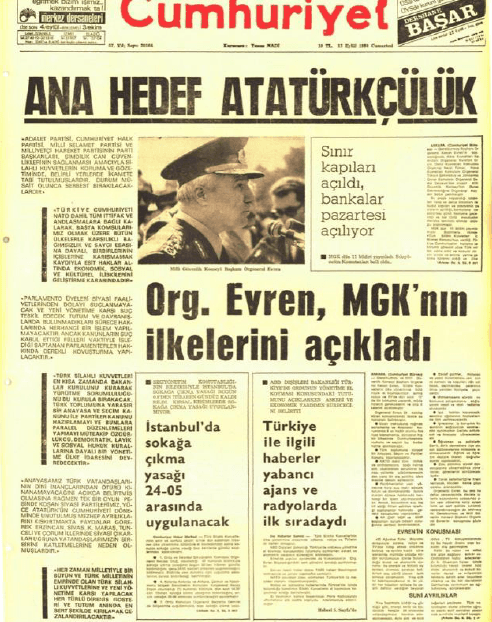
Explanation Regarding the Official Ideology After the Coup (Uğur Ersinadım)
Members from the House’s circle, such as Şener Akyol and Yılmaz Altuğ, were present in the Consultative Assembly Constitution Commission; according to the House’s chairman, Turkish-Islamic “combination” gained “official acceptance and recognition” after 1980.【19】 The seminar on “National Education and Religious Education” held on May 10, 1981, concluded that compulsory religious education did not contradict secularism.
The integration of this line into state policies became more visible at the meeting of the Atatürk Higher Council of Culture, Language, and History on June 26, 1986. President Kenan Evren and Prime Minister Turgut Özal attended; here, Turkish-Islamic Synthesis was adopted as “the state’s fundamental cultural policy / official ideology.” This acceptance demonstrated the continuity of the line begun with September 12 into the ANAP period.
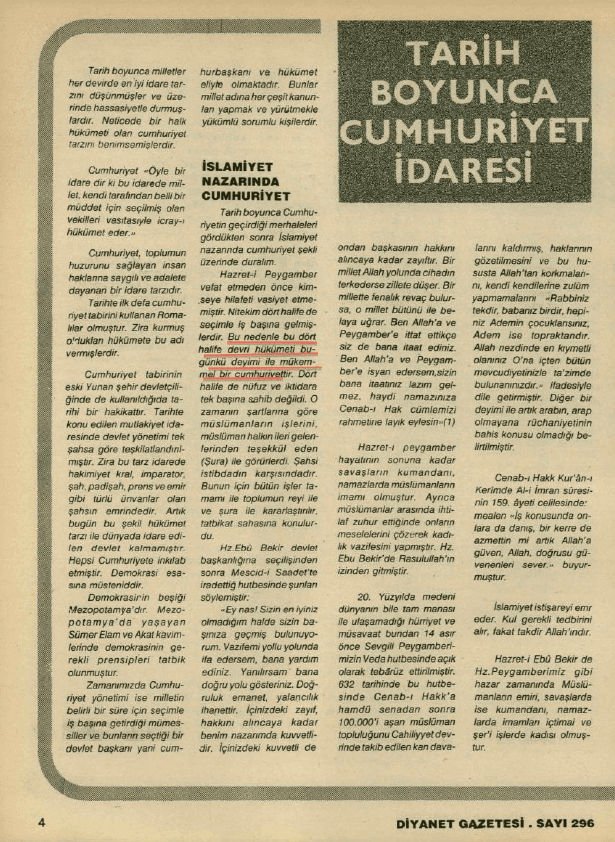
Islam and the Republic (Şerife Şimşek)
In curricula and textbooks, emphasis on Atatürkism, national history, and Islamic civilization increased; history programs were reorganized to integrate “national-religious values.【20】 ” This content centralized the orientation that began in the 1970s after the coup; the discourse acquired a sustainable administrative framework in education.
The official acceptance of this discourse also expanded criticisms. It was alleged that members of the House’s circle were institutionalized in universities and public institutions and that academics dismissed under Law No. 1402 were replaced by individuals sympathetic to this view.
The stabilization and structural adjustment program announced on January 24, 1980, was designed with components such as an immediate currency adjustment of approximately 40 percent, elimination of the multiple exchange rate regime, relaxation of interest rate controls, administrative price adjustments in state economic enterprises, and reduction of subsidies. The decision package was more consistently implemented after the September 12 coup through the centralized administrative capacity provided by the military regime.
January 24 Decisions (Day 32)
Export incentives based on exchange rate and tax rebates were expanded; foreign exchange allocation and import licensing were gradually simplified; standby arrangements and restructuring channels with creditor countries were used to access external financing. To break the wage-price spiral, income policy was hardened; strict restrictions were applied to public sector wages and employment in state economic enterprises. During implementation, the exchange rate was managed through gradual adjustments, access to imported inputs was facilitated, and the export-led growth objective was supported through customs and tax arrangements.
Turgut Özal emerged as a decisive coordinator in the architecture and implementation of the program. He assumed technical leadership during the preparation phase of the January 24 decisions and directed implementation as the official responsible for economics in the Bülend Uluso government formed after the coup. The policy set was defined through the transition to market prices, openness to the outside, and liberalized interest and exchange rate adjustments; coordination among monetary, fiscal, and foreign trade policies was targeted.
During 1980–1982, public finances were brought under discipline; cost-based pricing was adopted in state economic enterprises; administrative simplifications were made in foreign exchange and foreign trade regulations. Although the 1982 banking crisis revealed financial vulnerabilities, after the 1983 elections, Özal-led export-oriented policies continued under civilian politics. This transformation aimed to shift the growth strategy’s axis from a structure protecting the domestic market to one enhancing efficiency through external competition.
In the first days of September 12, strikes and lockouts were halted, trade union activities were suspended, and mass investigations and legal proceedings were initiated against numerous trade union structures, including DİSK. Between 1980 and 1983, the collective bargaining mechanism was operated through the High Arbitration Board; wage increases were limited by administrative ceilings and income policy decisions; dismissals, rotations, and disciplinary practices created a one-sided balance in working life.
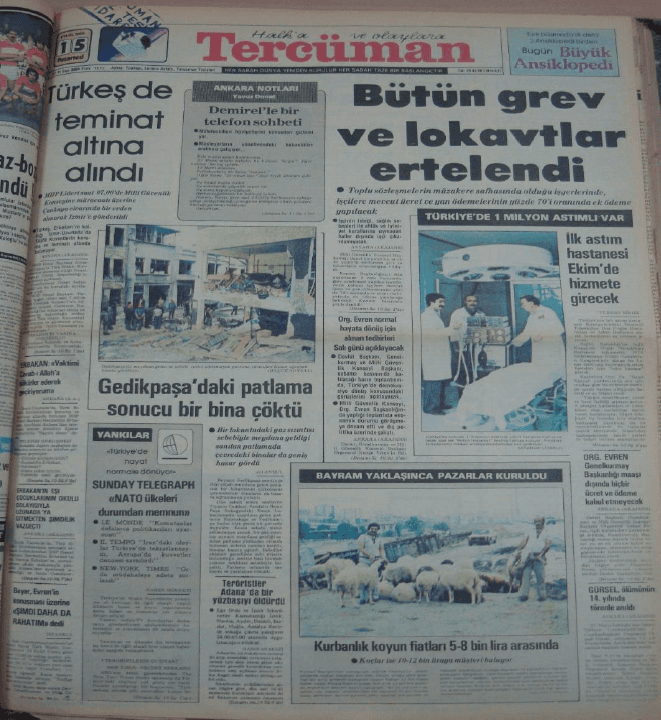
Regarding the Ban on All Strikes (Ezgi Gürses)
The Trade Unions Law No.【21】 2821 and the Collective Bargaining, Strike, and Lockout Law No. 2822, effective in 1983, introduced a restrictive framework with high barriers approaching the “one union per trade” principle, strict conditions for authority and membership, strike bans, and postponement provisions. Under this regime, real wages were suppressed, the organizational capacity of the labor movement weakened, and industrial relations were reorganized under centralized administrative control. These outcomes led to the limitation of institutional channels that could have compensated workers for the cost distribution of the January 24 program and transformed wages into a tool for controlling disinflation targets.
Law No. 2547 was published in the Official Gazette on November 6, 1981, formally establishing the Higher Education Council (YÖK); the draft was approved by the NSC on November 4, 1981, and Professor İhsan Doğramacı was appointed as its president. The law defined the purpose of higher education as “educating students as citizens loyal to Atatürk’s revolutions and principles” and explicitly mandated the inculcation of this loyalty among students under its “Basic Principles.”
Shortly after its establishment, YÖK made the courses on Atatürk’s Principles and the History of the Turkish Revolution compulsory and decided to extend them over four years. The curriculum framework was determined by the “Program for the History of the Turkish Revolution and Atatürkism” adopted in 1981; an amendment on July 20, 1982, foresaw the establishment of Institutes for Atatürk’s Principles and the History of the Turkish Revolution in universities and aimed to train teaching staff for these courses.
A hierarchical system based on appointment rather than election was adopted in the management model; rectors and deans were appointed. This transformation was criticized as an erosion of university autonomy; some circles compared it to a “barracks mentality.” On the other hand, some administrators argued that “hierarchy is appropriate for university management.” Thus, the same regulation triggered opposing assessments within academia and redefined university-state relations.
Public television open sessions were held to introduce the law; immediately afterward, Ankara University convened on November 24, 1981, and sent a letter to the General Staff State of Emergency Coordination Headquarters outlining concerns that long-term administrative and scientific autonomy would be damaged. In Istanbul, 1,447 academic staff opposed the law; critical articles were published in the press. These reactions demonstrated that the YÖK model generated widespread protest within the university community.
Centralization was concretized through Transitional Article 1, which terminated the terms of current rectors as of July 31, 1982; thus, a management cadre fully aligned with the new hierarchy was intended to be created. YÖK also aimed to standardize campus discipline through regulations on dress code and mandatory physical education, and restructured university life around the axis of “order and public order.”
In the personnel regime, Law No. 1402 on the State of Emergency, amended on September 21, 1980, granted State of Emergency commanders direct authority to remove public officials deemed “hazardous to public order or security.”
Dismissals in universities were carried out on this basis, and the process known in literature as “1402s” operated through three channels: direct removals based on Law No. 1402; dismissals by rectors and deans using administrative discretion granted by the YÖK law; and academics forced to resign or who resigned in response to the YÖK regime. In early 1983, dismissals were accelerated based on lists of names submitted to State of Emergency units. Ultimately, the YÖK system transformed higher education into a structure coordinated from a single center, reorganizing curriculum, management, and discipline in favor of centralized administration.
After September 12, the curriculum was centralized around the axis of “Atatürkism-Nationalism-Turkish-Islamic Synthesis,” and religious education was granted the status of a compulsory subject. Thus, religious education came under state supervision and control, and its content was defined within the framework of “religious culture.”
The Education and Training Board reorganized the scope and distribution of the Turkish Revolution and Atatürkism course in the autumn of 1981; on August 28, 1981, Decision No. 149 expanded the teaching principles; on September 14, 1981, Decision No. 153 updated the “course distribution schedule.” In the same year, on November 19, 1981, Decision No. 320/10110-81 adopted the “Guidelines for Teaching Atatürk’s Revolutions and Principles,” detailing the goal of cultivating Atatürkist citizens in primary and secondary education.
Weekly teaching hours were separately determined for schools implementing OSANOR (School-Industry Joint Education), and the status of the course was clarified for different school types such as Imam Hatip, Technical, and Health Vocational Schools. These decisions aimed to implement history education in primary and secondary education as a behavioral-oriented Atatürkism.
A circular dated November 19, 1982 (1982/172) reorganized the History and Geography curricula as temporary curricula to emphasize “Turkish history, Türkiye’s geography, and the history of civilization”; the information section of the circular listed the Prime Ministry, General Staff, NSC General Secretariat, and ministries.
TTK Decision No. 156 defined the program’s objectives with an emphasis on “the place and share of the Turkish nation in world history.” Teachers were required to submit implementation reports, and the program was immediately implemented upon reaching schools. Thus, history education was reshaped with increased national-cultural emphasis in content and objectives.
Textbooks were rewritten and rapidly implemented from 1981 onward. By Decision No. 4.1.1982, new textbooks for Turkish Revolution and Atatürkism for middle and high schools were listed; the book by M. Kâmil Su–Ahmet Mumcu was taught in high schools during 1982–1983 and 1983–1984; in 1984–1985, the title was expanded to “Turkish Revolution and Atatürkism.”
İsmet Parmaksızoğlu’s book was accepted as the single textbook for middle school; in higher education, the four-volume “Atatürk’s Principles and the History of the Turkish Revolution I–IV” set by Anadolu University Open Education extended the course over four years. Textbooks emphasizing Atatürk’s principles and revolutions were also prepared by institutions such as the General Directorate of Security (1985).
Text-curriculum consistency was also observable when compared with the previous 1976 program. While the 1976 program contained explicit references to “Turkish-Islamic synthesis,” the program prepared during the military administration moved the topic of the first Turkish-Islamic states to the first year of high school. The scope of the History of the Revolution was limited to 1938, and the narrative consistently emphasized the contribution of Turks to world civilization. In summary, between 1981 and 1983, TTK decisions, circulars, and new textbooks were simultaneously implemented; history and religious education were reshaped with emphasis on Atatürkism and “national culture.”
With the September 12 coup, the press and media field was immediately subjected to the state of emergency regime. Article 16 of Law No. 1402 on the State of Emergency provided for imprisonment and fines for those who published or transmitted false or exaggerated news causing public alarm or excitement; if the offense was committed by press and media outlets, penalties were doubled. Thus, news and commentary production was forced into preventive self-censorship under legal threats. Amendments at the end of 1982 prohibited filing lawsuits against State of Emergency measures, further narrowing oversight channels.
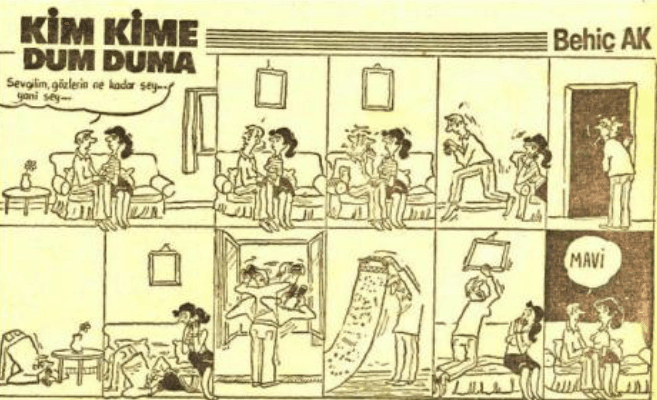
Representing a "No" Vote in the Blue Referendum (Ezgi Gürses)
The communication and broadcasting infrastructure was under control from the evening of September 11.【22】 TRT General Director Doğan Kasaroğlu was taken to the General Staff on September 11, 1980, at 17:30; shortly afterward, PTT General Director Fikri Çağlar was also brought there; TRT announcer Mesut Mertcan was assigned to read the declarations. These steps ensured complete control over radio and television broadcasts until the coup’s announcement on the morning of September 12.
TRT’s broadcasting policy was detailedly restricted by an order on September 14, 1980: “Foreign news unfavorable to us may be broadcast,” “news about anarchy will not be broadcast,” “NSC declarations will be published three times daily, State of Emergency declarations twice.” These rules narrowed the public agenda and linguistic framework in single-channel broadcasting. This framework resulted in the systematic exclusion of content critical of the NSC and State of Emergency authorities.
The print media faced widespread sanctions. Between September 12, 1980, and March 12, 1984, numerous newspapers were suspended; for example, Milli Gazete was closed four times for a total of 72 days, Cumhuriyet four times for 41 days, Tercüman twice for 29 days, Günaydın twice for 17 days, Güneş once for 10 days, Tan once for 9 days, and Hürriyet twice for 7 days. During the same period, the number of investigations and prosecutions against journalists was also high: Cumhuriyet 28, Tercüman 27, Hürriyet 14, Milliyet 14, etc. This picture demonstrated the establishment of an administrative-judicial pressure regime on the press.
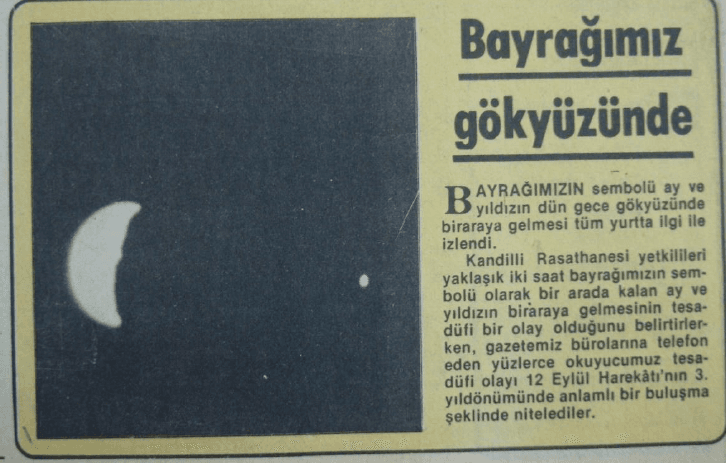
The Crescent and Star Being Interpreted as a Symbol (Ezgi Gürses)
In practice, censorship and self-censorship operated together.【23】 Political trials were published in newspapers according to the regime’s wishes and often with delays; otherwise, newspaper closures and journalist arrests were triggered. In this environment, writers were forced to apply extremely strict self-censorship in news and columns.
The visual-auditory and cinema fields were also severely affected. After September 12, Yılmaz Güney’s films, books, posters, and negatives were confiscated; severe sanctions including loss of citizenship were applied. Yavuz Özkan and Korhan Yurtsever faced similar pressures; Ali Özgentürk was arrested during the editing process of his film At. Halit Refiğ’s series Yorgun Savaşçı was burned; it could only be shown on TRT in 1993.
In 1985, TRT implemented a “205-word language ban,” narrowing the boundaries of broadcast language through administrative regulation. These examples demonstrated that cultural production was controlled through administrative intervention and punishment. Even in 1983, closures continued; for example, Hürriyet was suspended on December 1, 1983, and allowed to resume broadcasting on December 7. This continuity demonstrated that administrative control persisted beyond the initial period of the coup and continued even after the transition to civilian government.
Immediately after September 12, the trade union field was suspended. The activities of trade unions, including DİSK and MİSK, were halted by NSC Declaration No. 7, and trade union organization was effectively blocked alongside political party and association activities. Immediately after the coup, Declaration No. 15 suspended all strikes and lockouts; in ongoing collective bargaining processes, a “70 percent wage increase” was announced; thus, the right to strike was effectively eliminated.
At the implementation level, State of Emergency authorities also banned “work slowdowns” and similar actions; Istanbul State of Emergency Command’s Declaration No. 51 announced that any action restricting the freedom to work would be punished. In the first days of the coup, dismissals of civil servants and workers were suspended “until a second order,” and workers were required to immediately return to work; this framework aimed to ensure uninterrupted production.
The institutional goal of the trade union movement, particularly DİSK, was targeted. DİSK General President Abdullah Baştürk and Executive Board members were arrested; within the first one and a half months, the number of detained officials rose to 306; 1,477 workers affiliated with DİSK were brought before the 2nd Military Court. The DİSK trial, which began in 1981, lasted until December 23, 1986; some defendants were sentenced to 10 years in prison, 1,166 were acquitted, and 274 received penalties; the decision included the closure of DİSK, and the Confederation remained closed for 11 years.
In contrast, Türk-İş was able to continue its activities as a “endorsed” confederation by the coup regime; Kenan Evren explicitly stated that Türk-İş had acted “in the direction of national interests” before and after September 12. Although the joint banning of DİSK and MİSK created an appearance of “neutrality,” the fundamental shrinkage of the trade union field resulted from the suspension of the right to strike and collective bargaining processes.
Data showed the scale of the trade union movement before the coup and the magnitude of the postponed strikes. As of September 1980, 53,788 workers (46,849 of whom were DİSK members) were on strike or preparing to strike in 178 workplaces; the total number of workdays lost in strikes was recorded as 6,427,011. According to TİSK’s assessment, if the September 12 coup had not occurred, this wave of strikes would have seriously pressured employers; during the three-year period after the coup, employer demands were fully met.
The collective bargaining system was operated through the High Arbitration Board (YHK) after the suspension of strikes; the NSC period directed labor disputes toward administrative channels through legislation restricting strikes and non-strike actions and through YHK practices. This period also corresponded to the reorganization of working life in favor of employers within the economic-political equation shaped by the January 24 line.
Ultimately, trade unions and worker organizations faced a severe pressure regime during the coup process: activities were suspended, the right to strike and lockout was postponed, collective bargaining was transferred to YHK, DİSK was closed, and thousands of unionists and workers were left facing criminal prosecutions.
The September 12 coup suppressed the political sphere and interrupted women’s organizations and feminist activism that had emerged in the 1970s; however, the experience of exile, through contact with Western European women’s liberation movements, contributed to strengthening the intellectual foundation of a new feminist wave in the late 1980s and 1990s.
Throughout the 1980s, the theme of “woman” became prominent in culture; narratives portraying women as subjects rather than sexual objects in cinema became widespread. The line represented by Müjde Ar and the “women’s films” intertwined with the suppression and depoliticization climate of September 12 were indicators of this transformation. During the same period, on one hand, repression and censorship increased, while on the other hand, channels for new social movements, particularly feminism, opened up.
Initiatives organized around families of detainees under coup conditions also gained public visibility; solidarity practices such as signature campaigns for “associations of detained relatives” emerged prominently in the representations of the period. While the authoritarian institutional framework of September 12 continued, in the second half of the 1980s, feminists and other new social opposition lines gained the right to speak in the public sphere.
A distinct “political migration” wave occurred from Türkiye to Europe after the coup. Unlike the labor migration of the 1960–70s, this wave was shaped by asylum and political reasons. In the case of the United Kingdom, excluding Turkish Cypriots and limited individual developments, the first large community of Turkish origin after September 12 consisted of asylum seekers; thus, the Turkish-origin population in the UK in the 1980s had a smaller but more homogeneous appearance compared to other European countries.
According to field data, the majority of these migrants arrived between 1980 and 1989, with settlement concentrated in London; in the sample distribution, London accounted for 75 percent, clearly leading. During the same period, the gender composition of migration was male-dominated, with approximately two-thirds of participants being men.
The individual and collective memory of exile left a strong imprint in literature and intellectual life. Novels dealing with September 12 transformed exile into a central motif, frequently exploring “double consciousness,” language, and identity fractures; Zülfü Livaneli’s texts expressed the existential tension created by disconnection from roots and placement in a foreign cultural context. These themes have firmly established themselves as the cultural projection of the political coercion after the coup and the orientation toward abroad.
The arms embargo imposed by the U.S. Congress on Türkiye following the 1974 Cyprus Operation through Resolution 93-559 severely strained bilateral relations; the government announced on July 25, 1975, that it had annulled the Defense Cooperation Agreement and halted the operations of U.S. facilities outside İncirlik; the embargo was lifted only in 1978. This period is recorded as a significant rupture in Turkish-American relations, and Türkiye’s response left lasting residues in the base regime and defense cooperation architecture.
The 1979 Iranian Revolution and the Soviet invasion of Afghanistan shook U.S. bases in the Middle East–Caucasus region; Türkiye’s geostrategic importance became clearly apparent from Washington’s perspective. In this context, the Rapid Deployment Force concept emerged; expectations arose for Türkiye as a supply and staging area; Ankara, however, imposed firm reservations that “U.S. bases in Türkiye could not be used without Türkiye’s consent.”
Greece’s return to NATO’s military wing was also discussed within the same Cold War context, as a negotiation issue through the command-and-control arrangement in the Aegean and the Rogers Plan. In the 1970s, Türkiye refused to approve the return without resolving the FIR/airspace and authority-sharing issues in the Aegean; during the September 12 period, the return occurred with a single signature. It is noted that the U.S. played an active role in the process; the decision reinforced the perception that Türkiye, under military rule, accelerated its alignment with Western bloc issues.
During the same period, bilateral relations proceeded under the shadow of the political atmosphere created after Cyprus and the ASALA attacks. The insecurity created by the embargo left a lasting mark; the intensifying activities of ASALA from the mid-1970s expanded the security cooperation agenda concerning Türkiye’s diplomatic missions and personnel.
In the international reaction to September 12, the expression “Your boys have done it” (attributed to Paul Henze) symbolized in the world press the claim that the U.S. was at least aware of the coup beforehand; although the accuracy of this claim remains controversial, the rhetoric influenced perceptions regarding Türkiye’s position in the Cold War context. In Türkiye, different views were expressed regarding the role of U.S. influence in the context of increasing geopolitical importance due to developments in Iran and Afghanistan.
In Western capitals, the September 12 coup was generally accompanied by “cautious acceptance” and “public sensitivity.” Indeed, at the Council of Europe level, the “Fivesome” composed of France, the Netherlands, Denmark, Sweden, and Norway’s application to the European Commission on Human Rights on July 1 did not lead to the suspension of Türkiye’s membership; London advised Ankara to exercise caution, and Turkish authorities requested an additional four months to respond, prolonging the process.
The same file was transferred to the Council of Europe Assembly and the European Parliament, where it was anticipated that debates would increase friction. In contrast, Turkish authorities declared their commitment to “loyalty to Western ideals” and their intention to apply to the European Community after returning to the parliamentary system. British diplomatic reports noted that the 1982 Constitution could enable democratic development “in careful hands” but could easily be manipulated “in unscrupulous hands.”
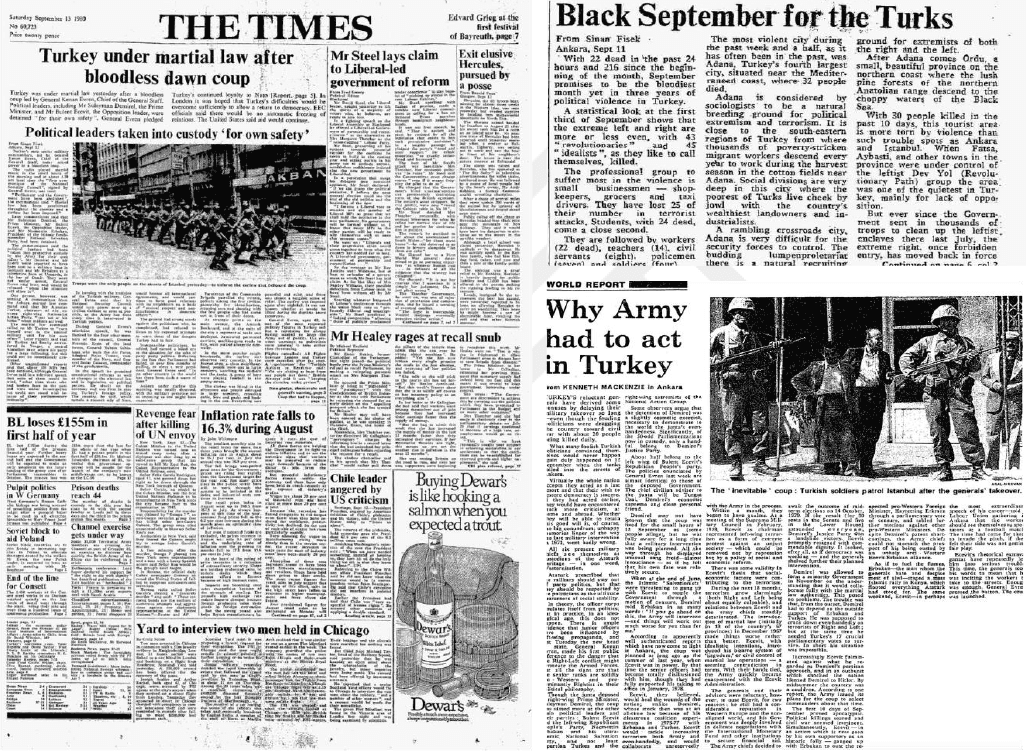
News Text on September 12 in a British Newspaper (Uğur Ersinadım)
In the NATO framework, Greece’s return to the military wing from which it had withdrawn in 1974 was rapidly concluded during the September 12 period.【24】 Unlike the civilian period, when Türkiye preferred not to lift its veto until the FIR/airspace and command-responsibility areas in the Aegean were clarified, the military regime approved the return through the Rogers Plan and accepted that issues would be discussed later; this step was interpreted as prioritizing NATO objectives over bilateral issues among members. The Western alliance, particularly the U.S., played an active role in this file.
In summary, NATO and the Western world approached Türkiye after September 12 with a security-focused cost-benefit calculation: alliance files (particularly Greece’s return) were accelerated, while Türkiye’s ties with European institutions were managed on a “criticize without breaking” axis.
Throughout the 1980s, the novel field changed direction under the impact of the political-social fracture opened by the September 12 coup; ideologically oriented narratives receded, and tendencies such as “reckoning” and “turning toward history” emerged. Gürsel Aytaç noted that during this period one line represented a critical confrontation with pre-1980 political actions, while another line represented historical constructions. In the same framework, Berna Moran determined that the coup’s claim to “create a new human” and change values transformed novel aesthetics and increased the inclination toward postmodern narrative techniques. In this context, the works of Orhan Pamuk, Latife Tekin, Nazlı Eray, Bilge Karasu, and Pınar Kür were associated with the new narrative searches of the period.
Novel production increased numerically after the coup; over a hundred novels directly addressed September 12. Part of this corpus critically questioned the organizational violence and mistakes of the 1970s; another part focused on the human perspective of detention, torture, isolation, and prison experiences. In criticism, this trend was discussed for its risk of being reduced to “torture/prison literature”; in contrast, texts that did not merely depict violence but analyzed its mechanisms were also observed. Mehmet Eroğlu’s Yüz: 1981, Naci Bostancı’s Işığın Gölgesi, Bilge Karasu’s Gece, İbrahim Yıldırım’s Yaralı Kalmak and Bıçkın ve Orta Halli, and Ayşegül Devecioğlu’s Kuş Diline Öykünen were mentioned as examples of this analytical line.
The thematic scope expanded. Torture, prison life, asymmetric power relations between the state and the individual, internal workings of organizational structures, loss of social and individual memory, erosion of values, ideological disintegration, psychological-physiological damage, escape, and hopelessness became dominant themes. In this framework, motifs such as “mankurtization” and “divided self” were used to explain how the pressure of the coup triggered the subject’s detachment from reality.
The pre-coup violence climate in novels was also frequently portrayed, with daily death figures and organizational violence critically examined; however, these narratives did not aim to produce the impression that the coup was a “valid cause.” Scenes portraying torture during detention and interrogation as an “inevitable reality” reached such intensity that characters described the prison as “more bearable than torture.”
Chronologically, a significant portion of novels addressing September 12 were written not “immediately after” but after a short interval; this interval allowed themes to clarify along the axes of nostalgia and reckoning. Writers and critics noted that September 12 left a deeper mark in novels than previous coups, but this mark was concentrated around experience, trauma, and memory rather than direct ideological defense.
Examples of works demonstrated the breadth of thematic variation: Latife Tekin’s Gece Dersleri, Orhan Pamuk’s Sessiz Ev, Zülfü Livaneli’s Bir Kedi, Bir Adam, Bir Ölüm, İsmet Kür’s Onuncu Sigara, Gürsel Korat’s Ay Şarkısı, Hasan Öztoprak’s Devamı Hayat and Hakikatin Ölümü, İbrahim Yıldırım’s Bıçkın ve Orta Halli and Yaralı Kalmak were among the novels mentioned in this context. This list indicated a diversity of narrative techniques revealing individual and social disintegration after the coup.
The cinematic reflection of September 12 became prominent from the mid-1980s, shaped under harsh censorship and pressure conditions. In cinema literature, films on September 12 were categorized as those addressing the pre- and post-coup periods, narratives of characters arrested or imprisoned, lives of characters not in prison, and confrontations of those released from prison; this framework showed that the common axis of narratives was the feeling of “loss” and “mourning/melancholy.”
The cinema field during the September 12 period faced a severe censorship regime. Yılmaz Güney’s films, books, posters, and even negatives were confiscated; he was stripped of citizenship and his works were banned from screening. Similarly, Yavuz Özkan and Korhan Yurtsever faced pressure; Ali Özgentürk was arrested during the editing process of his film At. Halit Refiğ’s series Yorgun Savaşçı was burned; it could only be shown on TRT in 1993. This picture is recorded as the most visible evidence of the direct impact of September 12 on cinema.
Şerif Gören’s Sen Türkülerini Söyle (1986) dealt with the alienation of a former prisoner trying to hold on to life after prison; the same year, Zeki Ökten’s Ses centered on the trauma and confrontation of a youth subjected to torture. Zeki Alasya’s Dikenli Yol (1986), Ali Özgentürk’s Su da Yanar (1986), Erden Kıral’s Av Zamanı (1987), and Zülfü Livaneli’s Sis (1988) established the themes of memory, violence, and disintegration in different styles.
Tunç Başaran’s Uçurtmayı Vurmasınlar (1989) is frequently included in lists, but some studies note that the film does not directly address September 12 but is positioned as a “prison narrative.” This variation demonstrated that the post-coup cultural climate could be addressed in cinema both politically and psychosocially.
Throughout the 1990s, films such as Yavuz Özkan’s Bir Sonbahar Hikâyesi (1993), Yusuf Kurçenli’s Çözülmeler (1993), and Bilge Olgaç’s Bir Yanımız Bahar Bahçe (1994) processed political-social disintegration through personal life and ethical dilemmas. Canan Evcimen İçöz’s Hoşçakal Umut (1993) and later Ömer Uğur’s Eve Dönüş (2006) made visible the individual destruction resulting from prison and torture experiences.
Sırrı Süreyya Önder – Muammer Gülmez’s Beynelmilel (2006) represented, in a tragicomic tone and antimilitarist stance, the military regime’s attempt to organize local social life in Adıyaman in 1982. During this period, September 12 narratives expanded from direct testimonies to indirect memory aesthetics.
In September 12 films, the “lost ideal” and melancholic response formed a common backbone. Studies showed how the emotional trace of loss was constructed in the narrative structure of examples such as Ses (1986), Bekle Dedim Gölgeye (1990), and Bütün Kapılar Kapalıydı (1990). These analyses revealed that the relationship between individual trauma and the oppressive regime established by the authoritarian state was constructed in cinema along the axis of “internal collapse–external violence.”
From the late 1980s, television’s “pre-sales” methods and Eurimages support nourished independent and author cinema; some films with September 12 themes or carrying that climate were produced with the contribution of television channels. The shift of audiences from cinemas to television transformed producers’ financing strategies. This infrastructure enabled the continuation of post-coup memory across multiple media platforms.
September 12 has established itself as a foundational rupture in the collective memory of generations, becoming a matter of memory that bridges the past, present, and future. Collective memory is constructed and transmitted within social relationships; in this sense, the period has also acquired an ideological position, offering generations frameworks of identity and belonging.
The coup regime pursued a politics aimed at erasing part of the political-social meaning maps of the pre-September 12 period and replacing them with new values. Some concepts and symbols constituting the backbone of collective memory suffered meaning loss; a new order was established around new symbols and figures. This process forced subsequent generations to understand the legacy of the 1970s through indirect channels.
The carriers of intergenerational transmission operated through four main memory types: mimetic/behavioral memory, object-space memory, communication memory, and their institutional integration into cultural memory. Within this structure, rituals, gestures, marches, and slogans imparted patterns and language to generations; objects and spaces assumed mnemonic roles. Cultural memory assumed the function of transmitting meaning to future generations by institutionalizing these elements.
Rituals were the most visible carriers of generational memory. Funerals, death anniversaries, and “commemoration days” provided a repetitive pattern in collective remembrance; they offered practices that strengthened belonging and renewed memory across generations. Even representations of official authorities increasing security measures on “special days” demonstrated how the ritual clashed with political control.
Additionally, the “great blackout” created by the coup severed communication channels; detention, interrogation, state of emergency, and prison systems blocked public circulation; letter and conversation channels became inoperative. This interruption weakened the direct transmission of experience; writing and literature assumed the role of modern carriers of cultural memory. In ancient societies, this function was performed by religious figures and bards; in the modern era, it was taken over by writers and books; post-coup generations learned the September 12 experience through novels, narratives, and critical texts.
A memory-oriented framework has become prominent in academic literature on September 12. In the field of literary history and criticism, Gürsel Aytaç classified the tendencies of the 1980s into two streams: “reckoning” and “turning toward history,” noting that Ahmet Altan, Adalet Ağaoğlu, Mehmet Eroğlu, as well as Ayla Kutlu, Attila İlhan, Tarık Buğra, and Sevinç Çokum represented these lines. Berna Moran stated that September 12 changed value perceptions by aiming to “eliminate the left and construct a new human,” and strengthened postmodern tendencies.
A. Ömer Türkeş read post-1980 novels along the axis of “individualization–reckoning–pleasure” and argued that despite hundreds of examples, a unified “September 12 Novel corpus” cannot be spoken of. This debate line recorded that literature addressed trauma and experience through indirect means rather than directly defending ideology.
The thematic-emotional map of literary representations also occupied a central place in debates. In critical literature, it was determined that themes such as torture, prison life, state-individual asymmetry, internal workings of organizational structures, loss of social and individual memory, ideological disintegration, psychological and physiological damage, escape, and hopelessness had become dominant.
In novel analyses, the space-memory relationship became a special topic of debate. In September 12 novels, space was argued to be constructed through “selection,” functioning not merely as physical space but as space that constitutes memory; thus, symbolic areas and everyday indicators assumed mnemonic functions. This orientation made visible the connection between spatial preferences in narratives and the politics of memory.
Ultimately, the antidemocratic nature of September 12 created a broad area of consensus in academic and literary debates. The fundamental function of literature was positioned not to legitimize the coup but to record the historical experience around the triangle of memory, trauma, and confrontation and to become the institutional carrier of cultural memory.
The institutional framework established by September 12 and the 1982 Constitution became the main reference point in political debates for the following decade. Provisions strengthening the executive and restricting fundamental rights and freedoms became embedded in contemporary politics as “paternalism” and “coup constitution.” The narrowing of the scope of constitutional review, the limitation of KHK oversight, and the restriction of appeal channels were cited as primary bases in debates about the imbalance favoring the executive.
Observations that the post-coup period aimed for a “politics-free society” and that the constitutional architecture was established with a logic that “empowered the rulers” provided the foundation for reform demands in the 1980s and 1990s; high majority requirements for constitutional amendments and preferences reinforcing centralization remained continuously on the political agenda.
One of the most visible reflections of this legacy in contemporary politics was the referendum on political bans on September 6, 1987. Turgut Özal launched an open “no” campaign against the removal of Transitional Article 4; his ministers wore “no”-written T-shirts in public campaigns. In contrast, the referendum was approved with 50.16 percent “yes,” allowing banned leaders such as Süleyman Demirel, Bülent Ecevit, Necmettin Erbakan, and Alparslan Türkeş to return to active politics. This process demonstrated that the political bans imposed by September 12 remained a subject of debate in the realm of social legitimacy.
Debates regarding the removal of legal immunities of the coup period through Transitional Article 15 also became one of the main topics in contemporary politics. It was emphasized that the wording of the article excluded criminal, financial, and legal accountability claims regarding decisions and actions during the September 12 process; it was stated that the removal of the article brought the issue of prosecution to the agenda. This debate strengthened the legitimacy basis of confronting the coup legacy and demanding accountability.
In the 2010 constitutional referendum process, the government labeled the 1982 Constitution as a “coup constitution” and framed the package as a threshold for “fighting military tutelage.” In this context, the new constitution served as a real political variable in the 2011–2012 debates. Thus, the September 12 reference continued to exist as a meta-narrative in contemporary politics, both justifying democratization claims and serving as a symbolic resource in legitimacy struggles.
Ultimately, the antidemocratic nature of September 12 served a dual function in contemporary political discourse. On one hand, it produced a counter-memory under the names of “coup constitution” and “tutelage” to bring reform demands to the agenda; on the other hand, debates over the restrictive rules of the coup period became one of the central axes of political competition through referendums and law amendments. This axis materialized both in the 1987 ban referendum and the 2010 package; the September 12 legacy continued to exist as a constant reference point shaping the language, tools, and claims of contemporary politics.
Research Works
32. Gün. "12 Eylül 1980 Darbesi Nasıl Yapıldı? | Kenan Evren Anlatıyor | 32. Gün Arşivi." YouTube. Accessed September 17, 2025. https://www.youtube.com/watch?v=lWsz5Q6OvA4.
32. Gün. "12 Eylül'ün Bilançosu | 1980 | 32. Gün Arşivi." YouTube. Accessed September 17, 2025. https://www.youtube.com/watch?v=D-vV29Hs1tA.
32. Gün. "1982 Anayasası Nasıl Kabul Edildi? | Kenan Evren Anlatıyor | 32. Gün Arşivi." YouTube. Accessed September 17, 2025. https://www.youtube.com/watch?v=-Z_nq37qIbM.
32. Gün. "24 Ocak Kararları Nedir? | 1980 | 32. Gün Arşivi." YouTube. Accessed September 17, 2025. https://www.youtube.com/watch?v=l-hlV4bABWQ.
32.Gün. "Türkiye'nin Ekonomik Krizleri | 1.Bölüm." YouTube. Accessed September 17, 2025. https://www.youtube.com/watch?v=vbb_lHqDsx0.
Akkuş, Murat Baran. “Acı, Maruz Kalış ve Bağışlama: 12 Eylül Darbesinin Sinema Hafızası.” PhD thesis, Yaşar Üniversitesi, Lisansüstü Eğitim Enstitüsü, 2022. Accessed September 17, 2025. https://tez.yok.gov.tr/UlusalTezMerkezi/TezGoster?key=RsTBl6RWK25OBMIKtIgYYYkqglUy5B9AaynR-WUsczB4ktjagwssbARsYUOEg4m1.
Aktaş, Elif. "12 Eylül 1980 Askerî Darbesi ve Tarih Öğretimine Etkileri." PhD thesis, Atatürk University, Institute of Social Sciences, 2011. Accessed September 17, 2025. https://tez.yok.gov.tr/UlusalTezMerkezi/TezGoster?key=EEdeQgIdFRxX5NbvVau-Agr7EJLZ_UwDG-KOTR0Vwwnpo2hME1BHBFsKIgnA1sM_.
Audiovisual Sources
Avcı Güven, Kübra. “Izdıraptan Taşan Muhayyile: Kadın Yazarların Romanlarında 12 Eylül Darbesi’nin Sosyolojik Tahlili.” PhD thesis, İnönü Üniversitesi, Sosyal Bilimler Enstitüsü, 2020. Accessed September 17, 2025. https://tez.yok.gov.tr/UlusalTezMerkezi/TezGoster?key=_F5QEpayDXGqGZlp9XiFtImwNzPJ9Gi3bk_QsY2kP-TdFyhmqxkzgE_bgw3MstpP.
Açıkyol, Erdal. “Servet-i Fünûn ve 12 Eylül Dönemini Anlatan Romanlarda İçe Burkulma Eğilimleri.” PhD thesis, Dicle University, Institute of Social Sciences, 2022. Accessed September 17, 2025. https://tez.yok.gov.tr/UlusalTezMerkezi/TezGoster?key=RsTBl6RWK25OBMIKtIgYYRY14uOcVldv1n3V1uTEQF8Om4DrZx39I_w1vyq913B3.
BBC News Türkçe. "12 Eylül 1980 Darbesi: Askeri Darbe Sonrası Türkiye'de Siyasal Ve Sosyal Yaşam." YouTube. Accessed September 17, 2025. https://www.youtube.com/watch?v=VlSTJkB8L1Q.
BBC News Türkçe. "12 Eylül 1980 Darbesi: BBC'nin 1988'de Hazırladığı 12 Eylül Döneminde Siyasi Haklar Belgeseli." YouTube. Accessed September 17, 2025. https://www.youtube.com/watch?v=0LAD62boIyU.
BBC News Türkçe. "1984'te Hazırlanan 12 Eylül Hapishaneleri Belgeseli." YouTube. Accessed September 17, 2025. https://www.youtube.com/watch?v=99_97sDa-f8.
Bükrücü Kazkondu, Şeyda. “Sivil Asker İlişkilerini Açıklayan Teoriler ve 12 Eylül 1980 Askerî Darbesi.” PhD thesis, Zonguldak Bülent Ecevit Üniversitesi, 2025. Accessed September 17, 2025. https://tez.yok.gov.tr/UlusalTezMerkezi/TezGoster?key=5NNqZKwwGohPh6_KCcfp-ldlgxbuxXykxPNw8JDN74QLb0iLr1hSEqLDRfRUJLAO.
Ceyhan, Çağdaş. “Muhafazakâr Basında Hegemonya Uğrakları: 12 Eylül 2010 Referandumu ve Yeni Anayasa Tartışmaları.” PhD thesis, Anadolu University, Institute of Social Sciences, 2014. Accessed September 17, 2025. https://tez.yok.gov.tr/UlusalTezMerkezi/TezGoster?key=48XPj7KKQhKUgntkUiKO3HbjUh72-s3LCW3NcKbT8kzGwMQc4CTxCeb8HYub3Qjk.
Ekrem, Nuray. “Türkiye’de İşveren Örgütlerinin Çalışma İlişkilerine Etkisi: 12 Eylül Dönemi Örneği.” PhD thesis, Kocaeli University, Institute of Social Sciences, 2022. Accessed September 17, 2025. https://tez.yok.gov.tr/UlusalTezMerkezi/TezGoster?key=sELqxhTlFGAjsbjOuuiyCK9opQ4RWaEpN0HoLELNZpBT29bWVOlhvEzpJRfqKXyn.
Ersinadım, Uğur. “İngiliz Perspektifinden 12 Eylül Askerî Darbesi.” PhD thesis, Hacettepe University, Institute of Atatürk’s Principles and History of Revolution, 2024. Accessed September 17, 2025. https://tez.yok.gov.tr/UlusalTezMerkezi/TezGoster?key=E_eEUHQic_C-LvhxNQn1W-vaLz63M6x1SDrBSioq1ygh86O_SWaxC69ZOpTGGMLj.
Gençalp, Ebru. “Türk Basınında Sovyet İmgesi (27 Mayıs 1960–12 Eylül 1980).” PhD thesis, Dokuz Eylül Üniversitesi, Atatürk İlkeleri ve İnkılâp Tarihi Enstitüsü, 2014. Accessed September 17, 2025. https://tez.yok.gov.tr/UlusalTezMerkezi/TezGoster?key=sY7m19PfcL6F1NUw-cr80I1Yfcu-l_egT3hulbba3zGK_xTSayjhJe8fdOUK7HjY.
Göğercin Toker, Hülya. “İletişimsel Bellekten Toplumsal Belleğe Yazılı Tanıklıklar: 12 Eylül ile Yüzleşmek.” PhD thesis, Ankara University, Institute of Social Sciences, 2017. Accessed September 17, 2025. https://tez.yok.gov.tr/UlusalTezMerkezi/TezGoster?key=RrI-Krk3A-RkF4YfHofuk12Hz72oWkOGXZJ5JNvIo77lDhUyI0jUDLiPKUNSStQ8.
Gülbay, Alper. “12 Mart’tan 12 Eylül’e Türkiye’de Seçimler ve Sonuçları.” PhD thesis, Hacettepe University, Institute of Atatürk’s Principles and History of Revolution, 2017. Accessed September 17, 2025. https://tez.yok.gov.tr/UlusalTezMerkezi/TezGoster?key=RrI-Krk3A-RkF4YfHofuk0mFdZD9SdMdZ-rvzn9ZEwvByx_M9FMdI_fG4_aJ7hps.
Gürses, Ezgi. “12 Eylül Dönemi ve Türk Ulusal Basını: Medya, Toplum ve Siyaset.” PhD thesis, Hacettepe University, Institute of Social Sciences, 2024. Accessed September 17, 2025. https://tez.yok.gov.tr/UlusalTezMerkezi/TezGoster?key=cr4SkWLaRMhkDRBjqthpsXlCL_f5wNgEo_CNy_PUicJAoQMN2pIZz2o-6EfZqC4j.
Karabağ Sarı, Çağla. “12 Eylül Filmlerinin Üniversiteli Gençler Tarafından Alımlanması.” PhD thesis, Ankara University, Institute of Social Sciences, 2012. Accessed September 17, 2025. https://tez.yok.gov.tr/UlusalTezMerkezi/TezGoster?key=rcbWnuqW6HxCZ_98ARapgqKA4qt8mmwuugRi8zZbSsa4nUem7-dUF02qPYgGejTw.
Kılıç, Aziz. “Türkiye’de Askerî Darbelerin Eğitim ve Kültür Hayatı Üzerindeki Etkileri (27 Mayıs 1960–12 Mart 1971–12 Eylül 1980).” PhD thesis, Kahramanmaraş Sütçü İmam Üniversitesi, Sosyal Bilimler Enstitüsü, 2019. Accessed September 17, 2025. https://tez.yok.gov.tr/UlusalTezMerkezi/TezGoster?key=4J_FzTwlrMCH4qBROpXPH8JeKa79up9DTAsxpkKyOfwhXm6rkkeNhX8hB8LfsOkz.
Maral, Taylan. “12 Eylül 1980 Müdahalesi Öncesi ve Sonrasında Hürriyet Gazetesinin Yayın Politikası.” PhD thesis, İstanbul Üniversitesi, Sosyal Bilimler Enstitüsü, 2022. Accessed September 17, 2025. https://tez.yok.gov.tr/UlusalTezMerkezi/TezGoster?key=5XiSE4yCP_gmnukpMEp65V_raIqm-kOnenuyrg0d7P6p5FlpdI7qmtu7agBqb912.
Morva, Ahsen Deniz. "Melankolinin 12 Eylül Filmlerinde İnşası." PhD thesis, İstanbul Üniversitesi, Sosyal Bilimler Enstitüsü, 2008. Accessed September 17, 2025. https://tez.yok.gov.tr/UlusalTezMerkezi/TezGoster?key=veR1mHu9yoWjwcVUjCEoPKyuWPxVhpyC68TG7Imm5UWg9REwrr4eFqdiUi7g39Rd.
Mutluay, Barış. "12 Eylül 1980 Sonrası Türkiye’den İngiltere’ye Politik Göç (1980–1989)." PhD thesis, Hacettepe Üniversitesi, Sosyal Bilimler Enstitüsü, 2019. Accessed September 17, 2025. https://tez.yok.gov.tr/UlusalTezMerkezi/TezGoster?key=FgmkGchPKo23qQqBeqzVZj3uFQE8Hccy9smHMAAXNjYTncUpzmcr8zfWsMJnalH1.
Solak Şener, Aslı. “12 Mart’tan 12 Eylül’e Türk Basınının Siyasal Söylem Analizi: (1971-1980).” PhD thesis, Dokuz Eylül Üniversitesi, Atatürk İlkeleri ve İnkılâp Tarihi Enstitüsü, 2025. Accessed September 17, 2025. https://tez.yok.gov.tr/UlusalTezMerkezi/TezGoster?key=P3dtmmHrq-mzEcmCLi1CqZeoR9GpbMkRZa_lOgvXiAlNnsDkQXZ_IlGUC8g1EjOc.
Sunay, Cengiz. “12 Eylül Dönemi Türk Siyasetinde Sivil-Asker İlişkileri (1980–1987).” PhD thesis, Marmara Üniversitesi, Türkiyat Araştırmaları Enstitüsü, 2009. Accessed September 17, 2025. https://tez.yok.gov.tr/UlusalTezMerkezi/TezGoster?key=CwVIqqBuz1VkysVpueogAaohlfbiNgz6Ai3VCY6OioVLtDcwtdfQQpu3v2Muii5J.
TRT Archive. "12 Eylül 1980 Darbesi | TRT Arşiv." YouTube. Accessed September 17, 2025. https://www.youtube.com/watch?v=zD9fyoWMvo4.
TRT Archive. "12 Eylül 1980 Darbesi Öncesi | TRT Arşiv." YouTube. Accessed September 17, 2025. https://www.youtube.com/watch?v=hvrBEuf2Haw.
TRT Haber. "Darbe İle Gelen Anayasa: 1982 Anayasası." YouTube. Accessed September 17, 2025. https://www.youtube.com/watch?v=Sul28Clx0cM.
Tansi, M. Deniz. “Türkiye’de 12 Eylül 1980 Sonrası Yazılı Basındaki ‘Türk Milliyetçiliği’ Söyleminin Milletvekili Genel Seçimlerine Etkisi.” PhD thesis, Marmara Üniversitesi, Sosyal Bilimler Enstitüsü, 2003. Accessed September 17, 2025. https://tez.yok.gov.tr/UlusalTezMerkezi/TezGoster?key=p911s0iMPy2wtZbYYckXOdd2mHd-zwkjfafR_zlyX3tdsn00Sk4ch1OpcJYaI3h2.
Tataroğlu, Muhittin. “Türkiye’de 12 Eylül 1980 Sonrası Siyasi İktidar-Bürokrasi İlişkileri.” PhD thesis, Dokuz Eylül Üniversitesi, Sosyal Bilimler Enstitüsü, 1997. Accessed September 17, 2025. https://tez.yok.gov.tr/UlusalTezMerkezi/TezGoster?key=_F5QEpayDXGqGZlp9XiFtBK9sUDud2J_h0WxG8Qxd1kCHBx_SsFhNB8e6c4fHKh1.
Uzun, Bünyamin. “12 Eylül Askerî Darbesinin Bellek Mekânları Üzerinden İncelenmesi.” PhD thesis, Anadolu University, Institute of Social Sciences, 2023. Accessed September 17, 2025. https://tez.yok.gov.tr/UlusalTezMerkezi/TezGoster?key=j_Fjwp4JS4mk97Puqti8rhBuJwlfyd6WpNv_IRxine98p_2e957DkTEovNjvkXIj.
Yolcu, Faruk Selahattin. "Darbelerin Siyasi Meşruiyetinin Sağlanmasında Medyanın Rolü: 12 Eylül, 28 Şubat ve 15 Temmuz Örnekleri." PhD thesis, İnönü University, Institute of Social Sciences, 2023. Accessed September 17, 2025. https://tez.yok.gov.tr/UlusalTezMerkezi/TezGoster?key=kIrIdtdJ31bRgjb6fHvMUTz53YtBrx2XkYIR2FIuBbLdCPiX6nBtCnQgpCv33icz.
Yücer, Rezzan. “Türkiye’de Eğitim ve Kültür Faaliyetleri (27 Mayıs 1960–12 Eylül 1980).” PhD thesis, Necmettin Erbakan University, Institute of Social Sciences, 2023. Accessed September 17, 2025. https://tez.yok.gov.tr/UlusalTezMerkezi/TezGoster?key=G_oJ1rKE4SgJUkomyAKpRzSGcNlYB5QYzqGaxFOThEnRZyUFOKHrNNlcnPOX3Oj9.
Yıldız, Seda. “Türkiye’de Polis-Siyaset İlişkisine Dönemsel Bir Bakış: 12 Mart 1971–12 Eylül 1980 Arası Türk Polis Teşkilatı.” PhD thesis, Hacettepe Üniversitesi, Sosyal Bilimler Enstitüsü, 2015. Accessed September 17, 2025. https://tez.yok.gov.tr/UlusalTezMerkezi/TezGoster?key=sY7m19PfcL6F1NUw-cr80Mhiv14AsvTBXEyR3_gUQsR5hj7MFEJxMXHtwIItznid.
Özdemir Çolak, Aysel. “Devletin İşgal Edilmiş Hâli: 12 Eylül 1980 ve 28 Şubat 1997’ye Giden Süreç.” PhD thesis, Police Academy, Institute of Security Sciences, 2017. Accessed September 17, 2025. https://tez.yok.gov.tr/UlusalTezMerkezi/TezGoster?key=DPTyuy3wRPq_qvCPSqUB66KVDMiaMi6hCH1FnxbUcBONyffco7S4xv_-QIMUxygd.
Özer, Hanife. “12 Eylül 1980 Darbesinin Türk Romanına Yansıması.” PhD thesis, İstanbul Üniversitesi, Sosyal Bilimler Enstitüsü, 2011. Accessed September 17, 2025. https://tez.yok.gov.tr/UlusalTezMerkezi/TezGoster?key=zD1B0cW7zVr3VcnZjitVXkM26FgXl8D-MtH22YcWwnY3x3eIYbD3gcIMtVFhHkD4.
Özger, Mehmet. “12 Eylül Romanlarında Bellek, Özne ve İktidar Kavramlarının İncelenmesi.” PhD thesis, Muğla University, Institute of Social Sciences, 2010. Accessed September 17, 2025. https://tez.yok.gov.tr/UlusalTezMerkezi/TezGoster?key=ZeTyprYuef2HkaF3xt4wYqdcLJQ1CI6cDOEbkBGNZ6E5iB9nPj-gXbnrm_bqDk-Z.
İnal, Kemal. “Türkiye’de Ders Kitaplarında Demokratik ve Milliyetçi Değerler: 27 Mayıs ve 12 Eylül Askerî Müdahale Dönemlerine İlişkin Bir İnceleme.” PhD thesis, Ankara University, Institute of Social Sciences, 1998. Accessed September 17, 2025. https://tez.yok.gov.tr/UlusalTezMerkezi/TezGoster?key=CG8WvdvvxJP04Unr7YecfwIQHGQQvpcwbXOVaSMBfifod9ZdR_6iDgGCzEqeAi3w.
Şahin, Ali. “12 Mart’tan 12 Eylül’e Sol Düşün Akımlarının Türk Devrimi Algılamaları (1971–1980).” PhD thesis, İstanbul University, Institute of Atatürk’s Principles and History of Revolution, 2012. Accessed September 17, 2025. https://tez.yok.gov.tr/UlusalTezMerkezi/TezGoster?key=RYan9_S-Z7Eir3xdWGXBiFOsbeD1owJxfK3gWRVnxZGnn8lgn6nX-QeKyGsMJ8tA.
Şimşek, Şerife. “Resmî Dinî Alanın Yeniden Düzenlenmesi: 12 Eylül Ara Döneminde Diyanet İşleri Başkanlığı (1980–1983).” PhD thesis, Selçuk Üniversitesi, Sosyal Bilimler Enstitüsü, 2019. Accessed September 17, 2025. https://tez.yok.gov.tr/UlusalTezMerkezi/TezGoster?key=Mir2lXQK1dkmQ9Ige3PZbiHIPMe_GbQebJhFo7ACwRVQrZDcMYw83J1fhCc907wV.
Şıvgın Dündar, Lale. “12 Eylül Dönemi Türk Yazılı Basınında Atatürk ve Atatürkçülük.” PhD thesis, Ankara University, Institute of Turkish Revolution History, 2016. Accessed September 17, 2025. https://tez.yok.gov.tr/UlusalTezMerkezi/TezGoster?key=cbOXH84ZayrLjc0tI-QXKhRTVz2QD1lZQ1NcB6RKtXLbbZ1XoRnX8bZECgz_aVgE.
[1]
Aslı Solak Şener, “12 Mart’tan 12 Eylül’e Türk Basınının Siyasal Söylem Analizi (1971-1980)” (doktora tezi, Dokuz Eylül Üniversitesi, Atatürk İlkeleri ve İnkılâp Tarihi Enstitüsü, 2025), s. 578.
[2]
Ezgi Gürses, “12 Eylül Dönemi ve Türk Ulusal Basını: Medya, Toplum ve Siyaset” (doktora tezi, Hacettepe Üniversitesi, Sosyal Bilimler Enstitüsü, 2024), s. 70.
[3]
Ezgi Gürses. (a.g.e), s. 109.
[4]
Taylan Maral, “12 Eylül 1980 Müdahalesi Öncesi ve Sonrasında Hürriyet Gazetesinin Yayın Politikası” (doktora tezi, İstanbul Üniversitesi, Sosyal Bilimler Enstitüsü, 2022), s. 242.
[5]
Ezgi Gürses. (a.g.e), s. 110.
[6]
Ezgi Gürses. (a.g.e), s. 84.
[7]
Ezgi Gürses. (a.g.e), s. 72.
[8]
Ezgi Gürses. (a.g.e), s. 99.
[9]
Faruk Selahattin Yolcu, “Darbelerin Siyasi Meşruiyetinin Sağlanmasında Medyanın Rolü: 12 Eylül, 28 Şubat ve 15 Temmuz Örnekleri” (doktora tezi, İnönü Üniversitesi, Sosyal Bilimler Enstitüsü, 2023), Erişim tarihi: 17 Eylül 2025, s. 109.
[10]
Ezgi Gürses. (a.g.e), s. 140.
[11]
Ezgi Gürses. (a.g.e), s. 271.
[12]
Uğur Ersinadım, “İngiliz Perspektifinden 12 Eylül Askerî Darbesi” (doktora tezi, Hacettepe Üniversitesi, Atatürk İlkeleri ve İnkılâp Tarihi Enstitüsü, 2024), s. 354.
[13]
Ezgi Gürses. (a.g.e), s. 225.
[14]
Ezgi Gürses. (a.g.e), s. 93.
[15]
Bünyamin Uzun, “12 Eylül Askerî Darbesinin Bellek Mekânları Üzerinden İncelenmesi” (doktora tezi, Anadolu Üniversitesi, Sosyal Bilimler Enstitüsü, 2023), s. 264.
[16]
Bünyamin Uzun. (a.g.e), s. 266.
[17]
Ezgi Gürses. (a.g.e), s. 95.
[18]
Cengiz Sunay, “12 Eylül Dönemi Türk Siyasetinde Sivil-Asker İlişkileri (1980–1987)” (doktora tezi, Marmara Üniversitesi, Türkiyat Araştırmaları Enstitüsü, 2009), s. 278.
[19]
Uğur Esinadım. (a.g.e), s. 355.
[20]
Şerife Şimşek, “Resmî Dinî Alanın Yeniden Düzenlenmesi: 12 Eylül Ara Döneminde Diyanet İşleri Başkanlığı (1980–1983)” (doktora tezi, Selçuk Üniversitesi, Sosyal Bilimler Enstitüsü, 2019), s. 254.
[21]
Ezgi Gürses. (a.g.e), s. 98.
[22]
Ezgi Gürses. (a.g.e), s. 263.
[23]
Ezgi Gürses. (a.g.e), s. 128.
[24]
Uğur Esinadım. (a.g.e), s. 360.

Date(s) | 12 September 1980 | ||||||||
|---|---|---|---|---|---|---|---|---|---|
Place | Throughout Türkiye | ||||||||
Planners | Commander of the Gendarmerie General Sedat Celasun Commander of the Navy Admiral Nejat Tümer Commander of the Air Force General Tahsin Şahinkaya Commander of the Army General Nurettin Ersin Chief of the General Staff General Kenan Evren | ||||||||
Goal | transfer of state administration to military rule dissolution of parliament Overthrow of political power | ||||||||
Background | short-lived governments economic crisis terrorist incidents increasing left-right conflicts Political polarization | ||||||||
Implementation | martial law was declared the Grand National Assembly of Türkiye was dissolved political parties were closed The Turkish Armed Forces seized power | ||||||||
Results | acceleration of the neoliberal transformation in the economy closure of parties and banning of their leaders drafting and adoption of the 1982 Constitution suspension of trade unions and political organizations arrest of nearly 650000 people Establishment of the National Security Council | ||||||||
No Discussion Added Yet
Start discussion for "September 12, 1980 Coup" article
The Road to the Coup
Political Polarization and Instability
Economic Crisis and Social Problems
Institutional Blockage and Legitimacy Issues
International Conjuncture and External Influences
Preparation and Execution of the Coup
Preparations Within the Turkish Armed Forces
Chronology of the September 12 Morning
September 11, 1980 – 17:30
September 11 Night – 02:00–02:05
September 12 – 03:00
September 12 – 04:00
September 12 – 05:00
September 12 – Early Morning
September 12 – Morning to Noon
September 12 – 13:00
September 12 – During the Day
Coup Declarations and Public Announcements
National Security Council (NSC) and Temporary Governance
Formation and Functions of the NSC
State of Emergency Measures
Consultative Assembly and Constitutional Preparations
Legal Order and Judicial Processes
Death Sentences and Executions
Suppression of Political Parties
Constitutional Reforms and the 1982 Constitution
Human Rights and Prisons
Detentions and Allegations of Torture
The Case of Diyarbakır Prison
Daily Regime and Discipline
Investigation and Interrogation Practices
Erosion of Legal Safeguards
Allegations of Death, Suicide, and Permanent Damage
International Human Rights Reports
Politics and Ideology
Economic Policies
Implementation of the January 24 Decisions
Özal and the Transformation of Economic Management
Suppression of Trade Unions and Impact on the Labor Movement
Educational and Cultural Policies
Establishment of YÖK and Transformation in Universities
Textbooks and Curriculum
Press, Censorship, and Media Control
Social Spheres
Status of Trade Unions and Worker Organizations
Women’s Movements and the Social Gender Context
Migration and Diasporic Reflections
Foreign Policy Dimension
Relations with the United States and the Cold War Context
NATO and the Western World’s Approach
Cultural and Artistic Reflections
Literature and Novels on September 12
Cinema Representations of the Coup
Censorship and Production Environment
Examples and Themes of the 1980s
Reinterpretation of Memory in the 1990s and 2000s
Loss, Melancholy, and Confrontation
Industry Transformation and Television Impact
Collective Memory and Commemoration
September 12 in National Memory
Academic and Literary Debates
September 12 in Post-Coup Politics