


This article was automatically translated from the original Turkish version.
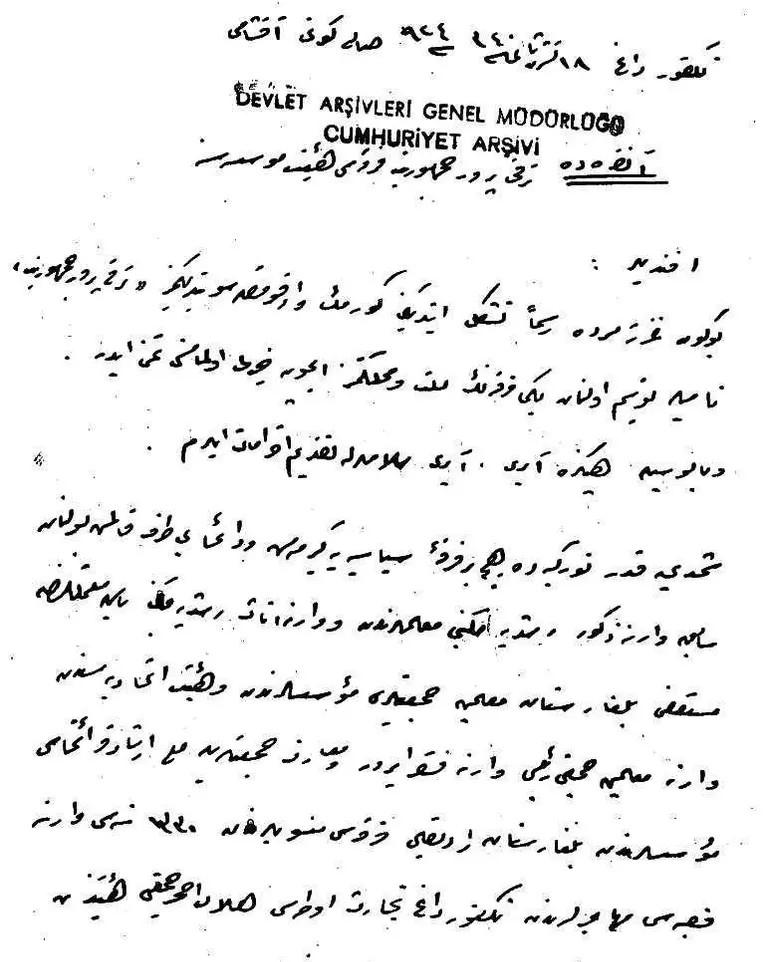
(Presidency of State Archives)
Progressive Republican Party
Founder(s) | Ali Fuat Cebesoy Adnan Adıvar Rauf Orbay Kazım Karabekir | ||||||||
|---|---|---|---|---|---|---|---|---|---|
Founding Date | 17 November 1924 | ||||||||
Headquarters Address | Ankara, Postane Street No: 7 | ||||||||
Program Features | A program jointly addressing politics and economy in 58 articles | ||||||||
Economic Approach | Liberal-oriented; encouragement of the private sector, reduction of tax burden, worker participation in profits, openness to foreign capital | ||||||||
Election System Proposal | Adoption of a single-round election system | ||||||||
Parliamentary Term | Activity during the Second Term of the Grand National Assembly of Türkiye | ||||||||
Activity Type | Political activity through regular speaking on technical issues within the assembly and support for independent candidates | ||||||||
Congresses Held | Istanbul Provincial Congress and Beykoz District Congress | ||||||||
Reason for Closure | Closure of all branches as a result of judicial and administrative evaluations under emergency measures | ||||||||
The Progressive Republican Party (TCF) was a political party established in the early years of the Republic to represent opposition. Shortly after its founding, the party undertook organizational activities across the country; however, due to the political conditions of the period, it became the subject of various administrative and judicial investigations, some of its local branches were closed, and it was ultimately removed from political life as a result of government decisions.

Founders of the Progressive Republican Party: Kazım Karabekir (Atatürk Ansiklopedisi), Ali Fuat Cebesoy (Atatürk Ansiklopedisi), Rauf Orbay (AA)
The political and legal reforms following the proclamation of the Republic, particularly the abolition of the Caliphate and the debates surrounding the 1924 Constitution, intensified criticisms from certain members of parliament against government policies and created a foundation for a new political formation.【1】 This process marked the initial stage of developments leading to the establishment of the Progressive Republican Party. These developments later led to the emergence of divergent attitudes among the individuals who would go on to found the party.
On 20 October 1924, a motion of censure concerning the Ministry of Exchange, Construction and Settlement brought the differences of opinion within the parliament into clear view and accelerated the split.【2】 As the government’s response to the motion was deemed inadequate, the issue was converted into a formal censure motion; the votes of no confidence and resignations that occurred during this period brought the creation of a new political party firmly onto the agenda.
Following the censure debates, the resignation of Rauf Bey and several members of parliament from the People’s Party signaled the practical beginning of the process to establish a new party. During this period, parliamentarians who had served together during the National Struggle demonstrated differing approaches to governance and the implementation of reforms; this situation prompted preparations for a new political organization.【3】
The parliamentarians who left the People’s Party met at the Ankara home of Sabit Bey, deputy from Erzincan, to draft the program and bylaws of the new party. At these meetings, principles such as the party’s foundation on democratic principles and support for the ongoing reforms were adopted.【4】
On 17 November 1924, the Progressive Republican Party was officially established through a petition submitted by Ali Fuat Pasha to the Ministry of Interior. Among the founding members were prominent figures who had served during the National Struggle, including:
The party’s headquarters was registered at Postane Street No: 7, Ankara. Although the official founding occurred in November 1924, it is understood that preparatory activities had been underway since September 1924.【5】
With its establishment, the Grand National Assembly of Türkiye saw, for the first time, a formal opposition party, resulting in a brief two-party system during the early years of the Republic.
The Progressive Republican Party, officially founded on 17 November 1924, operated during the Second Term of the Grand National Assembly (1923–1927). During this period, the party adopted a flexible stance toward government policies rather than a uniformly oppositional one; it supported certain government measures while openly opposing others.
One of the party’s notable points of objection was the abolition of the Ministry of Exchange, Construction and Settlement and the transfer of its duties to the Ministry of Interior. While the party viewed the abolition as appropriate, it opposed the concentration of these powers within a single ministry and advocated their distribution among different institutions.【6】 As this example illustrates, the TCF adopted a context-dependent approach to opposition within political processes.
Immediately after its founding, the Progressive Republican Party faced the electoral process before completing its organizational structure, which directly affected its initial political activities. In regions where the party had not yet established branches, it could not field its own candidates; as a result, supporting independent candidates became one of its primary methods. In particular, support for independent candidates in electoral districts such as Bursa, Çanakkale and Kayseri attracted attention and proved decisive in determining election outcomes in some areas.【7】 Although a decision was made to participate in elections for two vacant parliamentary seats in Istanbul, the elections were postponed and this initiative remained unfulfilled. This situation characterizes the TCF’s first phase, in which it entered electoral competition before fully completing its organizational structure.
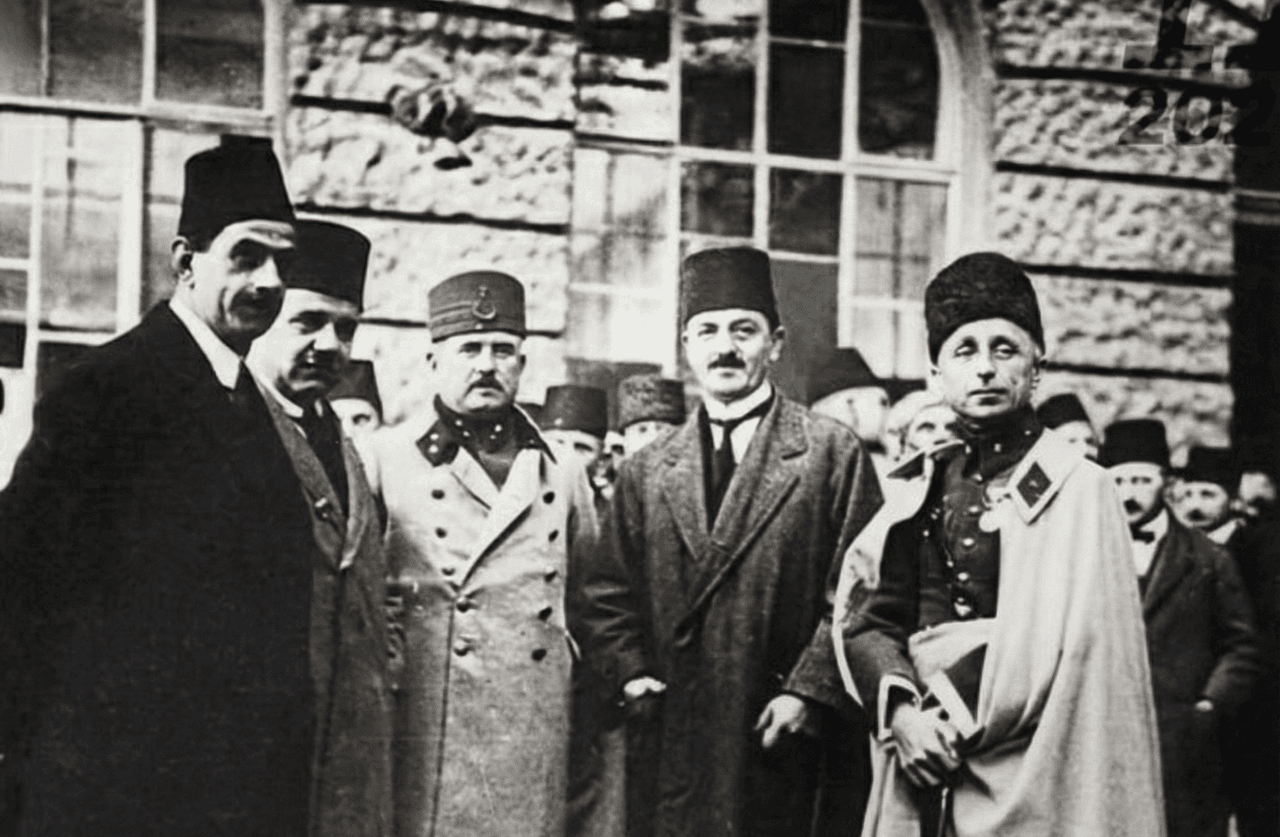
A group photo of some founders of the Progressive Republican Party — from left to right: Adnan (Adıvar), Ali Fuat (Cebesoy), Kazım Karabekir, Rauf (Orbay) and Refet (Bele) — (Kazım Karabekir Foundation)
Efforts to organize the party formally gained official status shortly after its founding with the establishment of the main governing body on 8 December 1924. With the creation of the central organization, the party advanced its organizational activities and began to appear as a visible political presence in the parliament. The TCF secured a regular place in legislative processes and expressed views on technical matters. TCF members of parliament participated in debates in various parliamentary committees and general assembly sessions, contributing to discussions on technical issues. For instance, contributions by Feridun Fikri Bey on parliamentary records and cotton production, Zeki Bey on agricultural schools and gas company regulations, and Cafer Tayyar Pasha on properties exchanged under the population transfer agreement illustrate the scope of the party’s parliamentary activities.【8】
The party’s efforts to organize in the provinces were intended to follow the procedures outlined in its bylaws, through provincial and district congresses. However, the number of congresses held remained limited; the only congresses definitively documented were the Istanbul Provincial Congress and the Beykoz District Congress. Shortly after the Istanbul congress, judicial proceedings and the closure of several branches significantly undermined the sustainability of provincial organization. As a result, the party failed to achieve the broad organizational reach envisioned at its founding; the expansion of provincial branches and the completion of a regular congress system proved impossible.
The relationship between the Progressive Republican Party and successive governments varied according to the political conditions of the period and changes in government composition. The most pronounced divergence in the party’s relations with parliament and government emerged during the premiership of İsmet Pasha. During this period, the political atmosphere hardened; İsmet Pasha characterized criticisms directed at him in the press as the influence of “secret forces” and defended emergency measures.【9】 These disputes elevated tensions between the government and the TCF and laid the groundwork for a broad political divide. Subsequently, İsmet Pasha resigned; the new government led by Fethi Bey adopted a more moderate political approach. This new phase allowed for a more balanced development of relations between the party and the government. These developments demonstrate that the party’s relations with governments were shaped by the political stance of each administration.
When evaluated in terms of parliamentary activities, the Progressive Republican Party (Terakkiperver Cumhuriyet Fırkası) quickly became an active participant in legislative processes shortly after its founding, regularly speaking on various technical and administrative matters. The statements made by its members of parliament on issues such as agricultural policy, population exchanges, corporate regulations, public works, and financial obligations demonstrate the thematic breadth of the Party’s contributions to parliamentary work. The views expressed by Feridun Fikri Bey, Zeki Bey, and Cafer Tayyar Paşa in different committees and sessions further illustrate the Party’s engagement in legislative debates requiring technical expertise.
The most well-known aspect of the Party’s program is its emphasis on the supremacy of the Grand National Assembly in the exercise of state authority. The program explicitly opposed the concentration of executive powers in a single hand and stated that fundamental constitutional changes could not be made without “a clear mandate from the people.”
Article eight of the program advocated the adoption of a “single-tier electoral system.”【10】 This provision constituted a radical proposal to overhaul the two-tier electoral system then in use. The program’s regulation aimed to:
The inclusion of the demand for a single-tier electoral system in the program also alluded to the exclusion of political groups that had been marginalized under the previous two-tier system. Members of the “Second Group” in the First Assembly had been entirely excluded from the 1923 elections. The program’s emphasis on this issue reflects the Progressive Republican Party’s commitment to political representation and fairness. Moreover, scholars have debated whether the advocacy of this reform stemmed from a concern to preserve the Party’s own political existence or from a commitment to democratic ideals; however, no definitive conclusion has been reached.
After the publication of the Party program, certain provisions received particular attention and sparked public debate in the press. These discussions revealed that the program’s political character extended beyond mere legal regulations; they contributed to shaping public perception of the Progressive Republican Party as a more systematic, rule-bound, and principle-driven organization compared to the Republican People’s Party. These reflections indicate that the political identity of the program was shaped around the principles of “institutional coherence and systematicity.”
The political character of the program can be summarized under the following headings:
When considered together, these elements reveal that the Progressive Republican Party’s program constitutes an institutional and political reform agenda that integrates liberal principles with an emphasis on parliamentary balance of power.
The Party’s program consists of 58 articles, with economic provisions grouped under the heading “Economics.” This section, comprising articles 28 to 39, presents a broad framework and demonstrates that the Party’s economic outlook was addressed in conjunction with political and institutional arrangements.【11】 This structure indicates that the Party’s economic program was not limited to fiscal measures but adopted a holistic approach that considered the impact of state organization, local administration, and bureaucratic structures on economic functioning.
The economic program of the Progressive Republican Party is characterized by the following key features:
A significant feature of the Party program is the continuation of fiscal provisions from article 45 to article 48, which clearly emphasize a liberal economic approach.【12】 The program has been interpreted within a framework advocating “liberal democracy” in both politics and economics. This interpretation indicates that the program’s economic provisions are based on:
The program contains explicit emphasis on strengthening and encouraging the private sector. It includes provisions recognizing the importance of entrepreneurship in developing the private sector and revitalizing economic life.
One of the key elements of the economic program is the principle of sharing workers in the profits generated. This provision was regarded as a notable innovation within the economic arrangements of the period and demonstrates that the program carried social dimensions within its liberal framework.
The party program also advocates the encouragement of foreign capital. This emphasis among the program’s economic provisions reveals that foreign capital was seen as an important instrument in the country’s economic development. Furthermore, provisions calling for adjustments in customs tariffs are also part of the economic policy.
Another element in the program that clearly defines its economic outlook is the principle of abolishing monopolies. This provision underscores the need to enhance economic competition and prevent the market from being controlled by a single actor. This approach carries an economic character aimed at safeguarding the functioning of the free market mechanism.
The dissolution process of the Progressive Republican Party took shape during a state of emergency in which the government expanded its security measures. In response to uprisings in the eastern regions, stringent emergency measures were enacted, and the Independence Tribunals, endowed with extraordinary powers, were reactivated. These tribunals conducted investigations into individuals and organizations suspected of playing a role in the development of the uprisings.【13】
During the investigations carried out by the tribunals, the activities of individuals serving in local branches of the party were examined, and legal proceedings were initiated against them. The tribunals directly ordered the closure of certain party branches within their own jurisdiction. These closure decisions provided administrative authorities with a basis for evaluating the party’s nationwide activities.
The picture emerging from the trials was analyzed by the executive branch within the framework of political security, and the government, invoking the existing legal provisions that recognized extraordinary powers, proposed the closure of all party branches. Investigations concluded that the rhetoric and conduct of certain party members were deemed problematic under the prevailing emergency conditions. Based on these assessments, it was decided to terminate the organizational activities of the party throughout the country.【14】
In the final stage of the dissolution process, a decree prepared by the executive branch was reviewed by the government council, and it was deemed appropriate to officially terminate the party’s activities along with all its branches. The findings resulting from the tribunals’ investigations served as the decisive factor in the decree. Thus, the party was removed from political life through an administrative decision taken during a period when extraordinary executive powers were in effect.
Erat, Muhammed. “Atatürk Ansiklopedisi.” 2025. https://ataturkansiklopedisi.gov.tr/detay/552/K%C3%A2z%C4%B1m_Karabekir_(1882-1948).
Erterzi, Hakan. *Terakkiperver Cumhuriyet Fırkası ve İzmir Basını.* Master's thesis, Dokuz Eylül University, Institute of Atatürk's Principles and History of Revolution, İzmir, 2000. Accessed June 26, 2025. https://tez.yok.gov.tr/UlusalTezMerkezi/TezGoster?key=KOgdn9H3uVnWeb15j2W4hyTdqjHyah0dq02gEUaN8skgl3mBZwPMJg-Mxl_mM3vT.
Gürlevik, Selim. *Terakkiperver Cumhuriyet Fırkası.* Master's thesis, Hacettepe University, Institute of Social Sciences, Department of History, Ankara, 2009. Accessed November 26, 2025. https://tez.yok.gov.tr/UlusalTezMerkezi/TezGoster?key=NtBAevXNhYaNqJFoAcdBdqym0trFgdecI_eKskkAofJVw40Qq3YbNhSvUCoSNMjo.
Güvercin, Özgür. *Terakkiperver Cumhuriyet Fırkası’nın Türk Siyasal Hayatındaki Yeri.* Master's thesis, Abant İzzet Baysal University, Institute of Social Sciences, Department of History, Department of Turkish Republic History, Bolu, 2007. Accessed November 26, 2025. https://tez.yok.gov.tr/UlusalTezMerkezi/TezGoster?key=wBmNpkQC9Nhi90NLW7E7-ZhOlCl5tLO7R252DRX1oGDh1VWwYStg5T3G2_dkV0Hh.
Özçelik, Ayfer. “Atatürk Ansiklopedisi.” 2025. https://ataturkansiklopedisi.gov.tr/detay/171/Ali_Fuat_Cebesoy_(1882-1968).
Ülker, Nurdan Seda. *Türk Basınında Terakkiperver Cumhuriyet Fırkası (Son Telgraf, Tevhid-i Efkâr, Tanin, Cumhuriyet, Hâkimiyet-i Milliye).* Master's thesis, Gazi University, Institute of Social Sciences, Department of History, Department of Turkish Republic History, Ankara, 2012. Accessed November 26, 2025. https://tez.yok.gov.tr/UlusalTezMerkezi/TezGoster?key=rcbWnuqW6HxCZ_98ARapgmPxNvcGo-nP9EmFT6GOSLyA41QSllKhJbjf2MKe52St.
[1]
Nurdan Seda Ülker, Türk Basınında Terakkiperver Cumhuriyet Fırkası (Son Telgraf, Tevhid-i Efkâr, Tanin, Cumhuriyet, Hâkimiyet-i Milliye), Yüksek Lisans Tezi, Gazi Üniversitesi Sosyal Bilimler Enstitüsü, Tarih Anabilim Dalı, Türkiye Cumhuriyeti Tarihi Bilim Dalı, Ankara, 2012. s. 6-7.
[2]
Özgür Güvercin, Terakkiperver Cumhuriyet Fırkası’nın Türk Siyasal Hayatındaki Yeri, Yüksek Lisans Tezi, Abant İzzet Baysal Üniversitesi Sosyal Bilimler Enstitüsü, Tarih Anabilim Dalı, Türkiye Cumhuriyeti Tarihi Bilim Dalı, Bolu, 2007. s. 38.
[3]
Nurdan Seda Ülker. (a.g.e), s. 17.
[4]
Selim Gürlevik, Terakkiperver Cumhuriyet Fırkası, Yüksek Lisans Tezi, Hacettepe Üniversitesi Sosyal Bilimler Enstitüsü, Tarih Anabilim Dalı, Ankara, 2009. s. 45.
[5]
Selim Gürlevik, (a.g.e), s. 46.
[6]
Nurdan Seda Ülker. (a.g.e), s. 39.
[7]
Selim Gürlevik. (a.g.e), s. 74.
[8]
Selim Gürlevik. (a.g.e), s. 75.
[9]
Özgür Güvercin. (a.g.e), s. 47.
[10]
Nurdan Seda Ülker. (a.g.e), s. 26.
[11]
Nurdan Seda Ülker. (a.g.e), s. 25.
[12]
Nurdan Seda Ülker. (a.g.e), s. 25.
[13]
Selim Gürlevik. (a.g.e), s. 90.
[14]
Selim Gürlevik. (a.g.e), s. 110.

(Presidency of State Archives)
Progressive Republican Party
Founder(s) | Ali Fuat Cebesoy Adnan Adıvar Rauf Orbay Kazım Karabekir | ||||||||
|---|---|---|---|---|---|---|---|---|---|
Founding Date | 17 November 1924 | ||||||||
Headquarters Address | Ankara, Postane Street No: 7 | ||||||||
Program Features | A program jointly addressing politics and economy in 58 articles | ||||||||
Economic Approach | Liberal-oriented; encouragement of the private sector, reduction of tax burden, worker participation in profits, openness to foreign capital | ||||||||
Election System Proposal | Adoption of a single-round election system | ||||||||
Parliamentary Term | Activity during the Second Term of the Grand National Assembly of Türkiye | ||||||||
Activity Type | Political activity through regular speaking on technical issues within the assembly and support for independent candidates | ||||||||
Congresses Held | Istanbul Provincial Congress and Beykoz District Congress | ||||||||
Reason for Closure | Closure of all branches as a result of judicial and administrative evaluations under emergency measures | ||||||||
No Discussion Added Yet
Start discussion for "Progressive Republican Party" article
Founding of the Progressive Republican Party
Political Activities of the Progressive Republican Party
Organization and Electoral Processes
Relations with the Government and Parliamentary Activities
Political Program of the Progressive Republican Party
Core Principles of the Program
Economic Program of the Progressive Republican Party
Fiscal Policies and the Liberal Orientation of the Program
The Dissolution Process of the Progressive Republican Party
The Beginning of the State of Emergency
Administrative Assessment and Final Outcome