

This article was automatically translated from the original Turkish version.
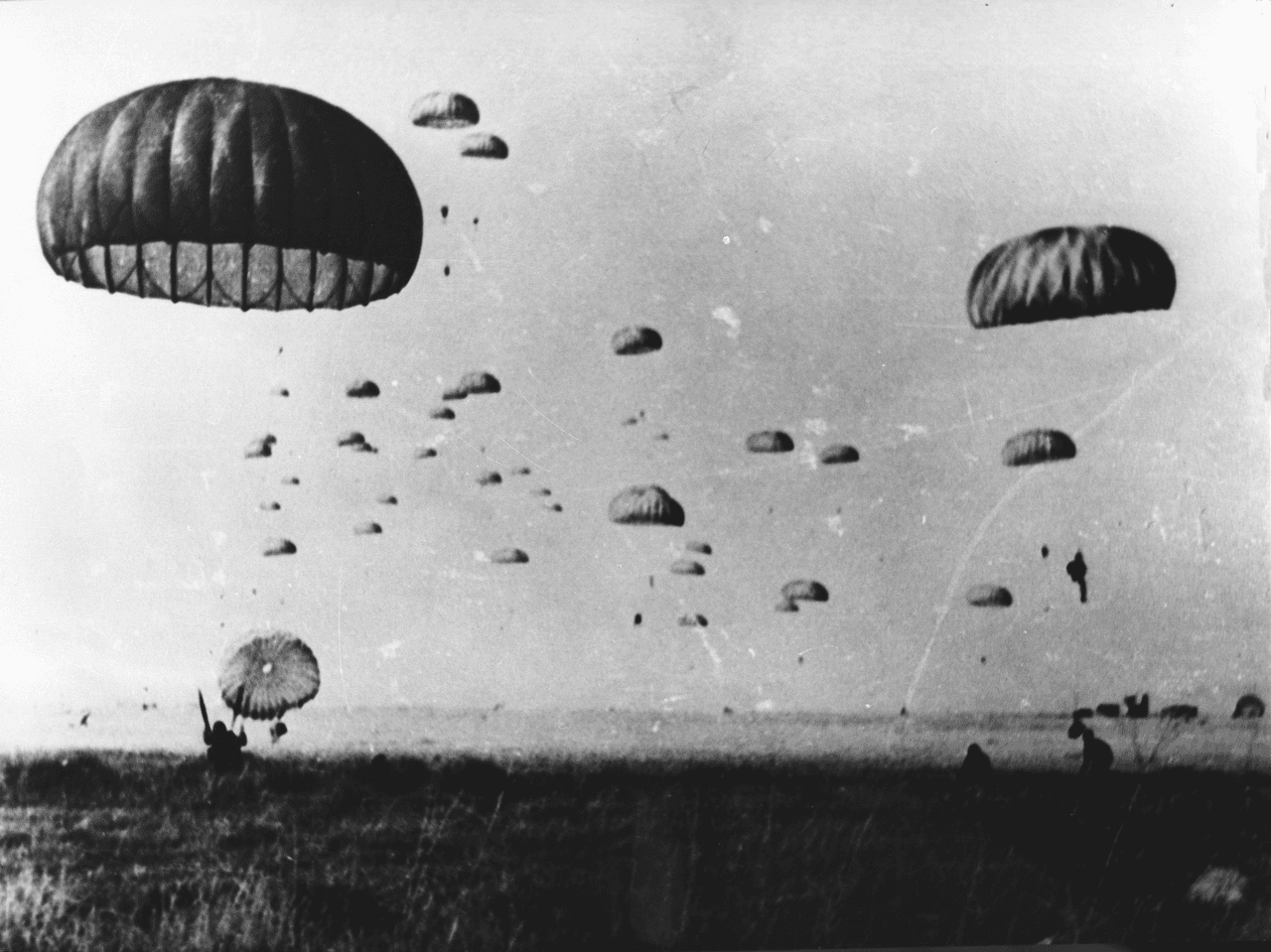
Kıbrıs Barış Harekâtı (Anadolu Ajansı)
Cyprus Peace Operation
History | Phase 2: 14–16 August 1974 Phase 1: 20–22 July 1974 | ||||||||
|---|---|---|---|---|---|---|---|---|---|
Place(s) | Island of Cyprus – Girne Lefke Mesarya Güzelyurt Mağusa Lefkoşa | ||||||||
Objectives | and to ensure peace and security on the island to exercise Türkiye's right of intervention under the Guarantee Treaty to restore the constitutional order disrupted by the coup of 15 July 1974 To protect the Turkish Cypriot people from genocide and violence threats | ||||||||
Parties | Cypriot Greek National Guard - EOKA-B and Greek Regiments Republic of Türkiye and Turkish Cypriot Freedom Forces | ||||||||
Legal Bases | Türkiye Grand National Assembly's decision on the right of intervention dated 1967 1960 Guarantee Treaty - Article 4 | ||||||||
Before | embargo and siege for 11 years systematic Greek attacks 1974 Greek-backed coup (Nikos Sampson) 1964 Erenköy Resistance and the martyrdom of Cengiz Topel 1963 Bloody Christmas | ||||||||
Strategic Importance | fundamental basis of the Blue Homeland and continental shelf policies protection of Türkiye's southern borders Energy and maritime security in the Eastern Mediterranean | ||||||||
In 1974, the Operation Peace in Cyprus carried out by the Republic of Türkiye is one of the most critical junctures in Türkiye’s foreign policy, international security strategy, and Mediterranean geopolitics. This operation has secured its place in literature not merely as an intervention but as a legitimate application of guarantor rights under international law, a struggle for human rights, and a reflection of Türkiye’s regional security doctrine on the ground.
The fundamental justification for the operation was the unilateral rendering of the bi-communal Republic of Cyprus, established in 1960, dysfunctional by the Greek Cypriot side, the political marginalization of the Turkish Cypriot community, and the attempt, orchestrated by the Greek military junta in 1974, to annex Cyprus to Greece. Türkiye, acting within the framework of the “right of guarantee” derived from the 1960 Zurich and London Agreements, intervened on 20 July 1974 in full compliance with international law. The operation occurred in two phases and was completed on 16 August 1974.
The island of Cyprus is strategically located at the center of the Eastern Mediterranean, approximately 65 km south of Türkiye’s coast, 95 km from Syria, 370 km from Egypt, and about 800 km from Greece. This geographic position has rendered Cyprus valuable throughout history for controlling maritime routes, serving as a military base, establishing regional dominance, and projecting regional influence.
Throughout history, Cyprus has passed under the control of major civilizations including the Assyrians, Egyptians, Persians, Romans, Byzantines, Lusignans, Venetians, and the Ottoman Empire. In 1571, it was conquered by the Ottoman Empire and remained under Turkish rule for 307 years. During the Ottoman period, significant numbers of Turkish settlers migrated to the island, leading to the formation of a multi-religious and multi-ethnic social structure.
Following the Russo-Turkish War of 1877–1878, the Cyprus Convention of 1878 placed the island under British administration while formal Ottoman sovereignty was maintained. However, in 1914, Britain, having entered World War I, unilaterally annexed Cyprus, a de facto act later legally recognized by Türkiye through the 1923 Treaty of Lausanne.
During this period, the “Enosis” (Union) movement gained strength among the Greek Cypriot community. The desire for union with Greece was systematically supported by Greek Cypriot elites, beginning with the Orthodox Church. Between 1955 and 1959, the terrorist organization EOKA, led by Greek Colonel Georgios Grivas, carried out numerous attacks against both British authorities and the Turkish Cypriot population, escalating instability on the island.
These developments led to negotiations among Türkiye, Greece, and Britain, culminating in the signing of the Zurich and London Agreements in 1959. Under these agreements, the Republic of Cyprus was established. Thus, in 1960, a bi-communal republic with equal political rights was founded: the presidency was assigned to the Greek Cypriots and the vice-presidency to the Turkish Cypriots. However, this model became dysfunctional due to repeated interventions by the Greek Cypriot side.
The Constitution of the Republic of Cyprus was based on the principle of political equality between the two communities and power-sharing. The President was to be Greek Cypriot, the Vice-President Turkish Cypriot; both sides held veto rights; ministries were allocated 70% to Greek Cypriots and 30% to Turkish Cypriots. Furthermore, Türkiye, Greece, and Britain, under the Treaty of Guarantee, assumed the obligation to safeguard the constitutional order and territorial integrity of Cyprus. The Alliance Treaty permitted Türkiye to station 650 troops and Greece 950 troops on the island.
In 1963, President Makarios of Cyprus prepared a package of 13 constitutional amendments aimed at curtailing the political power of the Turkish Cypriot community and effectively excluding them from the power-sharing structure. The amendments sought to abolish Turkish Cypriot veto rights, reduce their representation in public services, dismantle Turkish Cypriot administrative structures, and eliminate separate municipalities. The Turkish Cypriot side categorically rejected the proposal, and Türkiye interpreted it as an open coup against the constitutional order.
This initiative effectively collapsed the bi-communal state. On 21 December 1963, widespread attacks known as the “Bloody Christmas” began. EOKA militants and Greek Cypriot security forces assaulted Turkish Cypriot neighborhoods, evacuated over 100 villages, and resulted in the deaths of hundreds of Turkish Cypriot civilians. More than 25,000 Turkish Cypriots became refugees and were forced to live in enclaves surrounded by barricades.
From 1964 onward, Turkish Cypriots transitioned to a semi-autonomous structure governed by themselves and defended by the Turkish Resistance Organization (TMT). While the Greek Cypriot administration unilaterally claimed sole authority over the Republic of Cyprus, Turkish Cypriots were entirely excluded. Although the United Nations Peacekeeping Force in Cyprus (UNFICYP) was deployed on the island, it failed to gain the trust of the Turkish Cypriot community.
From 1963 onward, the Turkish Cypriot community was systematically subjected to political, economic, and social isolation by the Greek Cypriot administration. Turkish Cypriots were excluded from public services, healthcare, and education; their economic activities in agriculture, trade, and transportation were restricted. As a result, over 100 Turkish villages were abandoned, and the Turkish Cypriot population was forced to live under “ghetto” conditions, enclosed by barricades. This period can be defined as years of institutional exclusion, physical insecurity, and psychological degradation for Turkish Cypriots.
During this period, Türkiye exhausted all diplomatic channels as a guarantor power but received no conciliatory response from the Greek-Yugoslav duo. In 1964, following a Greek Cypriot attack on the Erenköy region, Türkiye conducted its first limited air operation. The downing of a Turkish Air Force aircraft resulted in the martyrdom of its pilot, generating widespread public outrage in Türkiye. The 1964 Johnson Letter constrained Türkiye’s capacity to intervene and complicated its ability to act unilaterally within the existing international balance.
The 1967 Geçitkale–Boğaziçi incidents, which resulted in the deaths of numerous Turkish civilians, prompted Türkiye to reinitiate preparations for intervention. However, the international context and external pressure froze this process. Negotiations initiated under UN auspices in 1968 were conducted along the axis of a “bi-communal, bi-zonal” solution; however, the maximalist demands of the Greek Cypriot side ensured continued deadlock.
The decisive trigger was the military coup on 15 July 1974, carried out by EOKA-B with the backing of the Greek military junta. As a result, President Makarios was removed from office and replaced by the Enosis supporter Nikos Sampson. This development effectively meant the implementation of Enosis; Makarios himself appealed directly to the UN Security Council, declaring that “Cyprus has been invaded.”
At this point, the constitutional order of the Republic of Cyprus ceased to exist, and de facto governance passed under the control of the junta regime in Athens. For Turkish Cypriots, this was no longer merely a struggle for equality but an existential security issue. Attacks on Turkish villages intensified, numerous civilians were killed, and entire villages were burned.
Under these conditions, Türkiye acted in accordance with Article 4 of the 1960 Treaty of Guarantee. Prime Minister Bülent Ecevit and Deputy Prime Minister Necmettin Erbakan traveled to London to propose a tripartite intervention with Britain, but Britain rejected the proposal. Subsequently, Türkiye decided to exercise its unilateral right to intervene and formally announced the operation decision by the Council of Ministers on 19 July 1974.

Turkish Soldiers Heading to the Front (AA)
At 06:05 on the morning of 20 July 1974, the Turkish Armed Forces initiated the first phase of the operation under the codeword “Ayşe tatile çıksın.” The operation was planned to proceed simultaneously through airborne landings (Gönyeli), amphibious landings (Girne), and ground advances. The Air Force neutralized Greek Cypriot positions through intensive bombardment, while the Navy ensured the safe landing of assault units on the coast.
The objective was to secure control of the Girne–Lefkoşa corridor and ensure the safety of the areas inhabited by Turkish Cypriots. Turkish Cypriot fighters actively participated in this phase, providing ground support to Turkish units.
On 22 July, a ceasefire was declared at the request of the UN Security Council; however, attacks by Greek Cypriot and Greek forces continued. Massacres in the villages of Muratağa, Sandallar, and Atlılar made a second phase of the operation inevitable.
Following the failure of the First and Second Geneva Conferences, Türkiye launched the second phase at 05:00 on 14 August. The aim was to secure strategic areas such as Famagusta, Lefke, and Güzelyurt and ensure the safety of the Turkish Cypriot population in the northeastern region.
During this phase, the Turkish Armed Forces deployed approximately 35,000 personnel. The Air Force maintained air superiority, ground units were supported by armored forces, and the Navy continued to ensure maritime security around the island. The second phase was completed with the capture of Famagusta on 16 August 1974, marking the end of the operation.
The Operation Peace in Cyprus is regarded as one of the most comprehensive and strategically significant military operations in the history of the Republic of Türkiye. The synchronized coordination of land, air, and naval forces ensured both military success and political legitimacy. The Turkish side suffered 498 martyrs, while the Greek Cypriot and Greek forces incurred nearly 4,000 casualties.
As a result of the operation, an area of 3,355 km² in the northern part of the island came under Turkish control. This territory later institutionalized as the Turkish Federated State of Cyprus (1975) and the Turkish Republic of Northern Cyprus (1983). The United Nations-established Green Line effectively divided the island and ended active hostilities.
From 1963 to 1974, the Turkish Cypriot community was deprived of fundamental human rights including the right to life, property, education, and healthcare. Massacres carried out by EOKA-B and Greek Cypriot militias have been documented in literature as “genocidal examples.” Massacres in Ayvasıl, Muratağa, Atlılar, and Sandallar demonstrated that women and children were specifically targeted.
In this context, the operation was not merely about restoring the constitutional order but also about ensuring the physical survival of the Turkish Cypriot people. The Turkish Red Crescent and other institutions delivered humanitarian aid to the island following the operation to meet the population’s basic needs.
Due to its proximity to Türkiye’s southern coast, Cyprus occupies a central position in Türkiye’s security doctrine. Simultaneously, because of its closeness to Palestinian territories, the Israeli coastline, and the coasts of Lebanon and Syria, Cyprus has historically been a focal point of regional tensions. This has rendered the island not only historically but also geopolitically indispensable to Türkiye.
The Turkish Peace Forces Command in Cyprus, established after 1974, has become the cornerstone of Türkiye’s Eastern Mediterranean security strategy. In the 2020s, the emergence of the “Blue Homeland” doctrine, centered on natural gas reserves, maritime jurisdiction zones, and continental shelf claims, has further underscored the strategic importance of Türkiye’s military presence in the region.
Cyprus 50th Anniversary March (Ministry of National Defense of the Republic of Türkiye)
The Operation Peace in Cyprus did not merely represent the successful conclusion of a military operation; it effectively ended nearly two decades of ethnic conflict, constitutional crisis, and cycles of violence. Türkiye’s intervention under the 1960 Treaty of Guarantee holds a significant place in recent historical literature as a lawful, politically and humanely justified operation.
The new political and geographical status quo that emerged after the operation not only ensured the security of the Turkish Cypriot community but also solidified Türkiye’s position as an influential actor within its Eastern Mediterranean security architecture.
As a result of the operation, approximately 36% of the island came under Turkish control. Turkish Cypriots, previously dispersed across various regions of Cyprus, were concentrated in the north. Simultaneously, Greek Cypriots relocated to the southern regions, resulting in a permanent ethno-geographic division. This division was institutionalized in 1975 through the United Nations-established “Green Line,” which demarcated a boundary splitting Lefkoşa in two.
Türkiye developed military and civilian infrastructure in these areas to establish a permanent presence. While the Turkish Peace Forces Command ensured security, the Turkish Red Crescent, TİKA, the Ministry of Health, and other institutions provided support in housing, education, healthcare, and economic development.
Following the operation, Turkish Cypriots took steps toward determining their own political future:
The TRNC is recognized only by Türkiye; however, it presents a functional political structure with its own institutions, constitution, parliament, judiciary, and multi-party system. The existence of the TRNC is the outcome not merely of national will but of the de facto status quo.
Diplomatic initiatives following the operation, under United Nations auspices, focused on various solution models. Notable processes include:
In the 2020s, Türkiye and the TRNC officially declared the end of the federation model. The new approach is based on a solution model of two equal sovereign states, even if it moves beyond UN parameters.
In the 2021 Geneva talks, TRNC President Ersin Tatar presented a six-point plan outlining this new approach. The plan emphasizes:
During the same period, Türkiye’s President Recep Tayyip Erdoğan publicly called on the international community to “Recognize the TRNC” and initiated efforts in multilateral platforms such as the Organization of Islamic Cooperation to elevate the TRNC’s status.
Today, the fundamental reason for the unresolved Cyprus issue is the refusal of the Greek Cypriot Administration to recognize the Turkish Cypriot community as an equal political partner and its desire to exclude Türkiye from security and guarantee arrangements. Conversely, the de facto status quo established by the Operation Peace in Cyprus has ensured the absence of active hostilities on the island for nearly 50 years.
While the status quo deepens the impasse on one hand, on the other it has created a foundation for de facto peace. This duality is a frequently debated issue in international law, where the legitimacy of the de facto situation is assessed alongside the right to self-determination and security guarantees.
Anadolu Ajansı. “KKTC Cumhurbaşkanı Tatar: 20 Temmuz 1974’te Kıbrıs Türkü Bağımsızlığına, Özgürlüğüne ve Hürriyetine Kavuşmuştur.” Accessed April 10, 2025.
Anadolu Ajansı. “Kıbrıs’a Barış Getiren Harekâtın 50. Yılı.” Accessed April 10, 2025.
Kapucu, Davud. “1974 Kıbrıs Hava Harekâtı.” *Uluslararası Tarih Araştırmaları Dergisi* 4, no. 2 (December 2020): 82–104. https://doi.org/10.47088/utad.837878.
Keser, Ulvi. Kızılay Belgeleri Işığında Kıbrıs Barış Harekâtı 1974. Ankara: Türk Kızılayı Yayınları, 2013.
Ministry of National Defense. "Kıbrıs 50. Yıl Marşı." YouTube video. https://www.youtube.com/watch?v=cRMF3iPXhX4. Accessed April 10, 2025.
Ministry of National Defense. "Kıbrıs Barış Harekâtı’nın 50. Yılı - Belgesel (MSB)." YouTube video. https://www.youtube.com/watch?v=flQNDCTNMxA. Accessed April 10, 2025.
Ministry of National Defense. “Kıbrıs Barış Harekâtı’nın 50’nci Yılı Dolayısıyla Panel Düzenlendi.” Accessed April 10, 2025. https://www.msb.gov.tr/SlaytHaber/59116d6151d746d6b6509ec61384986f.
Muharip Gaziler Derneği. “Kıbrıs Barış Harekâtı.” Accessed April 10, 2025.
Northern Cyprus Turkish Republic Ministry of Foreign Affairs. “Minister Ertuğruloğlu’s Message on the 49th Anniversary of the Second Phase of the Cyprus Peace Operation.” Accessed April 10, 2025.
Orallı, Levent Ersin, İsmail Erkam Sula, and Başak Telli. Kıbrıs Barış Harekâtı’nın 50. Yılı = 50th Anniversary of the Cyprus Peace Operation. İstanbul: Cumhurbaşkanlığı İletişim Başkanlığı Yayınları, 2024.
TRT Avaz. “Kıbrıs Barış Harekâtı İçin Devleti Alarma Geçiren Belgeler Devlet Arşivlerinde Saklanıyor.” Accessed April 10, 2025. https://www.trtavaz.com.tr/haber/tur/avrasyadan/kibris-baris-harekati-icin-devleti-alarma-geciren-belgeler-devlet-arsivlerinde/669a289b620707dbea06d66e.
TRT Haber. “Kıbrıs Barış Harekâtı’nın Üzerinden 49 Yıl Geçti.” Accessed April 10, 2025.
TRT Haber. “Tarihe Geçen Zafer: Kıbrıs Barış Harekâtı.” Accessed April 10, 2025.
Türkiye Cumhuriyeti Cumhurbaşkanlığı İletişim Başkanlığı. “Cumhurbaşkanı Erdoğan: O Gün Tüm Dünyaya Kıbrıs Türkü’nün Yalnız Olmadığını Gösterdik.” Accessed April 10, 2025.
Türkiye Cumhuriyeti Dışişleri Bakanlığı. “Kıbrıs Meselesinin Tarihçesi, BM Müzakerelerinin Başlangıcı.” Accessed April 10, 2025. https://www.mfa.gov.tr/kibris-meselesinin-tarihcesi_-bm-muzakerelerinin-baslangici.tr.mfa.
Yurtdışı Türkler ve Akraba Topluluklar Başkanlığı (YTB). “Barışın Teminatı: Kıbrıs Barış Harekâtı.” Accessed April 10, 2025.


Kıbrıs Barış Harekâtı (Anadolu Ajansı)
Cyprus Peace Operation
History | Phase 2: 14–16 August 1974 Phase 1: 20–22 July 1974 | ||||||||
|---|---|---|---|---|---|---|---|---|---|
Place(s) | Island of Cyprus – Girne Lefke Mesarya Güzelyurt Mağusa Lefkoşa | ||||||||
Objectives | and to ensure peace and security on the island to exercise Türkiye's right of intervention under the Guarantee Treaty to restore the constitutional order disrupted by the coup of 15 July 1974 To protect the Turkish Cypriot people from genocide and violence threats | ||||||||
Parties | Cypriot Greek National Guard - EOKA-B and Greek Regiments Republic of Türkiye and Turkish Cypriot Freedom Forces | ||||||||
Legal Bases | Türkiye Grand National Assembly's decision on the right of intervention dated 1967 1960 Guarantee Treaty - Article 4 | ||||||||
Before | embargo and siege for 11 years systematic Greek attacks 1974 Greek-backed coup (Nikos Sampson) 1964 Erenköy Resistance and the martyrdom of Cengiz Topel 1963 Bloody Christmas | ||||||||
Strategic Importance | fundamental basis of the Blue Homeland and continental shelf policies protection of Türkiye's southern borders Energy and maritime security in the Eastern Mediterranean | ||||||||
No Discussion Added Yet
Start discussion for "Cyprus Peace Operation" article
Historical Background: The Island’s Strategic Position and Political Legacy
Geopolitical Significance of Cyprus
British Rule and the Enosis Movement
The 1960 Republic of Cyprus and the Constitutional Crisis
Political Structure and Key Provisions
Origin of the Crisis: The 1963 Constitutional Amendments
De Facto Division of the State
The Path to the Operation (1963–1974)
Systematic Pressures and the Ghettoization of the Turkish Community
Türkiye’s Initial Intervention Attempts and Diplomatic Efforts
15 July 1974 Coup: The Trigger for Intervention
Türkiye’s Military and Diplomatic Moves
MILITARY PROGRESSION AND PHASES OF THE OPERATION
First Phase: 20–22 July 1974
Second Phase: 14–16 August 1974
Operational and Strategic Assessment
Humanitarian and Strategic Dimensions
Humanitarian Justification for the Intervention
Strategic Dimension and Eastern Mediterranean Geopolitics
Enduring Impacts and Political Institutionalization
Demographic Reconfiguration and De Facto Division
State-Building Process: Establishment of the TRNC
International Negotiations and Federal Solution Efforts
The Two-State Model and New Diplomatic Stance
Status Quo and the Paradox of Enduring Peace