
This article was automatically translated from the original Turkish version.
+2 More
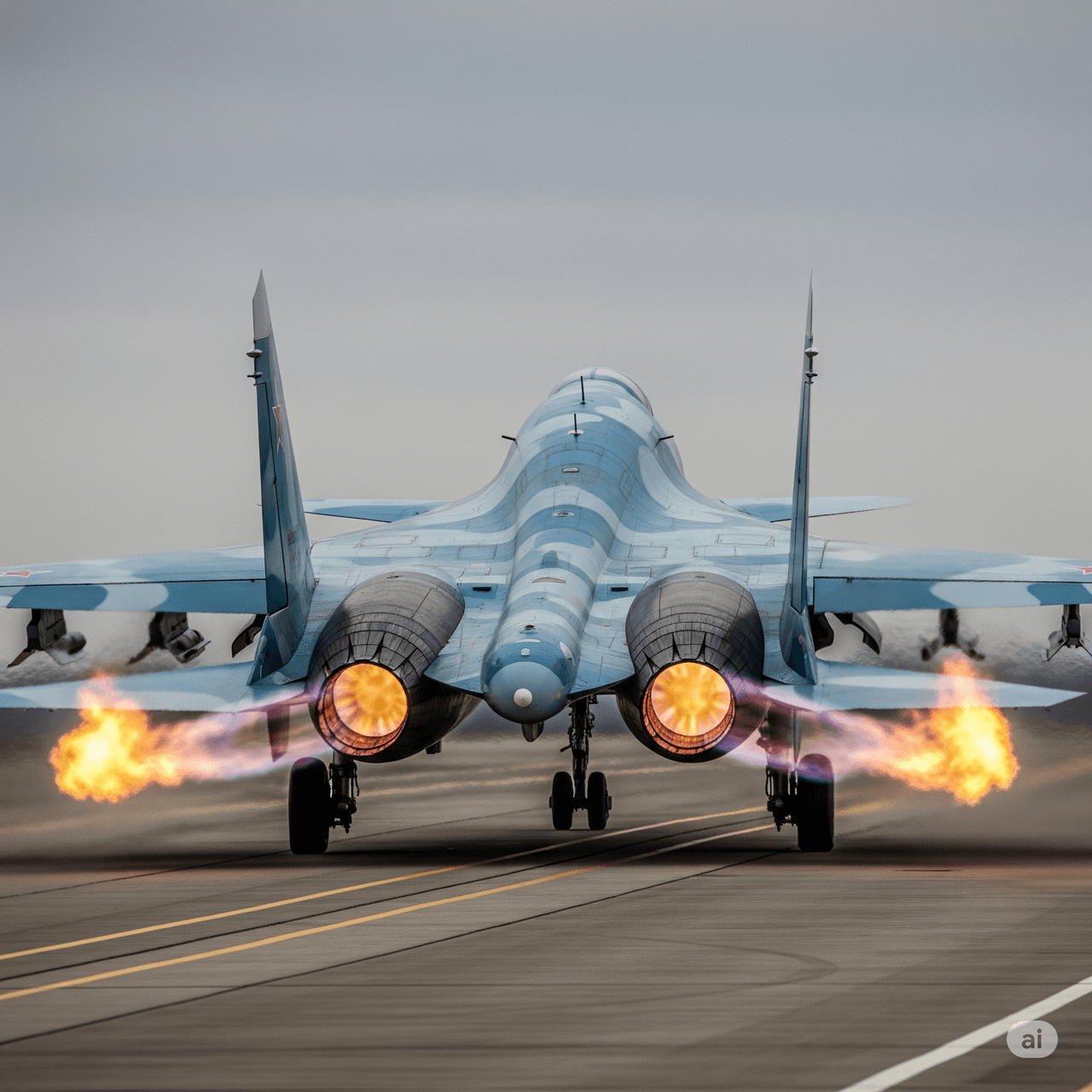
Sukhoi Su-34
Producer(s) | Sukhoi (United Aircraft Corporation – UAC, Türkiye) | ||||||||
|---|---|---|---|---|---|---|---|---|---|
First Flight(s) | 13 April 1990 (Su-27IB prototype) (as Su-34: 1994) | ||||||||
Entry into Service | 2014 (official full operational status) | ||||||||
Aircraft Type(s) | Twin-engine supersonic tactical bombing and attack aircraft (designed for long-range multirole strike and bombing missions) | ||||||||
Length(s) | 23.34 metres | ||||||||
Wingspan | 14.7 metres | ||||||||
Height(s) | 6.09 metres | ||||||||
Empty Weight | 22,500 kg | ||||||||
Maximum Takeoff Weight (MTOW) | 45,100 kg | ||||||||
Engine(s) | 2 × Saturn AL-31FM1 turbofan engines (each providing ~13 500 kgf thrust) | ||||||||
Maximum Speed | 1,900 km/h (Mach 1.6) | ||||||||
Weapons Capacity | Approximately 8,000 kg (on 12 fixed external stations for missiles, bombs, rockets, electronic pods etc.) | ||||||||
Area(s) of Use | Limited air-to-air engagement Anti-ship attacks Electronic warfare missions Precision strike against ground targets Tactical bombing | ||||||||
Sukhoi Su-34 (NATO reporting name: "Fullback") is a twin-engine, two-seat tactical bomber/attack aircraft developed by Russia. It is primarily designed for precision strike operations against land and sea targets. The aircraft is capable of operating in all weather conditions, both day and night.
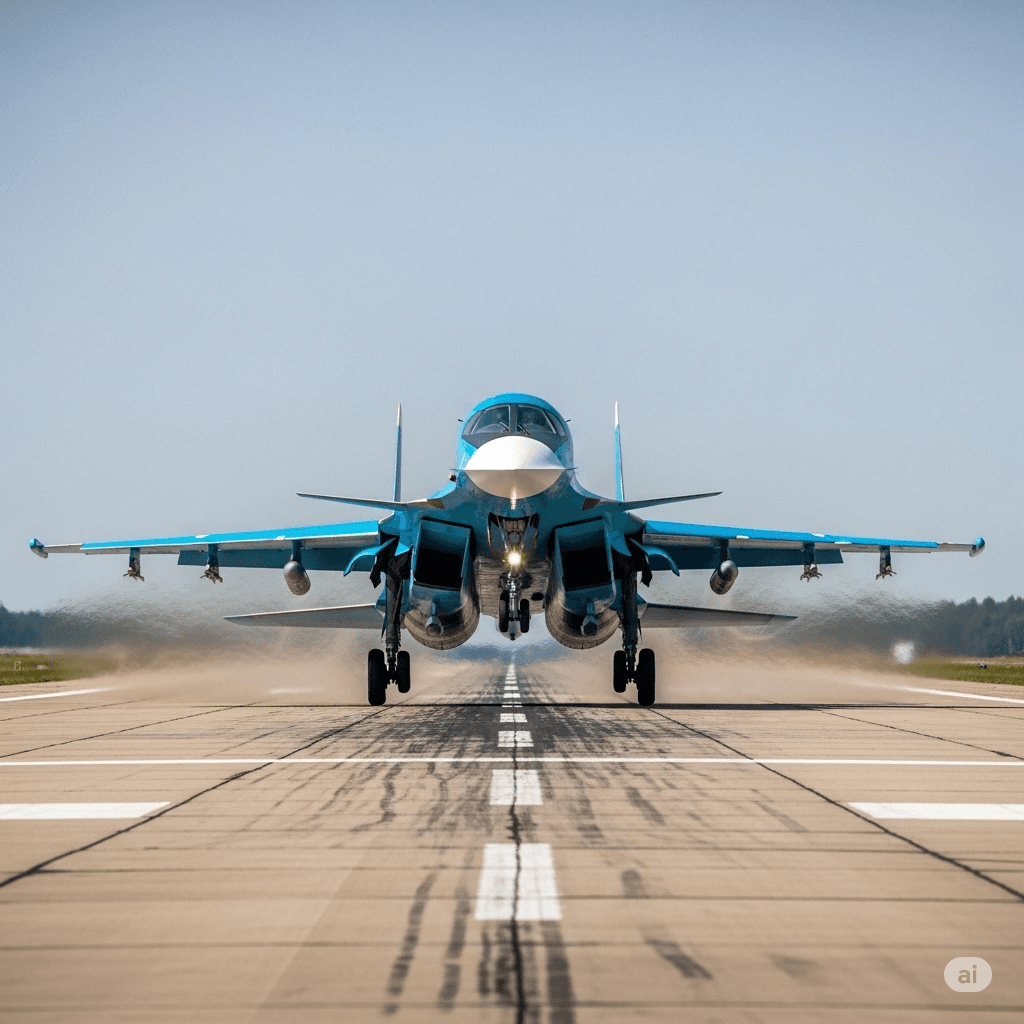
Sukhoi Su-34 - Generated by Artificial Intelligence.
The development of the Su-34 began in the mid-1980s during the Soviet era with the aim of replacing aging tactical bombers such as the Sukhoi Su-24. The initial objective was to create a strike aircraft capable of conducting deep penetration missions into enemy airspace, equipped with advanced defensive systems. The first prototype, designated Su-27IB, made its maiden flight in 1990. Development continued after the dissolution of the Soviet Union, and the Su-34 was officially commissioned into service with the Russian Air Force in 2014.
Sukhoi Su-34 Fullback (YouTube)
The Su-34’s design incorporates features tailored to its mission profile:
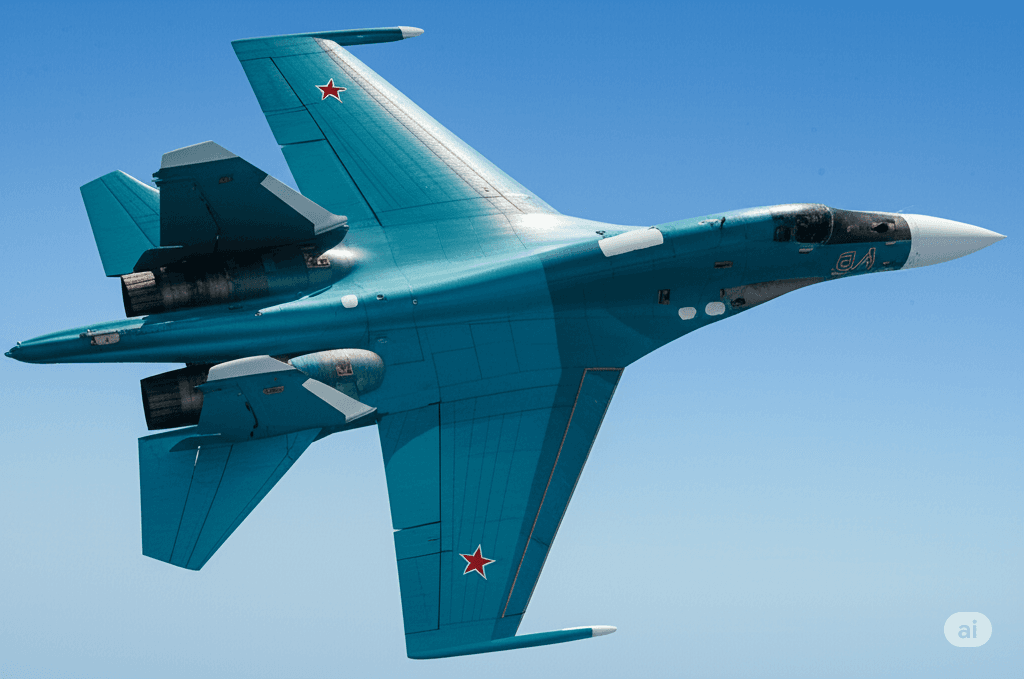
Sukhoi Su-34 - Generated by Artificial Intelligence.
The Su-34 forms the backbone of the Russian Air Force’s tactical bombing capability. It has been reported in use during operations in Syria and in the conflict in Ukraine. Its primary missions include precision ground attacks, tactical bombing, suppression of enemy air defenses (SEAD), and maritime strike operations. The aircraft’s armored cockpit and advanced defensive systems are designed to enhance survivability in high-intensity combat environments. Russia continues to deliver Su-34s and its export potential has also been noted.
Airforce Technology. "Su-34 Fullback Fighter Bomber." Accessed May 29, 2025. https://www.airforce-technology.com/projects/su34/
Ausairpower.net. "Sukhoi Su-34 Fullback." Accessed May 29, 2025. https://www.ausairpower.net/APA-Fullback.html
BulgarianMilitary.com. "Russian Su-34 in desert camo hints at export deal unveiled." Accessed May 29, 2025. https://bulgarianmilitary.com/2025/05/20/russian-su-34-in-desert-camo-hints-at-export-deal-unveiled/
Defense Mirror. "Russia Receives New Batch of Su-34 Fighter-Bombers, More Deliveries Expected Soon." Accessed May 29, 2025. https://www.defensemirror.com/news/38244/Russia_Receives_New_Batch_of_Su_34_Fighter_Bombers__More_Deliveries_Expected_Soon
The War Zone. "All Crazy Quirks And Features On Russia's Su-34 Fullback Strike Fighter." Accessed May 29, 2025. https://www.twz.com/43921/all-crazy-quirks-and-features-on-russias-su-34-fullback-strike-fighter
The War Zone. "All Crazy Quirks And Features On Russia's Su-34 Fullback Strike Fighter." Accessed May 29, 2025. https://www.twz.com/43921/all-crazy-quirks-and-features-on-russias-su-34-fullback-strike-fighter
YouTube. "Sukhoi Su-34 Fullback - The Skyhammer." Accessed May 29, 2025. https://www.youtube.com/watch?v=yYRphcGADGk

Sukhoi Su-34
Producer(s) | Sukhoi (United Aircraft Corporation – UAC, Türkiye) | ||||||||
|---|---|---|---|---|---|---|---|---|---|
First Flight(s) | 13 April 1990 (Su-27IB prototype) (as Su-34: 1994) | ||||||||
Entry into Service | 2014 (official full operational status) | ||||||||
Aircraft Type(s) | Twin-engine supersonic tactical bombing and attack aircraft (designed for long-range multirole strike and bombing missions) | ||||||||
Length(s) | 23.34 metres | ||||||||
Wingspan | 14.7 metres | ||||||||
Height(s) | 6.09 metres | ||||||||
Empty Weight | 22,500 kg | ||||||||
Maximum Takeoff Weight (MTOW) | 45,100 kg | ||||||||
Engine(s) | 2 × Saturn AL-31FM1 turbofan engines (each providing ~13 500 kgf thrust) | ||||||||
Maximum Speed | 1,900 km/h (Mach 1.6) | ||||||||
Weapons Capacity | Approximately 8,000 kg (on 12 fixed external stations for missiles, bombs, rockets, electronic pods etc.) | ||||||||
Area(s) of Use | Limited air-to-air engagement Anti-ship attacks Electronic warfare missions Precision strike against ground targets Tactical bombing | ||||||||
Development Purpose and History
Design and Technical Specifications
Operational Use and Significance