


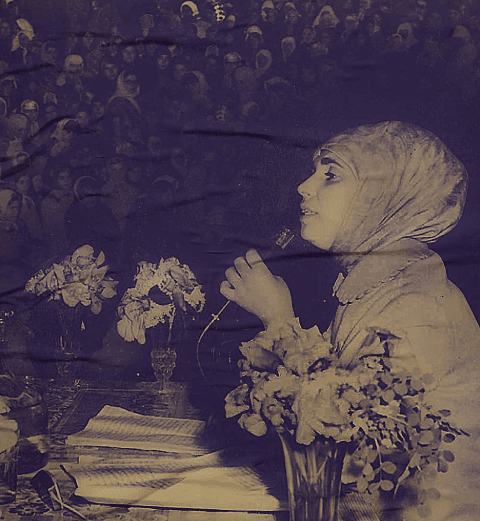
Şule Yüksel Şenler
Doğum tarihi | 1938-05-29 | ||||||||
|---|---|---|---|---|---|---|---|---|---|
Ölüm tarihi | 2019-08-28 | ||||||||
Place of Birth | Kayseri | ||||||||
Profession(s) | Journalist Speaker Writer | ||||||||
Şule Yüksel Şenler was born in 1938 in Kayseri. Her family were migrants from Cyprus and later settled in Istanbul. Her formal education ended at primary school level; however, her efforts to develop herself from a young age attracted attention. Although her formal education ended early, she cultivated herself in literature journalism and Islamic thought through personal interest and determination. Her religious identity shaped by her family and surroundings played a decisive role in both her personal life and public activities in later years. Her youth spent in Istanbul marked the foundation of her literary career which connected religious sensitivities with social issues.
Şule Yüksel Şenler’s journalistic journey began in the 1960s with articles written for various magazines and newspapers. Her writings focused especially on women’s social status their religious identities and the tensions they experienced during the process of modernization.
Her journalistic activities were not limited to writing; she also delivered lectures in different cities across Anatolia addressing a broad female audience. While examining the relationship between personal belief and public identity in her articles she evaluated the tensions between modernization and religious life using concrete examples. Throughout her journalistic career she faced both criticism and widespread public interest.

Journalist Şule Yüksel Şenler (Şule Yüksel Şenler Foundation)
Şule Yüksel Şenler is best known in public memory for her struggle over the headscarf. During a period in the 1960s when restrictions on women’s public veiling intensified she defended the headscarf both as a personal choice and a religious obligation. During this time the veiling style she designed became widely adopted by many women and later came to be known as the “Şenler model”.
She addressed the meaning foundations and social dimensions of veiling not only in her writings but also through lectures held across the country. These gatherings aimed at women contributed significantly to the emergence of a broad-based movement.
Her struggle drew criticism from various circles but also became a source of inspiration for many women. By linking the headscarf issue to the political and social dynamics of the era she positioned herself not merely as an intellectual but as a social actor.
Şule Yüksel Şenler’s work as a writer served as a vehicle for conveying her intellectual world to society. Her most famous work the novel Huzur Sokağı reached a wide readership by exploring themes such as personal quests faith modernization and female identity. This work was regarded not only as a literary text but also as a symbolic narrative reflecting the social realities of its time. The novel’s influence expanded further in subsequent years through theatrical adaptations and a television series.
Shenler’s other writings and works focused on the relationship between personal piety and social responsibility. In her writings she examined how a lifestyle shaped by religious belief manifested itself in both public and private spheres. While advocating for women’s freedom to live their religious identities she framed this not merely as a matter of faith but as an integral part of social justice.
Her intellectual perspective was not confined to issues within the Islamic tradition; it also encompassed the transformation of society gender relations the education system and conflicts between modern values and religious principles. This broad framework made her a figure debated both in conservative circles and across diverse intellectual domains. Her works and writings were evaluated as texts demonstrating how individual religious experience could intersect with social transformation.
Şule Yüksel Şenler’s public influence extended beyond her intellectual production to include political and legal consequences. Her public defense of the headscarf and her critical writings on the subject were monitored by authorities of the time under various pretexts. In particular her speeches and writings advocating for the visibility of veiling in public life led to her prosecution on charges of “inciting hatred and enmity among the people”.
She was brought to court and sentenced to imprisonment on the grounds that certain writings contained expressions contrary to public order. The verdict was met with both support and criticism in public opinion. The approximately nine-month prison sentence became a turning point in both her personal life and social identity.
The attitude she displayed during her imprisonment reinforced her commitment to her beliefs and her determination not to retreat from her ideas. Experiences from this period occasionally appeared indirectly in her later writings. Her trial and conviction became not only a personal experience but also part of broader debates in Türkiye regarding religious freedom freedom of expression and women’s public visibility.
In the later stages of her life Şule Yüksel Şenler struggled with health problems. Although she gradually withdrew from active writing and public speaking her influence in public opinion and her intellectual legacy endured.
She passed away in 2019 and was subsequently evaluated from various perspectives by different circles. The ideas she defended throughout her life her stance in the headscarf struggle and her literary output became subjects of both academic studies and popular debates. In particular her influence on how women express their religious identities in public life remains one of her most remembered contributions.
Her life continues to be viewed as a segment of the ongoing debates in Türkiye concerning religion identity and modernization. Her writings discourses and the transformations she witnessed positioned her not merely as a writer of her era but as one of the agents of sociocultural change.
Anadolu Ajansı. “Hayatı Mücadeleyle Geçen İsim: Şule Yüksel Şenler.” Anadolu Ajansı, August 29, 2019. https://www.aa.com.tr/tr/portre/hayati-mucadeleyle-gecen-isim-sule-yuksel-senler-/1567355
Goodreads. "Şule Yüksel Şenler." Goodreads Yazar Sayfası. Accessed June 16, 2025. https://www.goodreads.com/author/list/4398333._ule_Y_ksel_enler
Shively, Kim. “The Headscarf in Turkey: Feminist, Fashionable, and Political.” ReOrient 8, no. 1 (2022): 34–50. https://www.scienceopen.com/hosted-document?doi=10.13169%2Freorient.8.1.0034
Öztürk, Remziye. “Şule Yüksel Şenler’in Mücadeleci Kimliği.” Ankara Üniversitesi Siyasal Bilgiler Fakültesi Dergisi 71, no. 3 (2016): 931–952.
Şule Yüksel Şenler Vakfı. "Şule Yüksel Şenler Vakfı." Accessed June 16, 2025. https://www.sysv.org/

Şule Yüksel Şenler
Doğum tarihi | 1938-05-29 | ||||||||
|---|---|---|---|---|---|---|---|---|---|
Ölüm tarihi | 2019-08-28 | ||||||||
Place of Birth | Kayseri | ||||||||
Profession(s) | Journalist Speaker Writer | ||||||||
Journalistic Activities
The Headscarf Struggle and Its Social Impact
Intellectual Worldview
Trial and Imprisonment
Later Years and Legacy
Some Works