

This article was automatically translated from the original Turkish version.
Sultandağı Gılli Kirazı is a cherry variety belonging to the species Prunus avium L., cultivated within the geographical boundaries of the Sultandağı and Çay districts of Afyonkarahisar province. This product was officially registered as a geographical indication by the Türk Patent ve Marka Kurumu on 08.01.2021. Although cultivation in the region dates back to the 1940s, commercial cultivation in enclosed orchards became widespread from the 1980s onward.
Due to its distinctive color and flavor, the cherry is consumed fresh and is also used frozen or as a natural coloring agent in the food industry, making it one of the region’s key export products. Its unique characteristics are directly linked to the local climate and geographical conditions, including milder winters caused by the microclimate created by the Eber and Akşehir lakes, and summer temperatures that reduce water loss in the fruit during ripening.
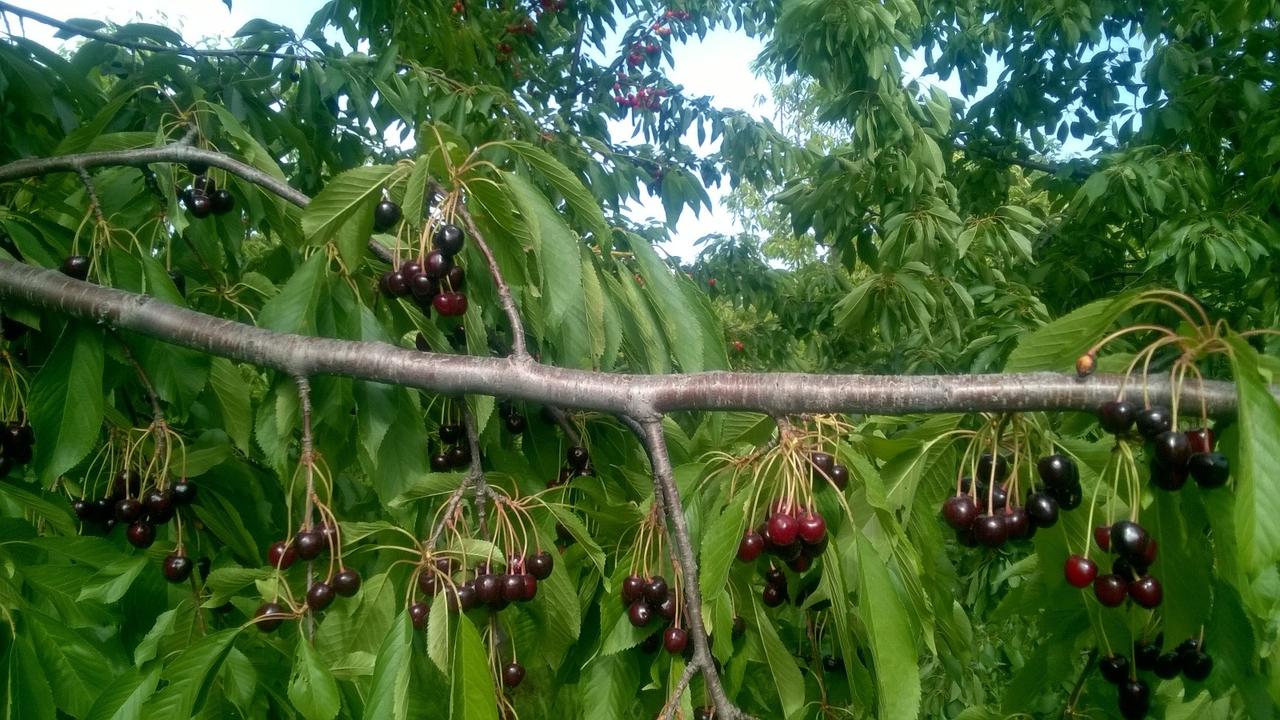
Sultandağı Gılli Kirazı has a fruit flesh color ranging from deep red to black, and its stone separates easily from the flesh. The fruit is generally round in shape and has medium firmness. Its distinguishing physical and chemical properties are as follows:
The cherry blooms between the second half of April and the first week of May, in the region’s sandy-clayey and loamy soils. This early-yielding variety is typically harvested during the month of June.
The cultivation and production of Sultandağı Gılli Kirazı follow specific stages and techniques:
The geographical boundary for the cultivation of the registered product, Sultandağı Gılli Kirazı, includes the districts of Sultandağı and Çay within Afyonkarahisar province.
A monitoring authority has been established to oversee compliance with the production method and the use of the geographical indication. This authority consists of at least three members, coordinated by the Sultandağı District Governorship and the Sultandağı District Directorate of Agriculture and Forestry, with one representative each from the Sultandağı District Directorate of Agriculture and Forestry, the Çay Chamber of Commerce and Industry, and the Sultandağı Agricultural Chamber.
Monitoring is conducted at least once annually; additional inspections may be carried out upon complaint or necessity. Inspections are documented in accordance with the Industrial Property Law and regularly submitted to the Türk Patent ve Marka Kurumu by the Sultandağı District Governorship. Any non-conformities identified during inspections and the necessary corrective measures are communicated to the relevant individuals or institutions.

No Discussion Added Yet
Start discussion for "Sultandağı Gılli Kirazı" article
Product Characteristics
Production Method
Geographical Boundary and Monitoring