


This article was automatically translated from the original Turkish version.
+2 More
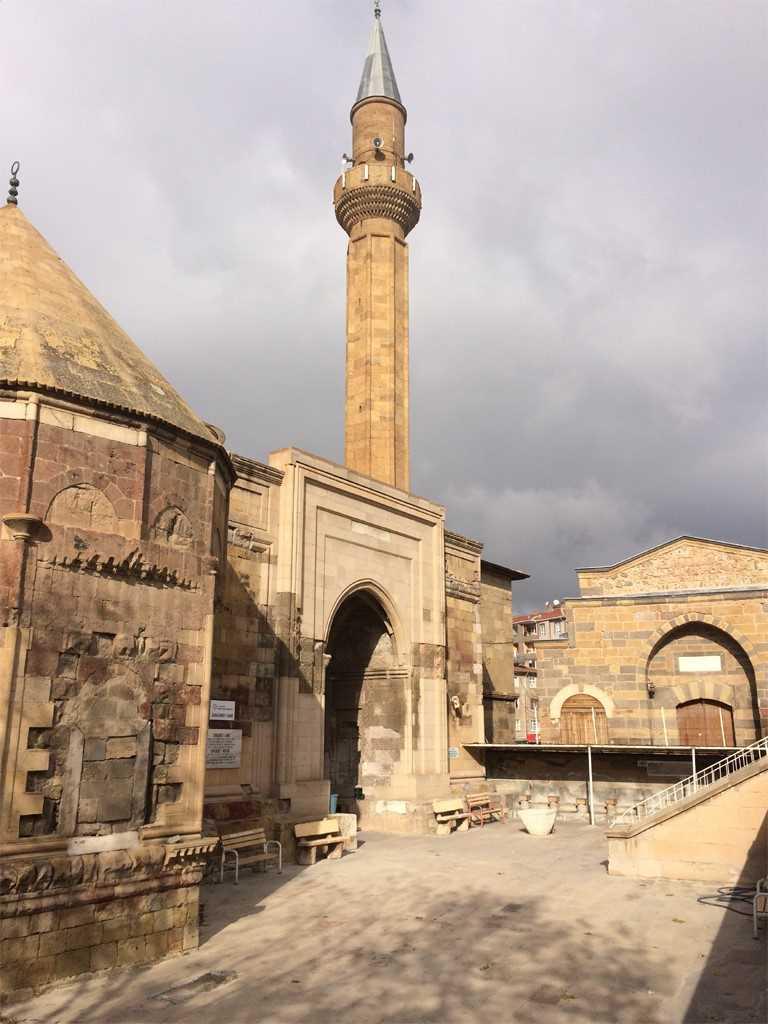
Location | Niğde Center Türkiye Niğde | ||||||||
|---|---|---|---|---|---|---|---|---|---|
Construction Date(s) | 14th century | ||||||||
Patron | Mamluk Governor Sungur Ağa | ||||||||
Architectural Style(s) | Anatolian Seljuk and Mamluk | ||||||||
Building Material | Cut stone | ||||||||
Sungur Bey Camii was commissioned by Sungur Bey, who served as governor of Niğde during the Ilkhanid period. The foundation inscription of the mosque has not survived to the present day. However, a tax inscription dated 735 AH/1335 CE on the base of the minaret indicates that the structure was completed by that date. On the other hand, the inscription on the mosque’s pulpit, which mentions both Sungur Bey and Ilkhanid ruler Abu Sa'id Bahadur Khan, suggests that the building was constructed between 1316 and 1335.
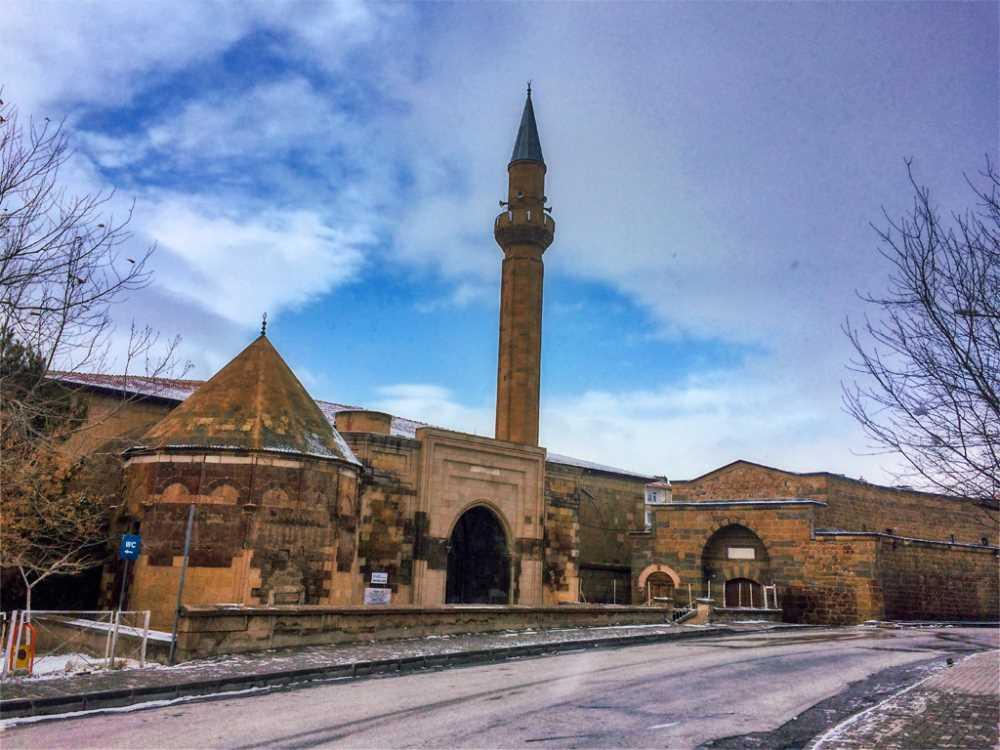
Sungurbey Camii (Türkiye Culture Portal)
The mosque is situated on a sloping terrain oriented east-west and measures 28.45 by 37.10 metres externally. The main structure consists of the prayer hall, the eastern and northern crowned portals, and a tomb adjacent to the southern side of the eastern facade. The building was constructed using fine-cut, pale-colored trachyte stone, with high-quality stonework demonstrating considerable craftsmanship.
At the northeastern corner of the northern facade is a raised entrance known as the “Bey Gate,” accessible from the outside via stairs. The crowned portal on the eastern facade is in the form of an iwan and is flanked symmetrically by two minarets. The placement of this crowned portal on the eastern facade relates to the topography of the site. The double-minaret crowned portal holds a distinctive and prestigious position in Turkish architecture.
The architect of the mosque is unknown. However, the wooden door panels of the pulpit and almost certainly those of the northern crowned portal were crafted by Hoca Ebubekir, while the wooden door panels of the eastern crowned portal were made by a master named Hacı Muhammed in a later period.
The building has been used for various purposes and has suffered damage throughout its history. A tax inscription dated 874 AH/1469–70 CE, located on the eastern crowned portal, indicates that repairs were carried out during this period. In the mid-18th century, while the mosque was being used as a gunpowder store, a fire broke out in the neighborhood, causing extensive damage: the roof system and minarets were completely destroyed. After the fire, the mosque was rebuilt with wooden pillars and a flat earthen roof. Further restoration took place around 1948, during which one of the minarets on the eastern crowned portal was reconstructed.
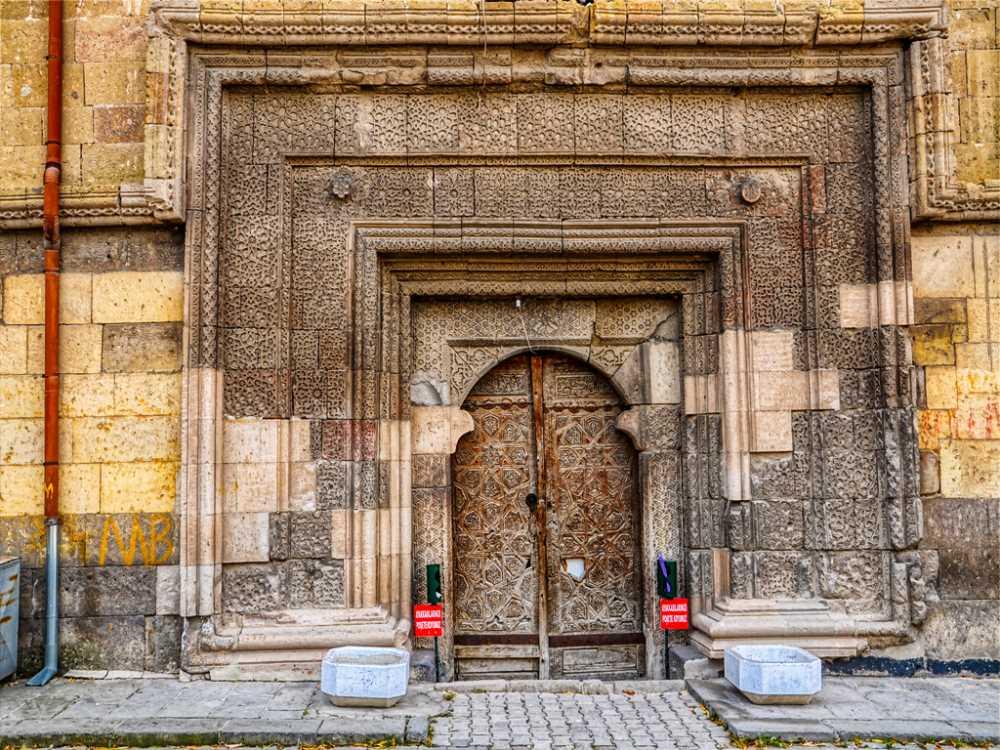
Sungurbey Camii (Türkiye Culture Portal)
Although Sungur Bey Camii has undergone various restorations over the centuries, it has retained its essential character and function to the present day, apart from its minarets and roof system.
Niğde İl Directorate of Culture and Tourism. "Sungurbey Camii" (PDF document). Accessed May 13, 2025. https://nigde.ktb.gov.tr/Eklenti/50176,sungurbey-camipdf.pdf?0.
Türkiye Diyanet Vakfı İslam Ansiklopedisi. "Sungur Ağa Camii ve Türbesi." *İslam Ansiklopedisi*. Accessed May 13, 2025. https://islamansiklopedisi.org.tr/sungur-aga-camii-ve-turbesi.
Türkiye Kültür Portalı. "Sungurbey Camii." Türkiye Kültür Portalı. Accessed May 13, 2025. https://kulturportali.gov.tr/turkiye/nigde/gezilecekyer/sungurbey-cam.

Location | Niğde Center Türkiye Niğde | ||||||||
|---|---|---|---|---|---|---|---|---|---|
Construction Date(s) | 14th century | ||||||||
Patron | Mamluk Governor Sungur Ağa | ||||||||
Architectural Style(s) | Anatolian Seljuk and Mamluk | ||||||||
Building Material | Cut stone | ||||||||
Architectural Features
Historical Development and Restorations
Current Condition