

+1 More

Babası | Ömer Efendi (Kireçcioğulları) | ||||||||
|---|---|---|---|---|---|---|---|---|---|
Annesi | Emine Hanım (Tiyeklioğulları) | ||||||||
Death(Text) | 25 November 1922 | ||||||||
Name(s) | Imam (Sütçü İmam) | ||||||||
Birth(Text) | 1872, Fevzipaşa/Bektutiye Neighborhood, Maraş | ||||||||
Preservation of Memory | Uzunoluk Monument; Liberation Monument; KSÜ; street, neighborhood and schools | ||||||||
Burial | Çınarlı Mosque Cemetery (tomb constructed after 1980) | ||||||||
Historical Role | The person who fired the first shot against the occupying forces in Maraş on 31 October 1919 | ||||||||
Profession(s) | Milk seller volunteer imam of Uzunoluk Mosque | ||||||||
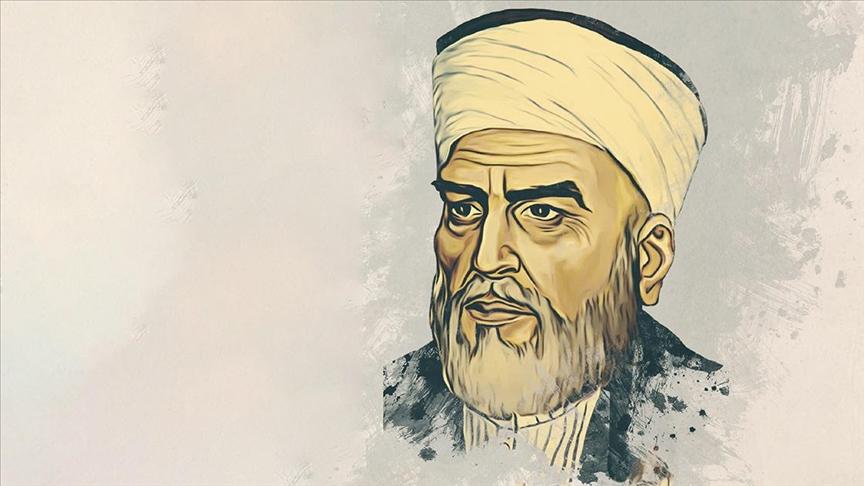
Sütçü İmam is the local resistance leader whose real name was İmam, known for firing the first bullet against occupying forces in Maraş on 31 October 1919, an act that became synonymous with the beginning of the National Struggle in the city. He earned the name “Sütçü İmam” because he earned his livelihood by selling milk; the first bullet he fired is regarded as a turning point in the defense of Maraş and the Southern Front.

The First Bullet Fired by Sütçü İmam (Generated by Artificial Intelligence.)
Sütçü İmam was born in 1872 in the Fevzipaşa (Bektutiye) neighborhood of Kahramanmaraş, the son of Ömer Efendi from the Kireçcioğulları family and Emine Hanım from the Tiyeklioğulları family. From a young age he engaged in trade by selling milk and dairy products, which is why he became known among the public as “Sütçü İmam.” He served voluntarily as an imam at the Uzunoluk Mosque and was known in his neighborhood for his religious knowledge and simple lifestyle. Sources indicate that Sütçü İmam was married and had three daughters and one son.
Following the Armistice of Mudros, Maraş came under British occupation on 22 February 1919; pursuant to the Syria Agreement of 15 September 1919, the region was transferred to French forces on 29 October 1919. Thus, after eight months of British occupation, French rule began. A significant number of Armenian legionaries served among the French troops, altering the social balance in the city. In accordance with the armistice terms, the majority of Armenians who had been relocated during the war returned; the population structure of Maraş and its surroundings changed rapidly.
From the first days of the French occupation, tensions arose in Maraş; on 31 October 1919, an incident near the Uzunoluk Hamam intensified these tensions.
On 31 October 1919, an attempt to uncover the veils of Turkish women exiting the Uzunoluk Hamam was met with resistance by those present. When Çakmakçı Said and his companions were shot and wounded while intervening in the incident, Sütçü İmam, who was in his shop nearby, took his pistol and fired at the occupying soldiers. Thus, the first bullet against the occupying forces in Maraş was fired.
After the incident, it is reported that Sütçü İmam was sought by authorities but was moved from house to house, aided by the physical layout of the neighborhood and community ties, until he reached the Bertiz area. Sources indicate that after his arrival in Bertiz, he contributed to the organization of the Kuvâ-yı Milliye forces there.
The first bullet fired by Sütçü İmam is recognized as the beginning of a 22-day resistance movement in Maraş. Immediately after the incident, defense organizations began forming in the city; neighborhoods organized themselves internally, Müdafaa-i Hukuk structures strengthened, and a struggle involving all segments of the population was waged against the French occupation.
As a result of this struggle, Maraş was liberated from occupation on 12 February 1920; in recognition of the resistance shown, the city was awarded the Independence Medal on 5 April 1925.

The Pistol of Sütçü İmam (Anadolu Agency)
After the liberation of Maraş, Sütçü İmam was appointed to an administrative role within the municipal organization and entrusted with the management of the cannon at the city fortress. During preparations for a 101-gun salute celebrating the accession of Caliph Abdülmecid in 1922, gunpowder ignited, causing him severe burns. He was taken to the German Training Hospital, where he died on 25 November 1922 and was buried in the Çınarlı Camisi Cemetery. His grave was later converted into a tomb after 1980.

The Monument to Sütçü İmam in Uzunoluk Square (Anadolu Agency)
The name of Sütçü İmam is preserved in Kahramanmaraş through numerous neighborhoods, streets, schools, cultural institutions, and most notably a university. A monument and fountain were erected at Uzunoluk Square, the site where the first bullet was fired, and a Liberation Monument was built at Kıbrıs Square. Additionally, the Sütçü İmam incident is presented to visitors through three-dimensional reconstructions at the Kahramanmaraş Liberation Epic Panorama Museum. In the literature of the National Struggle, his act is regarded as the starting point of the defense of Maraş and is recounted in various books, research papers, articles, and theatrical works.
AA (Anadolu Ajansı). "Millî Mücadelenin Unutulmaz Kahramanı Sütçü İmam." Anadolu Ajansı. Accessed November 24, 2025. https://www.aa.com.tr/tr/kultur/milli-mucadelenin-unutulmaz-kahramani-sutcu-imam/3403394
Anadolu Ajansı. "Millî Mücadelenin Fitilini Ateşleyen Kahraman: Sütçü İmam." Accessed November 24, 2025. https://www.aa.com.tr/tr/yasam/milli-mucadelenin-fitilini-atesleyen-kahraman-sutcu-imam/2430102
Anadolu Ajansı. “Maraş’ın İşgalinde Düşmana İlk Kurşunu Sıkan Kahraman: Sütçü İmam.” Accessed November 24, 2025. https://www.aa.com.tr/tr/portre/marasin-isgalinde-dusmana-ilk-kursunu-sikan-kahraman-sutcu-imam/2025812
Anadolu Ajansı. “Millî Mücadelenin Kahramanlarından Sütçü İmam Hafızalardan Silinmiyor.” Accessed November 24, 2025. https://www.aa.com.tr/tr/portre/milli-mucadelenin-kahramanlarindan-sutcu-imam-hafizalardan-silinmiyor/2746897
Atatürk Araştırma Merkezi. *Millî Direnişten İstiklâl Harbi’nin İlk Zaferine: Maraş’ın Kurtuluşunun 100. Yılı*, edited by Nejla Günay and Hüseyin Tosun. Ankara: Atatürk Kültür, Dil ve Tarih Yüksek Kurumu Yayınları, 2021. Accessed November 24, 2025. https://atam.gov.tr/wp-content/uploads/2023/06/MARASIN-KURTULUSUNUN-100.-YILI-E-YAYIN.pdf
Eyicil, Ahmet. “Maraş’ın Örgütlü Bir Şekilde Savunulması.” *Kahramanmaraş Sütçü İmam Üniversitesi Sosyal Bilimler Dergisi* 17 (Special Issue) (2020): 59–88. https://doi.org/10.33437/ksusbd.668228
Günay, Nejla. “Sütçü İmam (1871–1922).” *Atatürk Ansiklopedisi.* Accessed November 24, 2025. https://ataturkansiklopedisi.gov.tr/detay/311/S%C3%BCt%C3%A7%C3%BC_%C4%B0mam_(1871-1922)
Kahramanmaraş Sütçü İmam University. "Sütçü İmam (1872–1922)." KSÜ Resmî Sitesi. Accessed November 24, 2025. https://www.ksu.edu.tr/Default.aspx?SId=21362
Kalaycı, İsa. “National Struggle of Maras in National and Foreign Press.” *Kahramanmaraş Sütçü İmam Üniversitesi Sosyal Bilimler Dergisi* 17 (Milli Mücadelenin 100. Yılında Kahramanmaraş Özel Sayısı) (2020): 89–112. Accessed November 24, 2025. https://avesis.mku.edu.tr/yayin/3a80c633-366c-421b-ad3a-4269f11db6bc/yerli-ve-yabanci-basinda-marasin-milli-mucadelesi
Uslu, Ahmet. “Cahit Zarifoğlu’nun ‘Sütçü İmam’ Adlı Tiyatro Eseri Üzerine Bir İnceleme.” *The Journal of International Social Research* 9, no. 45 (2016): 226–236. Accessed November 24, 2025. https://www.researchgate.net/publication/307442011_CAHIT_ZARIFOGLU_NUN_SUTCU_IMAM_ADLI_TIYATRO_ESERI_UZERINE_BIR_INCELEME
Şavkılı, Cengiz. “Maraş’ın Kurtuluş Bayramı Kutlamaları ve Basına Yansımaları (1920–1950).” *Ankara Üniversitesi Türk İnkılâp Tarihi Enstitüsü Atatürk Yolu Dergisi* 61 (2017): 309–340. Accessed November 24, 2025. https://www.researchgate.net/publication/322080126_Maras'in_kurtulus_bayrami_kutlamalari_ve_basina_yansimalari_1920-1950

Babası | Ömer Efendi (Kireçcioğulları) | ||||||||
|---|---|---|---|---|---|---|---|---|---|
Annesi | Emine Hanım (Tiyeklioğulları) | ||||||||
Death(Text) | 25 November 1922 | ||||||||
Name(s) | Imam (Sütçü İmam) | ||||||||
Birth(Text) | 1872, Fevzipaşa/Bektutiye Neighborhood, Maraş | ||||||||
Preservation of Memory | Uzunoluk Monument; Liberation Monument; KSÜ; street, neighborhood and schools | ||||||||
Burial | Çınarlı Mosque Cemetery (tomb constructed after 1980) | ||||||||
Historical Role | The person who fired the first shot against the occupying forces in Maraş on 31 October 1919 | ||||||||
Profession(s) | Milk seller volunteer imam of Uzunoluk Mosque | ||||||||
Life
The Occupation of Maraş and Social Conditions
The Event of 31 October 1919 and the First Bullet
His Role in the National Struggle
Post-War Duties and Death
Legacy