

This article was automatically translated from the original Turkish version.
+2 More
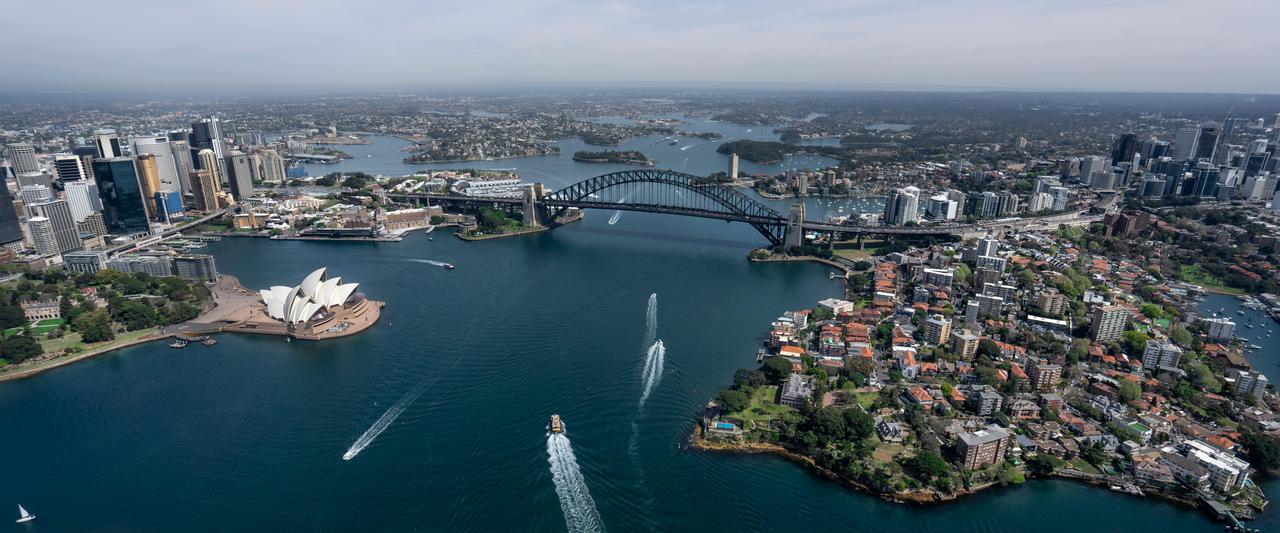
Sydney Harbour Bridge, Australia, is a large-scale arch bridge connecting the northern and southern shores of Sydney Harbour. Opened in 1932, the bridge was constructed according to the engineering conditions of its time and contributed significantly to Sydney’s development. Due to its technical features and symbolic status at the national level, the bridge, with its arch span, pylons and steel construction, holds a place in Australia’s cultural heritage.

Sydney Harbour Bridge (Flickr)
The construction of the Sydney Harbour Bridge followed various discussions and planning processes. The idea of a bridge linking the northern and southern shores of the harbour was first proposed in 1815 by convict architect Francis Greenway to Governor Macquarie, but the idea was not implemented for many years. In 1916, engineer John Job Crew Bradfield developed a design that planned the bridge not only as a crossing structure but also as part of a broader transportation system incorporating both rail and road connections. This planning approach shaped the bridge’s role within Sydney’s transport network.【1】
In 1924, a contract for the bridge’s construction was awarded to Dorman Long & Company, a firm based in Middlesbrough, England, and construction began the same year. The work lasted eight years and involved more than 2,000 workers. The bridge was completed in 1932 and opened during the Great Depression. The opening ceremony, attended by approximately one million people, became one of the most significant social events in Australian history.【2】

Sydney Harbour Bridge (Pexels)
The construction of the Sydney Harbour Bridge was carried out as an engineering project beginning in 1924 and continuing for eight years. The project aimed to realize an arch bridge connecting Sydney’s northern and southern shores. The construction was executed using the technical capabilities of the era and was completed and opened in 1932. The process encompassed various stages—from contracting and initial planning to labor and cost calculations and material usage—and stood as one of the most significant engineering endeavors of its time.
The contract for the construction of the Sydney Harbour Bridge was signed in 1924 with Dorman Long & Company, based in Middlesbrough, England. This company, active in heavy industry and steel production during the period, undertook the bridge’s construction. Following the contract, construction began the same year, with the design implemented according to the general specifications prepared by John Job Crew Bradfield. In line with Bradfield’s design, the bridge was structured as part of a system that included both rail and road connections. This initial phase represented a fundamental step in planning the bridge’s function within modern Sydney’s transport infrastructure and established the practical framework for subsequent construction activities.【3】

Sydney Harbour Bridge (Pixabay)
More than 2,000 workers were employed during the construction of the Sydney Harbour Bridge, which lasted eight years. Workers from various trades were hired, including stone masons and ironworkers brought in from abroad. Due to inadequate safety conditions during construction, sixteen workers lost their lives. Additionally, approximately 800 families living in the area were forcibly relocated without compensation. The total cost of the project was recorded at 4.2 million pounds, a significant sum for engineering projects of that era. These figures highlight the economic and social dimensions of the bridge’s construction.【4】
Advanced material technologies of the era were employed in the construction of the Sydney Harbour Bridge. The main load-bearing element, the arch, was fabricated from steel, with these steel components produced in England and transported to Sydney. The pylons were constructed using reinforced concrete and strengthened with granite cladding on their exterior surfaces. Rivets were used throughout the construction to join the steel sections. The choice of materials was made to ensure the bridge’s durability and long-term usability, positioning the structure among the notable engineering and architectural projects of its time.
The Sydney Harbour Bridge was officially opened on 19 March 1932 in a ceremony that, despite occurring during the Great Depression, was widely regarded as a national symbol of optimism.【5】 The ceremony, attended by approximately one million people, was one of the most heavily attended public events of its time.【6】 One notable incident during the opening was when Francis de Groot, a member of the New South Wales Mounted Rifles, rode on horseback and cut the ribbon with his sword before the official ceremony. The act caused brief confusion, but the event proceeded as planned.【7】

Sydney Harbour Bridge (Pexels)
The opening of the bridge significantly impacted Sydney’s transport system by establishing a direct link between the city’s northern and southern shores. This development enhanced the city’s transport network and accessibility, and the bridge quickly became one of Australia’s most iconic structures. Following its opening, the bridge attracted attention for both its engineering features and social significance.
The Sydney Harbour Bridge was designed as an arch bridge using the engineering techniques of its era. The main load-bearing element is the wide steel arch connecting the northern and southern shores of the harbour. The bridge was planned to serve both road and rail traffic, making it a multifunctional transport structure. The pylons supported the arch’s load-bearing elements, while the use of steel enhanced the structure’s durability. The bridge’s carrying capacity was calculated to meet the heavy load and high traffic conditions of the time, thereby contributing significantly to the modern transport infrastructure of Sydney from both a technical and architectural perspective.
The main architectural feature of the Sydney Harbour Bridge is the wide steel arch connecting the two sides of the harbour. The arch has a span of 503 metres, placing the bridge among the largest steel arch bridges internationally. The total length of the bridge is 1,149 metres, and its highest point above sea level is 134 metres.【8】 The arch structure was designed to form the central component of the bridge’s load-bearing system. These dimensions demonstrate that the bridge was appropriately designed according to the engineering standards of its time and became a critical transit point within Sydney’s transport network.

Sydney Harbour Bridge (Flickr)
The pylons of the Sydney Harbour Bridge were constructed as structural elements supporting the load-bearing components. These reinforced concrete pylons were strengthened with granite cladding on their exterior surfaces, enhancing the structure’s material properties. The bridge’s main load-bearing system consists of steel; approximately 53,000 tons of steel were used, all produced in England and transported to Sydney. Around six million rivets were used to join the steel components, contributing to the structural integrity of the bridge.【9】 The pylons and steel usage have ensured the bridge’s place among the most significant engineering and architectural projects of its era.
The Sydney Harbour Bridge carries eight lanes of road traffic, two railway lines, a pedestrian walkway, and a bicycle path.【10】 This arrangement was designed to serve daily traffic flows and connect Sydney’s northern and southern shores. The bridge’s carrying capacity was determined by engineering calculations of the time and provided technically adequate capacity for transporting heavy loads.
From an engineering perspective, the bridge was designed using the steel arch structure and riveting techniques characteristic of its era. The wide span of the arch, the materials used, and the structure’s lifespan were all supported by the applied engineering methods and materials. These features have ensured that the Sydney Harbour Bridge is cited as a model example in both national and international engineering literature.

Sydney Harbour Bridge (Pixabay)
Since its opening, the Sydney Harbour Bridge has been a recognized structure in Australia. It is not merely a transport structure but also one of the major engineering projects constructed during the country’s modernization process. Over time, the bridge has become one of the iconic structures of Sydney’s skyline, alongside the Opera House.
The bridge has served as a venue for national celebrations and public events. Particularly, the New Year’s Eve fireworks displays have established the bridge as a globally recognized landmark. Additionally, the bridge has been used as a meeting point for sporting events, walks, and various social gatherings. Through these functions, the Sydney Harbour Bridge has provided a spatial framework not only for its engineering features but also for its role in public life.
Since its opening, the Sydney Harbour Bridge has been subject to regular conservation and management processes. Official bodies responsible for its maintenance have conducted periodic inspections to ensure the structural integrity, traffic safety, and functionality of the bridge. Regular inspections of the steel arch and pylons, testing of rivet integrity, and protection of surfaces against corrosion have been key components of its conservation and management. Additionally, to accommodate increasing traffic volumes, the bridge has undergone various modifications over time, including reconfiguration of lanes and integration of technological systems, to meet modern traffic and safety requirements. These comprehensive conservation and management activities have contributed to preserving the bridge’s engineering and functional characteristics.
De Grijs, Richard, and Andrew P. Jacob. “Sydney’s Scientific Beginnings: William Dawes’ Observatories in Context.” *Journal of Astronomical History and Heritage.* (2021): 1-39. Accessed March 25, 2026. https://arxiv.org/abs/2101.08974
Department of Climate Change, Energy, the Environment and Water. “National Heritage Places – The Sydney Harbour Bridge.” *Australian Heritage Council*. September 14, 2022. Accessed March 25, 2026. https://www.dcceew.gov.au/parks-heritage/heritage/places/national/sydney-harbour-bridge
Department of Climate Change, Energy, the Environment and Water. “Sydney Harbour Bridge – National Heritage Assessment.” Australian Heritage Council. October 10, 2021. Accessed March 25, 2026. https://www.dcceew.gov.au/parks-heritage/heritage/organisations/australian-heritage-council/national-heritage-assessments/sydney-harbour-bridge
Godden Mackay Logan Pty Ltd. “Sydney Harbour Bridge—Conservation Management Plan 2007.” Roads and Traffic Authority (RTA). (2007): 1-247. Accessed March 25, 2026. https://www.transport.nsw.gov.au/system/files/media/documents/2023/sydney-harbour-bridge-conservation-management-plan_0.pdf
GoodGuyPaul. “Sidney, Harbour köprüsü, Avustralya görseli.” Pixabay. Accessed March 25, 2026. https://pixabay.com/tr/photos/sidney-harbour-k%c3%b6pr%c3%bcs%c3%bc-avustralya-1676597/
Kathleen. “Harbour Bridge.” Flickr. Accessed March 25, 2026. https://www.flickr.com/photos/72821066@N04/26838168276/
Mudassir, Ali. “Port Jackson'ın Havadan Görünümü.” Pexels. Accessed March 25, 2026. https://www.pexels.com/tr-tr/fotograf/port-jackson-in-havadan-gorunumu-1619854/
Olimpio, Gilberto. “Sydney, NSW, Australia.” Pexels. Accessed March 25, 2026. https://www.pexels.com/tr-tr/fotograf/kent-sehir-nehir-irmak-8032554/
Shakya, Nishess. “Sidney Liman Köprüsü.” Pexels. Accessed March 25, 2026. https://www.pexels.com/tr-tr/fotograf/sidney-liman-koprusu-i-22498624/
T. Joseph, Juby. “By the Harbour.” Flickr. Accessed March 25, 2026. https://www.flickr.com/photos/jubyj/22120851562/
Tomchill. “Havai fişek, Liman, Gece görseli.” Pixabay. Accessed March 25, 2026. https://pixabay.com/tr/photos/havai-fi%c5%9fek-liman-gece-kutlama-su-4021214/
Tomchill. “Sidney Harbour Bridge, Live Sydney, Live 2019 Image.” Pixabay. Accessed March 25, 2026. https://pixabay.com/tr/photos/sidney-liman-k%c3%b6pr%c3%bcs%c3%bc-canl%c4%b1-sydney-4229597/
[1]
Department of Climate Change, Energy, the Environment and Water, “National Heritage Places – The Sydney Harbour Bridge,” Australian Heritage Council, 14 September 2022, Last Access: 25 March 2026, https://www.dcceew.gov.au/parks-heritage/heritage/places/national/sydney-harbour-bridge
[2]
A.e.,
[3]
A.e.,
[4]
A.e.,
[5]
Department of Climate Change, Energy, the Environment and Water, “Sydney Harbour Bridge – National Heritage Assessment,” Australian Heritage Council, 10 October 2021, Last Access: 25 March 2026, https://www.dcceew.gov.au/parks-heritage/heritage/organisations/australian-heritage-council/national-heritage-assessments/sydney-harbour-bridge
[6]
Department of Climate Change, Energy, the Environment and Water, “National Heritage Places – The Sydney Harbour Bridge,” Australian Heritage Council, 14 September 2022, Last Access: 25 March 2026, https://www.dcceew.gov.au/parks-heritage/heritage/places/national/sydney-harbour-bridge
[7]
Godden Mackay Logan Pty Ltd, “Sydney Harbour Bridge—Conservation Management Plan 2007,” Roads and Traffic Authority (RTA), (2007): 17, Last Access: 25 March 2026, https://www.transport.nsw.gov.au/system/files/media/documents/2023/sydney-harbour-bridge-conservation-management-plan_0.pdf
[8]
Godden Mackay Logan Pty Ltd, “Sydney Harbour Bridge—Conservation Management Plan 2007,” Roads and Traffic Authority (RTA), (2007): Search The Australian Heritage Database Page 3 of 6, Last Access: 25 March 2026, https://www.transport.nsw.gov.au/system/files/media/documents/2023/sydney-harbour-bridge-conservation-management-plan_0.pdf
[9]
Department of Climate Change, Energy, the Environment and Water, “National Heritage Places – The Sydney Harbour Bridge,” Australian Heritage Council, 14 September 2022, Last Access: 25 March 2026, https://www.dcceew.gov.au/parks-heritage/heritage/places/national/sydney-harbour-bridge
[10]
Godden Mackay Logan Pty Ltd, “Sydney Harbour Bridge—Conservation Management Plan 2007,” Roads and Traffic Authority (RTA), (2007): 31, Last Access: 25 March 2026, https://www.transport.nsw.gov.au/system/files/media/documents/2023/sydney-harbour-bridge-conservation-management-plan_0.pdf

No Discussion Added Yet
Start discussion for "Sydney Harbour Bridge" article
History
Construction Process
Contract and Initiation
Labor and Cost
Material Usage
Opening and Social Impact
Architectural and Technical Features
Arch Structure and Dimensions
Pylons and Steel Usage
Carrying Capacity and Engineering Significance
Cultural and National Symbol
Conservation and Management