


This article was automatically translated from the original Turkish version.
+1 More
System Room (Data Center)
Name(s) | Server Room (Data Center) | ||||||||
|---|---|---|---|---|---|---|---|---|---|
Definition(s) | A specially secured room housing information processing equipment | ||||||||
Primary Objective | To securely ensure data processing, storage, and transmission | ||||||||
Critical Components | Servers, switches, UPS, air conditioning, fire and humidity sensors | ||||||||
Security Measures | Fingerprint, camera, alarm, fire suppression | ||||||||
Foundation Structure | Antistatic, raised floor (minimum 40–50 cm) | ||||||||
Cooling System | Redundant air conditioning, hot/cold air corridors | ||||||||
Fire Protection | FM-200 gas-based system, smoke detector | ||||||||
Critical Role | Continuity of corporate services and data security | ||||||||
A system room (or “data center”) is a specially secured area that forms the foundation of an organization’s IT infrastructure, housing servers, data storage units, network switches, and other active devices protected by high-level security measures. These rooms are designed to operate continuously and reliably to ensure the processing, storage, and secure transmission of data.
Operating a system room under unsuitable conditions can lead to shortened hardware lifespan, reduced performance, data loss, and widespread service disruptions across the organization. Therefore, system rooms are critically important for the sustainability of IT services.

Anadolu Ajansı data center (AA)
Selecting the location for a system room is of great importance for infrastructure security. The ideal location should be away from areas prone to water leaks such as water pipes, sinks, or ceilings, preferably on an upper floor rather than a basement, and must be dry, humidity-free, and shielded from direct sunlight.
In addition, lightning protection systems such as lightning rods must be installed, and cabling should be routed away from the system room. The facility must be constructed to withstand seismic risks and located at a safe distance from natural gas and flammable material storage areas.

Visual of system room interior structure (AA)
A typical system room includes the following sections:
Walls should be covered with fire-resistant gypsum board, ceilings should be insulated with acoustic stone wool material, and the floor must be designed as an elevated, anti-static raised floor.
The electrical infrastructure of system rooms must be supplied via dual circuits (dual feed), and all electrical connections must be routed through UPS systems. Redundant power sources, such as those designed according to the N+1 rule, should be implemented to prevent service interruptions.
High-performance devices generate significant heat. Therefore, precisely controlled air conditioning systems must create cold aisles and hot aisles, with air conditioners operating in redundant configurations. The ambient temperature should be maintained between 18–27 °C, and relative humidity between 40–60%.
Fire suppression systems should use non-halon gas-based solutions such as FM200. Smoke detectors must be installed both on the ceiling and beneath the raised floor. To mitigate the risk of flooding, water detectors should be placed at multiple levels, and the system must trigger alerts when humidity levels exceed critical thresholds.
Cabling must comply with structural standards; power and data cables must be routed on separate pathways. Fiber optic cables should be installed in areas free from electromagnetic interference, and cables compatible with 10 Gbps speeds are preferred. Grounding must be carried out in accordance with the Regulation on Grounding of Electrical Installations.
For physical access security, multi-stage biometric fingerprint readers, key-controlled entry points, and IP camera surveillance systems must be used. Additionally, an SMS-based alert system should be implemented to provide real-time notifications to responsible personnel.

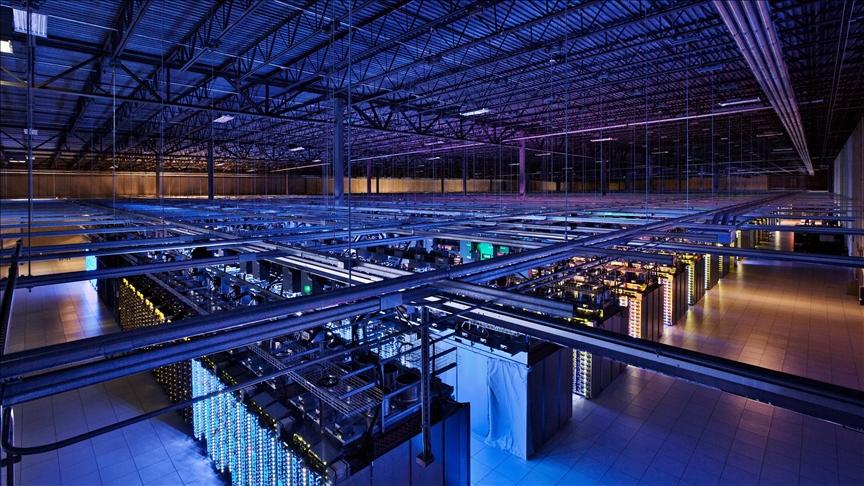
Google data center (AA)
Sensors monitoring environmental variables and device status must generate alarms in response to conditions such as temperature fluctuations, humidity changes, or power outages. These systems should be accessible for remote control via both the local network and the internet.
System rooms are not merely server hosting spaces; they are secure centers upon which all of an organization’s digital processes depend. Therefore, the design and management of system rooms require specialized expertise. Each component—power, air conditioning, fire protection, humidity control, and access security—must be planned as an integrated system, and the infrastructure must always be designed with scalability in mind.
Accessed November 26, 2025.
Banadersanlat. “Sistem Odası (Datacenter) Nasıl Olmalı?” Banadersanlat.com. Accessed May 15, 2025. https://banadersanlat.com/sistem-odas-datacenter-nasl-olmal/
Dörterler, Murat, Vildan Ateş, and Mustafa Açıkgöz. "Üniversite Sistem Odası Kurulumu: Gazi Üniversitesi Örneği." Akademik Bilişim’12 Bildirileri, 1–3 February 2012, Uşak Üniversitesi, pp. 309–315.
Ek PDF. "Sistem Odası’nın Önemi ve Standartları." ODTÜ BİDB ve Diğer Kaynaklar, Accessed May 15, 2025.
Medium. "Sistem Odası Güvenliği." Databulls / Medium.com. Accessed May 15, 2025. https://medium.com/databulls/sistem-odas%C4%B1-g%C3%BCvenli%C4%9Fi-86ef38ad3458
Çözümpark. "Sistem Odası Kurulumu ve Network Dizaynına Dair Saha Gözlemleri." Çözümpark.com. Accessed May 15, 2025. https://www.cozumpark.com/sistem-odas-kurulumu-ve-network-dizayn-na-dair-saha-g-zlemler/

System Room (Data Center)
Name(s) | Server Room (Data Center) | ||||||||
|---|---|---|---|---|---|---|---|---|---|
Definition(s) | A specially secured room housing information processing equipment | ||||||||
Primary Objective | To securely ensure data processing, storage, and transmission | ||||||||
Critical Components | Servers, switches, UPS, air conditioning, fire and humidity sensors | ||||||||
Security Measures | Fingerprint, camera, alarm, fire suppression | ||||||||
Foundation Structure | Antistatic, raised floor (minimum 40–50 cm) | ||||||||
Cooling System | Redundant air conditioning, hot/cold air corridors | ||||||||
Fire Protection | FM-200 gas-based system, smoke detector | ||||||||
Critical Role | Continuity of corporate services and data security | ||||||||
Location and Physical Conditions
Construction Features and Zoning
Power and Redundancy
Cooling and Air Conditioning
Fire, Smoke, Water, and Humidity Detection Systems
Cabling and Grounding
Security and Monitoring
System Monitoring and Management