


This article was automatically translated from the original Turkish version.
+1 More
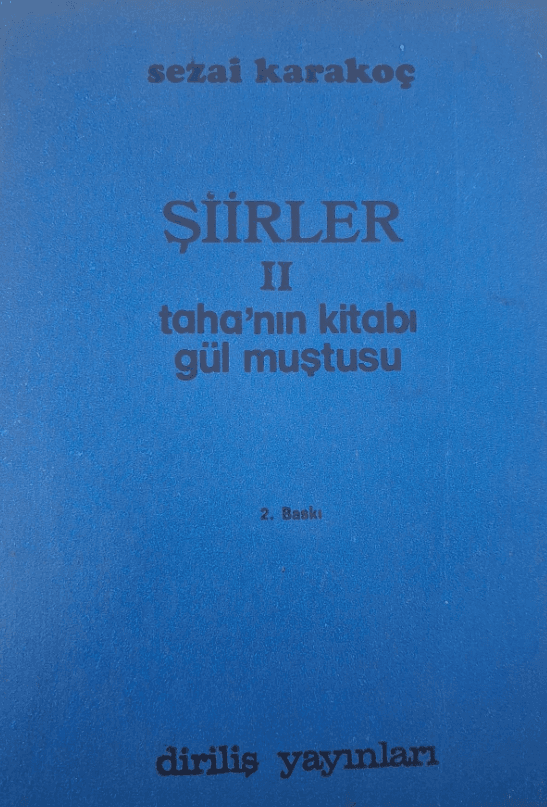
Taha'nın Kitabı Gül Muştusu
"Gül Muştusu" is a poetic work by Sezai Karakoç, written in verse form and published as a book under this title. It was first released independently in 1969 by Diriliş Yayınları. In subsequent editions, it was published together with the work "Taha’nın Kitabı."
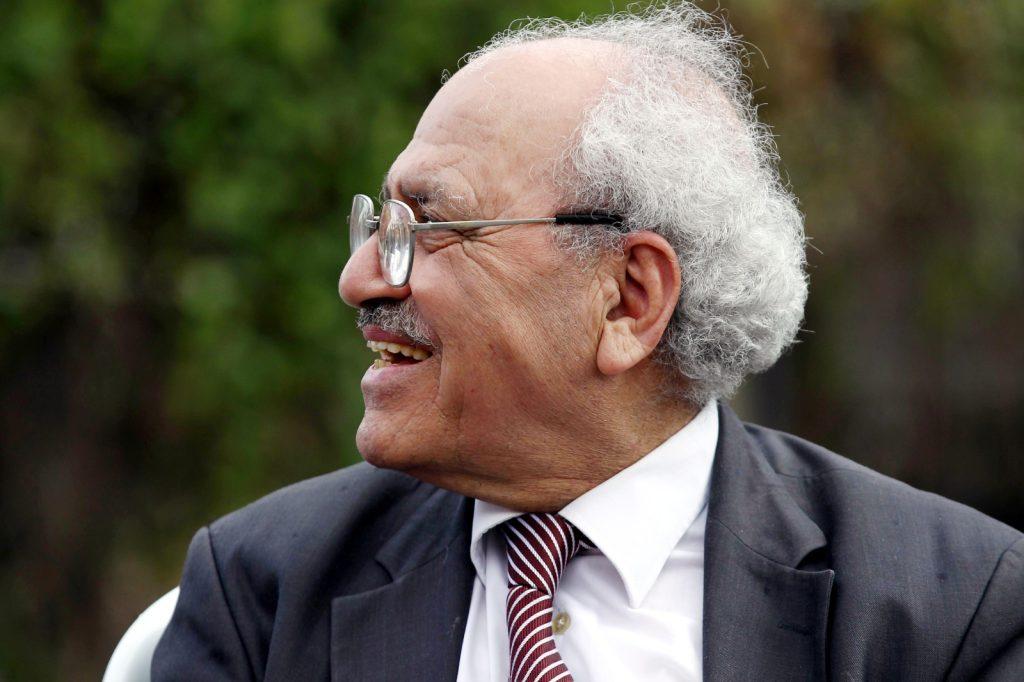
Sezai Karakoç (İnsicam Magazine)
The poem titled Gül Muştusu consists of fourteen sections and is constructed through imagery and metaphors centered on the theme of love. In the poem, the image of the rose is not merely a botanical element but also carries symbolic meaning within the Islamic tradition, representing the Prophet Muhammad (peace be upon him). This usage strengthens the work’s religious and cultural references. Sezai Karakoç establishes a direct connection between the image of the rose and the idea of "revival." In this context, the rose functions both as an aesthetic symbol of beauty and as an emblem of spiritual awakening and rebirth. The layered meaning attributed by the poet to the rose reveals its central position as a symbol within his literary vision.
Gül Muştusu is today classified as a "modern mesnevi." The entire work is structured around the image of the rose. The poet holds the belief that revival is possible only through responding to and following the call and message of the Prophet Muhammad (peace be upon him). This conviction is expressed in Gül Muştusu through the symbol of the rose.
"The rose will come
To say the rose is coming is to say the Day of Judgment is near
The rose is the Prophet’s scent, the Prophet’s voice
The opened palm-leaf manuscript of the East
The flower of suffering in my torn heart"【1】
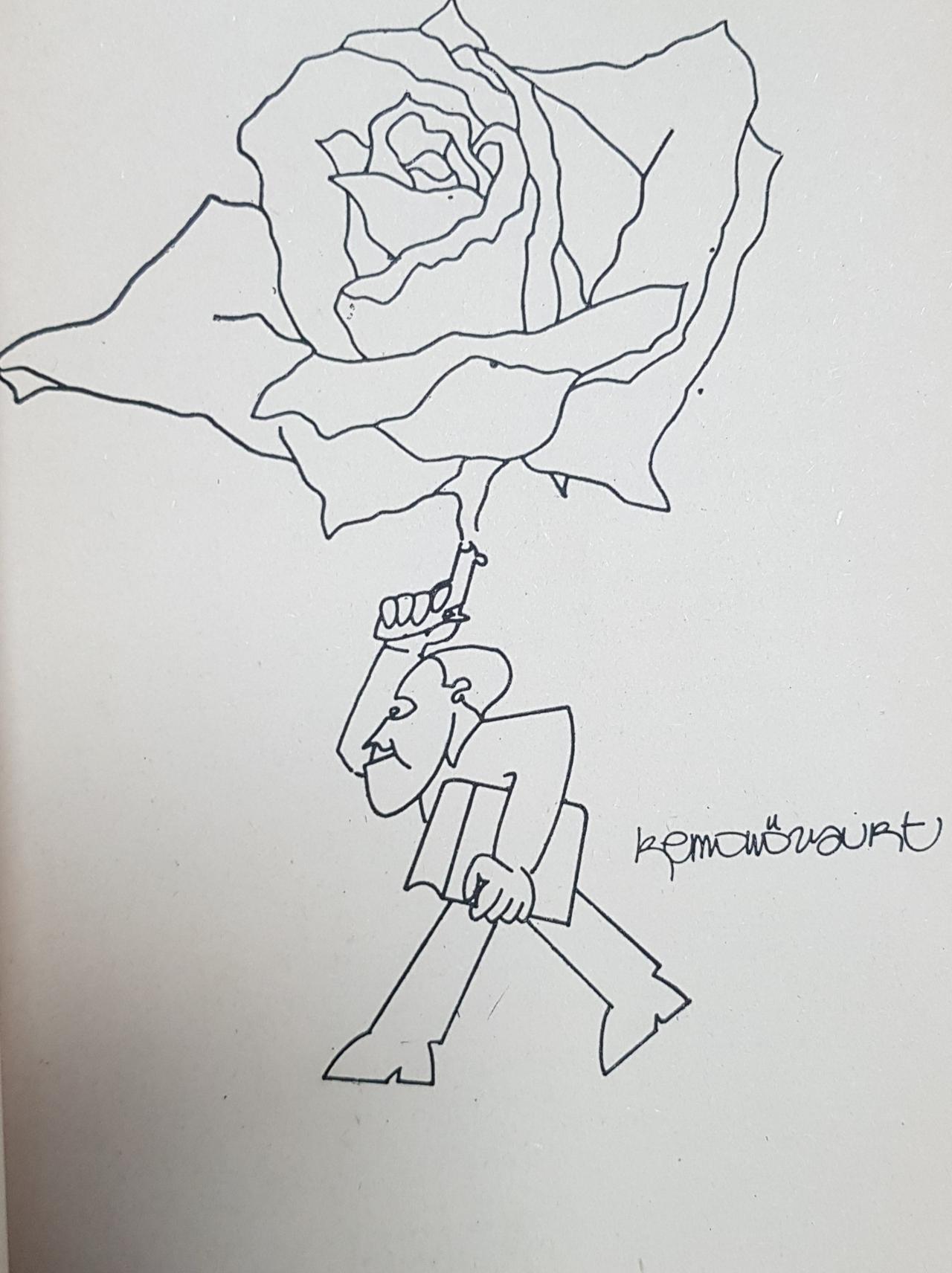
Sezai Karakoç – Drawing by Kemal Özyurt (İnsicam Magazine)
In Gül Muştusu, Sezai Karakoç positions the rose as the source of revival, endowing this image with spiritual meaning as well as new associations. The rose, whose world of meaning is deepened through these associations, is linked in the poem to the Prophet’s voice, civilization, essence, spring, Hızır’s whisper, the Prophet’s blessing of spring, sherbet, public fountain, prayer, tree, child, messenger, life, beauty, love, freshness, and birth.
The poet’s conception of civilization is also articulated through the image of the rose, described as a "civilization of roses." In this context, place names such as Karacadağ, Dicle, Fırat, Jerusalem, Mecca, Medina, Samarkand, Tashkent, Diyarbakır, Baghdad, and Damascus are mentioned both metaphorically and as actual geographical locations. Thus, the rose becomes a multidimensional symbol encompassing cultural, geographical, and civilizational dimensions.
"Between Dicle and Fırat
In silk-lined pavilions where the Qur’an is recited
Roses drift through open windows
Burned in the white foam of the sun
A city, a land of ancient wings
Waiting for spring at the edge of death
A country that builds a coffin from the rose tree
And enters within it"
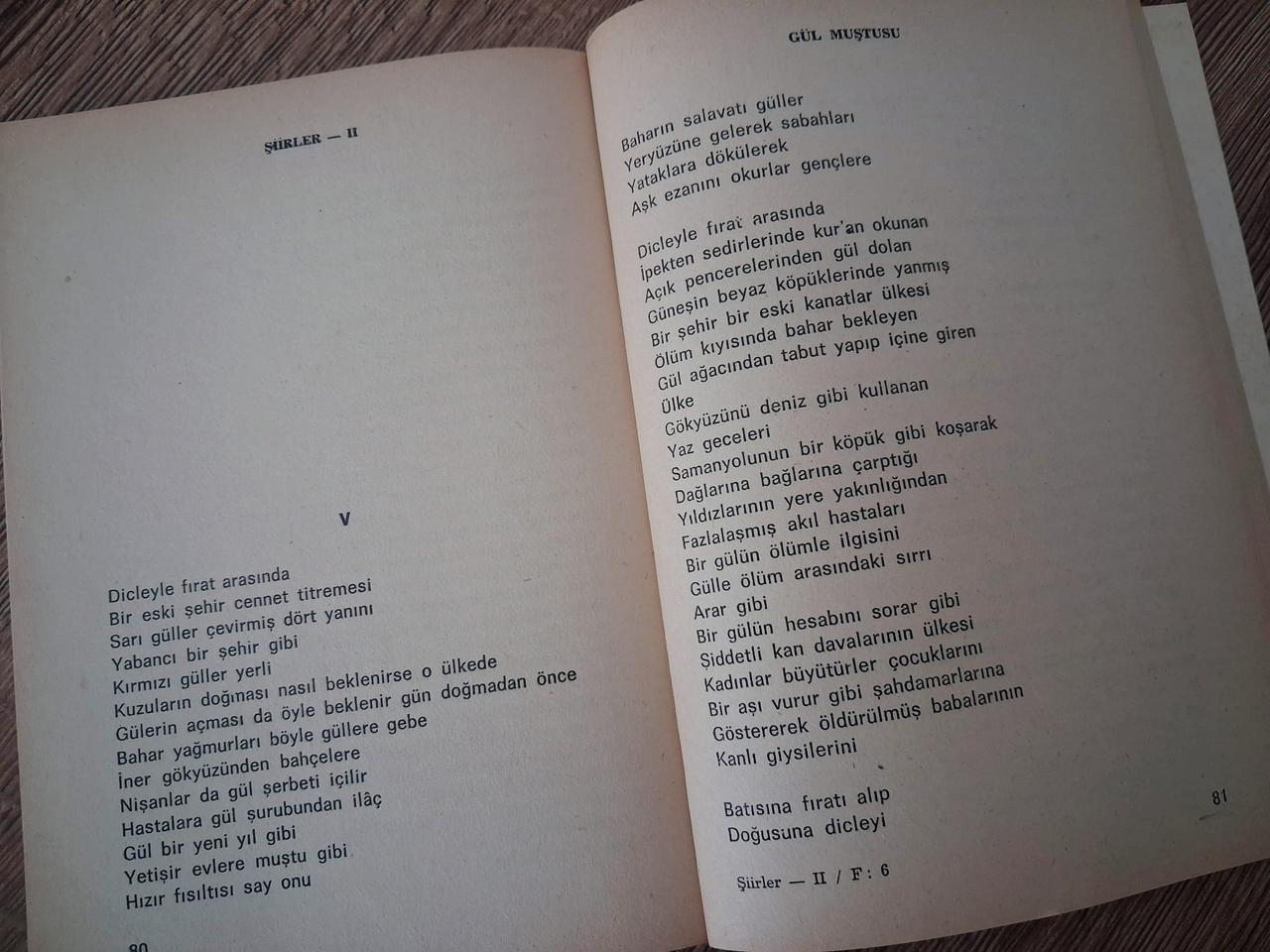
Şiirler II – Taha’nın Kitabı Gül Muştusu
Mahmut Hakkı Akın. Sezai Karakoç'un Başarı Hikayesi (2022). Accessed June 17, 2025. https://insicam.net/2022/03/07/sezai-karakocun-basari-hikayesi/
Mustafa Balcı, "Gül Muştusu ve Sezai Karakoç’un Şiir Dili Üzerine". İnsicam Dergisi (2022). Accessed May 25, 2025. https://insicam.net/2022/03/07/gul-mustusu-ve-sezai-karakocun-siir-dili-uzerine/
Mustafa Karabulut. "SEZAİ KARAKOÇ’UN ŞİİRLERİNDE GÜL SAĞNAĞI." Adıyaman Üniversitesi Fen-Edebiyat Fakültesi, 2. INTERNATIONAL MARMARA SCIENTIFIC RESEARCH AND INNOVATION CONGRESS (2022). Accessed June 17, 2025. https://turkoloji.cu.edu.tr/pdf/gul_sagnagi.pdf
Selami Alan and Ali Dursun (eds.), *Medeniyetin Burçları Sezai Karakoç Kitabı*, "Sezai Karakoç'un Şiirlerinde Bir İmge Olarak Ev" (2015). Accessed June 17, 2025. https://www.academia.edu/37594231/Sezai_Karako%C3%A7_un_%C5%9Eiirlerinde_Bir_%C4%B0mge_Olarak_Ev
Sezai Karakoç, "Taha'nın Kitabı / Gül Muştusu". Diriliş Yayınları, 1974
[1]
Sezai Karakoç, "Şiirler II - Taha'nın Kitabı - Gül Muştusu", Gül Muştusu, Diriliş Yayınları, İstanbul: 1974

Taha'nın Kitabı Gül Muştusu
No Discussion Added Yet
Start discussion for "Taha's Book Gül Muştusu (Book)" article
Content and Central Theme
Narrative Form and Style
Gül Muştusu and Revival