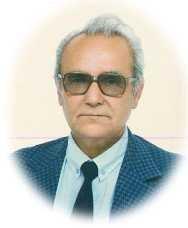
+2 More

Doğum tarihi | 1927-07-16 | ||||||||
|---|---|---|---|---|---|---|---|---|---|
Place of Birth | Tavşancıl, Gebze, Kocaeli | ||||||||
Ölüm tarihi | 2015-11-28 | ||||||||
Place of Death | Gündoğan, Bodrum, Muğla | ||||||||
Çocuk | Özlem Tekin | ||||||||
Title(s) | Prof. Dr. | ||||||||
Areas of Expertise | History of the Turkish Language, Altaic Studies, Comparative Turkic Linguistics, Phonology, Morphology, Historical Turkish Dialects | ||||||||
Professor Dr. Talat Tekin (1927–2015) was a pioneering academic who introduced modern scientific methods to Turkish linguistic research in the fields of Turkology and general linguistics. Through his comprehensive studies on Altaic linguistics, historical Turkic dialects, phonology, and morphology, he systematically examined the historical development of the Turkish language and established a lasting place in international Turkological literature. His critical approach, productivity, and the students he trained made significant contributions to the institutional and theoretical foundations of Turkish linguistics.
Talat Tekin spent his childhood and early schooling years in Tavşancıl village, Gebze district of Kocaeli, his birthplace. His family encouraged him to read and learn from an early age, and this interest brought him early into contact with language and literature. He completed his secondary education in the 1940s and enrolled in the Department of Turkish Language and Literature at Istanbul University, where he studied under the leading linguists and literary scholars of the time. Graduating in 1951, he entered academic life with a strong foundation in classical philology, Old Turkish, and Ottoman Turkish. Immediately after graduation, Tekin began teaching and deepened his interest in language pedagogy and the structure of Turkish, laying the groundwork for his future research.
After graduating from the Department of Turkish Language and Literature at Istanbul University in 1951, Talat Tekin worked as a literature teacher in İzmir, Trabzon, and Bitlis. In 1957, he joined the Turkish Language Association as a grammar specialist, marking the beginning of his scientific research career. In 1961, he became a research assistant in the Department of Near Eastern Languages at the University of California, Los Angeles, and completed his doctoral studies in 1965 with the thesis A Grammar of Orkhon Turkic under the supervision of János Eckmann. In the same year, he began his teaching career at the University of California, Berkeley campus, where he worked as a professor of Turkish Language and Literature until 1972.
In 1970, he earned the title of associate professor at Istanbul University with his thesis Ana Türkçede Aslî Uzun Ünlüler. In 1972, he returned to Türkiye and joined the Department of Turkish Language and Literature at Hacettepe University. In 1976, he was promoted to full professor based on his work Volga Bulgar Kitabeleri ve Volga Bulgarcası. In 1977, he conducted Altaic research at the Central Asian Institute of the University of Bonn in Germany, and again in 1981 and 1991 at the Institute of Asian and African Studies in Tokyo. From 1983 to 1990, he contributed to the new edition of the Türkçe Sözlük published by the Turkish Language Association.
Tekin completed his retirement from Hacettepe University in 1994 and continued his academic activities as a faculty member at the Department of History at Bilkent University (1996–97) and later at the Department of Turkish Language and Literature at Yeditepe University (1997–2002). Throughout his academic career, he shaped Turkology through his research on the history of the Turkish language, Altaic linguistics, phonology, morphology, and comparative Turkic studies. His major works include Türkoloji Eleştirileri (1994, expanded second edition 1997), Tarih Boyunca Türkçenin Yazımı (1997), and the three-volume series Makaleler (2003–2005). His research establishing the presence of original long vowels in Old Turkish, along with his scientific analyses on the classification and naming of Turkic languages, strengthened the theoretical foundations of Turkish linguistics.
After retiring from Hacettepe University in 1994, Professor Dr. Talat Tekin continued his academic work. From 1996 to 1997, he served as a part-time faculty member in the Department of History at Bilkent University, and from 1997 to 2002, he taught at the newly established Department of Turkish Language and Literature at Yeditepe University. During this period, the three-volume series Makaleler, prepared with his students, was published and served as a summary of his enduring productivity in Turkology.
Even in retirement, Tekin maintained his scholarly output and was honored as a globally respected linguist through several festschrift volumes. In 2008, on the occasion of his 80th birthday, two separate festschrift volumes were published by his students, a clear indication of the profound respect he commanded in Turkological circles.
After a long and productive academic career, Talat Tekin passed away on 28 November 2015. He left behind an extensive academic legacy in the fields of Turkish language history and Altaic linguistics, as well as numerous students and a lasting imprint on the institutional memory of Turkish linguistics.
The legacy of Professor Dr. Talat Tekin is defined by the profound impact he made in the fields of Turkish language history, Altaic linguistics, and comparative Turkic linguistics. As Emine Yılmaz stated, Tekin was not merely a scholar who produced important works for Turkology, but also a thinker who reshaped its theoretical framework.
In his Altaic studies, he introduced Western-centric theories to the Turkish scientific community and offered new perspectives on the classification and historical relationships of Turkic languages. Works such as A Grammar of Orkhon Turkic and Ana Türkçede Aslî Uzun Ünlüler are recognized as foundational sources for understanding the historical phonology of Turkish. He emphasized the importance of scientific criticism in Turkology, and his book Türkoloji Eleştirileri played a pioneering role in establishing a tradition of academic evaluation in Türkiye.
Furthermore, the students he trained, the three-volume Makaleler series he compiled, and the festschrift volumes published in his honor in 2008 attest to the continuity of his intellectual legacy. His students and colleagues regarded him not only as a scholar but as a lifetime devoted to Turkology. Talat Tekin’s works continue to serve as reference points in contemporary research on the structure, history, and classification of the Turkish language.
Anadolu Ajansı. "Özlem Tekin'in babası Talat Tekin hayatını kaybetti." Accessed October 14, 2025. https://www.aa.com.tr/tr/yasam/ozlem-tekinin-babasi-talat-tekin-hayatini-kaybetti/483251
Eker, Süer. "İnandıklarının Kırılgan Savaşçısı Hocam Prof. Dr. Talat Tekin (1927-2015)." *Dil Araştırmaları* 18, (Spring 2016): 307-312. Accessed October 14, 2025. https://dergipark.org.tr/tr/pub/dilarastirmalari/issue/60059/868660
Kocaman, Ahmet, and Talat Tekin. "Türkoloji Üzerine Prof. Dr. Talat Tekin İle Söyleşi." *Dilbilim Araştırmaları* (1992): 5-9. Accessed October 14, 2025. http://dad.boun.edu.tr/tr/pub/issue/4538/289803
Mehmet Olmez. "Talat Tekin - Tunyukuk Yaziti hakkinda." YouTube Video, 6:42. Screen Capture, 0:00. Accessed October 14, 2025. https://www.youtube.com/watch?v=GNksaFsOZuA
Turk Dil Kurumu. "Duyuru Belgeliği, Prof. Dr. Mehmet Talât TEKİN vefat etti." tdk.gov. Accessed October 14, 2025. https://tdk.gov.tr/icerik/duyurular/prof-dr-mehmet-talat-tekn-vefat-etmitir/
Yılmaz, Emine. "Prof. Dr. Talat Tekin." *Talat Tekin ve Türkoloji*. Nobel, Ankara, 2018, pp. 1-24. Accessed October 14, 2025. https://www.academia.edu/47776171/Prof_Dr_Talat_Tekin
Yılmaz, Emine. "Prof. Dr. Talat Tekin’in Ardından." *Türkbilig* 31, (2016): 205-222. Accessed October 14, 2025. https://dergipark.org.tr/tr/pub/turkbilig/issue/52825/697759
Yılmaz, Emine. "Sunuş." *Talat Tekin ve Türkoloji*. Nobel, Ankara, 2018, pp. V-VI. Accessed October 14, 2025. https://www.academia.edu/38466788/Talat_Tekin_ve_T%C3%BCrkoloji
Ölmez, Mehmet. "Talat Tekin (16.07.1927-28.11.2015)." http://turkdilleri.org/. Accessed October 14, 2025. http://turkdilleri.org/turkdilleri/ttekin_vefat.html

Doğum tarihi | 1927-07-16 | ||||||||
|---|---|---|---|---|---|---|---|---|---|
Place of Birth | Tavşancıl, Gebze, Kocaeli | ||||||||
Ölüm tarihi | 2015-11-28 | ||||||||
Place of Death | Gündoğan, Bodrum, Muğla | ||||||||
Çocuk | Özlem Tekin | ||||||||
Title(s) | Prof. Dr. | ||||||||
Areas of Expertise | History of the Turkish Language, Altaic Studies, Comparative Turkic Linguistics, Phonology, Morphology, Historical Turkish Dialects | ||||||||
Youth and Education
Academic Career
Main Works
Books
Compilations and Article Series
Selected Articles and Studies
Works in Which He Served as Editor or Contributor
Unpublished Works and Notes
Later Years and Death
Legacy