


This article was automatically translated from the original Turkish version.
+1 More
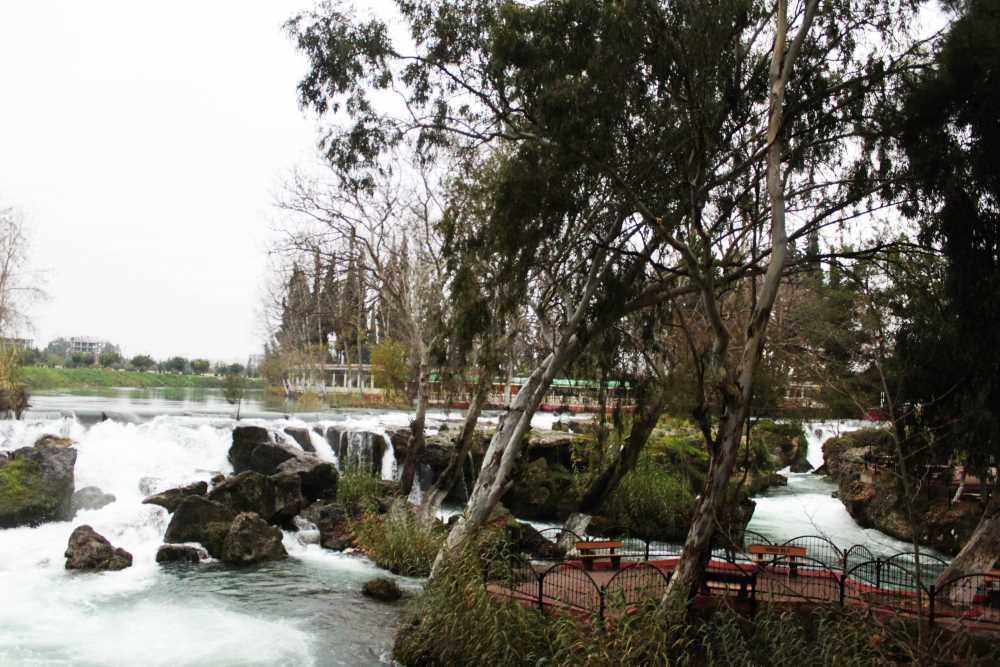
Tarsus Waterfall
Location | Tarsus Türkiye Mersin | ||||||||
|---|---|---|---|---|---|---|---|---|---|
Coordinate(s) | 36°55′N 34°54′E | ||||||||
Drop from Elevation | Approximately 5 metres | ||||||||
Source Water | Berdan (Tarsus) River | ||||||||
Geological Structure | Travertine formations and alluvial soil | ||||||||
Tarsus Waterfall is a natural water formation located in the Tarsus district of Mersin Province, Türkiye. Situated approximately five kilometers from the center of Tarsus city in the Mediterranean Region, the waterfall lies on a tributary of the Berdan River. Due to the region’s typical Mediterranean climate, its surroundings are covered year-round by a diverse vegetation cover. With a height of approximately 15 meters, the waterfall, together with its natural environment, is also used as a recreational area.

View from Tarsus Waterfall (Culture Portal)
Tarsus Waterfall is a natural waterfall formed by a mass failure influenced by the region’s geological structure. Limestone and gypsum sedimentary rocks are widespread in the area, and the direction of water flow along with the movement of underground water sources played a decisive role in the waterfall’s formation. Over time, erosion by water has deepened the area, giving it the appearance of a natural canyon. These structural features are significant in terms of the visual and acoustic effects created as the water falls to the ground.

Aerial View of the Waterfall (Culture Portal)
The area surrounding Tarsus Waterfall is characterized by Mediterranean maquis and forest vegetation. In addition to plants such as olive, thyme, and bay laurel, various herbaceous species are commonly found. The moist microclimate created by the waterfall supports the survival of certain endemic and sensitive plant species. In terms of fauna, small mammals, bird species, and especially water-dependent organisms are present in this ecosystem. The area where the waterfall is located has the status of a natural conservation zone and is of importance for the sustainability of biological diversity.
The district of Tarsus has been an important settlement site for various civilizations throughout history. Tarsus Waterfall, notable for its natural structure, is surrounded by archaeological and historical remnants from the Roman, Byzantine, and Ottoman periods. The waterfall is integrated into the cultural fabric of the region and offers visitors the opportunity to experience both natural and historical elements in one location.
Tarsus Waterfall is one of the important natural areas contributing to regional tourism. Visitor numbers increase significantly during the warmer months of the year, and the walking trails, picnic areas, and rest facilities around the waterfall are actively used. Access to the waterfall area is easily achieved by road, and infrastructure improvements have been made to meet visitors’ needs. Additionally, nature and ecotourism events organized in the surrounding area enhance the waterfall’s tourism potential.
Tarsus Waterfall and its surroundings have been placed under protection by relevant public institutions, and various management plans are implemented to preserve the region’s natural structure and biological diversity. Conservation activities include visitor education programs, environmental improvements, and monitoring initiatives. Sustainable use of the waterfall area and protection of natural resources are among the priorities of regional environmental policies.
Tarsus Waterfall (Tarsus Travel Guide)
T.C.Tarsus Kaymakamlığı Governorship. "Tarsus Şelalesi." T.C. Tarsus District Governorship. Accessed June 8, 2025. http://www.tarsus.gov.tr/tarsus-selalesi
Tarsus Gezi Rehberi. "Tarsus Şelâlesi Hakkında Bilmediklerimiz..." YouTube. Accessed June 8, 2025. https://www.youtube.com/watch?v=IaRD1Ut3dS8
Türkiye Kültür Portalı. "Tarsus Şelalesi - Mersin." *T.C. Kültür ve Turizm Bakanlığı.* Accessed June 8, 2025. https://www.kulturportali.gov.tr/turkiye/mersin/gezilecekyer/tarsus-selalesi

Tarsus Waterfall
Location | Tarsus Türkiye Mersin | ||||||||
|---|---|---|---|---|---|---|---|---|---|
Coordinate(s) | 36°55′N 34°54′E | ||||||||
Drop from Elevation | Approximately 5 metres | ||||||||
Source Water | Berdan (Tarsus) River | ||||||||
Geological Structure | Travertine formations and alluvial soil | ||||||||
Formation and Geological Structure
Flora and Fauna (Ecosystem)
Historical and Cultural Significance
Tourism and Visitor Information
Conservation and Management