This article was automatically translated from the original Turkish version.
+2 More
Taurus frog (Rana holtzi)
Type(s) | Rana holtzi | ||||||||
|---|---|---|---|---|---|---|---|---|---|
Family | Ranidae | ||||||||
Endemic Area | Türkiye – Niğde, Ulukışla, Bolkar Mountains | ||||||||
Habitats | Karagöl (2500 m), Çiniligöl (2580 m), Eğrigöl (3000 m) | ||||||||
Habitat | Grasslands and cool areas around the mountain lakes | ||||||||
Body Length | 6 – 7.5 cm | ||||||||
Skin | Flat, soft; sometimes warty in females | ||||||||
Color Characteristics | Back: yellowish, dirty green, pink; Black-spotted Belly: pink, gray, yellowish | ||||||||
Distinguishing Feature | Not vocal, produces sound with a low-intensity vocal sac | ||||||||
Conservation Status | Bern Convention (1984) Declaration as a Special Protection Area (Niğde Governorate) | ||||||||
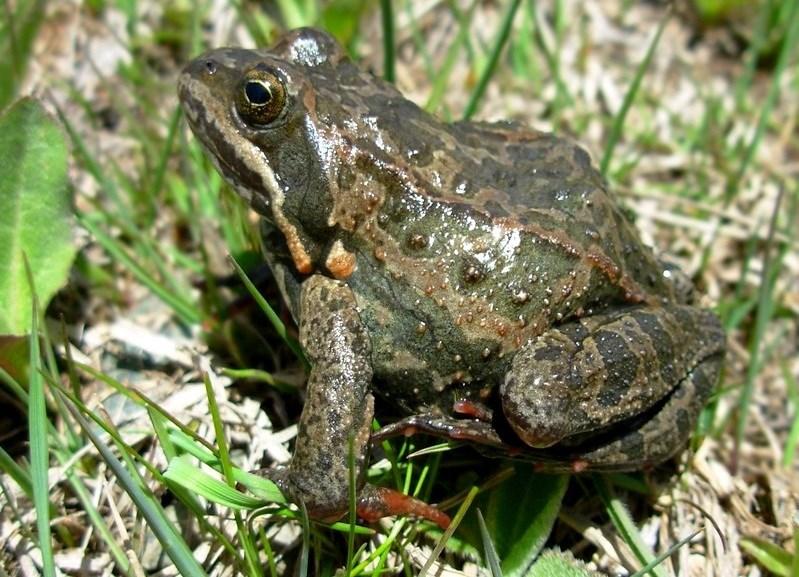
Toros Frog (Rana holtzi) is an endemic frog species found only in Türkiye, belonging to the family Ranidae. It is observed exclusively in the glacial lakes within the boundaries of the Bolkar Mountains in the Ulukışla district of Niğde. First introduced to the scientific community approximately 150 years ago, this species has been under international protection since the signing of the Bern Convention in 1984.
Toros frogs inhabit the areas around Karagöl at an altitude of 2500 metres, Çinigöl at 2580 metres, and Eğrigöl, discovered in 2007 and situated at approximately 3000 metres. This species survives in harsh, snow- and ice-covered climatic conditions, demonstrating remarkable resilience in nature. The grassland areas along the edges of these high-altitude lakes, which remain cool even during summer, serve as the primary habitats and breeding grounds for the frogs.
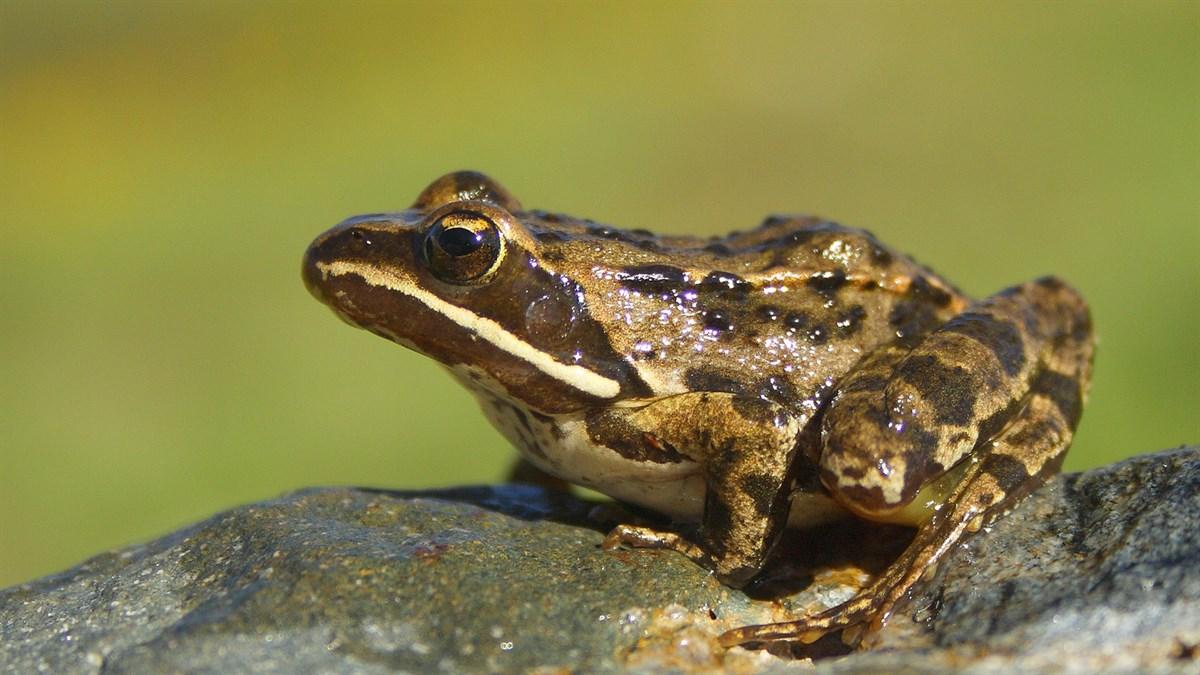
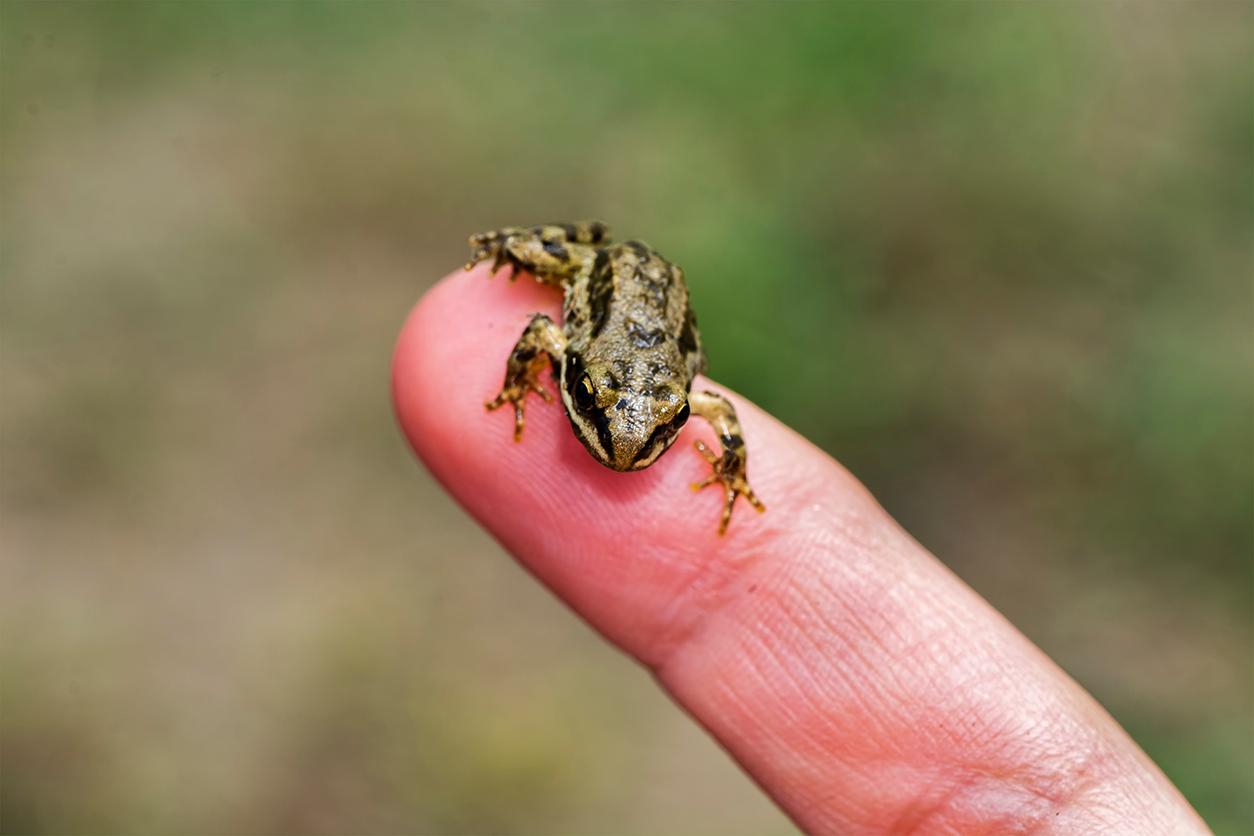
Their body length ranges between 6 and 7.5 cm on average. Females are generally larger than males. Their skin is smooth, soft and thin; some females exhibit wart-like structures. Prominent stripes extend from behind the eyes toward the ear region on both sides of the head. These stripes have been described by some observers as a “Zorro mask”. The back is coloured in yellowish, dirty green or yellowish-pink tones, covered with dark brown to blackish spots, which are also visible on the hind legs. The underside of the belly is pink, yellowish or greyish in colour.
The Toros frog is a cold-blooded animal and is active only during a short period from late May to October. Within this four-month window, it must feed, mate and reproduce. The frogs feed on insects and arthropods living in the grasslands around the lakes. Occasionally, they travel up to 30–40 metres away in search of food. Frog density increases in areas where plant diversity around the lake is high, making the preservation of the local vegetation critically important. Interestingly, the fertility of these grasslands is maintained by the fertilisation provided by local goat and sheep herds.
The breeding period of the Toros frog is very brief. During this time, frogs mate in areas of the lake where the ice has melted. Observations have recorded instances where a single female is surrounded by 14 to 16 males simultaneously. This clustering mating behaviour increases the chances of successful fertilisation. The tadpoles must lose their tails and transform into juvenile frogs within this short timeframe.
Toros FrogTÜBİTAK Science Young
Although commonly known in local folklore as the “silent frog”, this is not entirely accurate. The Toros frog lacks an external vocal sac, but it possesses internal vocal sacs. This allows it to produce low-intensity sounds audible from several metres away. Therefore, this species is not completely silent but has less audible vocalisations compared to other frogs.
In the 1990s, the species suffered significant decline due to the introduction of invasive species such as the mirror carp into its breeding habitats. Additionally, explosive illegal fishing caused severe damage to the local ecosystem. It is emphasized that this ongoing illegal fishing must be strictly monitored and controlled by authorities.
The region also attracts both local and international tourists. However, littering by picnickers, waste left around the lakes, and other harmful activities have increasingly threatened the frogs’ habitat. While camping in the area is not prohibited, the fundamental principle must be to avoid polluting nature. The concept that “the only trace left in nature should be footprints” has gained particular importance in this context.
Toros FrogDemirören News Agency)
Since 1999, the Ministries of Environment, Agriculture and Rural Affairs, the Niğde Governorate, TÜBİTAK, international environmental organizations, and local NGOs have carried out various initiatives to protect this species. The MADEN-DER (Frog Conservation Association), established in Maden Village under Ulukışla district of Niğde, is part of these efforts. The Governorate has also banned water extraction from Karagöl and declared the Bolkar Mountains a special protection area, implementing measures against all activities that could harm the environment.
The Toros frog is of great importance not only as a single species but also for the ecological diversity of the Bolkar Mountains where it lives. The Bolkar and Aladağ ranges are among Türkiye’s richest areas for endemic plant species. Of the approximately 11,700 plant taxa in Türkiye, more than 3,000 are endemic. Nearly 10 percent of these endemic species grow exclusively in the Bolkar Mountains.
Anadolu Ajansı. "Bolkarlar’ın Sessiz Sakini Toros Kurbağası." Accessed May 13, 2025. https://www.aa.com.tr/tr/turkiye/bolkarlarin-sessiz-sakini-toros-kurbagasi-/1230577
T.C.Ulukışla Kaymakamlığı Governorship. "Toros Kurbağası (Rana holtzi)." Accessed May 13, 2025. http://www.ulukisla.gov.tr/toros-kurbagasi-rana-holtzi
ÜBİTAK Bilim Genç. "Yeryüzü Türkiye'nin Toros Kurbağası." Accessed May 13, 2025. https://bilimgenc.tubitak.gov.tr/yeryuzu-turkiyenin-toros-kurbagasi

Taurus frog (Rana holtzi)
Type(s) | Rana holtzi | ||||||||
|---|---|---|---|---|---|---|---|---|---|
Family | Ranidae | ||||||||
Endemic Area | Türkiye – Niğde, Ulukışla, Bolkar Mountains | ||||||||
Habitats | Karagöl (2500 m), Çiniligöl (2580 m), Eğrigöl (3000 m) | ||||||||
Habitat | Grasslands and cool areas around the mountain lakes | ||||||||
Body Length | 6 – 7.5 cm | ||||||||
Skin | Flat, soft; sometimes warty in females | ||||||||
Color Characteristics | Back: yellowish, dirty green, pink; Black-spotted Belly: pink, gray, yellowish | ||||||||
Distinguishing Feature | Not vocal, produces sound with a low-intensity vocal sac | ||||||||
Conservation Status | Bern Convention (1984) Declaration as a Special Protection Area (Niğde Governorate) | ||||||||
No Discussion Added Yet
Start discussion for "Taurus Frog (Rana holtzi)" article
Habitat and Geographic Distribution
Morphological Characteristics
Biological Characteristics
Reproduction
The Silence Myth and Vocal Characteristics
Conservation Status and Threats
Conservation Efforts
Ecological Importance and Endemism