


This article was automatically translated from the original Turkish version.
+2 More
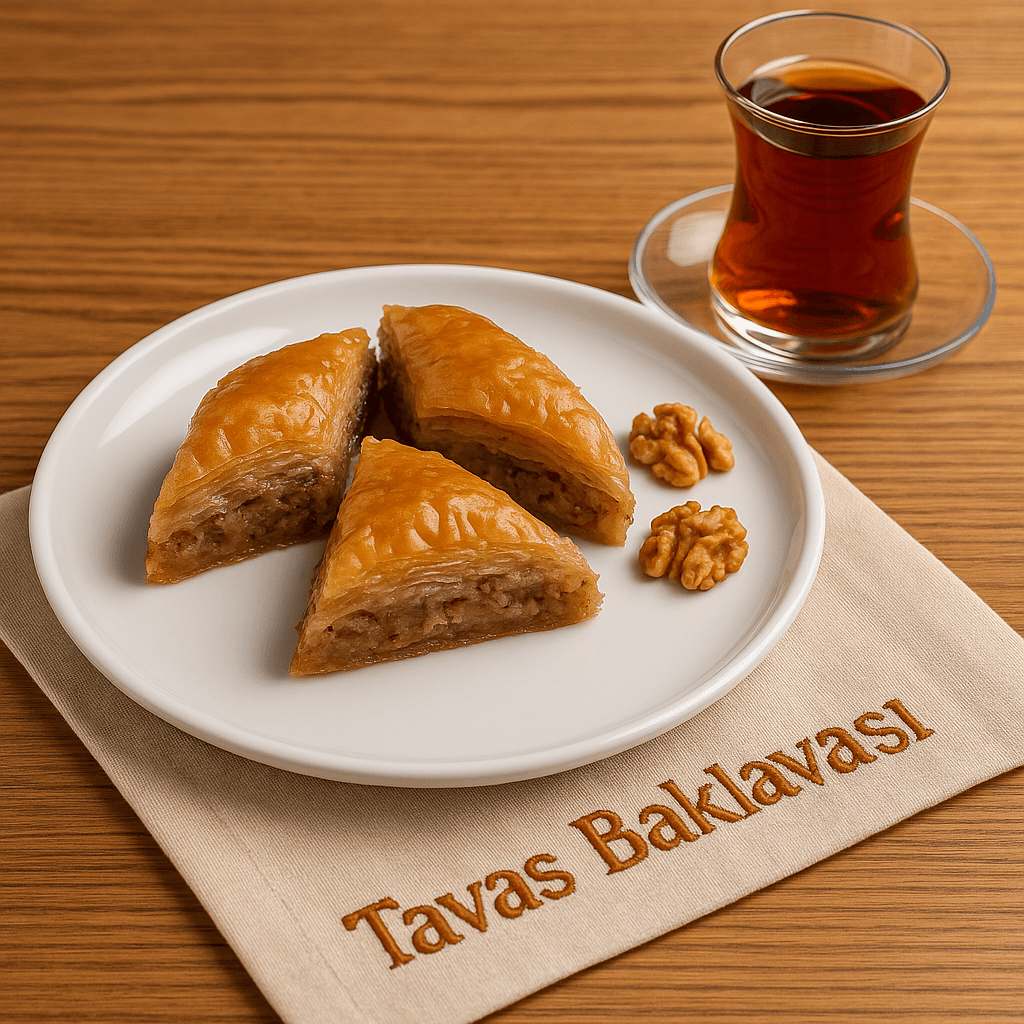
Tavas Baklava
Type of Geographical İndication | Mahreç Sign | ||||||||
|---|---|---|---|---|---|---|---|---|---|
File Number | C2016/110 | ||||||||
Application Date | 2016-12-16 | ||||||||
Registration Number | 375 | ||||||||
Registration Date | 2018-08-09 | ||||||||
Product / Product Group(s) | Bakery and Confectionery Products Sweets Dough Products | ||||||||
Province(s) | Denizli | ||||||||
Applicant/Registrant(s) | Tavas Municipality | ||||||||
Status | Registered | ||||||||
Tavas baklava is a product closely associated with the Tavas district of Denizli Province, long known and now established as part of the region’s cultural heritage.
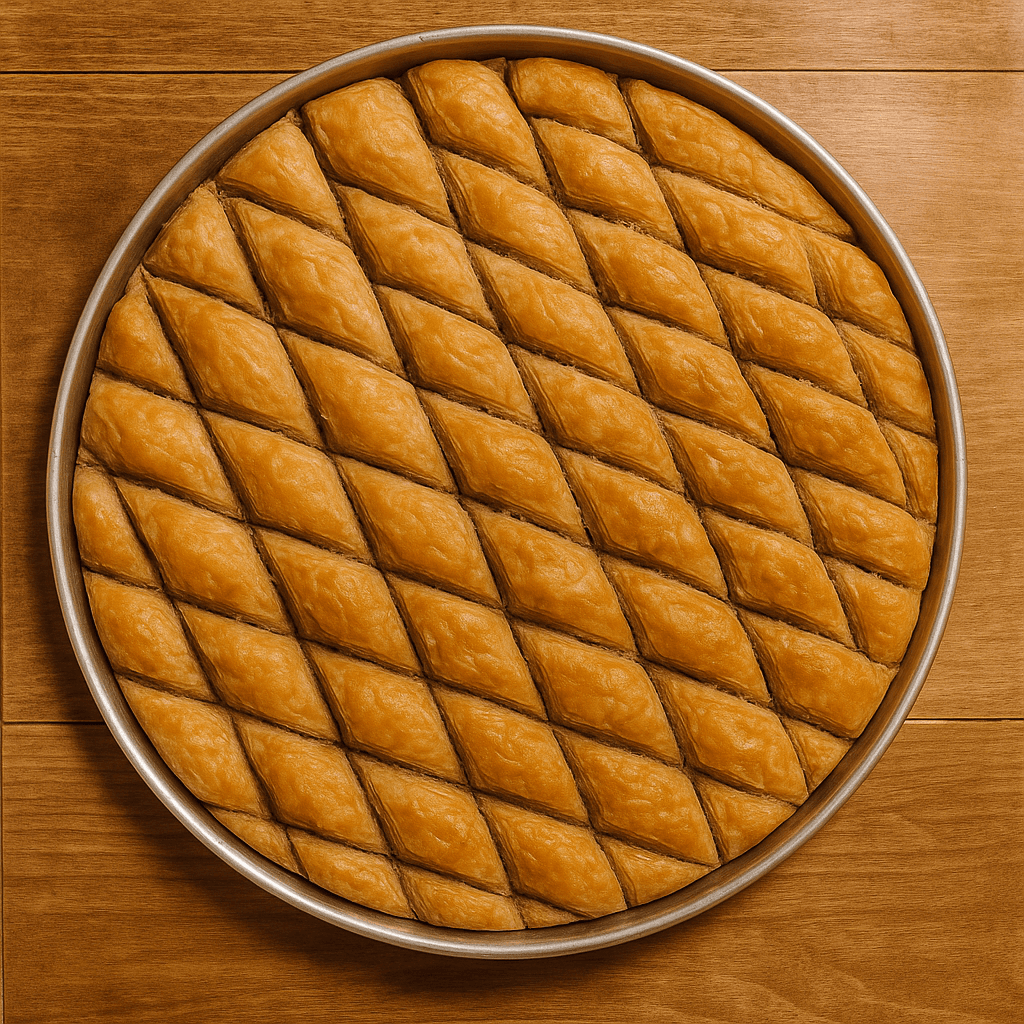
Tavas Baklava (Generated by Artificial Intelligence.)
The preparation of Tavas baklava employs traditional ingredients and methods. One of its distinguishing features is the use of urga flour, made from a mixture of yellow hard baklava wheat flour, whole wheat flour, and barley flour. Urgan flour is prepared by manually mixing 1 kg of baklava wheat flour, 100 grams of whole wheat flour, and 200 grams of barley flour. The baklava consists of 40 layers of phyllo dough. Walnut pieces are layered between the sheets. According to the traditional method, 2 kg of urga flour, 100 grams of salt, and 700 grams of water are mixed in a copper basin to form the dough, which is then rested and divided into 40 pieces of 70 grams each. These dough pieces are rolled out on a yastıgeç using the urgalama technique. Urgalama involves evenly sprinkling 35 to 40 grams of urga flour on each layer to prevent them from sticking together. The rolled-out layers are brushed with sunflower oil, corn oil, or sesame oil. The first four layers are left without walnuts; from the fifth to the thirty-fifth layer, 80 grams of walnuts are sprinkled on each layer. Layers thirty-six to forty are again laid without walnuts. After completing the layering, the dough is cut into pieces approximately 8 by 4 centimeters in size, brushed with oil, and rested for 15 minutes. Baking is carried out in wood-fired ovens, known locally as kara fırın, using oak wood as fuel for 25 to 30 minutes. After removal from the oven, the baklava is rested at room temperature for 60 minutes. For the syrup, 3.3 kg of sugar, 3 kg of water, and 1 to 2 drops of lemon juice are boiled together in a copper pot over an oak wood fire and poured over the rested baklava while still hot. After absorbing the syrup and cooling, the baklava is rested for one day before being served.

Tavas Baklava (Generated by Artificial Intelligence.)
The production, processing, and all other operations related to Tavas baklava must occur within its designated geographical boundaries. Production, marketing, ingredient quality, hygiene conditions, and compliance with the geographical indication are monitored by a supervisory body established under the coordination of the Tavas Municipality. This body includes representatives from the Tavas District Directorate of Food, Agriculture and Livestock, the Department of Food Engineering at Pamukkale University, and the Tavas Chamber of Commerce. Inspections are conducted annually or as needed.
T.C. Ministry of Culture and Tourism. "Tavas Baklavası." *Kültür Portalı*. Accessed May 25, 2025. https://www.kulturportali.gov.tr/turkiye/denizli/nealinir/tavas-baklavasi
Turk Patent and Trademark Office. "Tavas Baklavası - Tescil Belgesi." Accessed May 25, 2025. https://ci.turkpatent.gov.tr/Files/GeographicalSigns/375.pdf
Turk Patent and Trademark Office. "Tavas Baklavası." *Geographical Indications Information System*. Accessed May 25, 2025. https://ci.turkpatent.gov.tr/cografi-isaretler/detay/38238

Tavas Baklava
Type of Geographical İndication | Mahreç Sign | ||||||||
|---|---|---|---|---|---|---|---|---|---|
File Number | C2016/110 | ||||||||
Application Date | 2016-12-16 | ||||||||
Registration Number | 375 | ||||||||
Registration Date | 2018-08-09 | ||||||||
Product / Product Group(s) | Bakery and Confectionery Products Sweets Dough Products | ||||||||
Province(s) | Denizli | ||||||||
Applicant/Registrant(s) | Tavas Municipality | ||||||||
Status | Registered | ||||||||
Preparation
Traditional Ingredients Used
Supervision