This article was automatically translated from the original Turkish version.
+2 More
Place(s) | Büyüknefes Village Türkiye Yozgat | ||||||||
|---|---|---|---|---|---|---|---|---|---|
Establishment | 3rd century BCE, Galatians (Trokmians) | ||||||||
Former Name(s) | Tawiniya (Hittite) | ||||||||
Significance | Trade center, capital of Galatia | ||||||||
Remains | Höyük sites, theater, Roman-era stones | ||||||||
Status | First-degree protected area open-air museum | ||||||||
Tavium Ancient City is located within the boundaries of Büyüknefes Village, approximately 40 kilometers west of the city center of Yozgat, Türkiye. The city was established on two mounds known as Küçükkale and Büyükkale. These mounds are situated in the Çatalmağra locality and were officially registered as a first-degree archaeological site by the Council for the Protection of Cultural and Natural Heritage on August 16, 1989. Küçükkale Mound has a diameter of 150 meters and a height of approximately 20 meters, while Büyükkale Mound measures 220–230 meters in diameter and varies in height between 15 and 35 meters depending on the direction.

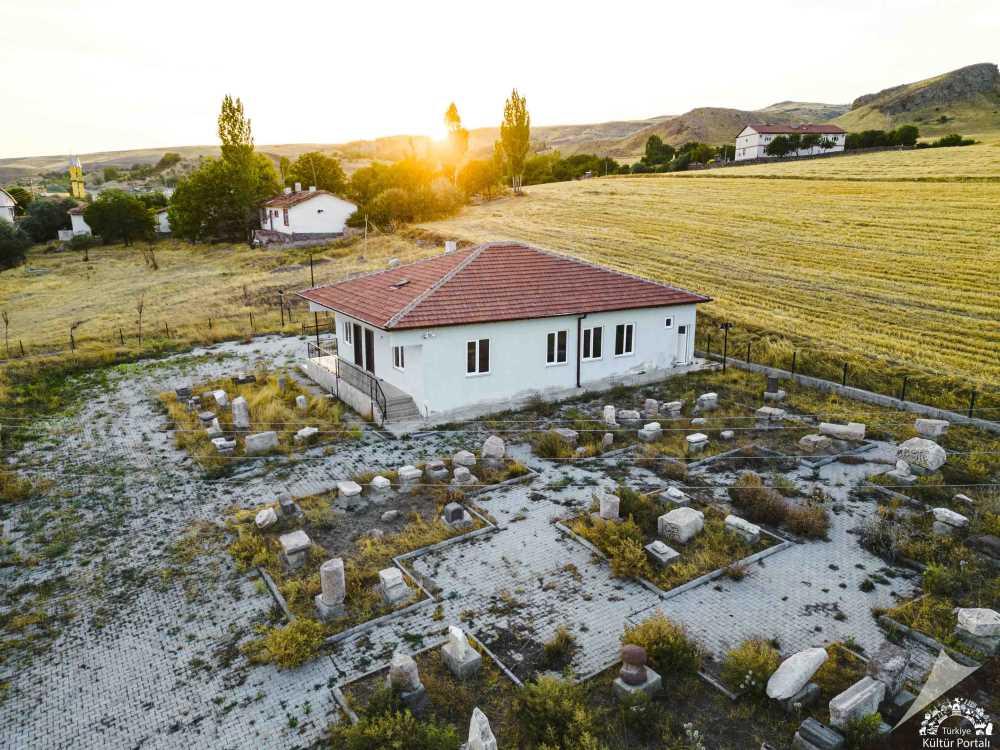
Tavium Ancient City (Türkiye Culture Portal)
The earliest settlement traces in Tavium date back to the Chalcolithic period, that is, the 4th millennium BCE. Following this, settlement expanded and the population increased during the Early Bronze Age. With the arrival of the Hittites in the region during the 2nd millennium BCE, the city became known as Tawiniya and began to exhibit Hittite cultural influences. The significance and sacredness attributed to rock formations during this period were also reflected in architectural practices. While Phrygian settlement traces are limited, the main phase of development and urbanization began in the 3rd century BCE under the Galatians.
Tavium was resettled by the Trocmi tribe of the Galatians and became the capital of the central Kızılırmak region. This period marked the city’s emergence as a political and commercial center. Although the Galatians were a warrior people who initially resisted sedentary life, they transformed cities such as Tavium, Ancyra, and Pessinus into major trade hubs. Tavium’s strategic position at the intersection of four major routes connecting Asia with the Black Sea and Syria enhanced its importance. According to Herodotus and Professor W.M. Ramsay, the Royal Road passed through this city.
Strabo noted that during the Galatian and Roman periods, Tavium functioned as a commercial center and mentioned the presence of fortresses named Mithridation and Danala, as well as a bronze statue of the god Zeus. In 25 BCE, when Galatia became a Roman province, Tavium was incorporated into the Roman administrative system and retained its significance during this era.
The first systematic scientific surface surveys in Tavium were initiated in 1997 under the leadership of Professor Karl Strobel from the University of Klagenfurt, Austria. Until 2009, these investigations identified numerous artifacts in Büyüknefes and surrounding villages, including ceramic fragments, architectural remains, column bases, drum segments, funerary stelae, and inscribed Byzantine-era graves. More than 450 architectural stone elements have been documented. However, these studies did not progress to excavation phases.
Examinations of the Büyükkale and Küçükkale Mounds have revealed settlement traces spanning from the Chalcolithic period to the Islamic era. A theater structure has also been identified near Küçükkale. The absence of comprehensive archaeological excavations in the region has prevented the full revelation of Tavium’s historical and cultural potential.

Tavium Ancient City (Türkiye Culture Portal)
Tavium Ancient City and its surrounding area have been officially registered as first- and second-degree archaeological sites through various decisions by the Kayseri Council for the Protection of Cultural Heritage. These designated areas include the mounds, rock-cut features, ancient settlement zones, and current cemetery grounds. Additionally, various tumuli such as Kuzeytepe, Üçtepe, and Anıl in the boundaries of Büyüknefes Village have also been placed under protection.
Some architectural elements recovered from the ancient city have been displayed in an open-air museum established in Büyüknefes Village. The area surrounding the village house has been enclosed to create the museum, which features Roman-era columns, temple remains, carved architectural stones, and statues. Particularly notable are Galatian symbols and Latin inscriptions, as well as relief decorations dating to the Eastern Roman period.
Among the civilizations represented in Tavium, the Hittites, Phrygians, and Galatians stand out. The Hittites constructed architectural structures by carving into rocks, an influence still visible today in the design of springs. The Phrygians left only limited traces in the region, preferring oval and rounded stones in their stonework. The Galatians were the dominant group in the region, developing advanced stone and marble craftsmanship and using Hellenistic inscriptions. The bull’s head motif was considered sacred by this group and was commonly used in fountain decorations.
Aydın AdnanMenderes Üniversitesi. "Tarih ve Kültürün İzinde Bir Yolculuk: Tavium Antik Kenti." gzt.adu.edu.tr. Accessed June 22, 2025. https://gzt.adu.edu.tr/haber/tarih-ve-kulturun-izinde-bir-yolculuk-tavium-antik-kenti-9283
Ministry of Culture and Tourism. "Büyüknefes (Tavium) Antik Kenti." Kültür Portalı. Accessed June 22, 2025. https://www.kulturportali.gov.tr/turkiye/yozgat/gezilecekyer/buyuknefes-tavium-antik-kenti
Yozgat Valiliği. Tavium Tanıtım Yazısı. Yozgat: Yozgat Valiliği İl Kültür ve Turizm Müdürlüğü. Accessed June 22, 2025.

Place(s) | Büyüknefes Village Türkiye Yozgat | ||||||||
|---|---|---|---|---|---|---|---|---|---|
Establishment | 3rd century BCE, Galatians (Trokmians) | ||||||||
Former Name(s) | Tawiniya (Hittite) | ||||||||
Significance | Trade center, capital of Galatia | ||||||||
Remains | Höyük sites, theater, Roman-era stones | ||||||||
Status | First-degree protected area open-air museum | ||||||||
No Discussion Added Yet
Start discussion for "Tavium Ancient City" article
Historical Development and Settlement Phases
The Galatian Period and Urban Development
Archaeological Research and Findings
Protection Status and Open-Air Museum
Cultural Traces and Heritage