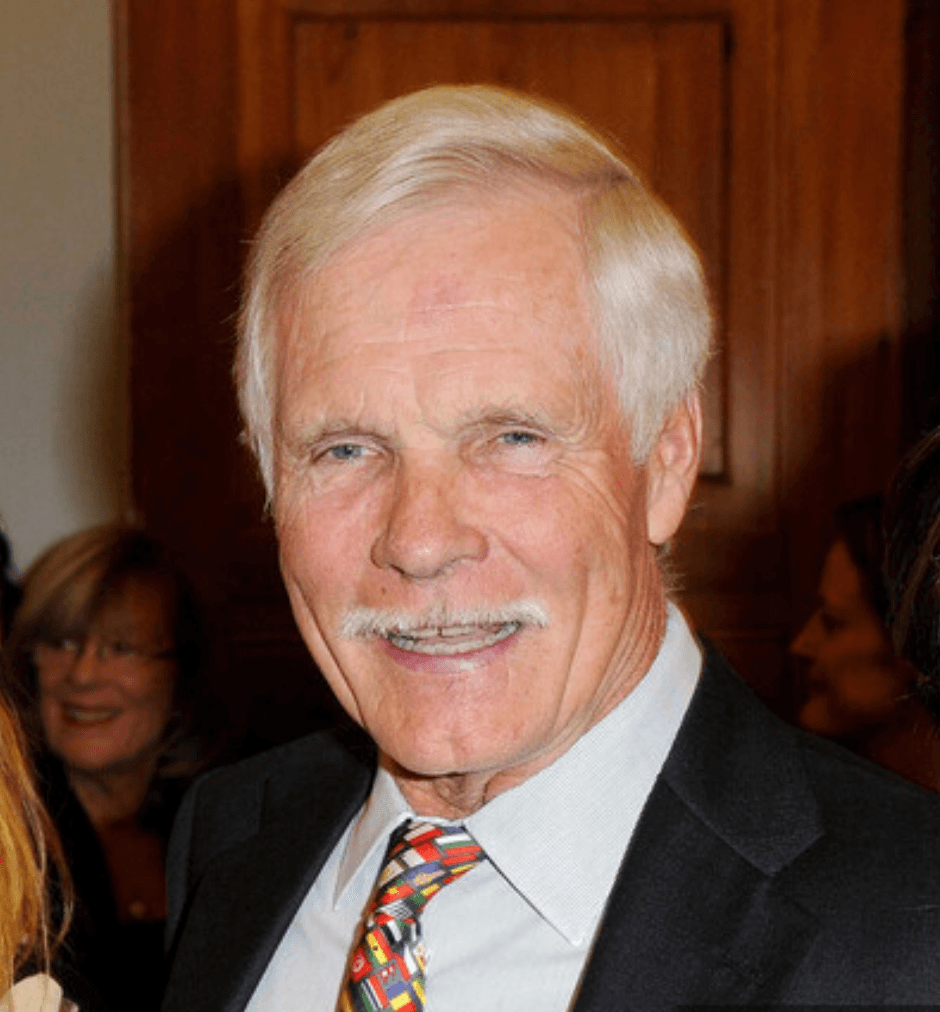
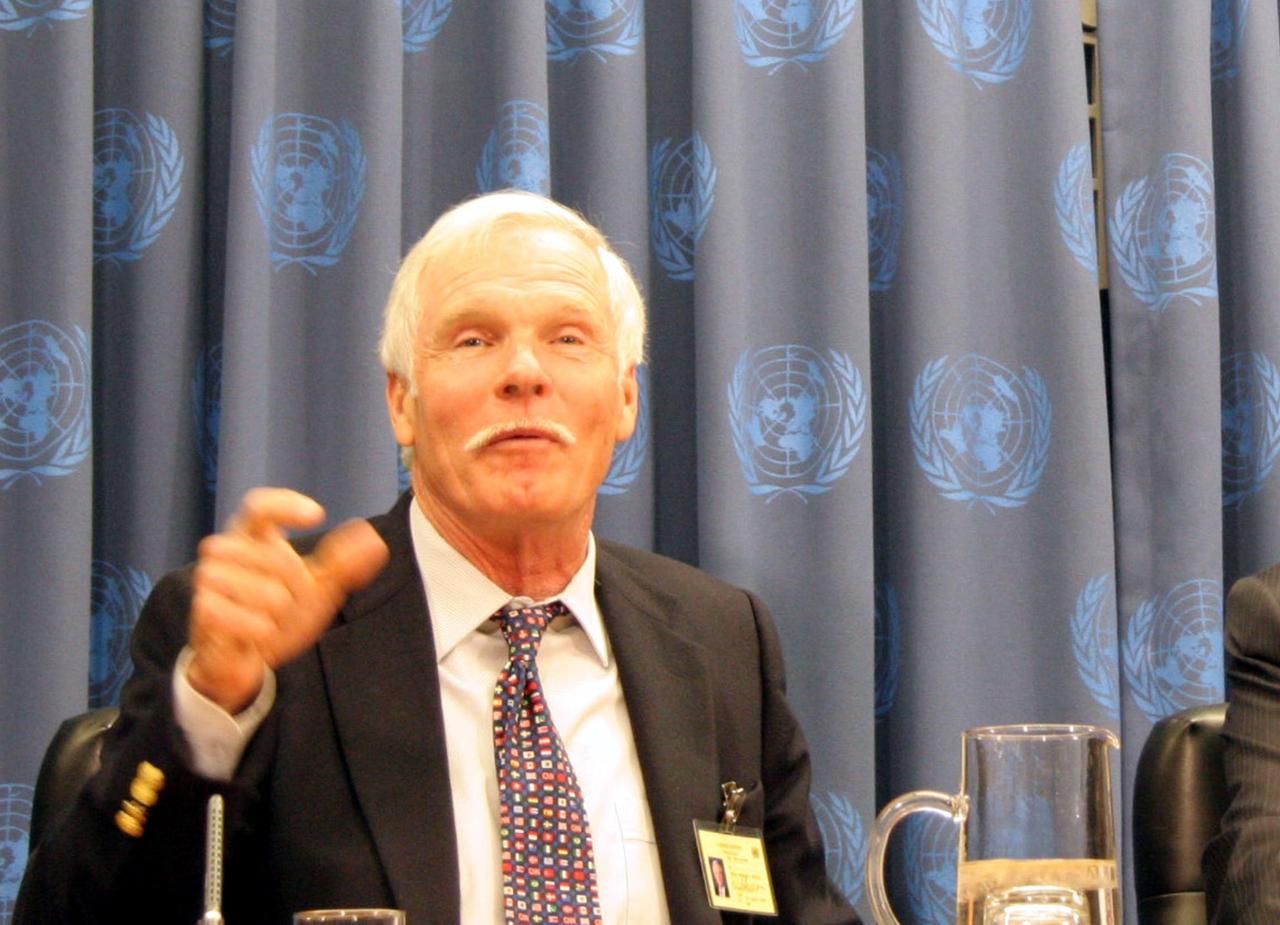

Robert Edward Turner III (November 19, 1938, Cincinnati – May 6, 2026, Tallahassee) was an American entrepreneur who founded CNN (Cable News Network) and played a pivotal role in the development of cable television in the United States through Turner Broadcasting System (TBS). He transformed the billboard advertising company he inherited from his father into a media and broadcasting enterprise and established CNN on June 1, 1980, as the world’s first 24-hour continuous news channel.
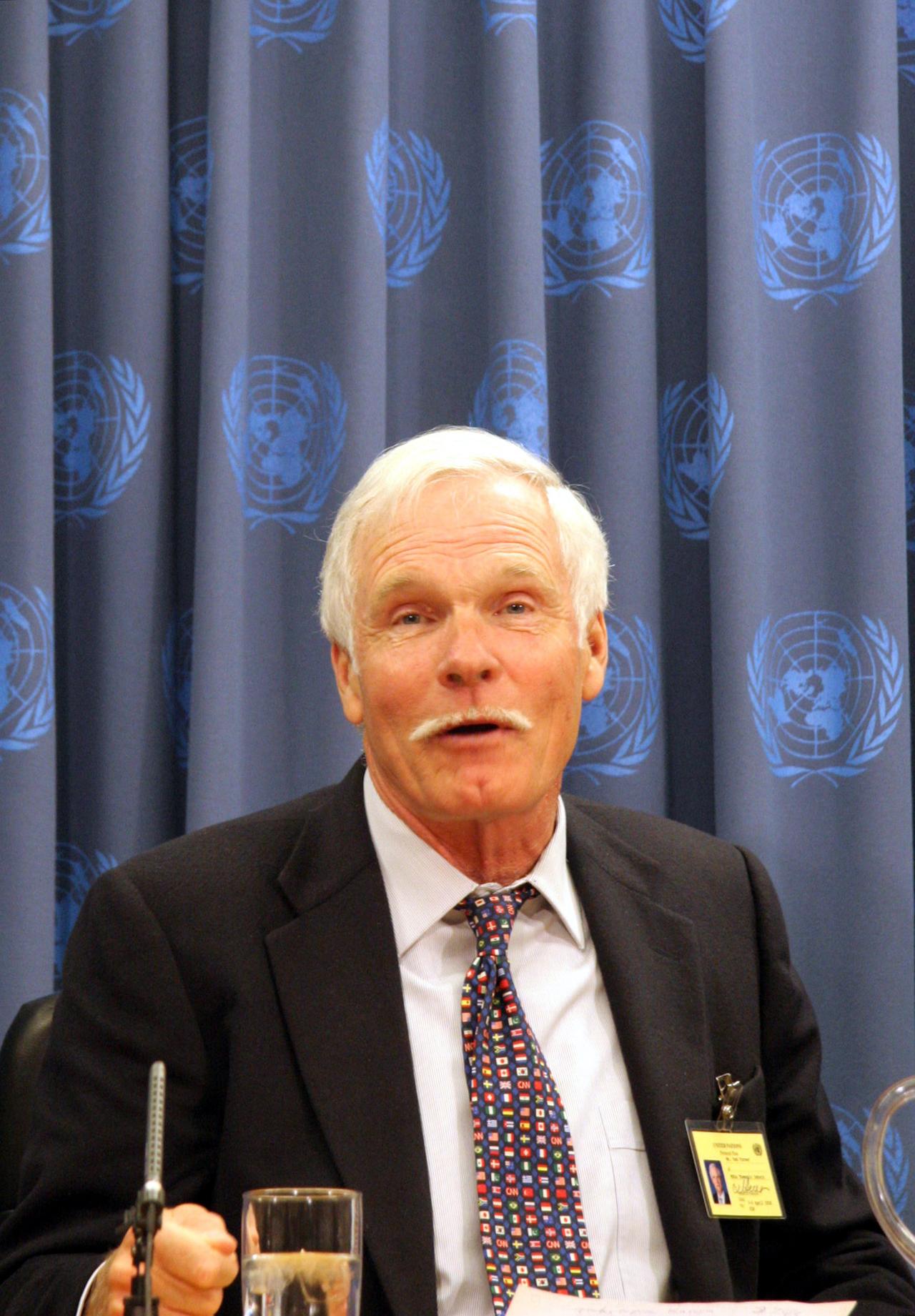
Robert Edward Turner - (Anadolu Ajansı)
Robert Edward Turner III was born on November 19, 1938, in Cincinnati, Ohio, to Robert Edward Turner Jr. and Florence (Rooney) Turner. Known from an early age as “Ted,” Turner’s father owned a billboard advertising company that would later become known as Turner Advertising.
During World War II, his father joined the U.S. Navy. While transporting his wife and daughter to his post on the Gulf Coast, he left Turner at a boarding school in Cincinnati. After the war, the family moved to Savannah to expand their billboard business.
Ed Turner, his father, ensured that his son participated in company operations from a young age, assigning him roles in maintenance and repair, accounting, sales, and billboard operations. Turner began sailing at age nine and at eleven participated in the Savannah Yacht Club’s junior regatta.
Turner’s sister, Mary Jean Turner, developed a rare autoimmune disease at a young age. After a prolonged illness, she passed away.
At age twelve, Turner was sent to McCallie School, a military boarding school. During his school years, he excelled in debate and won the Tennessee state debate championship. During summer months, he continued working at his family’s billboard company, gaining experience in sales and marketing from an early age.
In 1956, Turner enrolled at Brown University. He studied classical languages and was noted for his interest in military history. During his university years, he received disciplinary penalties for violating dorm rules and eventually left the institution. In the following period, he served briefly with the U.S. Coast Guard.
In 1960, Turner was appointed manager of the Macon branch of Turner Advertising by his father. Within his first year, he significantly increased the branch’s revenue. In 1962, his father Ed Turner acquired a competing advertising firm, which increased the company’s debt burden. Facing financial difficulties and health problems, Ed Turner died on March 5, 1963. At age 24, Turner assumed control of the company.
To preserve the company’s financial structure, Turner implemented various measures to improve cash flow, including offering discounts to customers who paid early. He restructured the company’s finances and by the end of the 1960s, it had become one of the largest billboard companies in the southeastern United States. During this period, the company’s name was changed to Turner Communications Group.
In 1970, Turner entered the field of television broadcasting, purchasing the UHF television station known as “Channel 17” in Atlanta and the WRET station in Charlotte. The acquired channels were later renamed WTCG and WRET respectively. To reduce broadcasting costs, Turner bulk-purchased the broadcast rights to classic films and television series, which were then reused in reruns.
One of Turner’s first significant steps in broadcasting was securing the broadcast rights to Atlanta Braves baseball games. These broadcasts contributed to increased viewership. In 1972, regulatory changes by the U.S. Federal Communications Commission (FCC) permitted cable operators to carry signals from distant television stations. Turner then began transmitting WTCG’s signal via microwave relays to cable operators in other regions.
By late 1975, Turner learned that RCA was preparing to activate its SATCOM II communications satellite. He leased a transponder to broadcast via satellite. As a result, WTCG’s broadcast signal was transmitted directly to the satellite, enabling its programming to reach cable operators nationwide. This development transformed the station from a local broadcaster into a national network.
In 1976, WTCG, now connected nationally via satellite, was renamed WTBS and became one of the first examples of what the broadcasting industry termed a “superstation.” Its programming consisted of classic films, television series reruns, sports events, and professional wrestling. Around the same time, Turner purchased the Atlanta Hawks basketball team and began broadcasting their games on the channel.
Turner had publicly criticized the structure of television news since the 1970s, arguing that the evening news and morning programs of major U.S. networks failed to adequately inform viewers and that a news channel broadcasting 24 hours a day was necessary. In 1980, he redirected the proceeds from the sale of his Charlotte television station toward launching a 24-hour news channel.
Industry insiders doubted the commercial viability of the venture, asserting that the existing news broadcasts of the three major networks and local stations were sufficient. Turner persisted, assembling a team of broadcasting professionals, including Reese Schonfeld, the founding president of CNN.
Cable News Network (CNN) launched on June 1, 1980, operating as the first 24-hour continuous news television channel. Its early years were marked by technical issues and financial strain. Some media outlets and critics derided the channel as “Chicken Noodle News.” During this period, Turner was largely based at CNN’s Atlanta broadcast center.
In 1982, a second 24-hour news channel, CNN Headline News, began broadcasting. The channel was later renamed CNN2 and then HLN. CNN International was launched in 1985, expanding the network’s global reach. That same year, CNN Radio also began operations.
CNN’s global prominence became especially evident during the 1990–1991 Gulf War, when it provided continuous live coverage from the battlefield and emerged as one of the leading sources of global news.
In subsequent years, the CNN model was widely regarded as influential in the creation of 24-hour news channels across the United States and internationally. Turner also introduced new broadcast terminology, insisting on the use of the term “international” instead of “foreign”.
Following the launch of CNN, Turner Broadcasting System (TBS) expanded its cable television operations. Turner Network Television (TNT) launched on October 3, 1988, Cartoon Network on October 1, 1992, and Turner Classic Movies (TCM) in April 1994.
Turner’s 1985 acquisition of MGM-UA Entertainment was a major development in the media and entertainment industry. He quickly resold the company to its former owners but retained the broadcast rights to its film archive. This archive included thousands of films from the catalogs of Metro-Goldwyn-Mayer (MGM), United Artists, Warner Bros., and RKO, spanning productions from the 1920s to the 1960s. This collection significantly expanded Turner Broadcasting’s content capacity.
Turner also initiated efforts to colorize some of the black-and-white films in the collection. This practice sparked controversy in film circles, with particular criticism directed at altering the original integrity of classic films.
Another initiative launched by Turner in the 1980s was the Goodwill Games. Organized in response to the mutual boycotts of the 1980 Moscow and 1984 Los Angeles Olympics, the tournament aimed to foster international sports engagement between the United States and the Soviet Union. It was held five times between 1986 and 2000.
In 1976, Turner purchased the Atlanta Braves baseball team. Broadcasting the team’s games on Turner’s television channels expanded the network’s sports programming. During Turner’s ownership, the Braves won five league championships and captured the 1995 World Series title. The team’s new stadium, opened in 1996, was named Turner Field and served as the Braves’ home for 21 seasons.
Turner had various disagreements with then-Baseball Commissioner Bowie Kuhn. During the 1977 season, Kuhn imposed restrictions on Turner’s access to technical areas and club offices.
In 1977, Turner also purchased the Atlanta Hawks basketball team. He maintained ownership of both teams until the Time Warner merger in 1996. In later years, Turner’s son Beau Turner and son-in-law Rutherford Seydel served as team partners within Atlanta Spirit LLC from 2004 to 2015.
In October 1996, Turner Broadcasting System joined Time Warner in a deal valued at approximately $7.34 billion. Following the merger, Turner assumed the role of vice chairman and became a major shareholder. He remained on the company’s board of directors from 1996 to 2001.
In 2001, the merger of AOL and Time Warner created AOL Time Warner. Turner continued as vice chairman but stepped down from his role in 2003. His board membership ended in 2006.
The economic downturn in the internet sector after the 2001 merger led to significant financial losses and a decline in share value. As a result, the market value of Turner’s shares decreased.
The former television networks and media assets under Turner Broadcasting System now operate under Warner Bros. Discovery as of 2026, following subsequent corporate mergers. After leaving company management, Turner focused his efforts primarily on environmental conservation, nature preservation, and philanthropy.
Sailing was one of the enduring pursuits in Turner’s life alongside his business career. He began sailing as a child and later competed in numerous national and international regattas.
In 1977, Turner competed in the America’s Cup with his yacht Courageous. His team won the elimination races, earned the right to defend the cup, and ultimately won the competition. Following this success, Turner appeared in various sports broadcasts and publications and was later inducted into the America’s Cup Hall of Fame and the National Sailing Hall of Fame.
In 1979, Turner captained the yacht Tenacious in the Fastnet Race. During the race, which began in Plymouth and circumnavigated the Fastnet Rock off the coast of Ireland, a severe storm struck. Many boats were damaged and lives were lost. Turner’s crew completed the race and finished first overall.
US Sailing named Turner “Sailor of the Year” in 1970, 1973, 1977, and 1979.
In 1990, Turner founded the Turner Foundation to support environmental protection, sustainable living, and the preservation of natural habitats. That same year, he collaborated with Barbara Pyle to create the environmental-themed animated series Captain Planet and the Planeteers.
Following the series’ debut in 1991, the Captain Planet Foundation was established. The foundation focuses on environmental education and hands-on environmental projects for youth. Turner’s daughter Laura Turner Seydel serves on its board.
In 1997, Turner pledged $1 billion to the United Nations to be paid over ten years. Due to subsequent economic losses, the payment schedule was extended, but the full amount was eventually fulfilled.
In 1998, Turner established the United Nations Foundation. The foundation supports initiatives in women’s and children’s rights, health, energy, and climate.
In 2001, Turner and former U.S. Senator Sam Nunn co-founded the Nuclear Threat Initiative (NTI). The organization works to reduce threats from nuclear, biological, chemical, radiological, and cyber weapons.
Established in 1997, the Turner Endangered Species Fund has conducted programs to protect endangered species and their habitats. Its initiatives include conservation efforts for the desert bighorn sheep, aplomado falcon, and Rio Grande cutthroat trout.
As of 2026, Turner owned more than two million acres of land across 12 U.S. states and Argentina. One of the largest properties is the approximately 578,000-acre Vermejo Park Ranch in New Mexico, which Turner purchased in 1996.
Turner is also known for maintaining large bison herds. His herds collectively number over 45,000 animals. These efforts are tied to the conservation of North American bison and the sustainability of their natural habitats.
In 2022, an agreement was reached to protect approximately 315,000 acres of Turner’s Armendariz Ranch. The agreement was signed between federal agencies and the New Mexico Land Conservancy. The protected area is home to hundreds of vertebrate species, bighorn sheep, and large bat colonies.
In 2010, Turner joined The Giving Pledge, an initiative launched by Bill Gates and Warren Buffett, committing to donate the majority of his wealth to charitable causes.
In 2002, Turner entered the restaurant industry by founding the chain Ted’s Montana Grill. The venture was co-founded with George McKerrow, founder of LongHorn Steakhouse. The restaurant chain became known for its bison meat products and opened locations across various U.S. states.
Turner married three times; all marriages ended in divorce. His first marriage, in 1960, was to Judy (Gale) Nye. They had two children: Laura Lee Turner and Robert Edward “Teddy” Turner IV.
His second marriage was to Jane (Smith) Turner. Beginning in the mid-1960s, this marriage ended in 1988. They had three children: Beau Turner, Rhett Turner, and Jennie Turner Garlington.
Turner’s third marriage was to actress and activist Jane Fonda. The couple married in 1991 and divorced in 2001. At the time of his death, Turner was survived by five children, fourteen grandchildren, and two great-grandchildren.
On September 30, 2018, Turner announced on CBS Sunday Morning that he had been diagnosed with Lewy body dementia. It was noted that the disease has progressive neurological effects.
In January 2025, Turner recovered from a mild case of pneumonia at a rehabilitation center. Turner died at his home in Tallahassee on May 6, 2026.
His family announced that the funeral would be private and that a public memorial service would be held at a later date.
Throughout his career, Turner received numerous awards and honors in media, sports, and philanthropy. In 1991, he was named “Man of the Year” by Time. He received multiple honorary doctorates and was inducted into the National Sailing Hall of Fame, the Cable Television Hall of Fame, and the Atlanta Braves Hall of Fame.
Turner was honored with lifetime achievement awards from the National Academy of Television Arts and Sciences and received multiple Peabody Awards and two honorary Emmy Awards. He also has a star on the Hollywood Walk of Fame.
At the 44th Primetime Emmy Awards on August 30, 1992, Turner was awarded the Governor’s Award. On October 3, 1992, he was inducted into the Television Academy Hall of Fame.
Academy of Achievement. “Robert Edward (Ted) Turner.” Academy of Achievement. Accessed May 7, 2026. https://achievement.org/achiever/ted-turner/
Al Jazeera. “CNN Founder Ted Turner Dead at 87.” Al Jazeera. Accessed May 7, 2026. https://www.aljazeera.com/news/2026/5/6/cnn-founder-ted-turner-dead-at-87
Biography.com Editors. “Ted Turner.” Biography.com. Accessed May 7, 2026. https://www.biography.com/business-leaders/a71233034/ted-turner-cnn
CNN. “CNN Founder Ted Turner, a Pioneer of Cable TV News, Dies at 87.” CNN. Accessed May 7, 2026. https://edition.cnn.com/2026/05/06/us/ted-turner-death
CNN. “Ted Turner Fast Facts.” CNN. Accessed May 7, 2026. https://edition.cnn.com/us/ted-turner-fast-facts
Georgia Historical Society. “Robert Edward ‘Ted’ Turner.” Georgia Historical Society. Accessed May 7, 2026. https://www.georgiahistory.com/bio/robert-edward-ted-turner/
Ted Turner Enterprises. “Ted Turner Legacy.” Ted Turner Enterprises. Accessed May 7, 2026. https://www.tedturner.com/ted-turner-legacy/
The Guardian. “Ted Turner Obituary.” The Guardian. Accessed May 7, 2026. https://www.theguardian.com/tv-and-radio/2026/may/06/ted-turner-obituary

Early Life and Education
Childhood and Family
Education
Business Career
Acquisition of Turner Advertising
Entry into Broadcasting and UHF Stations
Founding of CNN
Expansion of Turner Broadcasting System and New Networks
Sports Team Ownership
Time Warner Merger and Departure from the Company
Sailing
Philanthropy and Environmental Conservation
Turner Foundation and Captain Planet
United Nations Donation and Nuclear Threat Initiative
Land Ownership and Species Conservation
Ted’s Montana Grill
Personal Life
Marriages and Children
Illness and Death
Awards and Recognition