


This article was automatically translated from the original Turkish version.
+2 More
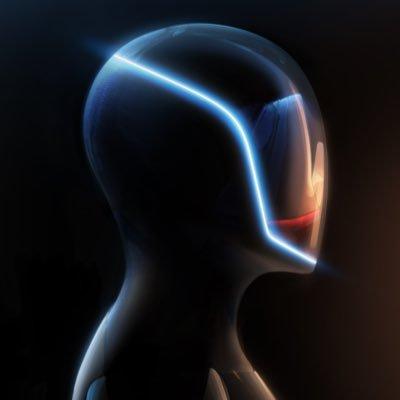
Optimus
Founder(s) | Tesla | ||||||||
|---|---|---|---|---|---|---|---|---|---|
Versions | Bumblebee, Gen 2 | ||||||||
Tesla Optimus is a humanoid robot project developed by Tesla Inc. and first introduced in 2022. Designed as an extension of the technologies Tesla uses in its electric vehicles, Optimus was announced by Tesla’s CEO Elon Musk. The robot features a structure capable of walking on two legs and interacting with its environment using two arms and hands. Musk has predicted that Optimus will assume a complementary role to human labor in the future.
Optimus was first announced during Tesla’s AI Day event in August 2021, and its prototype was revealed to the public in 2022. One of the earliest prototypes, named “Bumblebee,” was rapidly assembled from existing components and quickly demonstrated the ability to balance, walk, and carry objects. Tesla later introduced a more advanced prototype using actuators designed in-house. In 2023, Optimus Gen 2 was announced and showcased at Tesla’s “We, Robot” event in 2024.
Optimus Gen 2 (Tesla)
Optimus operates using Tesla’s proprietary artificial intelligence (AI) chip and deep learning techniques. The robot’s processor is the Tesla SoC, with connectivity provided via Wi-Fi and LTE. Its energy needs are met by a 2.3 kWh battery. It consumes approximately 100 watts while seated and 500 watts while walking. Optimus’s battery life ranges from 4 to 23 hours. The robot has 28 structural actuators, each of six different types. Its walking speed is around 5 miles per hour (approximately 8 km/h). Each hand can lift and carry up to 20 pounds (approximately 9 kilograms). For visual perception, it uses eight Autopilot cameras; for auditory perception, one or more microphones; and for audio output, speakers.
The design of Optimus incorporates joint structures similar to human biomechanics, providing 11 degrees of freedom (DOF) in each hand. It has a lightweight outer shell made of a composite of plastic and metal. Navigation, environmental recognition, and balance control are achieved using Tesla’s Full Self-Driving (FSD) technology and end-to-end neural networks.
Tesla Optimus possesses fundamental motor and perception capabilities. It can walk forward, move its arms in multiple directions, balance on one leg, lift objects, and grasp and carry them. It recognizes its surroundings and adjusts its balance by sensing the position of its limbs. A video released in 2024 demonstrated Optimus walking on uneven terrain and recovering its balance after slipping. These abilities are said to be performed without remote control, relying solely on sensors and a neural network-based control system.
Elon Musk has stated that Optimus will initially be used within Tesla’s own Gigafactory facilities, with large-scale production and commercial sales planned to follow. Limited production is scheduled to begin in 2025, with sales to other companies expected to start by 2026. Tesla aims to deploy Optimus for tasks such as factory operations, warehouse management, and material handling. In the long term, it is anticipated that Optimus could also be used in home environments for services such as childcare, housekeeping, and shopping.
The announcement of Optimus has drawn various criticisms from the technology community. Some videos published by Tesla revealed that the robot’s demonstrated actions were not fully autonomous but performed via teleoperation. This has led other robotics companies to explicitly label their promotional videos with “no teleoperation.” Additionally, early prototypes of Optimus have been noted to exhibit more limited capabilities compared to Honda’s Asimo robot, which was developed over 20 years ago.
Many robotics experts argue that Tesla’s humanoid robot design is not yet practically advantageous. In environments such as factories and warehouses, wheeled or task-specific robots are considered more efficient. Furthermore, it is emphasized that general-purpose robots face significant challenges in cost, software complexity, and safety.
Tesla CEO Elon Musk estimates that the long-term cost of Optimus will range between $20,000 and $30,000 USD. However, whether this projection will materialize remains uncertain, given the complexity of the production process, current technological levels, and commercial demand. Musk argues that humanoid robots like Optimus could reduce labor shortages in the future and free humans from heavy and dangerous tasks.
Tesla Optimus positions itself as an ambitious initiative in the field of humanoid robotics. However, considering the current state of technology, production capacity, software development progress, and market adaptation, it is assessed that further development and testing are required before Optimus can enter widespread daily use.
Anadolu Ajansı (AA). “ABD ile Çin Arasındaki Ticaret Savaşı Musk'ın Şirketi Tesla'nın Robot Üretimini Olumsuz Etkiliyor.” Anadolu Ajansı. Accessed April 25, 2025. https://www.aa.com.tr/tr/bilim-teknoloji/abd-ile-cin-arasindaki-ticaret-savasi-muskin-sirketi-teslanin-robot-uretimini-olumsuz-etkiliyor/3548211.
BBC News. “Tesla's Optimus and the Problem with Humanoids.” BBC News. Accessed April 25, 2025. https://www.bbc.com/news/technology-63130363.
Bloomberg HT. "Musk: ABD-Çin Ticaret Savaşı Tesla'nın Robot Üretimini Olumsuz Etkiledi." Accessed April 25, 2025. https://www.bloomberght.com/musk-abd-cin-ticaret-savasi-tesla-nin-robot-uretimini-olumsuz-etkiledi-3747141?page=3.
Built In. "Tesla’s Robot, Optimus: Everything We Know." Built In. Accessed April 25, 2025. https://builtin.com/robotics/tesla-robot.
Digital Trends. "What Is Tesla Optimus? Your Pressing Questions, Answered." Accessed April 25, 2025. https://www.digitaltrends.com/computing/what-is-tesla-optimus-robot-your-questions-answered/#dt-heading-conclusion.
FacilitiesNet. "The Future of Facility Management: Tesla's Optimus Robot." FacilitiesNet. Accessed April 25, 2025. https://www.facilitiesnet.com/software/article/The-Future-of-Facility-Management-Teslas-Optimus-Robot--20276.
IEEE Spectrum. "For Better or Worse, Tesla Bot Is Exactly What We Expected: Tesla Fails to Show Anything Uniquely Impressive with Its New Humanoid Robot Prototype." Accessed April 25, 2025. https://spectrum.ieee.org/amp/tesla-optimus-robot-2658369835.
Interesting Engineering. "AMECA, Atlas, Optimus: Top 10 Insane Humanoid Robots to Watch Out for in 2025." Interesting Engineering. Accessed April 25, 2025. https://interestingengineering.com/entertainment/top-humanoid-robots-list.
Quartz (QZ). "Tesla's Optimus Video Flub Has Other Robot Makers Assuring Us Their Robots Are Legit." Accessed April 25, 2025. https://qz.com/robot-legit-elon-musk-fake-optimus-tesla-demo-astribot-1851457009.
Tesla Optimus. "Tesla Optimus." Accessed April 25, 2025. https://x.com/Tesla_Optimus.
Tesla. "The Future Is Autonomous." Tesla. Accessed April 25, 2025. https://www.tesla.com/we-robot.
Wired España. "Tesla Presenta a Optimus, Su Robot Humanoide: Qué Puede Hacer, Cuánto Costará y Qué Tan Autónomo Es." Accessed April 25, 2025. https://es.wired.com/articulos/tesla-presenta-a-optimus-su-robot-humanoide-que-puede-hacer-cuanto-costara-y-que-tan-autonomo-es.
YouTube. "Optimus - Gen 2 | Tesla." Accessed April 25, 2025. https://www.youtube.com/watch?v=cpraXaw7dyc.

Optimus
Founder(s) | Tesla | ||||||||
|---|---|---|---|---|---|---|---|---|---|
Versions | Bumblebee, Gen 2 | ||||||||
Development Process and Announcement
Technical Specifications
Functions and Capabilities
Production and Application Areas
Debates and Criticisms
Future Plans and Cost