

This article was automatically translated from the original Turkish version.
+1 More
Author(s) | Ahmet Mithat Efendi | ||||||||
|---|---|---|---|---|---|---|---|---|---|
Prepared by | Halef Nas | ||||||||
Publisher(s) | Dergah Yayınları | ||||||||
Publication Year | January 2017 | ||||||||
Number of Pages | 315 | ||||||||
Type(s) | Historical Novel / Fiction-Criticism | ||||||||
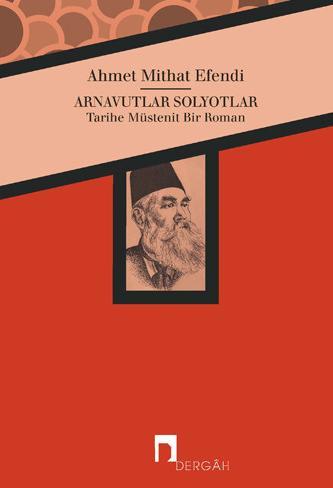
Albanians, Solyots: A Novel Pretending to Be History, written by Ahmet Mithat Efendi (1844–1912), one of the most prolific voices in Turkish literature and intellectual life, and published as part of Dergâh Yayınları’s “Turkish Literature” series, is a historical and socially critical novel. Prepared for publication by Halef Nas, this work stands as one of the earliest examples of the renewal period’s Turkish narrative tradition and emerges as a text in which Ahmet Mithat Efendi articulates and defends the ideology of Ottomanism. The book, published in January 2017, consists of 315 pages.
Albanians, Solyots: A Novel Pretending to Be History is one of the significant works within Ahmet Mithat Efendi’s extensive literary corpus, possessing the character of an narrative atlas of Turkish literature. As its title suggests, the novel constructs a fictional text grounded in historical events and is shaped around the triad of “idea-feeling-reality.”
In the introduction, Ahmet Mithat Efendi directly addresses the political and social issues of his time, describing the comfort and prosperity enjoyed by Bulgarians under Ottoman rule. In contrast, he emphasizes the hardships suffered by these communities due to European provocations and deceptions. This framing establishes the foundational rationale for his central argument: the necessity of Ottoman unity. Within this context, the novel advocates for the coexistence of diverse ethnic groups within the Ottoman territories and presents a critical stance against the destructive effects of nationalist movements.
Ahmet Mithat Efendi does not merely tell a story in this work; he also attempts, through fictional means, to explain and defend one of the key ideologies of his era—Ottomanism. In this sense, the novel transcends the conventional boundaries of fiction and assumes the character of a “fictional critique.” It functions as a platform through which the author conveys his social and political critiques, using historical events and the political atmosphere of the time as a backdrop.
The language and style employed by Ahmet Mithat Efendi in Albanians, Solyots: A Novel Pretending to Be History reflect the characteristics of his broader literary persona. The author carefully employs a simple and accessible language to reach his intended readership. However, given his engagement with the political and social issues of the period, he occasionally adopts an instructional and explanatory tone. In Halef Nas’s edition, the original text has been faithfully preserved, retaining expressions that reflect the linguistic features of the era. The work contains no advertising or laudatory language; instead, a descriptive and objective academic style prevails. The narrative interweaves historical facts with fiction to reflect the spirit of the time.
Ahmet Mithat Efendi is one of the most productive writers in Turkish literature after the Tanzimat reforms. He embraced the mission of enlightening the public and produced works across numerous genres, including the novel, short story, theater, and essays. He is regarded as one of the pioneers of the Western-style Turkish novel and is known by the nickname “the writing machine.” Albanians, Solyots is a significant work that unites his literary talent with his intellectual concerns.
Ahmet, Mithat Efendi. *Arnavutlar Solyotlar Tarihe Müstenit Bir Roman*. Edited by Halef Nas. İstanbul: Dergah Yayınları, 2017. Accessed July 8, 2025. https://www.dergah.com.tr/kitaplar/arnavutlar-solyotlar-tarihe-mustenit-bir-roman.

Author(s) | Ahmet Mithat Efendi | ||||||||
|---|---|---|---|---|---|---|---|---|---|
Prepared by | Halef Nas | ||||||||
Publisher(s) | Dergah Yayınları | ||||||||
Publication Year | January 2017 | ||||||||
Number of Pages | 315 | ||||||||
Type(s) | Historical Novel / Fiction-Criticism | ||||||||
No Discussion Added Yet
Start discussion for "The Albanians, the Solyots: A Novel Based on History (Book)" article
Content and Thematic Structure
Language and Style
The Author’s Position and the Work’s Significance