

This article was automatically translated from the original Turkish version.
+1 More
Author(s) | İsmail Kara Fulya İbanoğlu Filiz Dığıroğlu | ||||||||
|---|---|---|---|---|---|---|---|---|---|
Publisher(s) | Dergâh Yayınları | ||||||||
Publication Year | May 2022 | ||||||||
Type(s) | Oral history book culture cultural heritage | ||||||||
Number of Pages | 448 | ||||||||
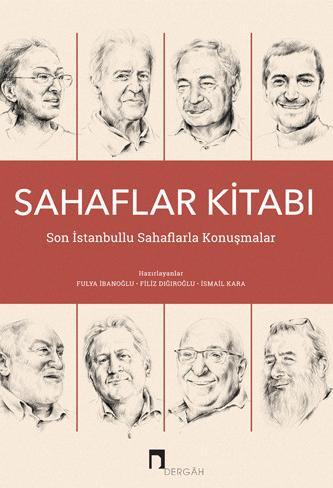
The Book of Sahaflar: Conversations with the Last Sahaflar of Istanbul is an oral history work that examines Istanbul’s centuries-old book culture within the framework of the sahaf tradition. Published in May 2022 as the 48th volume of Dergâh Yayınları’s “Anadolu Kitaplığı” series, the book is structured as a series of interviews conducted with the final practitioners of the sahaf profession. Among the sahaflar featured in the book are notable figures such as Orhan Asena, Turan Sevgili, Mustafa Duman, Nizamettin Yıldız, and Hilmi Kocaaslan, who have earned significant recognition in the memory of the trade.
The work compiles interviews carried out between 2009 and 2021. Each conversation unfolds within a broad framework, beginning with the sahaf’s personal life story and extending to topics such as their entry into the profession, the transformation of Istanbul’s book market, relationships with customers, and conceptions of books and culture. Visual elements also play an important role in the book; through photographs of sahaf shops, bookshelves, and occasionally archival materials such as vintage posters or correspondence, visual memory is evoked. Spanning 448 pages, the book presents the history of the sahaf profession in Istanbul to readers through both individual testimonies and cultural context.
The book consists of individual interviews, each conducted with one sahaf. Rather than following a chronological order, the interviews are arranged according to thematic coherence based on the intensity of their narratives. The content delves in detail into subjects such as professional craftsmanship, emotional bonds formed with books, shifts in customer profiles, the sahaflar’s personal libraries, and criteria for determining a book’s value. The book also emphasizes that sahaflik carries not only a commercial but also a cultural mission. A recurring theme throughout is that sahaflik is a way of life; each sahaf conveys both personal and societal transformation through their own lived experience.
The work is written directly in the interview format. Free from editorial intervention, the texts preserve the authentic voices of the sahaflar. This approach offers readers both a reliable oral history and an authentic literary experience. The language of the text is enriched by occasional use of regional dialects, idioms, and cultural references. Each sahaf’s distinct narrative style contributes to the linguistic and structural diversity of the book. This pluralistic structure enables the book to function not merely as a source of information but also as a document representing cultural memory.
The book was compiled by İsmail Kara, Filiz Dığıroğlu, and Fulya İbanoğlu. Rather than directing the narrative, the editors created space for the sahaflar’ own stories to emerge. İsmail Kara’s academic background, combined with Fulya İbanoğlu and Filiz Dığıroğlu’s archival sensitivity and field experience, lends methodological coherence to the work. The book is an important contribution that transmits the sahaf profession to future generations, bears witness to Istanbul’s cultural transformation, and advances the transcription of oral history sources into written form.
Author(s) | İsmail Kara Fulya İbanoğlu Filiz Dığıroğlu | ||||||||
|---|---|---|---|---|---|---|---|---|---|
Publisher(s) | Dergâh Yayınları | ||||||||
Publication Year | May 2022 | ||||||||
Type(s) | Oral history book culture cultural heritage | ||||||||
Number of Pages | 448 | ||||||||
No Discussion Added Yet
Start discussion for "The Book of Secondhand Books: Conversations with the Last Istanbul Secondhand Booksellers (Book)" article
Content and Thematic Structure
Narrative Style and Literary Features
The Editors’ Position and the Significance of the Work