


This article was automatically translated from the original Turkish version.

Drying, one of the oldest methods of preserving fruit beyond its season, creates a unique gastronomic experience when combined with figs. Homemade dried fig jam is not merely a breakfast spread; when enriched with walnuts and spices, it becomes a gourmet accompaniment to cheese platters. However, transforming the firm texture of dried fruit into the ideal jam consistency requires precise pre-treatment and cooking techniques.
In this article, we detail the steps to achieve a “amber” consistency by blending traditional fig jam preparation with modern kitchen insights.
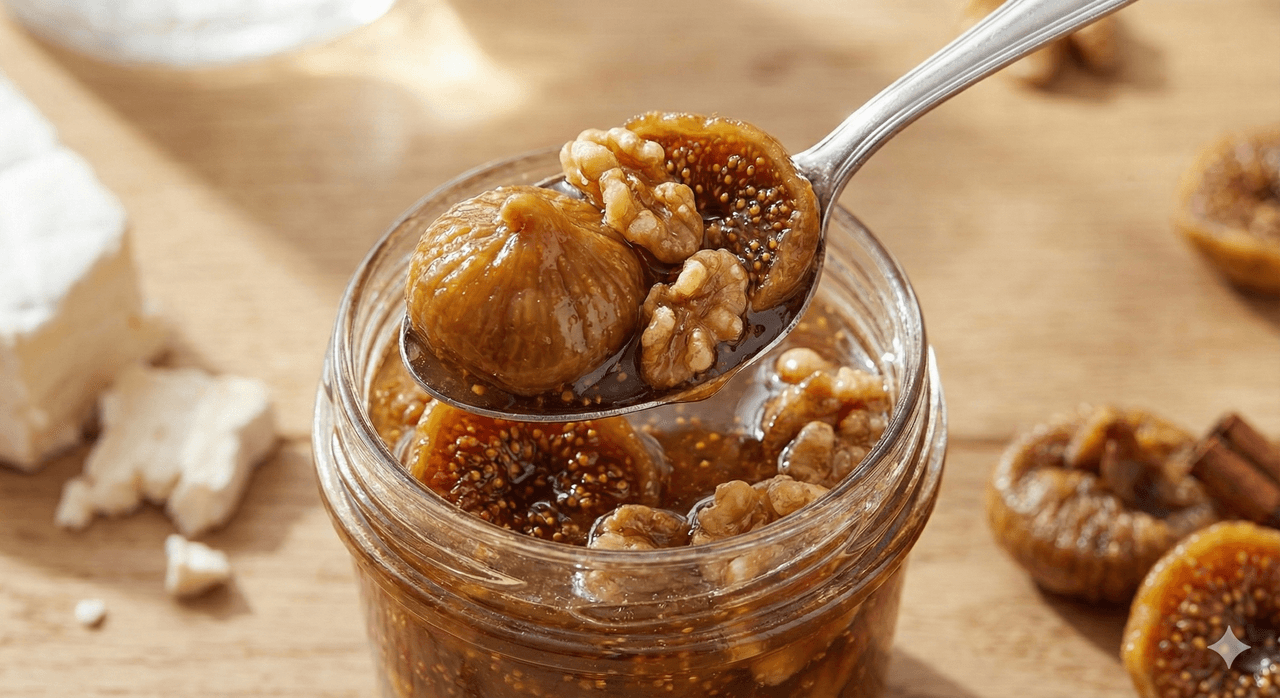
Prepared Dried Fig Jam (Generated by Artificial Intelligence)
Unlike fresh fruit jams, the first and most critical step in making dried fig jam is restoring the fruit’s lost moisture—a process known as “rehydration.”
While juicy fruits like strawberries rely on their own natural juices, dried fig jam requires an external syrup base made from water and sugar.
The pre-treated (drained) figs are added to the prepared hot syrup. The most crucial factor here is temperature control.
Once cooked, the jam must be left to cool completely at room temperature. Transfer it to clean glass jars, seal tightly, and store in a cool, dark place. Once opened, refrigeration is essential to preserve freshness.
This jam pairs exceptionally well with white cheese, lor, or tulum cheese, going beyond traditional breakfast use. Spread it on fresh bread or simit, or add it to yogurt for a healthy dessert alternative.
The jam contains high levels of sugar. If you have health concerns, consult your doctor before consuming.
Afiyet olsun.
Hıdır, Selin. "Kuru İncir Reçeli Tarifi," *Lezzet*. Accessed December 25, 2025. https://www.lezzet.com.tr/yemek-tarifleri/tatli-tarifleri/meyveli-tatlilar/kuru-incir-receli-tarifi
Ingredient Preparation and Rehydration
Syrup Balance and Aromatic Layers
Cooking Process and Consistency Control
Filling and Storage Conditions
Serving Suggestions