


This article was automatically translated from the original Turkish version.
+2 More
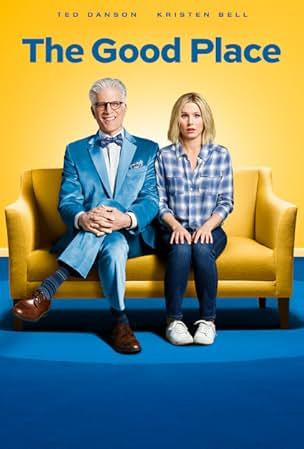
The Good Place (TV Series)
Type(s) | Comedy Adventure | ||||||||
|---|---|---|---|---|---|---|---|---|---|
Director(s) | Michael Schur | ||||||||
Producer(s) | Megan Amram Joe Mande David Hyman | ||||||||
Season | 4 | ||||||||
Actors | Manny Jacinto Ted Danson D'Arcy Carden William Jackson Harper Jameela Jamil Kristen Bell | ||||||||
The Good Place is a fantasy comedy series produced by the U.S.-based television network NBC, which aired from 2016 to 2020 and explores philosophical and ethical themes through a humorous narrative.

The Good Place - (IMDb)
The series was created by Michael Schur. Comprising four seasons and a total of 53 episodes, it reimagines life after death through a fictional afterlife system. The main cast includes Kristen Bell as Eleanor Shellstrop, Ted Danson as Michael, William Jackson Harper as Chidi Anagonye, Jameela Jamil as Tahani Al-Jamil, Manny Jacinto as Jason Mendoza, and D’Arcy Carden as Janet.
The series begins with the story of a selfish woman who awakens in the afterlife, a place called “The Good Place” reserved exclusively for virtuous individuals. Eleanor Shellstrop soon realizes she has been mistakenly sent there and strives to become genuinely good in order to remain. Her journey forms the central arc of the series, while her companions Chidi, Tahani, and Jason allow for exploration of concepts such as morality, self-awareness, ethics, and personal transformation. Each season evolves the plot into a new dimension, questioning the structure, nature, and justice of the system. The initially fixed distinction between “The Good Place” and “The Bad Place” gradually takes on a more critical framework through the transformations of the artificial intelligence character Janet and the architect Michael.

The Good Place - (IMDb)
The series directly references various moral frameworks including Kant’s deontological ethics, Bentham’s utilitarianism, and Aristotle’s virtue ethics. Ethical dilemmas are particularly dramatized through the character of Chidi. Jeremy Bentham’s principle of “the greatest happiness for the greatest number,” T.M. Scanlon’s ethical theory centered on “respecting others’ consent,” and Immanuel Kant’s views based on “duty” and “intention” are used as points of debate. The influence of ethical rules on individual behavior, the conditions of being a good person, free will, the freedom to choose, and systemic justice are among the core philosophical themes. Each character undergoes moral development by confronting their past, making the series a study of moral subject formation.

The Good Place - (IMDb)
The series critically examines the idea of posthumous life being evaluated through a points-based system. It develops systematic critiques of global capitalism, the modern individual’s entrapment in an abundance of choices, and the moral consequences of everyday actions. By portraying the near-impossibility of reaching “The Good Place,” the series challenges the ethical contradictions of contemporary society.
The series reaches a philosophical and emotional climax in its fourth and final season. The concluding episode arrives at a philosophical resolution to the questions “What is a good life?” and “What could be the purpose of existence?” It is widely praised by academics, particularly those teaching ethics in universities, who use it as an educational resource for demonstrating how philosophy can be applied to everyday life.
Beyazperde. "The Good Place." Accessed May 19, 2025. https://www.beyazperde.com/diziler/dizi-19647/
IMDb. “The Good Place (TV Series 2016–2020) – Photo Gallery.” Accessed May 19, 2025. https://www.imdb.com/title/tt4955642/mediaviewer/rm685609985/?ref_=tt_ov_i
IMDb. “The Good Place (TV Series 2016–2020).” Accessed May 19, 2025. https://www.imdb.com/title/tt4955642/
Irwin, William, ed. *The Good Place and Philosophy: Everything is Forking Fine*. Hoboken, NJ: Wiley Blackwell, 2020. https://www.wiley.com/en-us/The+Good+Place+and+Philosophy%3A+Everything+is+Forking+Fine-p-9781119633280

The Good Place (TV Series)
Type(s) | Comedy Adventure | ||||||||
|---|---|---|---|---|---|---|---|---|---|
Director(s) | Michael Schur | ||||||||
Producer(s) | Megan Amram Joe Mande David Hyman | ||||||||
Season | 4 | ||||||||
Actors | Manny Jacinto Ted Danson D'Arcy Carden William Jackson Harper Jameela Jamil Kristen Bell | ||||||||
No Discussion Added Yet
Start discussion for "The Good Place (TV Series)" article
Production Information and General Overview
Plot and Narrative Structure
Ethical Systems and Philosophical Themes
Character Representations and Semantic Depth
Structural and Institutional Critiques
Finale and Legacy