This article was automatically translated from the original Turkish version.
Director(s) | Harald Zwart | ||||||||
|---|---|---|---|---|---|---|---|---|---|
Screenwriter(s) | Christopher Murphey | ||||||||
Actors | Zhenwei Wang (Cheng) Wenwen Han (Meiying) Taraji P. Henson (Sherry Parker) Jackie Chan (Mr. Han) Jaden Smith (Dre Parker) | ||||||||
Production Year | 2010 | ||||||||
Country | China United States | ||||||||
Language(s) | Chinese English | ||||||||
Genre | Sports Family Drama Action | ||||||||
Duration | 140 minutes | ||||||||
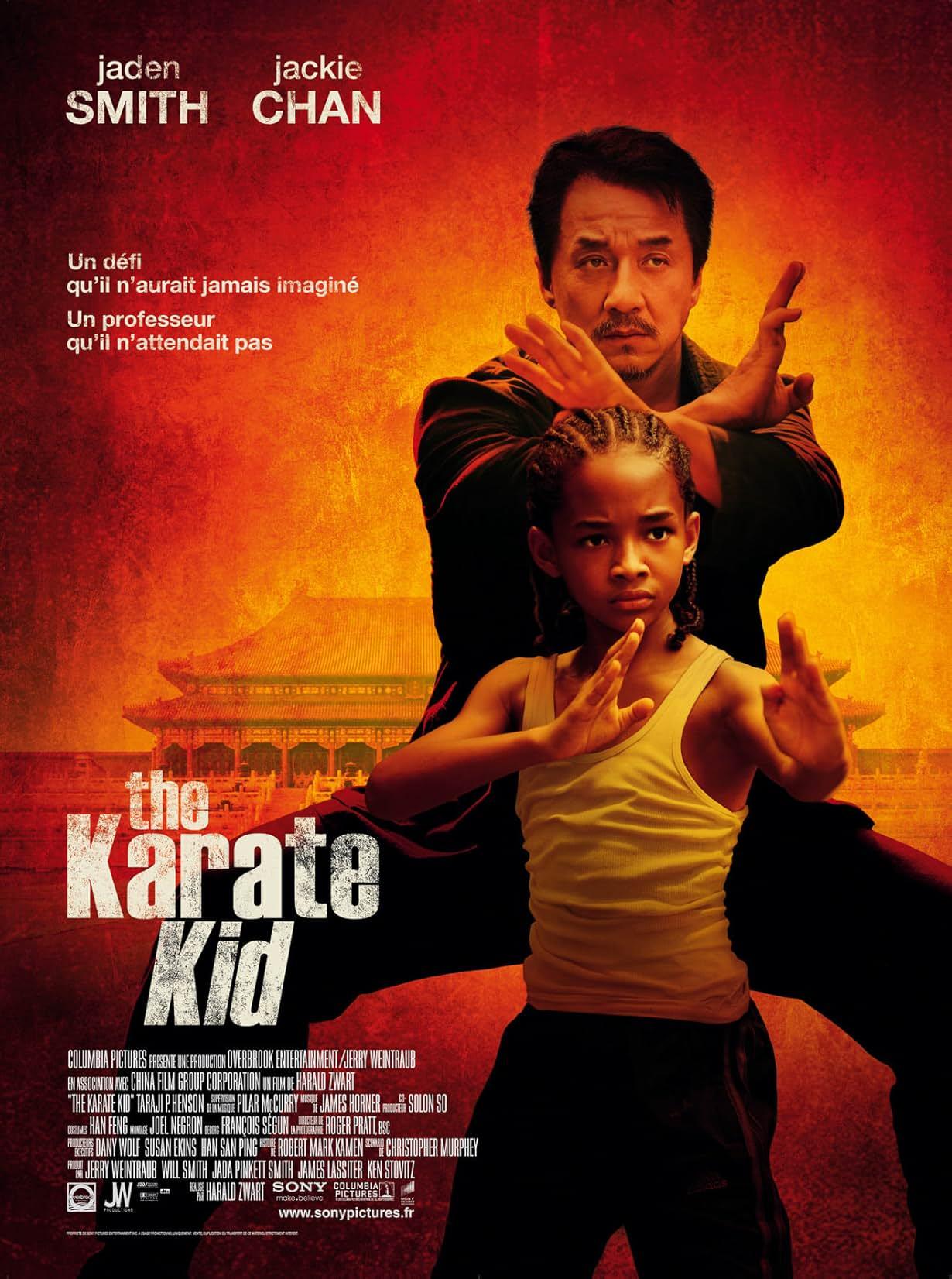
"The Karate Kid" is a 2010 American martial arts drama film directed by Harald Zwart and written by Christopher Murphey. Distributed by Columbia Pictures, this production is a remake of the 1984 film The Karate Kid. Starring Jaden Smith as Dre Parker, Jackie Chan as Mr. Han, and Taraji P. Henson as Sherry Parker, the film modernizes the original’s themes by setting the story in China. It follows the journey of a young boy who overcomes bullying through kung fu training.
The Karate Kid Film Trailer (Sony Pictures Entertainment)
The Karate Kid (2010) was conceived as a remake inspired by the success of the original film. The screenplay drew inspiration from Robert Mark Kamen’s original story but incorporated a culturally specific Chinese context. Filming took place in Beijing and other Chinese cities, with a budget of approximately 40 million dollars. The production was shaped around Jackie Chan’s expertise in kung fu and Jaden Smith’s youthful energy, and was designed with the support of the Chinese government to reflect local cultural elements. Director Harald Zwart emphasized that the film tells a universal story and employed professional choreographers for the action sequences.
The film tells the story of 12-year-old Dre Parker, who moves with his mother Sherry from Detroit to Beijing. In his new environment, Dre becomes the target of bullying by a group of students led by Cheng. He unexpectedly seeks help from Mr. Han, the building’s maintenance worker, who agrees to teach him kung fu. Through this process, Dre undergoes both physical and emotional transformation. He meets Meiying, a young Chinese violinist, and their friendship develops into a romantic connection, which intensifies tensions due to Cheng’s jealousy. Training progresses through traditional kung fu techniques, gradually building Dre’s self-confidence. The story culminates in a kung fu tournament in Beijing, where Dre defeats Cheng in the final match. The film explores themes of mentorship, resilience, and cultural adaptation.

A Scene from The Karate Kid Film (IMDB)
Mr. Han’s mentorship of Dre highlights traditional teaching methods and underscores the importance of experiential knowledge transfer. Dre’s struggle against bullying fosters his resilience and reinforces the ability to persevere in the face of adversity. The process of adapting to Chinese culture forms the backdrop of the narrative and emphasizes the capacity to navigate cultural differences. The journey of self-confidence during adolescence forms the core theme of personal development. Dre’s patience throughout his kung fu training reflects the long-term impact of Mr. Han’s methods, emphasizing the value of gradual progress over immediate results.

A Scene from The Karate Kid Film (IMDB)
The film features a visual style that captures the landscapes of China and the modern streets of Beijing. The kung fu sequences stand out through Jackie Chan’s acrobatic skills and high production values. The score, composed by James Horner, supports the narrative with emotional and epic tones. The song "Never Say Never" is featured during the tournament scenes.
The Karate Kid received mixed reviews from critics but achieved commercial success, earning 359 million dollars worldwide. Jaden Smith was nominated for the Young Artist Award for Best Young Male Actor. The film is regarded as a turning point in Jackie Chan’s international career.
The film has reached a global audience by reflecting cultural interactions between China and the West. It has increased interest in kung fu and Chinese culture and contributed to the popularization of martial arts among younger generations. While the series Cobra Kai is connected to the original 1984 film, the 2010 remake remains an independent story. Through its themes of mentorship, patience, perseverance, and personal growth, the film has established a significant place in modern cinema.
IMDb. "Görsel 1." Accessed July 3, 2025. https://www.imdb.com/title/tt1155076/mediaviewer/rm2550559744/?ref_=ttmi_mi_5
IMDb. "Görsel 2." Accessed July 3, 2025. https://www.imdb.com/title/tt1155076/mediaviewer/rm2804777472/?ref_=ttmi_mi_5
IMDb. "Görsel 3." Accessed July 3, 2025. https://www.imdb.com/title/tt1155076/mediaviewer/rm3039658496/?ref_=ttmi_mi_6
IMDb. "The Karate Kid (2010) – Awards." Accessed July 3, 2025. https://www.imdb.com/title/tt1155076/awards/?ref_=tt_ov_at_op_awd
IMDb. "The Karate Kid (2010) – Company Credits." Accessed July 3, 2025. https://www.imdb.com/title/tt1155076/companycredits/?ref_=tt_ov_at_dt_cmpy
IMDb. "The Karate Kid (2010) – Full Cast & Crew." IMDb. Accessed July 3, 2025. https://www.imdb.com/title/tt1155076/fullcredits/?ref_=tt_ov_at_pop_cst
IMDb. "The Karate Kid (2010) – Plot Summary." Accessed July 3, 2025. https://www.imdb.com/title/tt1155076/plotsummary/?ref_=tt_ov_at_pl_pl
IMDb. "The Karate Kid (2010) – Release Info." Accessed July 3, 2025. https://www.imdb.com/title/tt1155076/releaseinfo/?ref_=tt_ov_at_dt_rdat
IMDb. "The Karate Kid (2010)." Accessed July 3, 2025. https://www.imdb.com/title/tt1155076/?ref_=nv_sr_srsg_3_tt_7_nm_1_in_0_q_The%2520Karate
Rotten Tomatoes. “The Karate Kid (2010).” Accessed July 3, 2025. https://www.rottentomatoes.com/m/karate_kid_2010
Sony Pictures Entertainment. "The Karate Kid (2010) Official Trailer." Accessed July 3, 2025.

Director(s) | Harald Zwart | ||||||||
|---|---|---|---|---|---|---|---|---|---|
Screenwriter(s) | Christopher Murphey | ||||||||
Actors | Zhenwei Wang (Cheng) Wenwen Han (Meiying) Taraji P. Henson (Sherry Parker) Jackie Chan (Mr. Han) Jaden Smith (Dre Parker) | ||||||||
Production Year | 2010 | ||||||||
Country | China United States | ||||||||
Language(s) | Chinese English | ||||||||
Genre | Sports Family Drama Action | ||||||||
Duration | 140 minutes | ||||||||
No Discussion Added Yet
Start discussion for "The Karate Kid (Film)" article
Production and Development
Plot Summary
Character Analysis
Themes
Visuals and Music
Awards and Nominations
Cultural Impact and Legacy