
This article was automatically translated from the original Turkish version.
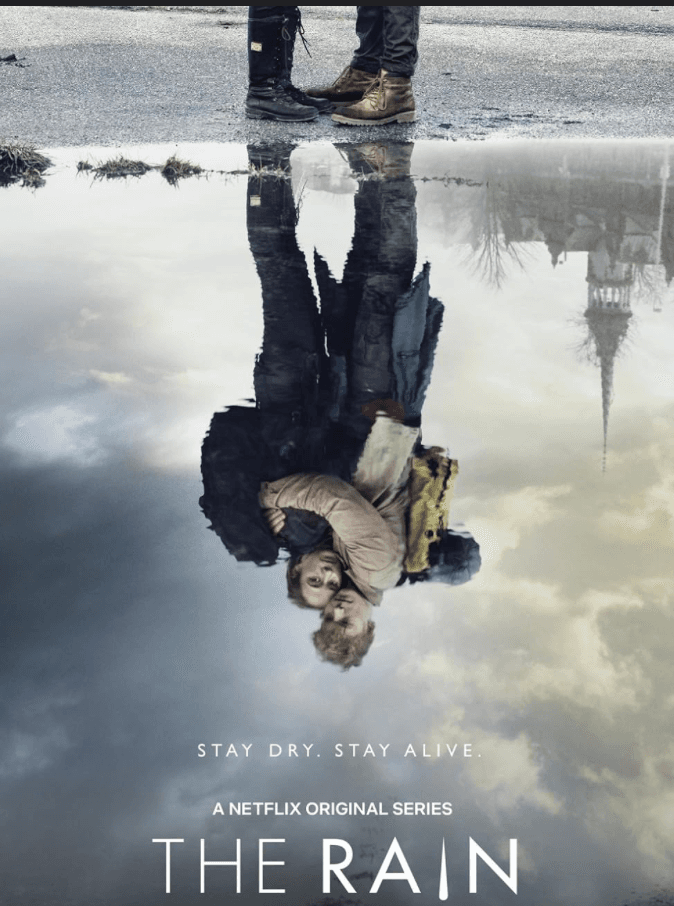
The Rain
Producer(s) | Miso Film | ||||||||
|---|---|---|---|---|---|---|---|---|---|
Number of Episodes | 20 (3 seasons) | ||||||||
Platform | Netflix | ||||||||
Duration | Approximately 45 minutes | ||||||||
Actors | Alba August, Lucas Lynggaard Tønnesen, Mikkel Boe Følsgaard, Jessica Dinnage, Angela Bundalovic | ||||||||
Creator | Jannik Tai Mosholt | ||||||||
Door | Science Fiction, Youth, Thriller, Post-apocalyptic | ||||||||
The Rain, a Danish-produced Netflix series, offers viewers who enjoy post apocalyptic universes a distinct atmosphere. The story begins with a lethal virus spreading through rain. Virus kills anyone it contacts within seconds, and large portions of the planet, particularly Denmark, rapidly become uninhabitable.
At the center are two siblings: Simone and Rasmus. Their father works for Apollon, a corporation suspected of being the virus’s origin. The family is forced into isolation within the first moments, and the children spend the next six years living in a shelter. The outside world has now become a none breeding ground. Almost all humans are dead; those who survive struggle not to thrive, but merely to exist.
The most striking aspect of the series is the intense claustrophobic atmosphere in its early episodes. Simone and Rasmus’s six-year isolation in a confined space bears traces not only of a catastrophe but also of the limits of human psychology. Simone’s transformation into a leader figure during this period, and Rasmus’s psychological fractures as he transitions from childhood to adolescence, challenge the most fundamental building of human relationships.
Yet this isolation does not last. As the air runs out, the siblings are forced outside and encounter other survivors. At this point, the series shifts toward the classical theme of post-apocalyptic survival. New characters introduce group tensions, together, betrayal, and trust as central themes.
Although The Rain is set in Denmark, it emphasizes universality over geographical specificity. Forests, abandoned cities, desolate roads, and derelict structures—this atmosphere feels less like a Danish setting and more like a component of any post-apocalyptic world.
The rain’s transformation into a death vector creates not only a physical but also a psychological threat. The panic rising in scenes where the rain falls merges with sound design and camera angles to instill a profound sense of real unease in viewers. Particularly noteworthy is Kenneth Kainz’s visual language, which constructs the rain’s impact through darkness clouds, individual droplet tracking, and echoing sounds.
The series speaks not only of disaster and the virus but also of human nature. The primal impulses emerging after civilization collapses, struggles for leadership within communities, and the blurring of moral boundaries—all these form the dramatic backbone of the show. Yet amid all this, Simone’s enduring presence as a symbol of hope and mercy forms the emotional core of the series.
Cooperation or survival at any cost? The character developments surrounding these questions compel viewers to reflect on the decisions of individuals, especially young people, caught in such a traumatic reality.
The Rain is Netflix’s first original production from Denmark. As such, certain technical and structural flaws are understandable. While the early episodes suffer from pacing inconsistencies, the overall narrative structure successfully maintains a sense of curiosity. In particular, flashbacks revealing the characters’ pasts add depth to the story. However, some supporting characters remain superficial, and unresolved plot points deferred with the promise of “explained in the next episode” can test viewer patience.
IMDb. Accessed March 25, 2025. https://www.imdb.com/title/tt6656238/
The Atlantic. Accessed March 25, 2025. https://www.theatlantic.com/entertainment/archive/2018/05/the-rain-review-netflix/559439/
The Guardian. Accessed March 25, 2025. https://www.theguardian.com/tv-and-radio/2018/may/04/the-rain-review-netflix-brings-post-apocalyptic-thrills-to-denmark
The Hollywood Reporter. Accessed March 25, 2025. https://www.hollywoodreporter.com/tv/tv-reviews/rain-review-1108020
YouTube. Accessed March 27, 2025. https://www.youtube.com/watch?v=st6r-8mLW_o.

The Rain
Producer(s) | Miso Film | ||||||||
|---|---|---|---|---|---|---|---|---|---|
Number of Episodes | 20 (3 seasons) | ||||||||
Platform | Netflix | ||||||||
Duration | Approximately 45 minutes | ||||||||
Actors | Alba August, Lucas Lynggaard Tønnesen, Mikkel Boe Følsgaard, Jessica Dinnage, Angela Bundalovic | ||||||||
Creator | Jannik Tai Mosholt | ||||||||
Door | Science Fiction, Youth, Thriller, Post-apocalyptic | ||||||||
No Discussion Added Yet
Start discussion for "The Rain (TV Series)" article
Character Dynamics and Closed Worlds
A Geographyless Apocalypse: The Universality of Space
Youth, Chaos, and Moral Ambiguity
First Steps, Shortcomings, and Potential