This article was automatically translated from the original Turkish version.
+1 More
Author of the Original Work | Mehmed Şükrü Efendi | ||||||||
|---|---|---|---|---|---|---|---|---|---|
Prepared by | Zeynep Hümeyra Ciğer | ||||||||
Publisher(s) | Dergâh Yayınları | ||||||||
Publication Year | March 2017 | ||||||||
Number of Pages | 182 | ||||||||
Type(s) | İlahi Güfte Mecmuası Musiki Tarihi Kaynağı | ||||||||
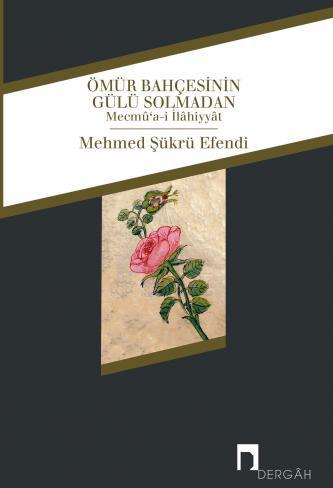
The Rose of the Garden of Life Has Not Wilted is the transcribed and annotated edition of Mehmed Şükrü Efendi’s work titled Mecmû‘a-i İlâhiyyât, prepared by Zeynep Hümeyra Ciğer. Published in March 2017 as part of Dergâh Yayınları’s Türk Klasikleri series, this publication brings to the public for the first time a collection of ilahis whose existence was previously unknown and of which only a single copy was preserved in a private library. The book consists of 182 pages and holds significant value as a source for the history of Turkish music.
The Rose of the Garden of Life Has Not Wilted presents Mehmed Şükrü Efendi’s compilation Mecmû‘a-i İlâhiyyât transcribed into the modern Turkish alphabet. Mehmed Şükrü Efendi is known for his work Mecmû‘a-i Tekâyâ, which provides information about Istanbul dergâhs and their sheikhs. However, Mecmû‘a-i İlâhiyyât was previously unknown, with only one surviving copy preserved in the private library of İsmail E. Erünsal.
This book contains the texts of ilahis collected by Mehmed Şükrü Efendi from various sources. The work embodies all the characteristics of a classical “güzelleme mecmuası” (collection of ilahi texts), not only by gathering ilahi texts into a single volume but also by systematically organizing them according to their musical modes. The most distinguishing feature of The Rose of the Garden of Life Has Not Wilted compared to similar collections is that it does not merely present the texts but also provides biographical information about the authors of the texts and melodies. In this respect, the work has become a “unique” source for Turkish music history, as it fills gaps in our musical and literary history by offering detailed information about the creators of the ilahis alongside the texts themselves.
The book is divided into two main sections. The first section provides comprehensive biographical information about Mehmed Şükrü Efendi’s life and his other works, followed by a detailed analysis of the subject, content, and significance of Mecmû‘a-i İlâhiyyât within the history of Turkish music.
The second section presents the original text of Mecmû‘a-i İlâhiyyât, transcribed into the Latin alphabet in a manner accessible to modern Turkish readers.
The style of the work reflects the spiritual depth and literary aesthetics of the original ilahi texts, while the sections prepared by Zeynep Hümeyra Ciğer adopt an academic and objective approach. The text preserves the mystical atmosphere of the ilahis and employs a descriptive and informative tone when analyzing Mehmed Şükrü Efendi’s life and work. There is no promotional or laudatory language in the book; instead, the subject is approached with scholarly rigor. The transcription of the texts into the modern alphabet ensures the work reaches a broad readership.
Mehmed Şükrü Efendi was one of the prominent figures in 19th-century Ottoman musical and literary circles, particularly known for his research on dergâh culture and the ilahi tradition. Mecmû‘a-i İlâhiyyât stands as an important legacy he left to the history of Turkish music.
The work, brought to light through the research of Zeynep Hümeyra Ciğer, serves as a foundational source for studies on Turkish music history, Sufi literature, and the tradition of ilahi text scholarship. The book not only presents the ilahi texts but also provides music historians and researchers with valuable data through the biographical information it offers on the authors of the texts and melodies. Its inclusion in the Türk Klasikleri series underscores its value within our cultural heritage. This book is a reference work for students of music history, researchers of Sufi literature, and general readers interested in Turkish religious music.
Efendi, Mehmed Şükrü. *Ömür Bahçesinin Gülü Solmadan*. Edited by Zeynep Hümeyra Ciğer. Istanbul: Dergah Yayınları, 2017. Accessed July 8, 2025. https://www.dergah.com.tr/kitaplar/omur-bahcesinin-gulu-solmadan.

Author of the Original Work | Mehmed Şükrü Efendi | ||||||||
|---|---|---|---|---|---|---|---|---|---|
Prepared by | Zeynep Hümeyra Ciğer | ||||||||
Publisher(s) | Dergâh Yayınları | ||||||||
Publication Year | March 2017 | ||||||||
Number of Pages | 182 | ||||||||
Type(s) | İlahi Güfte Mecmuası Musiki Tarihi Kaynağı | ||||||||
No Discussion Added Yet
Start discussion for "The Rose of Ömür Bahçesi Has Not Withered (Book)" article
Content and Thematic Structure
Language and Style
The Author/Editor’s Position and the Work’s Significance