

This article was automatically translated from the original Turkish version.
Original Name(s) | The Worst Person in the World | ||||||||
|---|---|---|---|---|---|---|---|---|---|
English Name | The Worst Person in the World | ||||||||
Production Year / Country | 2021 / Norway | ||||||||
Genre | Drama | ||||||||
Director(s) | Joachim Trier | ||||||||
Screenplay(s) | Joachim Trier Eskil Vogt | ||||||||
Main Actors | Renate Reinsve (Julie), Anders Danielsen Lie (Aksel), Herbert Nordrum (Eivind) | ||||||||
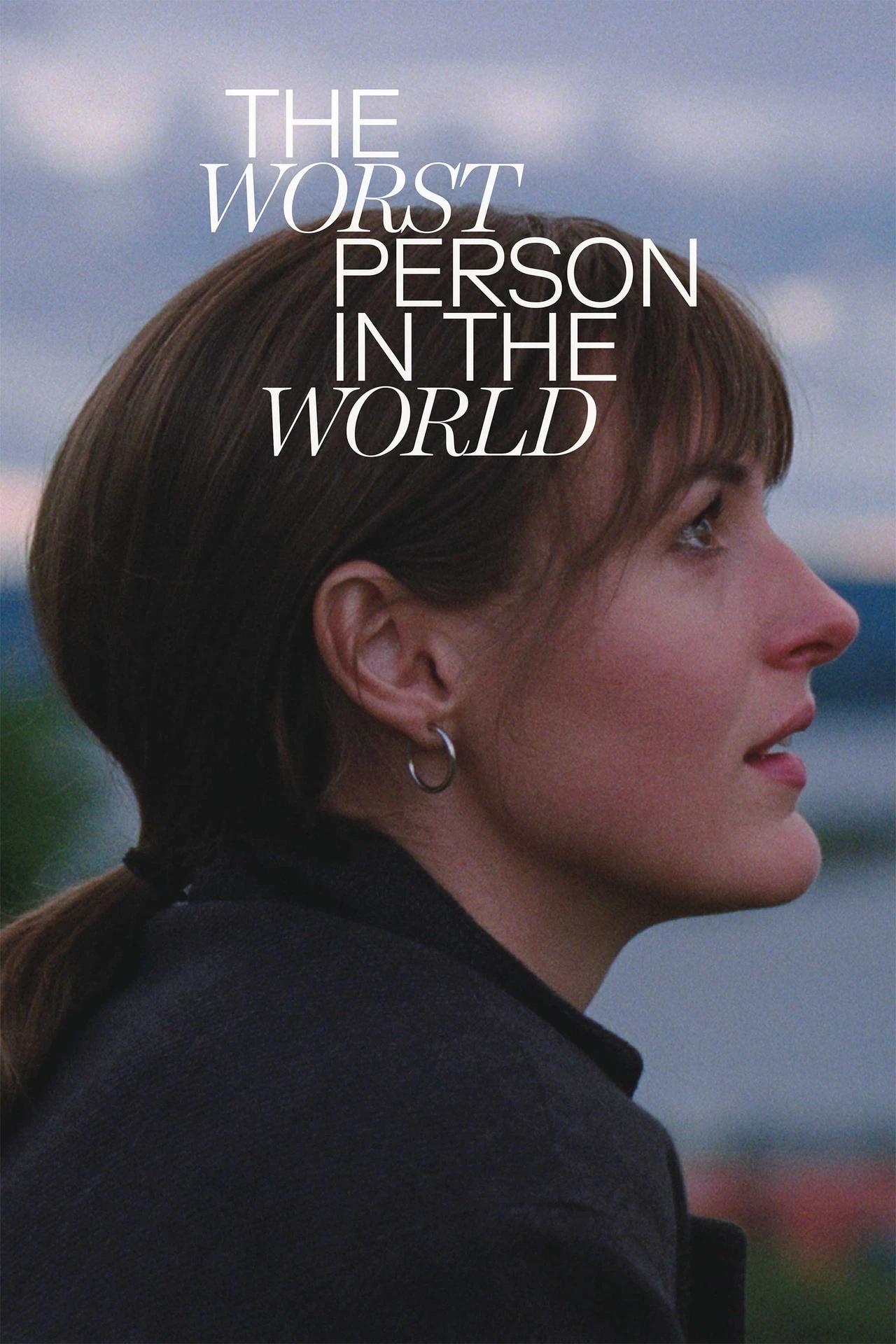
The Worst Person in the World (Verdens verste menneske) is a contemporary drama film shot in Norway in 2021. Directed by Joachim Trier and written by Trier and Eskil Vogt, the film stands out as a character study centered on the modern individual’s search for identity, love, career and meaning. Renate Reinsve portrays the lead role, while Anders Danielsen Lie and Herbert Nordrum deliver other pivotal performances that shape the narrative. The production centers on an intimate slice of life unfolding within Oslo’s urban fabric, highlighting the modern individual’s indecisiveness and emotional fluctuations. The drama, which blends humor and romance, has drawn attention from film critics for both its formal innovation and emotional depth.
The film is the final installment of Joachim Trier’s so-called “Oslo Trilogy,” following Reprise (2006) and Oslo, 31 August (2011), and reflects the director’s thematic and aesthetic maturation. Structured as twelve episodic chapters, the film chronicles pivotal turning points in the life of the protagonist Julie. With its palette of natural light and minimalist dialogue, the film continues the distinctive Norwegian cinematic tradition of minimalism. It explores themes such as social gender, the transience of love and individual dissatisfaction within the rhythm of contemporary urban life. These qualities have generated widespread resonance among both festival audiences and general viewers.
The story unfolds over several years in the life of Julie, who lives in Oslo, focusing on her decisions and relationships. The narrative centers on the protagonist’s restless search, as she fails to settle on a fixed path in education and career. The chapters progress as interconnected yet self-contained short stories. Julie’s relationships with different partners intersect with her expectations regarding family and professional life. The consequences of her personal choices become visible through time jumps. The tone of the text is one of humor that breaks tension yet sustains emotional weight.
The narrative schema combines everyday encounters, extended dialogue scenes and brief visual motifs. Transitions between chapters are marked by visual and auditory cues that accompany dramatic shifts. As time passes, the protagonist’s aging and accumulation of experience are made tangible through the people around her. Her pivotal decisions oscillate between professional productivity and relational dynamics. Rather than adhering to a single thematic axis, the screenplay prioritizes the interplay among different spheres of life. In the final chapter, personal reckoning and new directions converge into an open-ended but coherent conclusion.
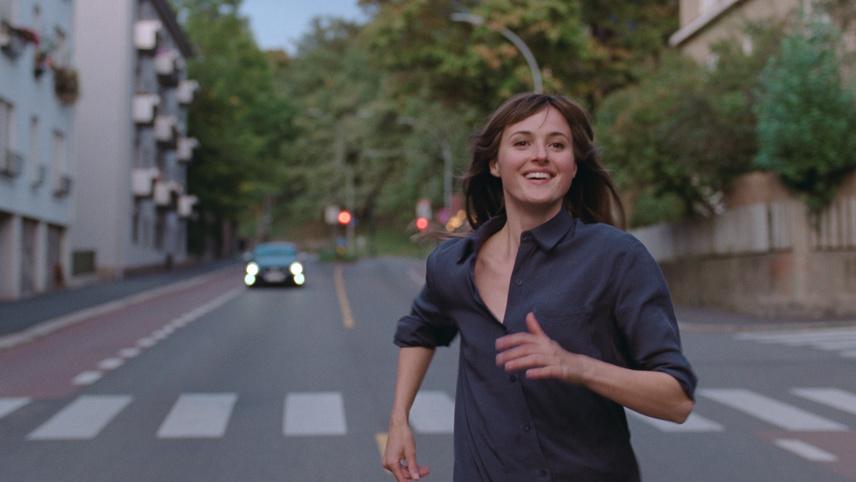
An iconic scene from the film (MUBI)
In cinematography, the bond between natural light and space with the character is particularly emphasized. The camera language balances close-ups with wide shots, reinforcing emotional intensity through scene composition. The editing rhythm adapts to the pacing demands of each chapter’s title. Musical selections heighten the emotional tone of scenes without overdirecting the viewer. Sound design renders the city’s ambient atmosphere and interior environments through natural recordings.
Shooting took place largely on location in real spaces across Oslo, a choice that strengthens the natural flow of the scenes. The color and texture palette follows a scale aligned with seasonal and diurnal light changes. The minimalist visual approach conveys emotional intensity through performances and dialogue. Thanks to these technical choices, the narrative translates inner movement into a visual architecture. The resulting whole presents a cohesive portrait that can be read as one of the contemporary exemplars of character-driven cinema.
Renate Reinsve portrays the protagonist Julie, uniting her various life phases with consistent nuance. Anders Danielsen Lie’s Aksel serves as a counterpoint to Julie, challenging her decisions through his intellectual outlook, age and professional standing. Herbert Nordrum’s Eivind embodies the possibilities introduced by everyday routines and spontaneous choices. Secondary characters, drawn from Julie’s family and work circles, assume diverse functions within the chapter-based structure. Dialogue serves as a primary instrument for measuring distance and closeness between characters. Brief supporting roles illuminate key turning points in the narrative.
The casting constructs a clustered community around the central trio. The characters’ professions, age differences and visions of the future become fundamental parameters of the dramatic continuity. Character development reveals the long-term consequences of choices made in specific moments. The restrained delivery of the performances supports the film’s sense of everyday realism. The screen time of supporting characters varies according to the chapter structure. All these elements enable the relational fabric to be perceived as fragmented yet cohesive.
Critical writings consistently highlight the chaptered structure, character-driven narrative and the cinematic representation of everyday life flow. Reviews discuss the balance between humor and drama achieved at the script level. Visual choices are explained through restrained camera movement and the use of natural settings. Performances are analyzed in relation to dialogue rhythm and micro-expressions within scenes. The open-ended finale is described as a solution that allows multiple interpretations of the protagonist’s future. Critics converge on a conclusion that emphasizes the harmony between form and content.
Additionally, commentary focuses on the tension between the protagonist’s professional and personal aspirations. The dramatic function of supporting characters is assessed through their ability to enrich the main narrative without diverting it. The parallel between the urban fabric and the film’s scenes is interpreted within the visual structure. The judicious use of music and ambient sound supports the emotional intensity of each scene. The alignment of the editing strategy with chapter titles is regarded as a positive factor for narrative accessibility. Overall, the film is positioned as a landmark example of character-centered cinema in contemporary European film.
The film gained prominence at numerous national and international institutions and festivals between 2021 and 2023. It competed for the Palme d’Or at the Cannes Film Festival and won the award for Best Actress. It received nominations for Best Original Screenplay and Best International Feature Film at the Academy Awards. At the BAFTAs, it was nominated for Best Non-English Language Film and Best Actress. The New York Film Critics Circle awarded it Best Foreign Language Film. The National Society of Film Critics presented the award for Best Supporting Actor and nominated Reinsve for Best Actress.
The film was also selected for official programs at major festivals such as Toronto and New York, and screened at events including AFI Fest, Karlovy Vary, Valladolid, Deauville, Sydney, Ghent, Busan, Palm Springs and Reykjavik. It won various jury and audience awards at Valladolid, including the FIPRESCI Prize. At the European Film Awards, it received nominations for screenplay and acting. In Norway, under the Amanda Awards, it won Best Film, Best Screenplay, Audience Choice and Best Actress, and received nominations for Best Director, Editing, Original Music, Art Direction, Visual Effects and Sound Design. It won the BIFA for Best International Independent Film, the Bodil Award for Best Non-American Film and the Goya Award for Best European Film, and received additional awards and nominations from critics’ associations in Vancouver, Chicago and elsewhere.
Beyazperde. "The Worst Person in the World." Accessed October 6, 2025. https://www.beyazperde.com/filmler/film-279214/
IMDb. "The Worst Person in the World – Awards." Accessed October 6, 2025. https://www.imdb.com/title/tt10370710/awards/?ref_=tt_ov_at_op_awd
IMDb. "The Worst Person in the World – Full Cast & Crew." Accessed October 6, 2025. https://www.imdb.com/title/tt10370710/fullcredits/?ref_=tt_ov_at_pop_cst
IMDb. "The Worst Person in the World – Media Index." Accessed October 6, 2025. https://www.imdb.com/title/tt10370710/mediaindex/?ref_=tt_ov_at_pop_ph
IMDb. "The Worst Person in the World – Plot Summary." Accessed October 6, 2025. https://www.imdb.com/title/tt10370710/plotsummary/?ref_=tt_ov_at_pl_pl
IMDb. "The Worst Person in the World." Accessed October 6, 2025. https://www.imdb.com/title/tt10370710/
IMDb. “The Worst Person in the World – Release Info.” Accessed October 6, 2025. https://www.imdb.com/title/tt10370710/releaseinfo/?ref_=tt_ov_at_dt_rdat
Letterboxd. "The Worst Person in the World." Accessed October 6, 2025. https://letterboxd.com/film/the-worst-person-in-the-world/
MUBI. "The Worst Person in the World – Awards." Accessed October 6, 2025. https://mubi.com/tr/films/the-worst-person-in-the-world/awards
MUBI. “The Worst Person in the World.” Accessed October 6, 2025. https://mubi.com/tr/tr/films/the-worst-person-in-the-world
Roger Ebert. “The Worst Person in the World Review (2022).” Accessed October 6, 2025. https://www.rogerebert.com/reviews/the-worst-person-in-the-world-movie-review-2022
Rotten Tomatoes. “The Worst Person in the World.” Accessed October 6, 2025. https://www.rottentomatoes.com/m/the_worst_person_in_the_world

Original Name(s) | The Worst Person in the World | ||||||||
|---|---|---|---|---|---|---|---|---|---|
English Name | The Worst Person in the World | ||||||||
Production Year / Country | 2021 / Norway | ||||||||
Genre | Drama | ||||||||
Director(s) | Joachim Trier | ||||||||
Screenplay(s) | Joachim Trier Eskil Vogt | ||||||||
Main Actors | Renate Reinsve (Julie), Anders Danielsen Lie (Aksel), Herbert Nordrum (Eivind) | ||||||||
No Discussion Added Yet
Start discussion for "The Worst Person in the World (Film)" article
Plot and Narrative Structure
Production and Technical Features
Actors and Characters
Critical Reception
Awards