
This article was automatically translated from the original Turkish version.
Original Title | Three Colors: Blue | ||||||||
|---|---|---|---|---|---|---|---|---|---|
Production Year / Country | 1993 / European co-production | ||||||||
Genre | Drama | ||||||||
Director(s) | Krzysztof Kieślowski | ||||||||
Screenplay(s) | Krzysztof Kieślowski Krzysztof Piesiewicz | ||||||||
Main Cast | Juliette Binoche (Julie), Benoît Régent, and various European actors in supporting roles | ||||||||
Music(s) | Zbigniew Preisner | ||||||||
Notable Awards | Venice – Golden Lion & Best Actress; César – Best Film, Director, Actress, Editing, Sound; Goya – Best European Film; LAFCA – Best Music | ||||||||
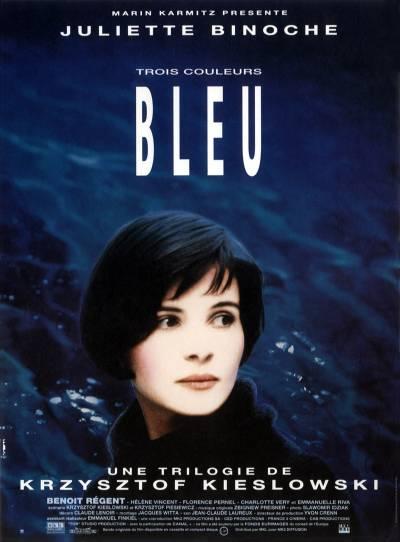
Blue: A feature-length dramatic film written and directed by Krzysztof Kieślowski, forming the first chapter of the trilogy inspired by the colors of the French flag and the triad of “liberty-equality-fraternity.” The production explores the experience of individual liberation within urban life through a minimalist narrative and features a restrained visual design with a prominent musical component. Juliette Binoche stars in the lead role; the story traces the character’s relationship with loss and grief through everyday details. The film entered the international festival circuit in 1993 and subsequently had commercial releases in various countries. The production credits highlight French and European co-production elements. The narrative structure and visual language are carefully crafted to support the film’s calm yet intensely emotional atmosphere.
The production addresses the theme of “liberty,” central to the trilogy’s conceptual framework, through personal rupture and reconstruction. The narrative progresses not through grand dramatic turns but through silence, gesture, and minor encounters. The dominance of blue tones in the visual world is directly linked to the thematic focus of the story. The connection between music and scene composition intensifies the emotional resonance. The film establishes a balance that is minimal in form yet layered in emotion. This approach has garnered lasting recognition from both festival juries and general audiences.
The story revolves around Julie, who, after an unexpected car accident that claims the lives of her husband and child, attempts to sever ties with her past and build a solitary life. The character systematically abandons her possessions, relationships, and former environment. The narrative unfolds through small scenes and brief encounters that illustrate how this desire for detachment becomes practical. Julie’s distant interactions with those around her introduce subtle undercurrents to the story. Music functions as the untimely return of emotions she strives to suppress. Thus, each new scene becomes a space of tension between the residue of the past and the silence of the present.
The narrative schema preserves linear time while rendering the character’s inner world visible through music and spatial transitions. Moments of silence override dialogue and carry emotional weight. The camera maintains a controlled balance between wide shots and close-ups, turning the distance between space and body into a dramatic measure. Scene transitions are softened by musical bridges and lighting design. The conclusion ends with an open finale that avoids definitive judgments but suggests the transformation within the character’s emotional world. The overall structure underscores that individual liberation is a fragile and fragmented process.
Music from the film Blue – Electrocardiography | Rythmography
The film was produced by companies operating under a European co-production model. Real locations are prioritized in filming, and the urban fabric is positioned as a silent witness to the narrative. The visual style is reinforced by the dominance of blue tones, careful lighting, and framing choices. The editing focuses on maintaining fluidity between scenes without disrupting the rhythm. The sound design adopts a balanced approach between ambient noise and music. All these technical choices create an intense emotional space through minimal external expression.
Music is one of the film’s foundational elements, organizing dramatic emphasis in a decisive manner. The visual composition strengthens the atmosphere through color saturation and textural detail. The camera is predominantly positioned at the character’s eye level to facilitate identification. During post-production, rhythm and sound level adjustments are designed with an emphasis on emotional continuity. The overall technical framework rests on a quiet and consistent aesthetic rather than large-scale production numbers. The result merges seamlessly with the thematic clarity unique to the opening film of the trilogy.

Juliette Binoche as Julie – IMDB
Juliette Binoche, portraying Julie, delivers a restrained and balanced performance throughout the film. The character’s inwardness is concretized through facial expression and bodily economy. Supporting roles illuminate Julie’s fluctuating connections to her past and surroundings. The entrances and exits of secondary characters are brief yet functional; this choice facilitates the narrative’s focus on a single central character’s experience. The overall tone of the acting is understated and natural. Character interactions align with the mechanical rhythm of the scene designs. Thus, silences become as integral to the performance as dialogue.
The screen time of the cast is carefully calibrated according to the narrative’s needs. Relationship networks emerge or recede in parallel with Julie’s steps toward her new life. Supporting characters provide a functional framework that enriches the social and emotional context. This framework makes more visible the character’s oscillation between solitude and the pursuit of freedom. The collective approach to acting directly serves the film’s restrained style. The overall impression creates a sense of community, enriching the singular narrative with ambient voices.
Critical assessments frequently emphasize how the film’s quiet and measured style generates a high-intensity emotional impact. The tight bond between music and imagery reinforces the narrative’s unity. The thematic function of color usage is interpreted in conjunction with shot scale and rhythm. The understated quality of the performances enhances the persuasiveness of the character-centered approach. The narrative favors subtle gestures and fleeting glances as carriers of meaning. The general trend in criticism points to the harmony between form and content. This harmony establishes an aesthetic consistency that guides the other films in the trilogy.
Moreover, the film stands out for addressing themes of grief and liberation without slipping into melodrama. The use of urban space as an emotional backdrop is another element that supports narrative intensity. Silences, in conjunction with musical transitions, map out the contours of emotional voids. The narrative relies not on grand claims but on small truths. This choice strengthens the personal connections viewers form with the film over time.
Venice Film Festival (1993) – Golden Lion (Won); Best Actress – Juliette Binoche (Won); Best Cinematography (Won).
César Awards (1994) – Best Film (Won); Best Director – Krzysztof Kieślowski (Won); Best Actress – Juliette Binoche (Won); Best Editing (Won); Best Sound (Won); Best Cinematography (Nominated); Best Music (Nominated); Best Screenplay (Nominated); Most Promising Actress (Won).
Golden Globe Awards (1994) – Best Foreign Language Film (Nominated); Best Actress – Drama (Nominated); Best Music (Nominated).
Los Angeles Film Critics Association (1993) – Best Music (Won); Best Foreign Language Film (Nominated).
European Film Awards (1994) – European Film Award (Nominated).
Chicago Film Festival (1993) – Special Jury Prize (Won).
Italian National Film Journalists (Nastri d’Argento, 1994) – Silver Ribbon (Won).
Goya Awards (1994) – Best European Film (Won).
Directors Guild of America Awards (1994) – International: Gold (Won).
National Society of Film Critics (USA, 1994) – Best Foreign Language Film (Nominated).
In addition, the film was officially selected and screened at festivals including Toronto (1993), Telluride (1993), New York (1993), Locarno (2014), Valdivia (1996), Fantasporto (1994), Berlin (2023), and Göteborg (2018).
Beyazperde. “Üç Renk: Mavi – Oyuncular ve Kadro.” Accessed October 7, 2025. https://www.beyazperde.com/filmler/film-8291/oyuncular/
IMDb. "Three Colors: Blue – Awards." Accessed October 7, 2025. https://www.imdb.com/title/tt0108394/awards/?ref_=tt_ov_at_op_awd
IMDb. "Three Colors: Blue – Company Credits." Accessed October 7, 2025. https://www.imdb.com/title/tt0108394/companycredits/?ref_=tt_ov_at_dt_cmpy
IMDb. "Three Colors: Blue – Filming Locations." Accessed October 7, 2025. https://www.imdb.com/title/tt0108394/locations/?ref_=tt_ov_at_dt_flmg
IMDb. "Three Colors: Blue – Full Cast & Crew." Accessed October 7, 2025. https://www.imdb.com/title/tt0108394/fullcredits/?ref_=tt_ov_at_pop_cst
IMDb. "Three Colors: Blue – Media Index." Accessed October 7, 2025. https://www.imdb.com/title/tt0108394/mediaindex/?ref_=tt_ov_at_pop_ph
IMDb. "Three Colors: Blue – Plot Summary." Accessed October 7, 2025. https://www.imdb.com/title/tt0108394/plotsummary/?ref_=tt_ov_at_pl_pl
IMDb. "Three Colors: Blue." Accessed October 7, 2025. https://www.imdb.com/title/tt0108394/
IMDb. “Three Colors: Blue – Release Info.” Accessed October 7, 2025. https://www.imdb.com/title/tt0108394/releaseinfo/?ref_=tt_ov_at_dt_rdat
Kasap, Çağrı Barış. “Metaforik Bir Deneyim Olarak ‘Ölümden Uyanmak’: Kieślowski’nin ‘Mavi’si.” SineFilozofi Dergisi 5, no. 9 (2020). ISSN: 2547-9458. Accessed October 7, 2025. https://dergipark.org.tr/en/download/article-file/1164758
MUBI. "Three Colors: Blue." Accessed October 7, 2025. https://mubi.com/tr/tr/films/three-colors-blue
Mazlum, Özge. “Üç Renk: Mavi (1993) Filminin Fenomenolojik, Hermeneutik ve Görsel Analizi.” SDÜ ART-E Güzel Sanatlar Fakültesi Sanat Dergisi 15, no. 30 (2022). ISSN: 1308-2698. Accessed October 7, 2025. https://dergipark.org.tr/tr/download/article-file/2683537
Rythmography. Zbigniew Preisner. Trois Couleurs: Bleu (Bande Originale Du Film) [Video, 1993]. YouTube. Accessed October 7, 2025. https://www.youtube.com/watch?v=jGSr95ehWF4
Toker Göğerçin, Hülya. “Krzysztof Kieslowski’nin ‘Üç Renk: Mavi’ Filminin ‘Travma’, ‘Yas’ ve ‘İyileşme’ Kavramları Çerçevesinde İncelenmesi.” Middle Black Sea Journal of Communication Studies 5, no. 2 (2020): 108–121. Accessed October 7, 2025. https://dergipark.org.tr/tr/download/article-file/1354239

Original Title | Three Colors: Blue | ||||||||
|---|---|---|---|---|---|---|---|---|---|
Production Year / Country | 1993 / European co-production | ||||||||
Genre | Drama | ||||||||
Director(s) | Krzysztof Kieślowski | ||||||||
Screenplay(s) | Krzysztof Kieślowski Krzysztof Piesiewicz | ||||||||
Main Cast | Juliette Binoche (Julie), Benoît Régent, and various European actors in supporting roles | ||||||||
Music(s) | Zbigniew Preisner | ||||||||
Notable Awards | Venice – Golden Lion & Best Actress; César – Best Film, Director, Actress, Editing, Sound; Goya – Best European Film; LAFCA – Best Music | ||||||||
No Discussion Added Yet
Start discussion for "Three Colors: Blue (Film)" article
Plot and Narrative Structure
Production and Technical Features
Cast and Characters
Critical Evaluation
Awards