


This article was automatically translated from the original Turkish version.
+2 More
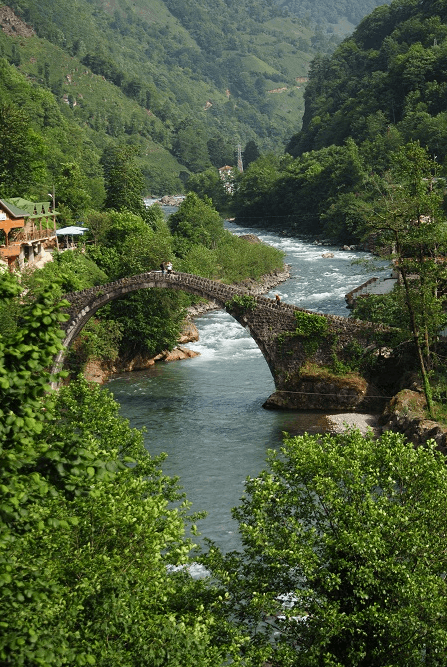
The Timisvat Bridge, located in the Ardeşen district of Rize, spans Fırtına Stream. It is one of the stone bridge examples from the Ottoman period. The structure is evaluated both for its position along historical transportation routes and for its integration with the surrounding natural environment. The bridge continues to be used by local residents and visitors alike.
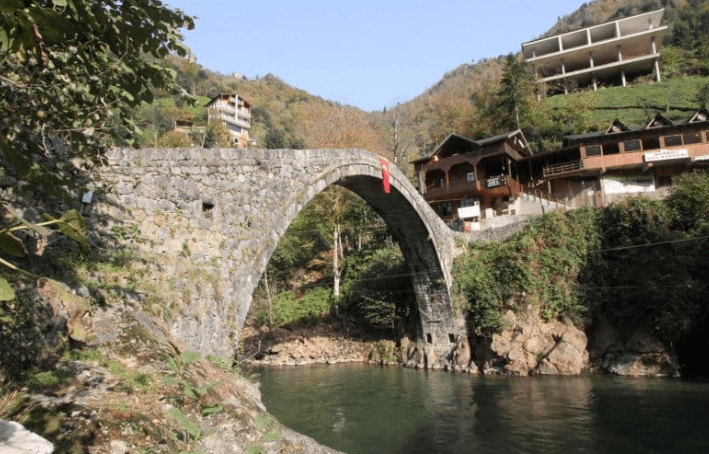
Timisvat Köprüsü (Black Sea Culture Inventory)
The exact construction date of the Timisvat Bridge is unknown; however, its architectural features and building materials suggest it may date to the Ottoman period. The bridge was constructed with a single-arch design, a common engineering solution of that era. The stonework and arch technique reflect the construction methods of the time. The arch structure provides advantages in load-bearing capacity.
The bridge is situated within the Fırtına Valley, surrounded by forested areas, mountainous terrain, and rivers. These environmental features contribute to the region’s ecological structure and serve as reference points for research in various disciplines such as geography, environmental science, and tourism studies. Additionally, this natural setting provides a foundation for the development of nature-based activities in the area.
Historically, the bridge served not only as a transportation link but also as a functional element enabling access to highland pastures and the transport of agricultural and timber resources. In this context, the bridge’s relationship with the rural economy is noteworthy. Today, the bridge is visited by travelers for historical structure analysis and outdoor activities.
Access to the Timisvat Bridge is provided by road from the Ardeşen district center. The route includes narrow, winding rural roads that reflect the typical topography of the Black Sea region. Several resting areas and small-scale enterprises are located around the bridge.
Demirören Haber Ajansı (DHA). "Türkiye’nin 13 Gösterişli Köprüsü Listesine Karadeniz’den 2 Köprü Girdi." Accessed May 21, 2025. https://www.dha.com.tr/foto-galeri/turkiyenin-13-gosterisli-koprusu-listesine-karadenizden-2-kopru-girdi-1620513/2.
Karadeniz Kültür Envanteri. "Köprüköy (Timisvat) Köprüsü." 2024. Accessed May 21, 2025. https://karadeniz.gov.tr/koprukoy-timisvat-koprusu/?utm_source=chatgpt.com.
T.C. Ministry of Culture and Tourism. *Tarihin Tanıkları Köprüler – Kültür Portalı.* 2023. Accessed May 21, 2025. https://www.kulturportali.gov.tr/portal/tarihin-taniklari-kopruler.
T.C.Rize İl Directorate of Culture and Tourism. *Kemer Köprüler.* 2023. Accessed May 21, 2025. https://rize.ktb.gov.tr/TR-127867/kemer-kopruler.html.

Historical and Structural Features
Geographical Location and Environmental Characteristics
Cultural and Economic Context
Access and Connectivity