This article was automatically translated from the original Turkish version.
+2 More
Type of Geographical İndication | Mahreç Sign | ||||||||
|---|---|---|---|---|---|---|---|---|---|
Application Date | 03.03.2021 | ||||||||
Registration Number | 931 | ||||||||
Registration Date | 26.10.2021 | ||||||||
Product / Product Group(s) | Handicraft products other than carpets kilims and textiles | ||||||||
Province(s) | Tokat | ||||||||
Applicant/Registrant(s) | Tokat Chamber of Commerce and Industry | ||||||||
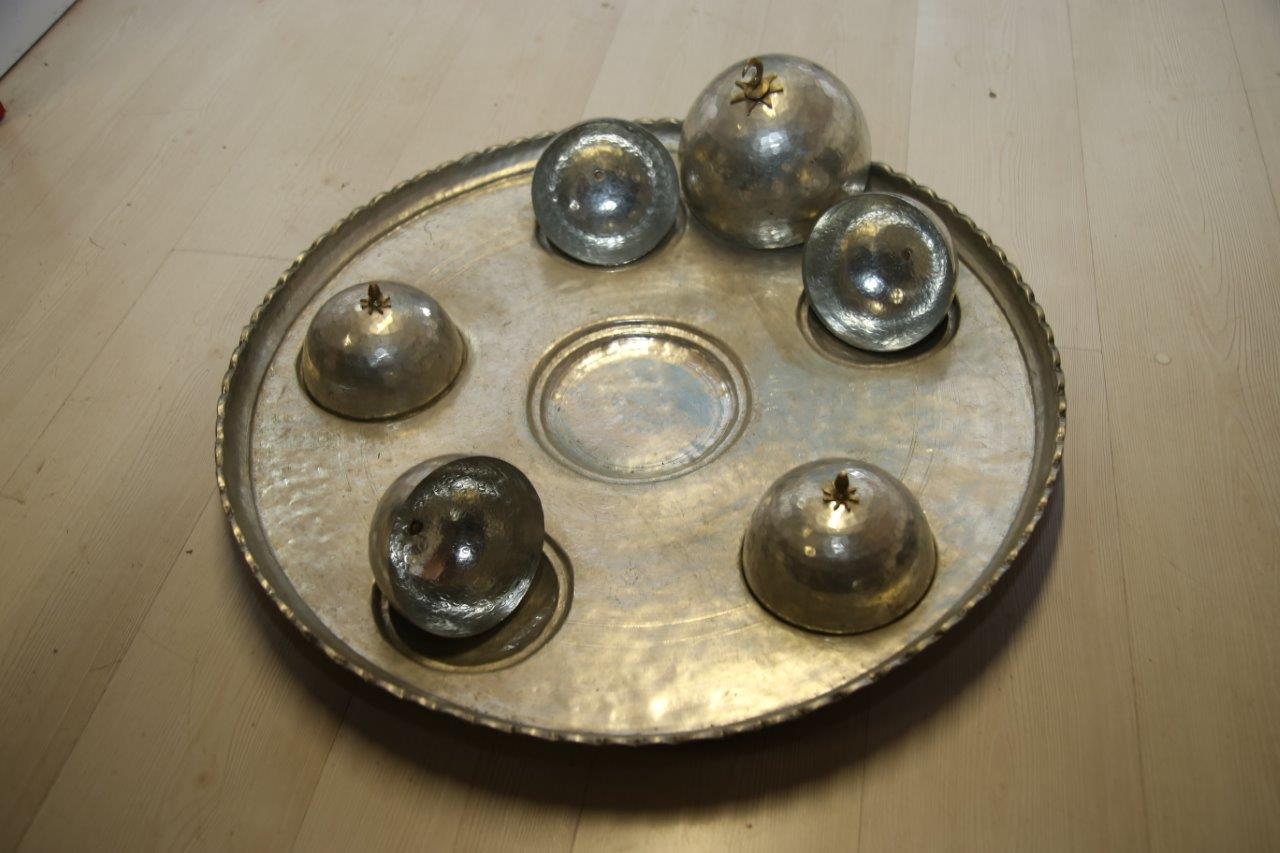
Tokat Honçası is typically produced with a diameter of 55–60 cm and a weight of 5–6 kg, though it can also be manufactured in different sizes according to demand. At the center of the tray is a large depression, surrounded by five smaller depressions arranged at equal intervals. The lids of these depressions are dome-shaped. In Tokat tradition, it is common for newly married couples to eat meals served on the Tokat Honçası. Each depression on the tray carries a distinct symbolic meaning:
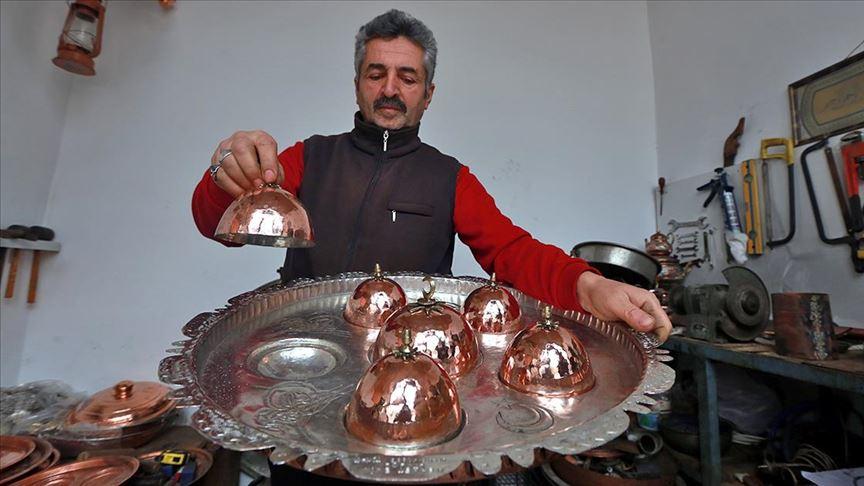
Tokat Honçası (AA)
The production of Tokat Honçası uses copper sheets that have been processed in a forge. The thickness of the copper sheets varies between 0.7 and 1.5 mm depending on the diameter of the honça. The production process consists of the following stages:
All stages of Tokat Honçası production must be carried out within the geographical boundaries of Tokat Province.
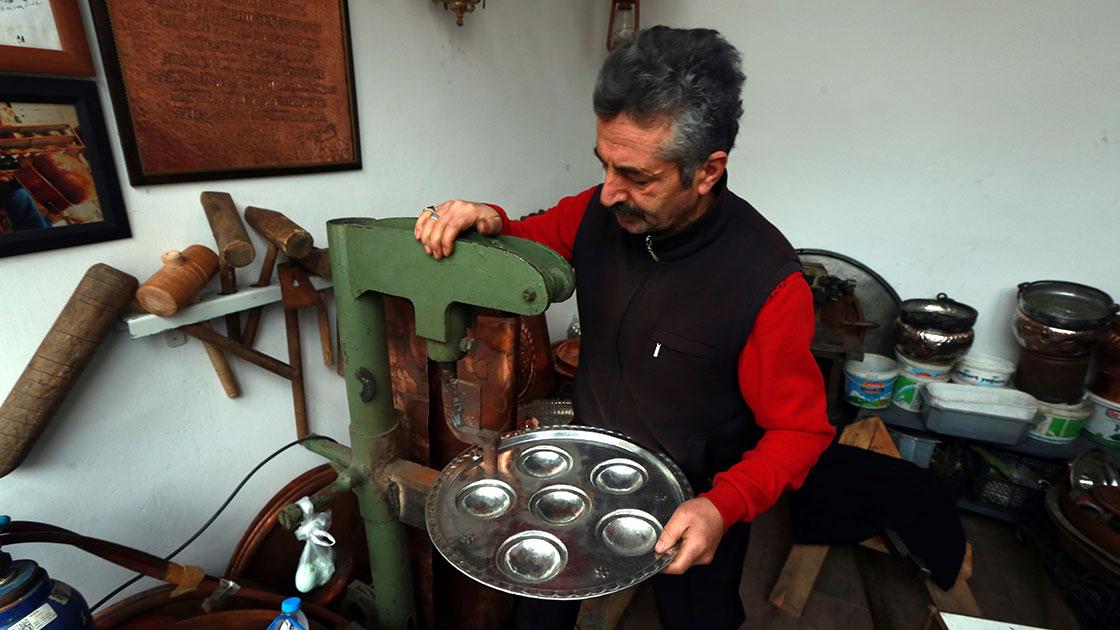
Tokat Honçası (AA)
Monitoring of Tokat Honçası is conducted by a supervisory body composed of at least three experts from the Tokat Chamber of Commerce and Industry, the Tokat Provincial Directorate of Culture and Tourism, and the Tokat Municipality, coordinated by the Tokat Chamber of Commerce and Industry. Monitoring is carried out annually as a routine procedure, and also whenever necessary or upon complaint. Criteria for monitoring include the suitability of copper sheets, compliance with the production method, and the correct use of the “Tokat Honçası” inscription and the official emblem.
Anadolu Ajansı. "Osmanlı Sarayı'nın Tabildot Kabı Honca Gelin Damat Tepsisi Olarak Geleceğe Taşınıyor." Accessed July 7, 2025. https://www.aa.com.tr/tr/kultur-sanat/osmanli-sarayinin-tabildot-kabi-honca-gelin-damat-tepsisi-olarak-gelecege-tasiniyor/1711011.
Turkish Patent and Trademark Office Geographical Indications and Traditional Product Names Bulletin. "Tokat Honçası." Accessed July 7, 2025. https://ci.turkpatent.gov.tr/cografi-isaretler/detay/3565.

Type of Geographical İndication | Mahreç Sign | ||||||||
|---|---|---|---|---|---|---|---|---|---|
Application Date | 03.03.2021 | ||||||||
Registration Number | 931 | ||||||||
Registration Date | 26.10.2021 | ||||||||
Product / Product Group(s) | Handicraft products other than carpets kilims and textiles | ||||||||
Province(s) | Tokat | ||||||||
Applicant/Registrant(s) | Tokat Chamber of Commerce and Industry | ||||||||
Production Method
Monitoring