This article was automatically translated from the original Turkish version.
+2 More
Type of Geographical İndication | Mahreç Sign | ||||||||
|---|---|---|---|---|---|---|---|---|---|
Application Date | 01.11.2017 | ||||||||
Registration Number | 484 | ||||||||
Registration Date | 26.02.2020 | ||||||||
Product / Product Group(s) | Handicraft products other than carpets kilims and textiles | ||||||||
Province(s) | Tokat | ||||||||
Applicant/Registrant(s) | Tokat Municipality | ||||||||
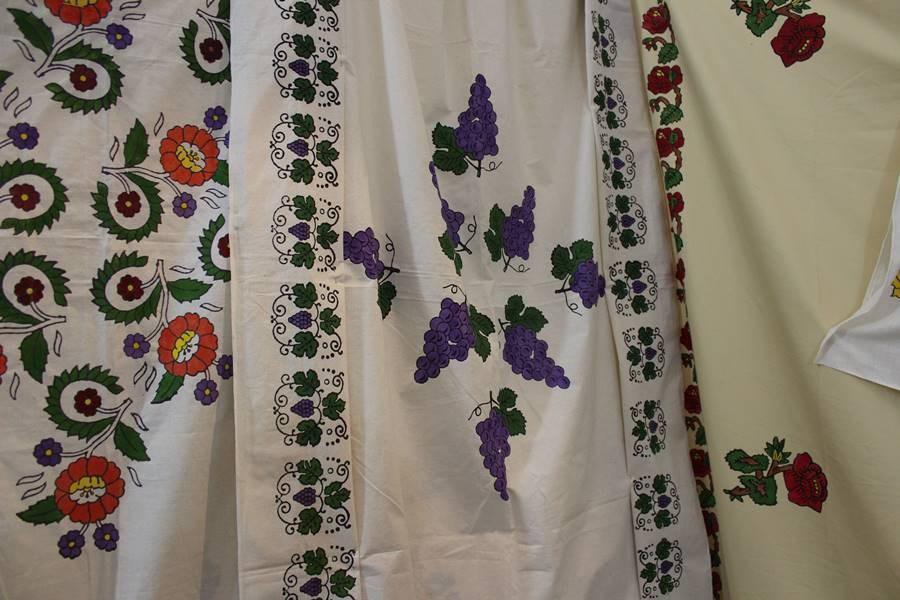
Tokat Yazması is a traditional craft product unique to the province of Tokat. With a history spanning over 600 years, it represents a continuous cultural tradition from the Seljuk period to the Ottoman era. Registered with a geographical indication on 26 February 2020, this product belongs to the category of non-woven handicrafts and is protected by geographical indication status, meaning it can only be produced within the province of Tokat.

Tokat Yazmaları (Tokat Governorate)
During the Seljuk period, Tokat Yazması was decorated with geometric patterns that reflected the artistic sensibilities of the time. In the Ottoman era, these textiles were reserved exclusively for Valide Sultans, and artisans in Tokat’s caravanserais made their livelihood through this craft. Evliya Çelebi praised Tokat Yazması for its white-pink fabric being “adorned like gold.” To preserve its exclusivity, production of this craft was banned in other cities during the Ottoman period.
The production of Tokat Yazması involves three essential elements: fabric, stamp, and dye.
Three primary techniques are employed in Tokat Yazması:

Renklendirme (Tokat Governorate)
The most common motifs in Tokat Yazması are plant-based. Major compositional types include:
These motifs carry symbols of the local culture, transforming Tokat Yazması into not merely a handicraft but also a narrative medium.

Kalıp Örneği (Tokat Governorate)
All production stages must take place within the boundaries of the province of Tokat. Production and marketing processes are inspected at least once a year under the coordination of the Tokat Municipality, Gaziosmanpaşa University, the Provincial Directorate of Culture and Tourism, and the Provincial Directorate of Industry and Technology. These inspections aim to maintain quality and preserve traditional methods.
T.C. Tokat Valiliği. "Tokat Yazmaları." Tokat Valiliği Resmî Web Sitesi. Accessed July 9, 2025. https://www.tokat.gov.tr/tokat-yazmalari
Turk Patent and Trademark Office. "Tokat Yazması." Geographical Indications Portal. Accessed July 9, 2025. https://ci.turkpatent.gov.tr/cografi-isaretler/detay/38392

Type of Geographical İndication | Mahreç Sign | ||||||||
|---|---|---|---|---|---|---|---|---|---|
Application Date | 01.11.2017 | ||||||||
Registration Number | 484 | ||||||||
Registration Date | 26.02.2020 | ||||||||
Product / Product Group(s) | Handicraft products other than carpets kilims and textiles | ||||||||
Province(s) | Tokat | ||||||||
Applicant/Registrant(s) | Tokat Municipality | ||||||||
Historical Background
Production Techniques and Materials
Pattern and Coloring Techniques
Patterns and Compositions
Geographical Link and Oversight