This article was automatically translated from the original Turkish version.
+1 More
Location | Kayseri Türkiye | ||||||||
|---|---|---|---|---|---|---|---|---|---|
Banisi | Danişmentlid ruler Melik Mehmed Gazi | ||||||||
Plan Type | Rectangular plan, kümbet-type | ||||||||
Material(s) | Thin geometric brick decorations flat bricks | ||||||||
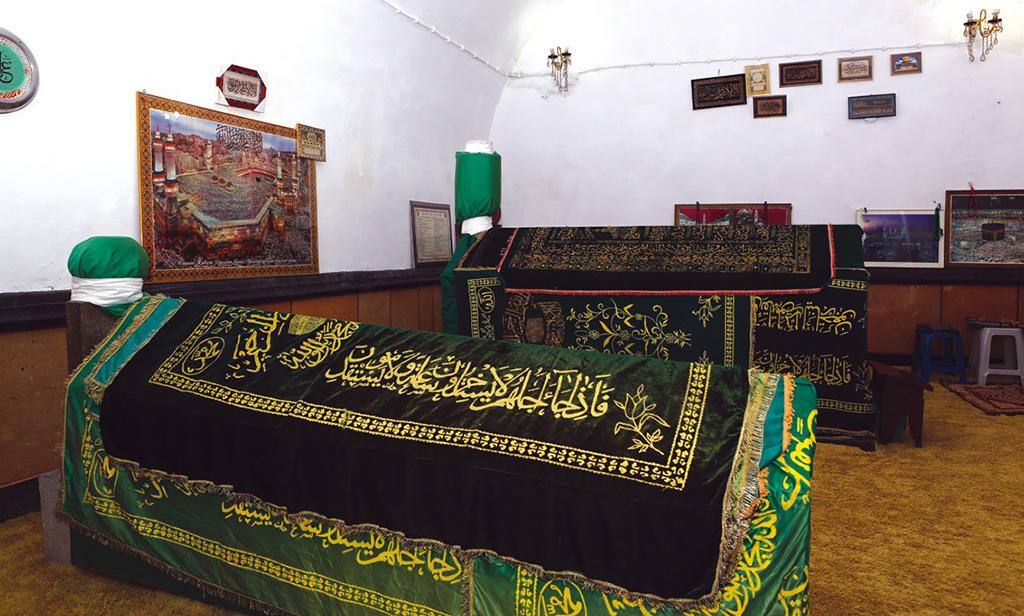
Melik Mehmed Gazi Türbesi is the tomb of Melik Mehmed Gazi, ruler of the Danişmentids. It is one of the surviving examples of Danişmentid architecture in Kayseri and dates to the first half of the 12th century. It is known that Melik Mehmed Gazi, the third ruler of the Danişmentids, died on 6 January 1143 and was buried in the tomb within the complex he commissioned. The tomb reflects characteristics of both Danişmentid and early Seljuk tomb architecture.

Melik Mehmed Gazi Türbesi (Kayseri Municipality)
Melik Mehmed Gazi played a significant political and cultural role during the Danişmentid period and commissioned numerous buildings, including the Kayseri Ulu Camii. Upon his death on 6 January 1143, the ruler was interred in this tomb within the complex he had built. The tomb was constructed adjacent to the southern facade of the Ulu Camii and integrated into one of the cells of the Melikgazi Medresesi. Although the exact construction date is unknown, it is generally estimated to have been built around 1143, based on the date of the ruler’s death.
The tomb is located in Melikgazi Village, within the Pınarbaşı district, at the foot of the historic Melikgazi Castle. The area was once part of a cohesive complex that included a medrese, mosque, and other külliye structures. Today, the medrese no longer exists, and the surroundings of the tomb have been landscaped as a park. Architecturally, the tomb serves both as a complementary element to the Ulu Camii and as one of the focal points of the külliye.
The Melik Mehmed Gazi Türbesi was constructed with a rectangular plan oriented along the north-south axis. The central entrance, featuring a pointed arch, is set back from the facade to create a deep recess. Stairs descend from ground level to the tomb’s courtyard, which functions as the access passage to the structure.
The upper section of the building is entirely constructed of thin, flat bricks arranged with great care to form intricate geometric patterns. This brick decoration is a refined example of the Danişmentid tradition of brick ornamentation. The dome-shaped structure reflects the architectural style of its time in both material and form. The upper level houses the sarcophagus of Melik Gazi, while the lower level contains a space known as the “mumyalık,” where three mummified bodies are interred.
Like classical Seljuk tombs, the Melik Mehmed Gazi Türbesi is two-storied:
No surviving inscription has been found on the tomb. However, based on the known date of Melik Mehmed Gazi’s death, it is accepted that the structure was built around 1143. In this regard, the tomb is one of the rare and early monumental burial monuments of the Danişmentid period.
Kayseri Metropolitan Municipality. "Melik Mehmed Gazi Türbesi." Kayseri Metropolitan Municipality. Accessed August 16, 2025. https://www.kayseri.bel.tr/kesfet-listeleme/melik-mehmed-gazi-turbesi
T.C. Kayseri Valiliği. "Melik Mehmet Gazi Türbesi." Accessed August 16, 2025. http://www.kayseri.gov.tr/melik-mehmet-gazi-turbesi
T.C. Kayseri Valiliği. “Melikgazi Türbesi.” T.C. Kayseri Valiliği. Accessed August 16, 2025. http://www.kayseri.gov.tr/melikgazi-turbesi
Turkish Ministry of Culture and Tourism. "Melikgazi Türbesi – Kayseri." *Culture Portal.* Accessed August 16, 2025. https://www.kulturportali.gov.tr/turkiye/kayseri/gezilecekyer/melikgazi-turbesi

Location | Kayseri Türkiye | ||||||||
|---|---|---|---|---|---|---|---|---|---|
Banisi | Danişmentlid ruler Melik Mehmed Gazi | ||||||||
Plan Type | Rectangular plan, kümbet-type | ||||||||
Material(s) | Thin geometric brick decorations flat bricks | ||||||||
No Discussion Added Yet
Start discussion for "Tomb of Melik Mehmed Gazi" article
Historical Background
Location and Site Layout
Architectural Features
Plan and Structural Organization
Inscription and Dating