


This article was automatically translated from the original Turkish version.
+2 More
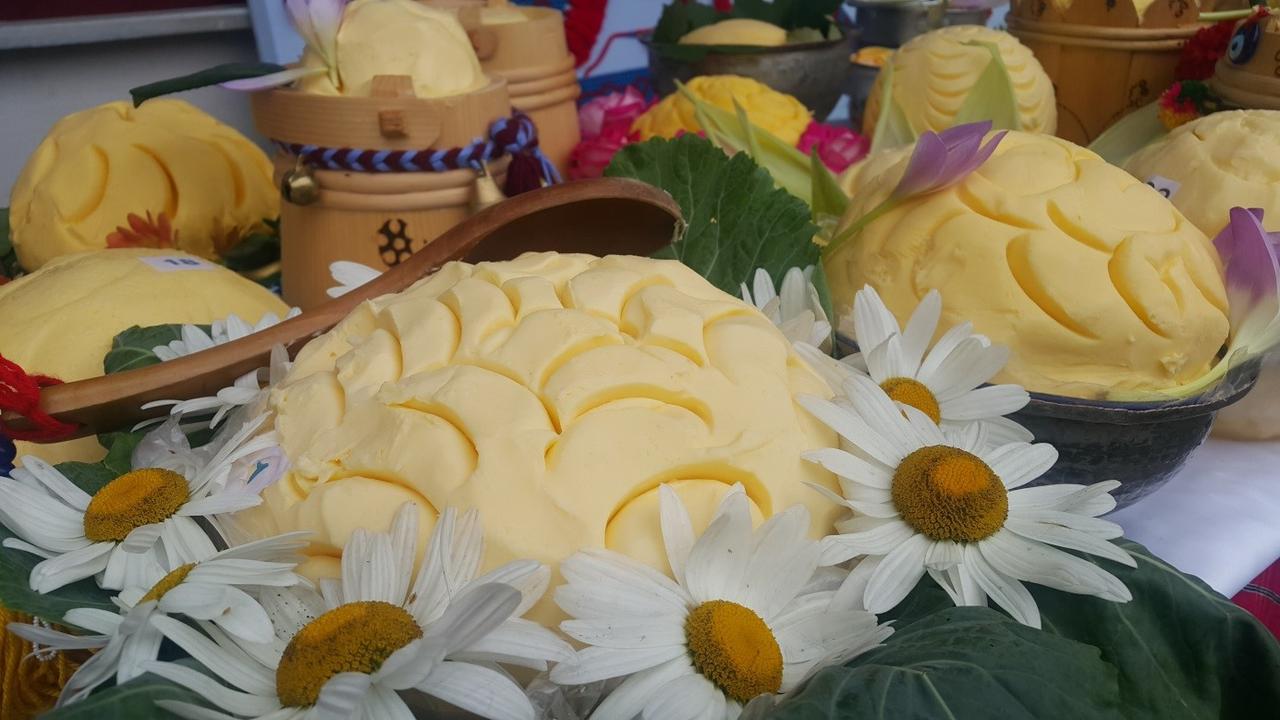
Tonya Butter
Registration Number | 380 | ||||||||
|---|---|---|---|---|---|---|---|---|---|
Registration Date | 18.08.2018 | ||||||||
Application Number | C2017/240 | ||||||||
Application Date | 18.12.2017 | ||||||||
Name of the Geographical Indication | Tonya Butter | ||||||||
Product / Product Group(s) | Butter / Butter Including Solid and Liquid Fats | ||||||||
Type of Geographical Indication | Place of Origin | ||||||||
Applicant/Registrant(s) | Tonya Municipality | ||||||||
Address of the Registrant | Orta Mah. Senetli 2 No. 3, Tonya TRABZON | ||||||||
Geographical Boundary | Tonya District Trabzon Province | ||||||||
Tonya Butter is a butter produced in the Tonya district of Trabzon province in Türkiye’s Black Sea Region and is registered with a geographical indication. This product, registered under its place of origin, possesses specific qualities determined by the feeding conditions of the animals providing the milk, the climatic characteristics of the region, its vegetation cover, and the production methods applied. The registration was officially completed on 18 August 2018, with the application submitted on 18 December 2017. The registering authority is the Tonya Municipality.

Tonya Butter (generated by artificial intelligence.)
The production of Tonya Butter can be traced back to the 19th century through historical records. The 1887 Trabzon Vilayet Salnamesi notes that Tonya Butter was considered “excellently desirable” and was dispatched to centers such as Trabzon and Istanbul. With the establishment of a dairy factory in the district in 1969, production began to be carried out on an industrial scale. Traditional knowledge, however, has been continuously passed down to the present day. In 2017, it was selected as the first prize winner among 360 products at a competition held in Istanbul.
Tonya forms a transitional zone between the Black Sea climate and the continental climate. The topography of the district is surrounded by forested hills rising from the Black Sea coast toward the interior. The region remains humid throughout the year, with dense fog common during summer months. Sunny days occur mostly in autumn. The average summer temperature is 20 °C, while winter temperatures range between 6–7 °C. This climatic structure shapes the natural vegetation of pastures and meadows. The pastures in the district retain their pristine condition and are not subjected to external interventions such as chemical spraying or fertilization. The limited extent of agricultural activity helps preserve the natural character of these pastures for animal feeding.
The milk used as raw material for Tonya Butter is primarily obtained from Jersey cattle. This breed is notable for its high milk fat content (up to 6%) and high β-carotene levels. A small number of Simmental and Holstein breeds are also present in the district. During the lactation period, animals are grazed on pastures for an average of 210 days. These pastures consist entirely of natural meadow vegetation, and no external feed is provided.
For the remainder of the year (approximately five months), animals are kept in barns. During the winter period, 80–85% of the feed is locally sourced, primarily consisting of dried forms of meadow grasses. The remaining 15–20% comprises dried forage and straw sourced from outside the region, mainly from Eastern Anatolia, Southeastern Anatolia, and the inner areas of the Eastern Black Sea region. These materials include plants such as wheat, vetch, corunga, alfalfa, and lentils.
Traditional production is carried out on a small, household scale without additives. Freshly milked milk is immediately filtered and boiled for yogurt production (approximately 98 °C). After cooling to 42 °C, the milk is inoculated with homemade natural yogurt culture. After a fermentation period of approximately 3–3.5 hours, yogurt is obtained. Once rested, the yogurt is transferred into wooden vessels called “yayık,” and an equal amount of cold drinking water is added. A synchronized churning process lasting approximately 30 minutes separates the butterfat.
The resulting butter is separated from the buttermilk and washed with cold water at 4–12 °C for no more than 30 minutes. This step is critical to preserve aroma compounds and prevent souring. The washed fat is then left to solidify and is made ready for consumption.
In industrial production, milk is first collected and subjected to quality control and clarification. Cream is separated using a centrifuge and heated to 81–82 °C. It is then transferred to a cold storage chamber for ripening. After ripening, the cream is held at room temperature for 1–2 hours and then subjected to the churning process. This process, involving the addition of water, lasts 45–60 minutes. After separation of butter and buttermilk, the butter is washed in four stages with cold water. Following inspections, it is packaged and marketed. The product obtained through industrial methods must possess the same physical and chemical properties as that produced traditionally.
The primary distinguishing feature of Tonya Butter is its yellowish hue and aromatic fragrance. This color derives from the high concentration of β-carotene in the milk and consequently in the butter.
Color values measured using a Hunter Lab instrument must fall within the following ranges:
In terms of organoleptic properties, the product has the fresh, non-sour aroma characteristic of traditional village butter. A distinct butter aroma is perceived in the mouth, accompanied by a mild fatty and slightly sour taste. No cheese or lactic acid flavor is detectable. The texture is smooth and free of particles. At room temperature, it must have a consistency suitable for spreading on bread.
The main factors distinguishing Tonya Butter from other products are:
Tonya Butter was registered under its place of origin on 18 August 2018. The monitoring process is coordinated by the Tonya Municipality. The monitoring body includes representatives from the following institutions:
Inspections are conducted at least once a year during production, packaging, and storage stages. In the event of a complaint, inspections are repeated. Both the production process and the physical and chemical conformity of the product are examined. Analyses may be carried out in specialized or public laboratories as needed. For market placement, the product must be labeled in accordance with geographical indication rules; the term “Tonya Butter” must appear on labels, and it must not be smaller than any registered brand name if present.
Turk Patent and Trademark Office. "Tonya Tereyağı." *Geographical Indications National Information System*. Accessed May 20, 2025. https://ci.turkpatent.gov.tr/cografi-isaretler/detay/38463.
Turk Patent and Trademark Office. *Tonya Tereyağı Geographical Indication Registration Certificate*. Ankara: Turk Patent and Trademark Office, 2018. Accessed May 20, 2025. https://ci.turkpatent.gov.tr/Files/GeographicalSigns/0eed396a-b460-4039-be17-738c15d58b56.pdf.

Tonya Butter
Registration Number | 380 | ||||||||
|---|---|---|---|---|---|---|---|---|---|
Registration Date | 18.08.2018 | ||||||||
Application Number | C2017/240 | ||||||||
Application Date | 18.12.2017 | ||||||||
Name of the Geographical Indication | Tonya Butter | ||||||||
Product / Product Group(s) | Butter / Butter Including Solid and Liquid Fats | ||||||||
Type of Geographical Indication | Place of Origin | ||||||||
Applicant/Registrant(s) | Tonya Municipality | ||||||||
Address of the Registrant | Orta Mah. Senetli 2 No. 3, Tonya TRABZON | ||||||||
Geographical Boundary | Tonya District Trabzon Province | ||||||||
History
Geographical and Ecological Context
Animal Breeds and Feeding Regime
Production Processes
Traditional Method
Industrial Production
Physical, Chemical and Sensory Properties
Chemical Composition of Butter:
Milk Used:
Distinguishing Characteristics
Monitoring and Geographical Indication Protection