


This article was automatically translated from the original Turkish version.
+1 More
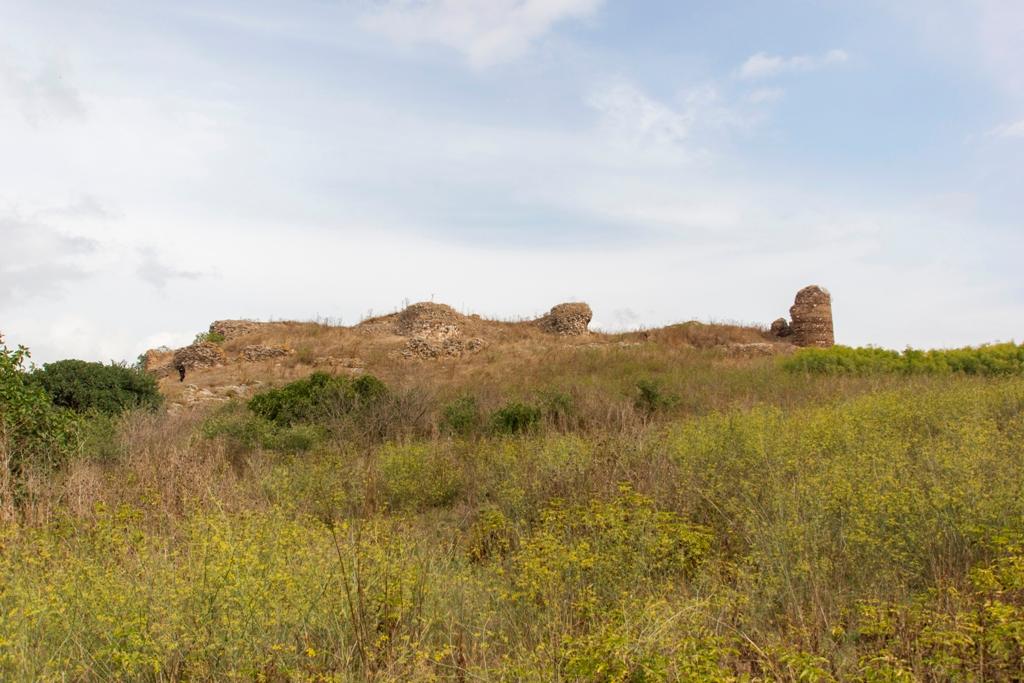
The Tophisar Castle, located near the village of Tophisar in the Karacabey district of Bursa, is one of the rare examples reflecting the strategic and architectural heritage of the Middle Ages. Situated on a dominant hill approximately 3 km southeast of the village, the castle stands at the center of a multi-layered settlement spanning from the Byzantine period to the early Ottoman era. Along with surrounding structures that served both military and religious functions, the castle was not merely a defensive outpost but also the core of a social and cultural living space.
The castle’s current appearance consists of the remains of three circular towers and the connecting defensive walls. Particularly one tower has survived almost entirely intact and clearly reveals the architectural techniques characteristic of its time. The stone materials used in the castle include cut stone, roughly hewn stone, and rubble, while decorative motifs made of brick and mortar are found on the walls. This architectural style recalls the ornamental wall craftsmanship seen in Byzantine frontier castles during the Laskarid period.
The külliye located on the northwestern slope of the castle served as a complementary religious and social center to its military function. Archaeological and architectural analyses indicate the presence of a tomb or tekke, a mosque, an imaret, and possibly a bathhouse within this complex. These structures were used across different periods, some maintained through endowments by important Ottoman state officials such as Eyne Bey. The columns and architectural fragments within the külliye were likely repurposed from earlier periods.
Tophisar Castle held significant importance during the Middle Ages not only due to its physical structure but also because of its location. Positioned at the junction of trade routes connecting Karacabey, Bandırma, and Bursa, the castle was strategically and economically vital. Its control over river routes and natural passes made it a key strategic point during both the Byzantine and early Ottoman periods. Its proximity to the confluence of Apolyont (Ulubat) Lake and the Rhyndakus (Karadere) River further enhanced its strategic value.
In conclusion, Tophisar Castle is key to understanding the military, religious, and economic life of western Anatolia during the Middle Ages, owing to its multi-layered history, architectural diversity, and regional significance. In this regard, it merits further scholarly research and greater efforts toward the preservation of its cultural heritage.

Remains of towers surviving from Tophisar Castle in Karacabey (
The architectural fabric of Tophisar Castle reflects typical characteristics of Byzantine medieval fortifications. Designed for both defense and surveillance, the castle features circular towers connected by curtain walls. The foundations of the towers are built with cut stone, while the upper sections are supported by rubble stone and mortar. The geometric brick decorative patterns observed on the standing tower serve both aesthetic and structural purposes.
The diagonal brickwork visible on the walls clearly demonstrates the influence of Laskarid architecture. Such decorative styles were not unique to Tophisar Castle but were widely employed in contemporary Byzantine fortresses such as Tripolis, Magnesia, and Nymphaeum. In these examples, where architectural technique merges with aesthetics, wall decorations represent not only visual appeal but also symbols of power and wealth.
The irregular, asymmetrical layouts of the castle’s structures are a common feature of late Byzantine castle architecture. These plans were designed to adapt to the topographical conditions of their sites. Tophisar Castle’s layout is a typical example: shaped directly according to the terrain’s slope to serve defensive and control purposes. The material usage within the castle is also noteworthy. The combined use of brick and stone reflects period-specific preferences in terms of both cost and aesthetic design. Bricks arranged in zigzag patterns within the mortar not only ornament the structure but also enhance its structural durability. This technique is also observed in other buildings in western Anatolia. The architectural features of Tophisar Castle are not confined to military structures but are also evident in religious and civil buildings. The wall craftsmanship of the külliye structures shares similar technical characteristics with the towers, offering a cohesive reflection of the period’s building culture. This architectural unity reveals that the site was not merely a defensive outpost but also a viable center of habitation.
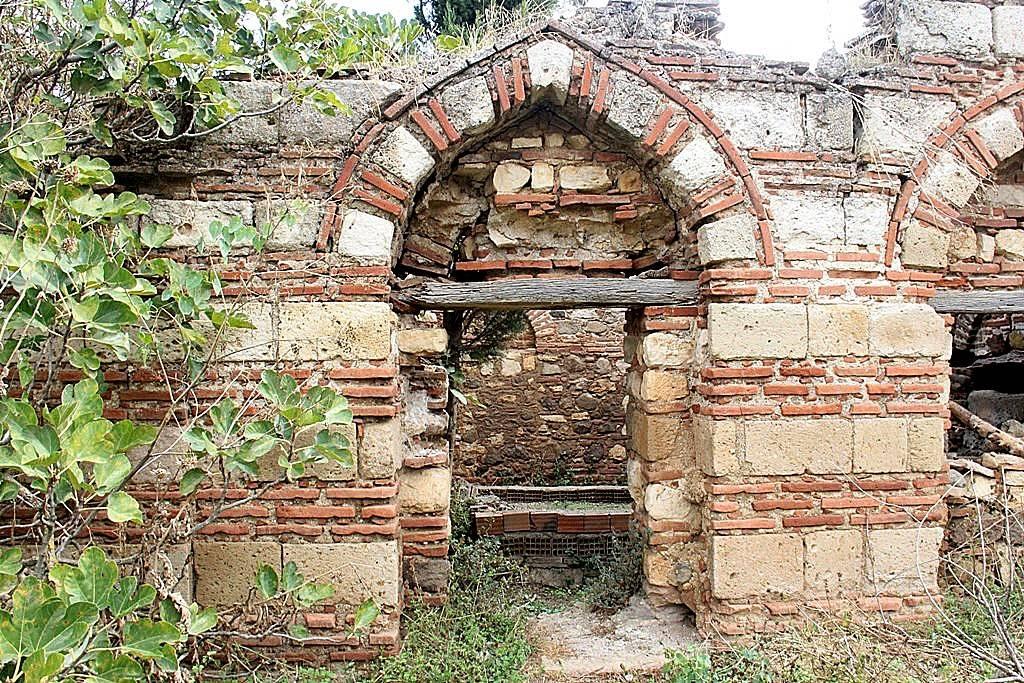
Defensive walls of Tophisar Castle and Byzantine-style brickwork techniques (Historical Monuments of Türkiye)
The historical origins of Tophisar Castle extend back to the Byzantine period. Particularly during the 12th and 13th centuries, amid Latin invasions and Byzantine civil wars, it functioned as a significant military base. During the reign of Byzantine Emperor John III Vatatzes, the region was reclaimed from Latin forces, and settlements such as Tophisar were reintegrated into Byzantine control. This period may be regarded as one of reconstruction or reinforcement of the castle.
The castle’s name appears in contemporary sources as “Lentiana.” First mentioned in Anna Komnene’s Alexiad, this name has since been identified by modern scholarship with Tophisar. As one of the central battlegrounds in the Byzantine-Latin conflicts, the region held immense strategic value due to its control over both land and river trade routes.
The castle retained its importance during the Ottoman period. While under the control of the Karasi Beylik, various endowment structures and religious centers were constructed around the castle ruins. The külliye established by Eyne Bey, a prominent Ottoman subashi, was among the key elements strengthening Ottoman presence in the region.
Tophisar became even more strategic during the second half of the 14th century, as the Ottomans expanded across western Anatolia. Its connections with settlements such as Bursa, Balıkesir, and Bandırma added commercial and military logistical value to the castle. The roads near the castle remained heavily used and documented throughout the Ottoman period.
These historical developments demonstrate that Tophisar Castle was not merely a pile of stones but a living political and cultural center across successive eras. Bearing traces of Byzantine, Latin, Karasi, and Ottoman influences, the castle stands as a tangible manifestation of Anatolia’s layered history.
The külliye surrounding Tophisar Castle added a social and religious dimension to the castle’s military function. Within this complex stood a tomb or tekke, a mosque, an imaret, a probable bathhouse, and various civil structures. The foundation of this complex likely originated from the family and endowments of Karasi Subashi Eyne Bey. A record dated 1805 mentions a mosque built in the name of “Fatma Tuti, wife of Hacı Ali Bey,” indicating that the külliye remained active in public memory for many years.
The architecture of these structures mirrors that of the castle, constructed using a mixture of brick, stone, and mortar. Aside from the minaret, very few structures remain standing. However, archaeological observations and historical photographs have largely revealed the plans and dimensions of the külliye buildings. It is evident that these structures served both religious worship and social welfare functions.
Eyne Bey’s endowment deed specifies that lands and revenues belonging to Tophisar Village were allocated for the maintenance of local structures such as hans, zaviyes, and the külliye. This demonstrates that Tophisar was not merely a military site but also a center for religious and commercial activity. Such complexes were common in early Ottoman settlement models.
Documents indicate that the tekke within the külliye was used by dervishes affiliated with the Ishaki order. The presence of Eyne Bey’s name in the endowment deed of the Ebu Ishak Zaviye in Bursa, built by Yıldırım Bayezid, confirms the influence of this religious current in Tophisar. The activities within the külliye extended beyond the local population, integrating into a broader religious network.
Today preserved only as ruins, these social structures, when supported by excavation findings and historical documents, provide valuable insights into both the settlement history of Tophisar and the local functioning of the Ottoman waqf system.
The location of Tophisar Castle rendered it a crucial junction for both land and river transport. Throughout the Middle Ages, waterways such as Apolyont Lake (Ulubat) and the Rhyndakus River (Karadere) were actively used for commercial transport and military logistics. These routes provided access to Bursa, Bandırma, Karacabey, and Balıkesir.
The shortest trade route through the region branched off from Karacabey and extended via Ulubat to Bandırma. Milestones along this route indicate its use since Roman times. Even into the 19th century, certain sections of these roads remained functional, supported by bridges and caravanserais.
The geography around Tophisar, where rivers converge and trade naturally flowed, gained particular importance during the Byzantine period. Numerous sources explicitly mention the transport of mineral and agricultural products through this region. In particular, mineral goods from Kütahya were transported via Tophisar to the port of Karacabey.
Control over these routes was vital for both the Byzantines and the Ottomans. Bridges over the Rhyndakus facilitated not only passage but also military mobility. In this sense, Tophisar Castle functioned not only as a defensive structure but also as a transportation control point.
Its position at the intersection of transportation and trade routes ensured that Tophisar consistently attracted the attention of various powers. In this regard, the settlement around the castle can be described not merely as a military garrison but also as an economic and logistical center.
Yıldız Ötüken, S. "Karacabey İlçesindeki Tophisar Köyünün Ortaçağdaki Önemi ve Tarihî Eserleri." *Arkeoloji ve Sanat Tarihi Dergisi* 4 (1992): 89–99. http://www.dlir.org/archive/archive/files/arkeoloji_sanat_tarihi_dergisi_v-4_p89-99_e5768fb44b.pdf
“Afyonkarahisar Kalesi.” *Türkiye’nin Tarihî Eserleri*. Accessed May 13, 2025. https://www.turkiyenintarihieserleri.com/?oku=1539

Architectural Structure and Technical Features
Historical Background and Strategic Importance
Külliye and Social Structures
Transportation and Trade Routes