


This article was automatically translated from the original Turkish version.
+1 More
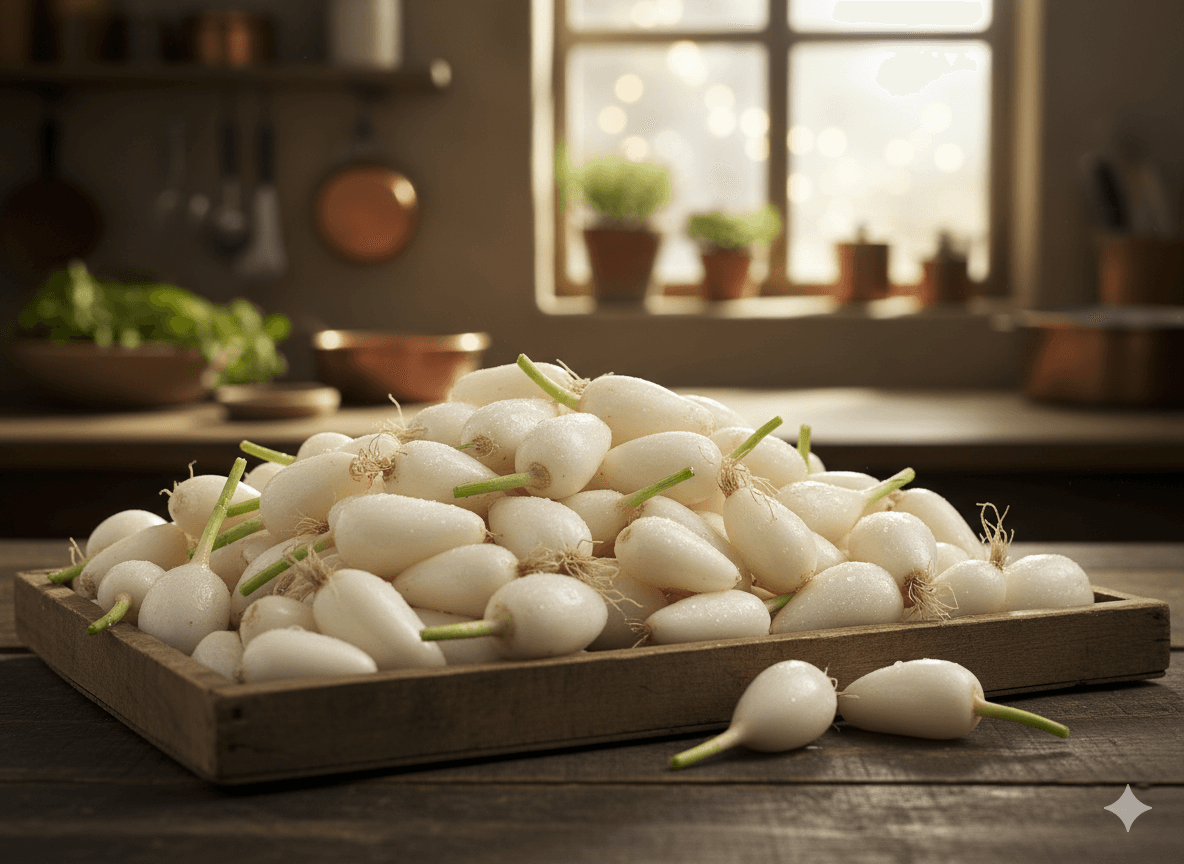
Tottori Sakyu Rakkyou / Fukube Sakyu Rakkyou (Yapay Zeka ile Oluşturulmuştur.)
Tottori Sakyu Rakkyou (also known as Fukube Sakyu Rakkyou) is a variety of rakkyō (Allium chinense) cultivated in the sandy fields within the famous Tottori Sand Dunes located in the northern part of Tottori City, Tottori Prefecture, Japan. The product was officially registered under Japan’s Geographical Indication (GI) system on 10 March 2016 with registration number 11. Tottori Sakyu Rakkyou is recognized for its bright white color and crisp texture, a result of its growth in sandy soil.
The production area is the town of Fukube, which encompasses the Tottori Sand Dunes, one of Japan’s largest sand dune systems. The fields in this region consist of sandy soil with low water retention capacity, making it poor in nutrients and moisture. However, these harsh conditions provide an ideal environment for the development of the rakkyō plant’s distinctive characteristics. The high drainage capacity of the sandy soil prevents rotting of the plant’s bulb and contributes to its clean, white appearance.
Tottori Sakyu Rakkyou (Geographical Indication Product Information Website)
Tottori Sakyu Rakkyou differs from standard rakkyō varieties both visually and sensorially:
The cultivation process is adapted to the region’s nutrient-poor soil conditions. The sandy soil’s lack of water and nutrients limits leaf growth, causing the plant to channel its energy into developing the bulb. As a result, the fibers within the bulb become finer, the flesh denser, and the product acquires its characteristic crisp texture.
Harvest timing and visual landscape are also significant in this region. Towards the end of October, rakkyō plants bloom with pale purple flowers. This “purple carpet” covering the Tottori Sand Dunes has become an iconic symbol of the region’s autumn scenery.
Although rakkyō cultivation in the Fukube area dates back to the Edo period, commercial and large-scale production began around 1914. Historically, local residents attempted to plant peach and mulberry trees to prevent wind-blown sand from damaging settlements, but these efforts failed due to the poor sandy soil structure.
The discovery of rakkyō’s drought resistance and ability to thrive in harsh soil conditions transformed the region’s fate. By leveling parts of the sand dunes to create arable land, production increased significantly, establishing Tottori as one of Japan’s leading centers for rakkyō production.
Geographical Indication Product Information Site. "11 Tottori Sakyu Rakkyō." YouTube video, 1:29. Accessed October 24, 2025. http://www.youtube.com/watch?v=GDD1emhRK04
Japan Geographical Indication. "Tottori Sakyu Rakkyo / Fukube Sakyu Rakkyo (Registration No.11)." Information Website on Japan’s Geographical Indications. Accessed October 24, 2025. https://pd.jgic.jp/en/register/entry/11.html
Ministry of Agriculture, Forestry and Fisheries. "Product Summary (Registration No.11): Tottori Sakyu Rakkyo / Fukube Sakyu Rakkyo." MAAF. Accessed October 24, 2025. https://www.maff.go.jp/e/policies/intel/gi_act/register/s11.html

Tottori Sakyu Rakkyou / Fukube Sakyu Rakkyou (Yapay Zeka ile Oluşturulmuştur.)
No Discussion Added Yet
Start discussion for "Tottori Sand Dunes Rakkyou / Fukube Sand Dunes Rakkyou" article
Origin and Production Area
Distinctive Features
Cultivation and Harvesting Methods
Historical Background and Economic Significance