

This article was automatically translated from the original Turkish version.
+2 More
Architect(s) | Sir Horace Jones | ||||||||
|---|---|---|---|---|---|---|---|---|---|
Height(s) | 240 feet (Towers) | ||||||||
Type(s) | Cantilever Suspension Bascule (Lifting) | ||||||||
Material(s) | Cornish Granite Portland Stone Steel Frame | ||||||||
Location | Tower Hamlets London | ||||||||
Cultural Significance | One of London's Iconic Structures | ||||||||
Engineer | Sir John Wolfe-Barry | ||||||||
Year of Opening | 1894 | ||||||||
Tower Bridge (Tower Bridge), spanning the River Thames, connects the eastern and western sections of London. It was constructed in response to the growing population and intensifying commercial traffic in the late 19th century, which rendered the existing London Bridge inadequate. The bridge was designed to accommodate both road traffic and uninterrupted river vessel passage.
Architecturally and engineering-wise, the bridge is notable for its bascule system. Its structure, supported by two large towers, fulfills both transportation functions and enables elevated pedestrian crossings. The construction process reflects the technical standards of its era in terms of engineering, architecture, and material use. Today, Tower Bridge serves as an important structure for both transportation and tourism.

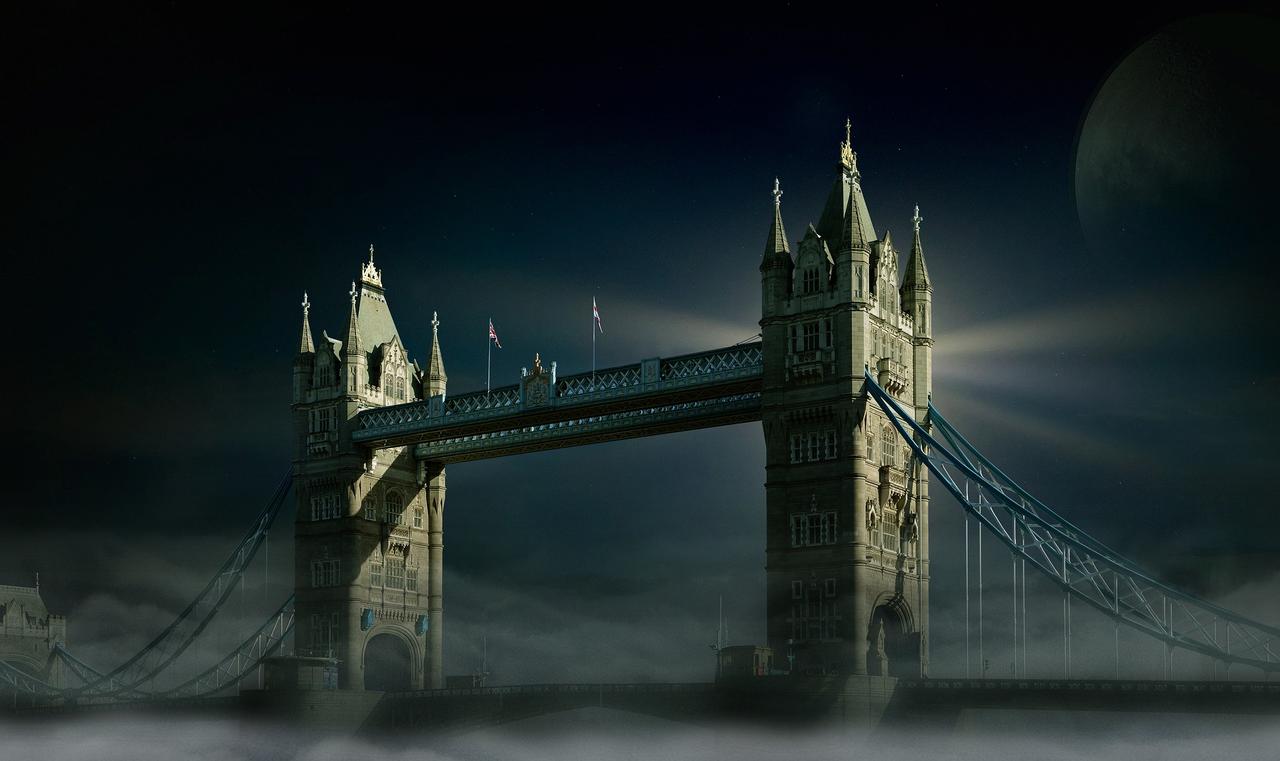
Tower Bridge (Pixabay)
The construction of Tower Bridge began in the second half of the 19th century as a response to the rising population and intensified trade in eastern London. The need for a new river crossing necessitated a structure that could accommodate both road and water traffic without disruption. In this context, the bridge was designed based on the bascule principle, requiring comprehensive architectural and engineering planning. The construction process was shaped by factors such as the technical capacity of the era, material procurement, and labor management; the bridge was completed after approximately eight years of work. From its opening, Tower Bridge assumed a critical role in managing river and urban traffic, and its location and design became directly linked to London’s urban development.
The design process for Tower Bridge began in the mid-19th century with the emergence of various proposals and ideas. As the population in the Tower Hamlets area on London’s eastern bank grew rapidly, the inadequacy of the existing London Bridge increased the demand for a new river crossing. During this period, various engineers and architects proposed designs that considered the need to maintain uninterrupted road and river traffic. Rowland Mason Ordish proposed a solid chain suspension bridge with a railway connection; Frederic Barnett presented a design featuring a central rotating span that would not obstruct vessel traffic. These proposals reflected the search for solutions that would not interfere with river transport while facilitating urban mobility. In 1878, Sir Horace Jones proposed a bascule bridge model that included elevated pedestrian walkways, ensuring uninterrupted pedestrian access during the opening of the bridge for tall ships.【1】 These preliminary designs and concepts served as fundamental reference points in shaping the final bridge design, enabling a balanced integration of engineering and aesthetic elements.
The architectural design of Tower Bridge was developed by Sir Horace Jones, aiming to harmonize with the historic structures in its surroundings. The Gothic-style towers and details were designed to create visual continuity with the Tower of London on the northern bank. The use of Cornish granite and Portland stone for the exterior cladding enhanced the structure’s durability while providing a traditional aesthetic. The interior spaces of the towers were planned to house the bascule mechanism, and the elevated pedestrian walkways were positioned to ensure continuous passage even when the bridge was open. During the design process, aesthetics and functionality were evaluated together, shaping the bridge not merely as a transportation link but as a symbolic element of the city.

Tower Bridge (Pixabay)
The engineering design was led by Sir John Wolfe-Barry, who prioritized structural durability and mechanical functionality. The bridge was constructed with a double-leaf bascule system, with rear counterweights of 50 feet in length and 422 tons in weight placed within the towers to balance each leaf.【2】 The side spans were supported by rigid suspension chains, and the elevated pedestrian walkways were attached to the upper ends of the chains via horizontal ties, enhancing the structure’s stability. This design was integrated with a hydraulic system that ensured the smooth operation of the bascule mechanism, enabling uninterrupted road and river traffic. During the design phase, architectural and engineering solutions were carefully coordinated, resulting in a structure that combined structural resilience with aesthetic unity.
Construction of Tower Bridge began in 1886 and lasted eight years. Two massive piers were sunk into the riverbed, and underwater work presented significant technical challenges due to ground conditions. Steel frameworks were assembled to form the main skeleton of the towers and roadways; this process required careful planning regarding worker safety and material transport. The construction employed a large workforce, with specialized teams handling various tasks.
The most notable technical challenge was the integration of the hydraulic system for the bridge’s opening leaves. The bascule mechanism was positioned to operate in conjunction with counterweights and rear sections within the towers. The hydraulic system was installed using massive steam engines and boilers, requiring precise measurements and assembly to ensure smooth operation. Additionally, the alignment of elevated pedestrian walkways and side spans was meticulously planned to ensure uninterrupted river traffic. All these engineering solutions were implemented in accordance with the technological capabilities of the era, ensuring both the durability and functionality of the bridge.
Tower Bridge was officially opened on 30 June 1894 by Prince Edward of Wales. The opening ceremony featured processions across the bridge, a flotilla of vessels on the river, and cannon salutes, with approximately 9,000 guests in attendance.【3】 When the opening leaves were first used, audible warning systems were activated for passing vessels. In the years following its opening, the bridge experienced heavy usage, opening and closing multiple times daily. During this period, a staff of 80 personnel was employed for maintenance, responsible for operating the steam-powered hydraulic machinery and bridge mechanisms.【4】 In the decades following its opening, Tower Bridge continued to function as a critical transportation link, regulating both road and river traffic and becoming an essential piece of urban infrastructure.
Tower Bridge is a multifaceted structure in both architectural and engineering terms. It integrates various engineering solutions, including the opening leaf system, suspension sections, and elevated pedestrian walkways. The two towers form main structures 240 feet in height, providing structural support for the bascule mechanism.【5】 This combination enables continuous road traffic while allowing uninterrupted river navigation. The materials and construction techniques were selected to ensure a long-lasting and durable bridge, while the hydraulic and mechanical systems guarantee the safe and controlled operation of the opening leaves. The overall design and engineering solutions are regarded as among the most advanced bridges of its era, built in harmony with the technological capabilities of the time.

Tower Bridge (Pixabay)
Tower Bridge employs three primary structural systems: bascule (opening leaves), suspension, and cantilever systems. The bascule system allows the roadway’s two leaves to pivot open and close around a central axis to permit river traffic. This system is balanced by rear counterweights and steel structures within the towers. The opening leaves enable tall vessels to pass while ensuring the safe continuation of road traffic.
Suspension systems support the road spans from the towers using steel cables. These cables stabilize the side spans and distribute the load. The elevated pedestrian walkways are designed using the cantilever principle, horizontally supported at the bridge’s upper level. The combination of cantilever and suspension systems provides both structural strength and an aesthetic appearance, allowing the integration of multiple engineering solutions.
Tower Bridge reflects the engineering standards of its era in terms of materials and construction techniques. The bridge’s skeleton consists of over 11,000 tons of steel, upon which the towers and roadways were constructed.【6】 The exterior façade is clad in Cornish granite and Portland stone, chosen for both aesthetic appeal and durability; this stone cladding protects the underlying steel from environmental exposure. Prefabrication of steel components and their assembly using cranes and scaffolding over the river represented a significant technical innovation. The construction techniques were designed to ensure balanced weight distribution and the safe operation of the opening leaves.
The opening leaves of Tower Bridge were originally operated by a hydraulic system powered by steam. Each leaf was supported by specialized balancing mechanisms within the towers, ensuring energy efficiency during opening and closing operations. The hydraulic system uses liquid pressure to raise and lower the leaves in a controlled manner. In 1976, this system was modernized to operate electrically, and mechanical systems were reconfigured to adapt the bridge’s functionality to contemporary conditions. The system now ensures safe opening and closing of the bridge while prioritizing river traffic.

Tower Bridge (Pixabay)
As one of London’s iconic symbols, Tower Bridge holds significant cultural importance at both local and national levels. Its visual appeal and distinctive architecture have inspired artists, photographers, and designers, frequently appearing in paintings, watercolors, drawings, and photographs. The bridge is also a major tourism destination, with annual visitor numbers measured in the hundreds of thousands, serving as a link between London’s historical fabric and modern life. Additionally, despite the intense use of the London docks in the past, the bridge played a critical social role by maintaining the continuity of public transportation and daily life. In this context, Tower Bridge is not merely a technical and engineering achievement but a structure deeply intertwined with the city’s economic, social, and cultural fabric.
Since its completion, Tower Bridge has undergone various restoration and improvement projects. Interventions such as repainting, structural reinforcement, and visitor area reorganization aim to preserve both its aesthetic and functional integrity. In addition to its original roles in cargo transport and vehicular traffic, the elevated pedestrian walkways and opening mechanisms are now used for tourism and cultural events. Visitors are offered opportunities to observe the bridge’s historical and engineering features and to experience panoramic views of the city. Furthermore, the bridge’s periodic openings for vessels of specific size continue to contribute to the regulation of modern transportation and maritime traffic, harmonizing its historical function with contemporary needs.
City of London Corporation. “City of London Corporation Announces Important Repair Works to Tower Bridge.” *City of London Corporation News*. Accessed March 18, 2026. https://news.cityoflondon.gov.uk/city-of-london-corporation-announces-important-repair-works-to-tower-bridge/
Fietzfotos. "Kule köprüsü, Köprü, Nehir görseli." Pixabay. Accessed March 18, 2026. https://pixabay.com/tr/photos/kule-k%c3%b6pr%c3%bcs%c3%bc-k%c3%b6pr%c3%bc-nehir-5727975/
Institution of Civil Engineers. "Tower Bridge." Institution of Civil Engineers. Accessed March 18, 2026. https://www.ice.org.uk/what-is-civil-engineering/infrastructure-projects/tower-bridge
London Museum. "Tower Bridge." London Museum. Accessed March 18, 2026. https://www.londonmuseum.org.uk/collections/london-stories/tower-bridge/
Mdk-solution. "Köprü, Sular, Asma köprü görseli." Pixabay. Accessed March 18, 2026. https://pixabay.com/tr/photos/k%c3%b6pr%c3%bc-sular-asma-k%c3%b6pr%c3%bc-ak%c4%b1%c5%9f-3196619/
PIRO4D. "Londra köprüsü, Kuleler, Kule köprüsü görseli." Pixabay. Accessed March 18, 2026. https://pixabay.com/tr/photos/londra-k%c3%b6pr%c3%bcs%c3%bc-kuleler-kule-k%c3%b6pr%c3%bcs%c3%bc-2324875/
Pdimaria. "Köprü, Londra, Kule köprüsü görseli." Pixabay. Accessed March 18, 2026. https://pixabay.com/tr/photos/k%c3%b6pr%c3%bc-londra-kule-k%c3%b6pr%c3%bcs%c3%bc-898114/
Pierre9x6. "Londra, Kule köprüsü, Doğa görseli." Pixabay. Accessed March 18, 2026. https://pixabay.com/tr/photos/londra-kule-k%c3%b6pr%c3%bcs%c3%bc-g%c3%bcndo%c4%9fumu-4395917/
Sekau67. "Kule Köprüsü, Londra, Akış Görseli." Pixabay. Accessed March 18, 2026. https://pixabay.com/tr/photos/kule-k%c3%b6pr%c3%bcs%c3%bc-londra-ak%c4%b1%c5%9f-6273431/
Tower Bridge. "About Us." Tower Bridge. Accessed March 18, 2026. https://www.towerbridge.org.uk/about-us
Tower Bridge. "What Type of Bridge Is Tower Bridge." Tower Bridge. Accessed March 18, 2026. https://www.towerbridge.org.uk/stories/what-type-of-bridge-is-tower-bridge
Wight, David, and Julia Dudkiewicz, eds. *Tower Bridge: A Celebration of 120 Years, 1894–2014*. London: Guildhall Art Gallery and Tower Bridge, 2014. https://www.academia.edu/17756649/Tower_Bridge_A_Celebration_of_120_Years_1894_2014_eds_Julia_Griffin_and_David_Wight_2014_Guildhall_Art_Gallery_City_of_London_Corporation_
[1]
David Wight ve Julia Dudkiewicz, ed., Tower Bridge: A Celebration of 120 Years, 1894–2014 (London: Guildhall Art Gallery ve Tower Bridge, 2014), 12-16. https://www.academia.edu/17756649/Tower_Bridge_A_Celebration_of_120_Years_1894_2014_eds_Julia_Griffin_and_David_Wight_2014_Guildhall_Art_Gallery_City_of_London_Corporation_
[2]
A.e., syf. 9
[3]
A.e., syf. 30
[4]
London Museum, "Tower Bridge," London Museum, Last Accessed: 18 March 2026, https://www.londonmuseum.org.uk/collections/london-stories/tower-bridge/
[5]
David Wight ve Julia Dudkiewicz, ed., Tower Bridge: A Celebration of 120 Years, 1894–2014 (London: Guildhall Art Gallery ve Tower Bridge, 2014), 9. https://www.academia.edu/17756649/Tower_Bridge_A_Celebration_of_120_Years_1894_2014_eds_Julia_Griffin_and_David_Wight_2014_Guildhall_Art_Gallery_City_of_London_Corporation_
[6]
A.e., syf. 28


Architect(s) | Sir Horace Jones | ||||||||
|---|---|---|---|---|---|---|---|---|---|
Height(s) | 240 feet (Towers) | ||||||||
Type(s) | Cantilever Suspension Bascule (Lifting) | ||||||||
Material(s) | Cornish Granite Portland Stone Steel Frame | ||||||||
Location | Tower Hamlets London | ||||||||
Cultural Significance | One of London's Iconic Structures | ||||||||
Engineer | Sir John Wolfe-Barry | ||||||||
Year of Opening | 1894 | ||||||||
History and Construction
Preliminary Designs and Concepts
Architectural and Engineering Design
Construction Process and Technical Challenges
Opening Ceremony and Early Years
Architectural and Engineering Features
Bascule, Suspension, and Cantilever Systems
Materials and Construction Techniques
Hydraulic and Mechanical Systems
Cultural and Social Significance
Restoration and Modern Use