
This article was automatically translated from the original Turkish version.
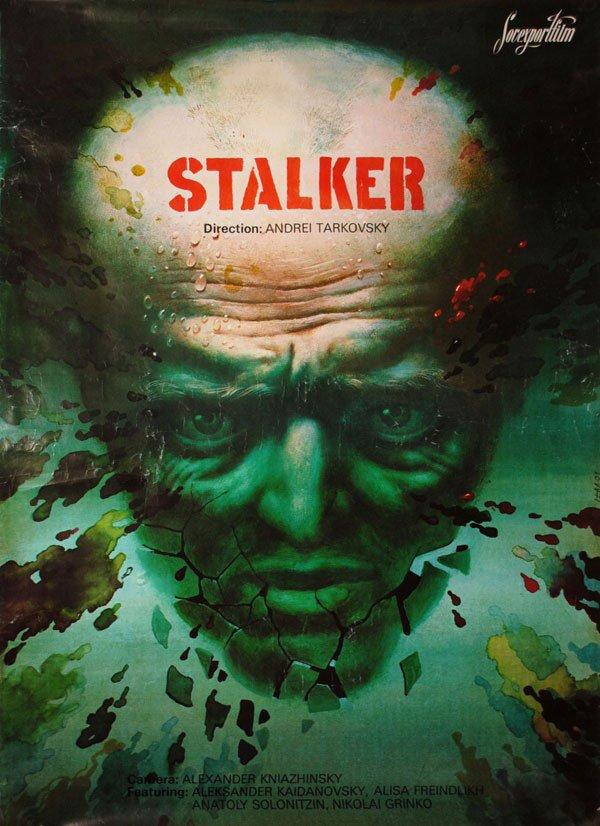
Original Title | Stalker | ||||||||
|---|---|---|---|---|---|---|---|---|---|
Production Year / Country | 1979 / USSR | ||||||||
Genre | Science fiction philosophical drama | ||||||||
Director(s) | Andrey Tarkovsky | ||||||||
Screenplay(s) | Andrey Tarkovsky Arkady and Boris Strugatsky | ||||||||
Main Cast | Aleksandr Kaidanovsky (Stalker/Pathfinder), Anatoly Solonitsyn (Writer), Nikolai Grinko (Professor), Alisa Freindlich (Stalker's wife) | ||||||||
Language(s) | Approximately 160 minutes | ||||||||
Notable Achievements | Cannes 1980 Ecumenical Jury Prize (winner), Fantasporto 1983 Special Mention, multiple festival selections from the 1980s to the 2020s | ||||||||
Stalker is a feature film that centers on a perilous three-person journey into a mysterious “Zone,” weaving existential questions with science fiction elements into a cohesive composition. The production parallels the decayed aesthetics of the external world with the internal fractures of its characters, placing them on a shared plane of meaning.
The narrative progresses not through action but through moments of waiting, hesitation, and contemplation, transforming its rhythm into a heightened sense of tension. The film embraces space and atmosphere as its dramatic backbone; the “Zone” functions both as a physical geography and a mental testing ground. Image scales, long takes, and patient framing thicken time; sound design aims to deepen perception through metallic hums, natural ambient sounds, and intervals of silence. This approach seeks not to tell a single “story” but to make the viewer an active participant in a contemplative experience.
The film consciously subverts classic adventure tropes and tests the ethical, intellectual, and emotional positioning of its characters. The distance between “what is desired” and “what is attainable” is measured both concretely and abstractly as the journey unfolds. The camera strives to derive dramatic effect not from direct climaxes but from emptiness, anticipation, and uncertainty. Color choices and lighting aim to amplify the eerie allure of the spaces; water surfaces, rusted textures, and barren landscapes become visual leitmotifs. In its final moments, the film structures the “Zone” as a mirror turned inward upon the human psyche—so that as the visible shifts, so too do the layers of meaning.
The story begins when a man known as the “Guide” or “Stalker” agrees to lead a “Writer” and a “Professor” into a dangerous and forbidden area. The trio encounters invisible rules, contradictory signs, and ambiguous traps within this isolated landscape. As the journey progresses, each character’s expectations and fears become increasingly visible. Internal disintegrations emerge alongside external threats; trust and purpose are continuously redefined. The narrative transforms the act of “reaching” from a physical goal into an ethical reckoning. The revelation does not lie at the destination but along the path traveled. For this reason, the rhythm is designed to generate meaning not only in action but in stillness.
The timeline moves linearly; however, the Zone’s peculiar rules and the characters’ fluctuating psychologies imbue events with a sense of threshold. The landscape functions like a labyrinth—each turn opens a new possibility of meaning. Objects, paths, rails, ponds, and rusted structures carry symbolic weight. Ambiguity is deliberately preserved in dialogue; questions accumulate more than answers. The ending closes not with definitive judgment but by leaving room for multiple interpretations. Thus, the film becomes a thought experiment that refuses to surrender its meaning to a single explanation.
The visual design elevates space as a “character” through wide frames and extended shots. Transitions in lighting and color make visible the emotional divide between the safe world and the “Zone.” Camera movements are restrained; rail-based transitions, static panoramas, and fixed frames establish the rhythm. Editing follows a flow grounded in intra-scene continuity rather than rapid cuts driven by action. Sound design juxtaposes natural ambience with mechanical hums; the balance between speech and silence is the primary tool for generating tension. Art direction and spatial arrangement include details that evoke a post-industrial atmosphere of decay. Overall, the form is rooted in minimalism, serving the film’s philosophical inquiry.
The technical choices establish a reflective relationship between the physical reality of the “Zone” and the characters’ inner worlds. Refractions broken on water surfaces, the harshness of earth and metal textures, and the uncontrolled spread of vegetation add layers of meaning to the visual text. Music is used sparingly; auditory tension arises mostly from environmental sounds and silence. Camera angles strive to balance power and hesitation among the characters. In post-production, rhythm and sound levels are scaled according to the psychological intent of each scene.

An Iconic Scene from Stalker – IMDB
Aleksandr Kaidanovsky (the Stalker) portrays the guide with a blend of fragility and stubbornness. The tension between his mission as a guide and his personal beliefs is conveyed through subtle gestures and prolonged silences. Kaidanovsky’s still gaze aims to make visible the ethical burden of guidance; he communicates his inner conflicts not through loud declarations but through bodily rhythm and look. Thus, the “Stalker” becomes an instrument who knows the Zone’s rules yet remains its prisoner.
Anatoly Solonitsyn (the Writer) embodies a figure driven by the crisis of creation and the fear of failure. Solonitsyn’s performance establishes a tone where irony intertwines with despair. Nikolai Grinko (the Professor) provides a cautious, calculating counterweight grounded not in faith but in measurement and evidence. Grinko’s detached demeanor renders visible the conflict between reason and desire. Alisa Freindlich (the Stalker’s Wife) represents fragile resilience in domestic scenes; her brief presence generates an internal counterpart to the character’s external mission. Supporting roles, though limited in screen time, reinforce the Zone’s eerie atmosphere and the broader social context.
Critical readings emphasize that the film’s power derives from its strategies of “reduction” and “waiting.” The ability to generate tension without high-octane stimuli is directly tied to its balance of sound and silence. Space ceases to be a mere physical backdrop and becomes a mental stage. Characters are portrayed not as embodiments of a single ideology but as conflicting desires and thoughts. Symbolic objects and recurring visual-auditory motifs expand the interpretive field. This approach transforms the film into a layered experience that resists reduction to a single interpretation.
Moreover, the film seeks to establish a discursive ground that reveals the chasm between modernity’s promises and the inner void of the human condition. The “Zone” operates like a testing ground perpetually swinging between science’s thirst for measurement and faith’s surrender. Camera scales reveal power dynamics among the characters. Color and lighting transitions alter the emotional climate of the space.
Cannes Film Festival (1980): Prize of the Ecumenical Jury – Winner.
Fantasporto (1983): Audience Jury Award – Special Mention.
Berlin Film Festival (1981): Official Selection.
Locarno Film Festival (1980): Official Selection.
São Paulo Film Festival (1982, 2011): Program screenings.
Telluride Film Festival (2012): Program screening.
Hong Kong Film Festival (2017): Program screening.
CPH:PIX (2017): Program screening.
Mumbai Film Festival (2017): Program screening.
Istanbul Film Festival (2018) & F Istanbul (2018): Program screenings.
Fajr Film Festival (2019): Program screening.
Fribourg Film Festival (2022): Program screening.
Valdivia Film Festival (2023) & Porto/Post/Doc (2023): Program screenings.
Beyazperde. "Stalker – Oyuncular." Beyazperde. Accessed October 9, 2025. https://www.beyazperde.com/filmler/film-702/oyuncular/.
Beyazperde. "Stalker." Beyazperde. Accessed October 9, 2025. https://www.beyazperde.com/filmler/film-702/.
Gezgin, Elif. “‘Normal’i Dayatan Bir Yaşamda İz Sürücü Olmak: Tarkovski’nin Stalker Filmine Varoluşçu ve Queer Bir Bakış.” Sosyal Bilimler Metinleri (2023). Accessed October 9, 2025. https://dergipark.org.tr/tr/download/article-file/3375492.
IMDb. “Stalker (1979).” IMDb. Accessed October 9, 2025. https://www.imdb.com/title/tt0079944/.
IMDb. “Stalker – Awards.” Accessed October 9, 2025. https://www.imdb.com/title/tt0079944/awards/?ref_=tt_ov_at_op_awd.
IMDb. “Stalker – Filming Locations.” IMDb. Accessed October 9, 2025. https://www.imdb.com/title/tt0079944/locations/?ref_=tt_ov_at_dt_flmg.
IMDb. “Stalker – Full Cast & Crew.” Accessed October 9, 2025. https://www.imdb.com/title/tt0079944/fullcredits/?ref_=tt_ov_at_pop_cst.
IMDb. “Stalker – Plot Summary.” IMDb. Accessed October 9, 2025. https://www.imdb.com/title/tt0079944/plotsummary/?ref_=tt_ov_at_pl_pl.
IMDb. “Stalker – Release Info.” IMDb. Accessed October 9, 2025. https://www.imdb.com/title/tt0079944/releaseinfo/?ref_=tt_ov_at_dt_rdat.
Letterboxd. “Stalker.” Letterboxd. Accessed October 9, 2025. https://letterboxd.com/film/stalker/.
MUBI. "Stalker." MUBI. Accessed October 9, 2025. https://mubi.com/tr/tr/films/stalker.
MUBI. “Stalker – Awards.” MUBI. Accessed October 9, 2025. https://mubi.com/tr/films/stalker/awards.
Rotten Tomatoes. “Stalker.” Rotten Tomatoes. Accessed October 9, 2025. https://www.rottentomatoes.com/m/1043378-stalker.
Sandıkçı, Hatice, and Sümeyra. “Modern Düşünme Tarzının Tahakkümünden Kurtulmak: Heideggerci Bir Modernlik Eleştirisi Olarak Stalker Filmi.” ViraVerita E-Dergi 18 (2023): 159–181. Accessed October 9, 2025. https://dergipark.org.tr/tr/download/article-file/3588123.
Stalker. Directed by Andrei Tarkovsky. Mosfilm. Moscow: Mosfilm Studios, 1979. Film.
The Guardian. “Three Colours: Red Review – Kieslowski’s Magnificent Farewell to Cinema.” The Guardian. Accessed October 9, 2025. https://www.theguardian.com/film/2023/apr/11/three-colours-red-review-kieslowski.

Original Title | Stalker | ||||||||
|---|---|---|---|---|---|---|---|---|---|
Production Year / Country | 1979 / USSR | ||||||||
Genre | Science fiction philosophical drama | ||||||||
Director(s) | Andrey Tarkovsky | ||||||||
Screenplay(s) | Andrey Tarkovsky Arkady and Boris Strugatsky | ||||||||
Main Cast | Aleksandr Kaidanovsky (Stalker/Pathfinder), Anatoly Solonitsyn (Writer), Nikolai Grinko (Professor), Alisa Freindlich (Stalker's wife) | ||||||||
Language(s) | Approximately 160 minutes | ||||||||
Notable Achievements | Cannes 1980 Ecumenical Jury Prize (winner), Fantasporto 1983 Special Mention, multiple festival selections from the 1980s to the 2020s | ||||||||
No Discussion Added Yet
Start discussion for "Track Driver (Stalker, Film)" article
Subject and Narrative Structure
Production and Technical Features
Cast and Characters
Critical Evaluation
Awards and Selections