

+2 More

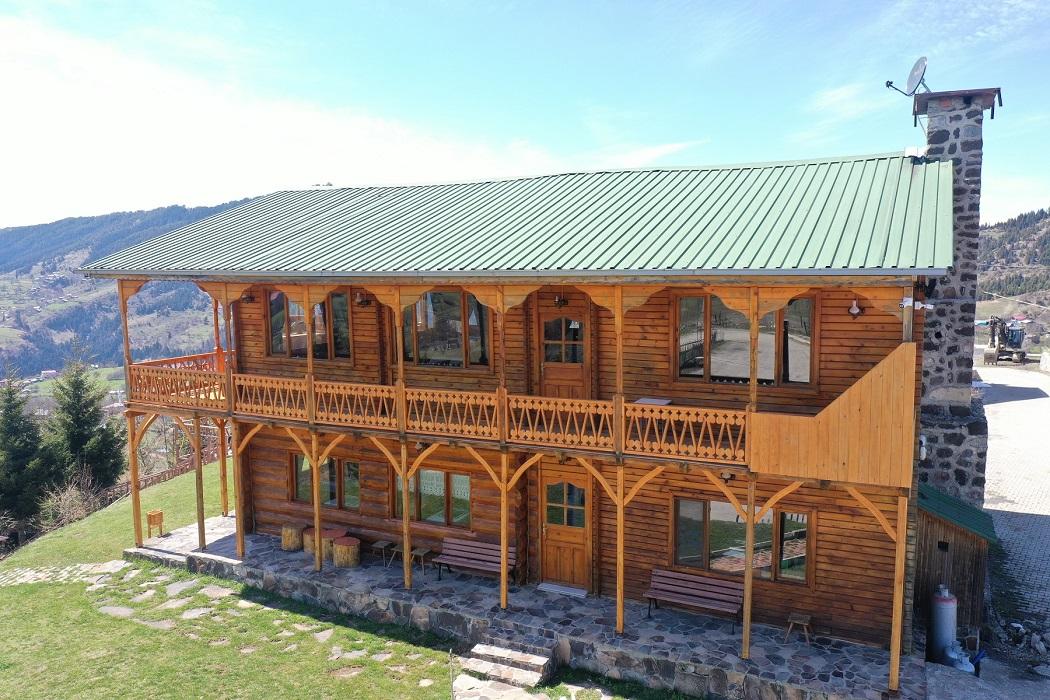
http://www.savsat.gov.tr/yeni-savsat-evi
Traditional Şavşat Houses
Sections of a Şavşat House | Wooden Ornamentation and Protruding Bays Windows and Wooden Shutters Attic Hearth or Stove Area Wall-Mounted Shelf and Built-in Bed Niche Inner Courtyard Rooms Central Space or Corridor/Hallway Courtyard | ||||||||
|---|---|---|---|---|---|---|---|---|---|
The traditional rural houses located in Savsat, a district in Artvin, are unique architectural examples shaped by the region’s harsh climatic conditions, social structure, and cultural values. These houses are typically built using timber log construction techniques and are designed to accommodate the patriarchal extended family structure in which multiple generations share the same living space.

Savsat House – Governorship of Savsat (Republic of Turkey)
Savsat houses generally consist of 3–4 rooms. A common feature in their layout is the concept of a central space, which functions more like a hallway or corridor than a typical room. These corridors may be linear, L-shaped, or T-shaped, with rooms opening onto them. The main entrance usually leads into the interior via an "ayvan" (an open or enclosed veranda). Inside the house, transitional spaces such as "avlu" (courtyard) or "divanhane" (sitting area) are also found.
Rooms are equipped with built-in storage systems such as wall niches and shelves known as "terek," as well as "yataklık," recessed wall spaces used for sleeping.

Bay Window in a Georgian House (Mimarlık Dergisi)
High-quality craftsmanship is a hallmark of these houses, especially visible in carved details on the wooden elements. Traditional master builders created intricate carvings on "kösk" (bay windows or balconies), which served both aesthetic and functional purposes—regulating light and airflow. However, due to the decline in skilled craftsmanship and the lack of knowledge transmission, these features have become simpler and less detailed over time.
Roofs are typically double-pitched with a 20–30% slope.
They are covered with bedevra (also known as hartama), made from overlapping strips of spruce, pine, or fir, offering high water resistance. This technique was widely used until the 1980s and is now rare.
Eaves are extended to cover the "ayvan," protecting walls from rain and snow.
Wooden gutters are placed beneath the roof to manage rainwater and prevent damage to the foundation.
Windows are typically small, fitted with wooden shutters called "akoşka."
Akoşkas protect the windows from cold weather and heavy snow or when the house is unoccupied for long periods.
When closed, a curved L-shaped iron bar is looped through a metal ring to "zirzala" (lock) the window, providing security and weather resistance.

Tea and Scenery on the Balcony of a Savsat House (Republic of Turkey, Savsat District Governorship)
Rooms are furnished with broad, low "sekis" (built-in seating platforms) that invite people to sit close to the floor.
Walls are decorated with local handicrafts such as kilims and cecim weavings.
Cushions filled with wool, sheep hides, and floor mats are placed on the sekis.
Kitchen shelves ("terek") and sleeping spaces ("yataklık") are recessed into the walls to maximize usable space.
The guest room is a dedicated area usually not used by household members. It contains a bed, a table, a stove, and decorative kilims for guests.
The patriarchal family structure is a key influence on house planning and development.
The first house built is known as the “unity house.” As the family expands, new rooms are added or separate houses are constructed. Some added rooms are even dismantled from old houses and reassembled elsewhere.
This building style reflects the extended family system and the social fabric of the region.
The traditional rural houses of Şavşat are authentic living spaces that merge woodcraft, local materials, and cultural traditions. With climate-responsive planning, functional interiors, and rich cultural features, these houses represent a significant part of the region’s cultural heritage. However, with modernization and the decline in traditional craftsmanship, many of these unique details are at risk of disappearing.
Artvin Governorship. “The Traditional Şavşat House Is Now Registered.” Artvin.org.tr. Accessed June 24, 2025. https://artvin.org.tr/geleneksel-savsat-evi-artik-tescilli/.
Mimarlık Journal. “Şavşat House.” Mimarlikdergisi.com. Accessed June 24, 2025. http://www.mimarlikdergisi.com/index.cfm?sayfa=mimarlik&DergiSayi=374&RecID=2720.
Şavşat District Governorship. “New Şavşat House.” Savsat.gov.tr. Accessed June 24, 2025. http://www.savsat.gov.tr/yeni-savsat-evi.
Yılmaz, Cevdet, and Leman Albayrak. “A Study on the Şavşat Houses of Artvin.” Dergipark. Accessed June 24, 2025. https://dergipark.org.tr/tr/download/article-file/1408111.
Yılmaz, Cevdet, and Leman Albayrak. “Traditional Şavşat Houses in the Context of Cultural Heritage.” Dergipark. Accessed June 24, 2025. https://dergipark.org.tr/tr/download/article-file/1358144.

http://www.savsat.gov.tr/yeni-savsat-evi
Traditional Şavşat Houses
Sections of a Şavşat House | Wooden Ornamentation and Protruding Bays Windows and Wooden Shutters Attic Hearth or Stove Area Wall-Mounted Shelf and Built-in Bed Niche Inner Courtyard Rooms Central Space or Corridor/Hallway Courtyard | ||||||||
|---|---|---|---|---|---|---|---|---|---|
No Discussion Added Yet
Start discussion for "Traditional Rural Houses of Şavşat" article
Architectural Plan and Spatial Layout
Materials and Construction Techniques
1. Primary Building Materials
2. Woodcraft and Master Craftsmanship
3. Roof Structure
Windows, Doors, and Shutter Systems
Interior Layout and Furnishings
Social and Cultural Context
Examples and Applications
Conclusion
This article was created with the support of artificial intelligence.
