


This article was automatically translated from the original Turkish version.
+2 More
This image was generated by Artificial Intelligence.
Traditional Şavşat Houses
Şavşat House Sections | Wood Carvings and Kiosks Windows and Akoska Attic Floor Hearth (Area Where the Stove Is Located) Terek and Sleeping Area Courtyard (Havlu) Rooms Central Space (Corridor or Hall) Ayvan (Courtyard or Open Sundurma) | ||||||||
|---|---|---|---|---|---|---|---|---|---|
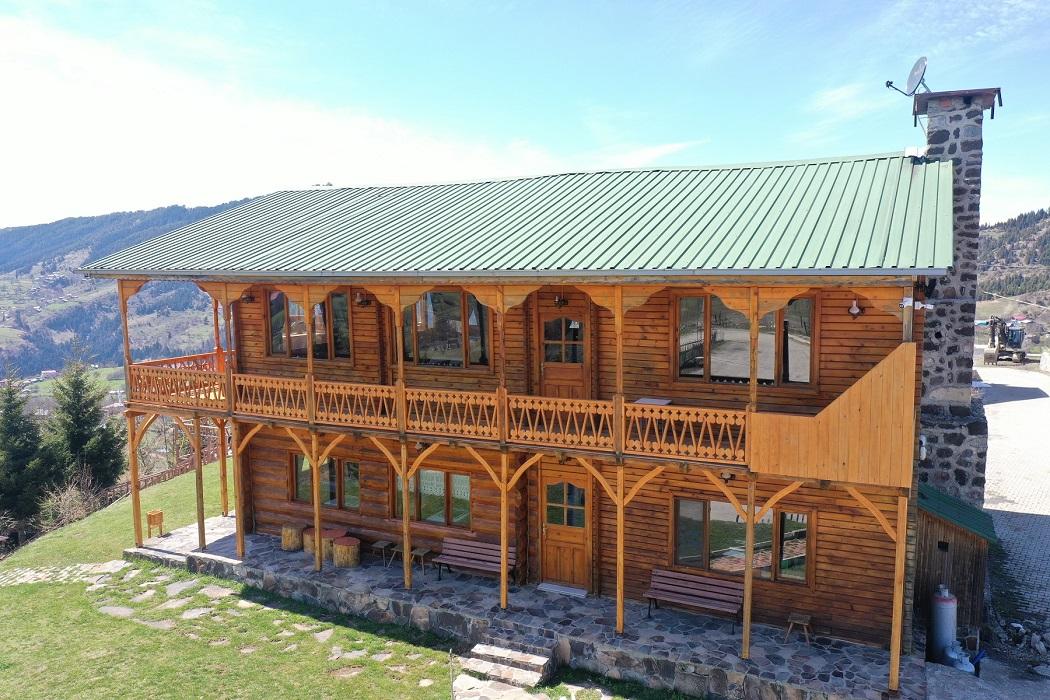
The traditional rural houses in Şavşat district of Artvin are original architectural examples shaped by the region’s harsh climatic conditions, social structure, and cultural values. These houses are typically constructed using timber-frame techniques and serve the patriarchal family structure in which multiple generations share the same living space.
Şavşat houses generally consist of three to four rooms. A defining feature of the floor plan is the central space, which functions more like a corridor or hallway than a room. Corridors are linear, L-shaped, or T-shaped, with rooms opening directly onto them. The main entrance to the house leads from the middle section of the ayvan (open or enclosed veranda) into the interior space. Within the house, intermediate sections known as avlu (havlu) or divanhane are also present. Rooms are equipped with built-in wall cupboards and shelf systems called “terek” to enhance functionality. Additionally, there are sleeping areas known as “yataklık,” which are recessed into the walls.

Şavşat Kaymakamlığı Şavşat Evi (T.C. Şavşat District Governorship)
The quality of woodworking in these houses is of great importance. Traditional craftsmen once created intricate carvings on eaves and decorative elements. However, due to the decline in the number of skilled artisans and the interruption in the transmission of technical knowledge, eaves and decorations have become simpler and less detailed. Eaves serve both aesthetic and functional purposes, enriching the exterior appearance while regulating light and airflow into the interior space.

Eaves in a Georgian House (Architecture Magazine)

Tea and View from the Balcony of a Şavşat House (T.C. Şavşat District Governorship)
The traditional rural houses of Şavşat are unique living spaces where woodworking craftsmanship, the region’s natural resources, and social structure converge. Through climate-adapted planning, functional interior arrangements, use of natural materials, and rich cultural elements, these houses constitute vital components of the region’s cultural heritage. However, due to modernization and the decline of skilled artisans, original craftsmanship and intricate details are increasingly at risk of being lost.
Artvin Valiliği. “Geleneksel Şavşat Evi Artık Tescilli.” Artvin.org.tr. Accessed June 24, 2025. https://artvin.org.tr/geleneksel-savsat-evi-artik-tescilli/.
Mimarlık Dergisi. "Şavşat Evi." Mimarlikdergisi.com. Accessed June 24, 2025. http://www.mimarlikdergisi.com/index.cfm?sayfa=mimarlik&DergiSayi=374&RecID=2720.
Yılmaz, Cevdet, and Leman Albayrak. “Artvin Şavşat Evleri Üzerine Bir Araştırma.” Dergipark. Accessed June 24, 2025. https://dergipark.org.tr/tr/download/article-file/1408111.
Yılmaz, Cevdet, and Leman Albayrak. “Kültürel Miras Bağlamında Geleneksel Şavşat Evleri.” Dergipark. Accessed June 24, 2025. https://dergipark.org.tr/tr/download/article-file/1358144.
Şavşat Kaymakamlığı. "Yeni Şavşat Evi." Savsat.gov.tr. Accessed June 24, 2025. http://www.savsat.gov.tr/yeni-savsat-evi.

This image was generated by Artificial Intelligence.
Traditional Şavşat Houses
Şavşat House Sections | Wood Carvings and Kiosks Windows and Akoska Attic Floor Hearth (Area Where the Stove Is Located) Terek and Sleeping Area Courtyard (Havlu) Rooms Central Space (Corridor or Hall) Ayvan (Courtyard or Open Sundurma) | ||||||||
|---|---|---|---|---|---|---|---|---|---|
Architectural Plan and Spatial Organization
Materials and Construction Techniques
1. Primary Structural Materials
2. Woodworking and Craftsmanship
3. Roof System
Windows, Doors, and Shutters
Interior Organization and Furnishings
Social and Cultural Context
Examples and Application Areas
