

This article was automatically translated from the original Turkish version.
Producer(s) | Turkish Aerospace Industries Inc. (TUSAŞ) | ||||||||
|---|---|---|---|---|---|---|---|---|---|
Development Start | 2004 | ||||||||
First Flight(s) | 2010 (ANKA Block A) | ||||||||
Class | MALE (Medium Altitude Long Endurance) | ||||||||
Mission Type | Reconnaissance, surveillance, target detection, intelligence, strike | ||||||||
Wingspan | 17.5 meters | ||||||||
Length(s) | 8.6 meters | ||||||||
Cruise Altitude | 23,000 feet (approximately 7,010 meters) | ||||||||
Engine Type | Turboprop | ||||||||
Communication System | SATCOM (BLOS - Beyond Line of Sight operational capability) | ||||||||
Weapon Integration | MAM-L, MAM-C (in some configurations) | ||||||||
National Systems | CATS EO/IR targeting system, ASELSAN payloads | ||||||||
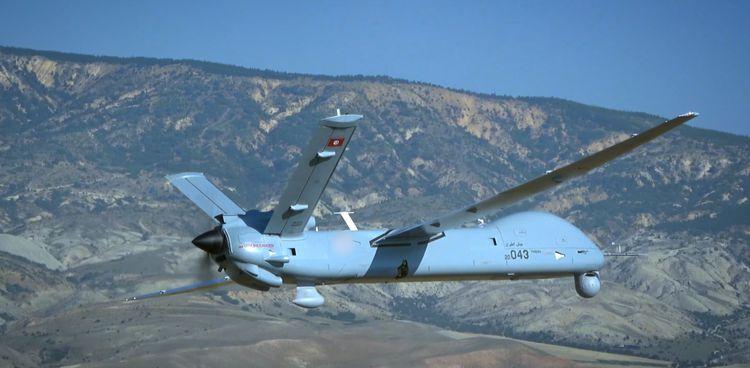
TUSAŞ ANKA is an unmanned aerial vehicle (UAV) system developed and produced by Turkish Aerospace Industries Inc. (TUSAŞ), belonging to the Medium Altitude Long Endurance (MALE) class. The ANKA was designed to meet the Turkish Armed Forces’ requirements for reconnaissance, surveillance, target acquisition, and intelligence operations, while also being configured for various civil missions.
TUSAŞ ANKA (Turkish Armed Forces)
The ANKA project was launched in line with the Republic of Türkiye’s objectives to reduce dependence on foreign defense technologies and enhance its own technological capabilities. In this context, an official contract was signed in 2004 between the Presidency of Defense Industries (SSB) and TUSAŞ, initiating project activities.
The development process was carried out entirely using national resources and indigenous engineering capabilities. The development cycle, comprising four main phases—design, prototyping, flight testing, and serial production—made a significant contribution to Türkiye’s ability to independently produce unmanned systems.
The first prototype, ANKA Block A, successfully completed its maiden flight in 2010. This flight was critical in validating the system’s aviation and control capabilities. Based on test results obtained after the prototype, comprehensive improvements were implemented, leading to the development of more advanced variants such as ANKA Block B and ANKA-S.
By 2013, serial production models of the ANKA UAV system had been integrated into the inventory of the Turkish Armed Forces. From this date onward, the system began active operational use.
The key technical specifications of the ANKA UAV system are as follows:
%252FNew%2520folder%2520(10)%252FAA-31292279.jpg&w=1280&q=75)
TUSAŞ ANKA (AA)
ANKA UAV systems are equipped with advanced avionics capable of high-precision data collection and analysis during missions. These systems consist of the following components:
%252FNew%2520folder%2520(10)%252FAA-31292281.jpg&w=1280&q=75)
TUSAŞ ANKA (AA)
The ANKA is designed for a wide range of military and civil missions and is capable of performing the following operational tasks:
Due to its ability to operate for extended durations at high altitudes, it is used in border security, counter-terrorism, and intelligence gathering missions. Observation data can be transmitted in real time to command and control centers.
Equipped with optical and radar systems, it enables accurate detection and tracking of both stationary and moving targets.
In addition to visual intelligence, it can perform signals intelligence (SIGINT) and electronic intelligence (ELINT) missions, providing strategic data for decision-making processes.
The armed configuration of the ANKA-S variant can carry and deploy precision-guided munitions such as ROKETSAN’s MAM-L and MAM-C. This capability provides close air support to ground forces.
Used to assess damage inflicted on target areas after military operations, enabling evaluation of mission effectiveness and impact.
ANKA systems are equipped with infrastructure to perform passive electronic surveillance, jamming, and electronic support missions.
It can be deployed in civil missions such as wide-area scanning during natural disasters (earthquakes, floods, fires), damage mapping, and coordination of search and rescue operations.
It is also utilized by coastal security and naval forces for tasks such as monitoring smuggling, illegal migration, and maritime traffic.
The ANKA UAV system is one of the platforms that have established international recognition for Türkiye’s engineering expertise in unmanned aerial vehicles. The system has been exported to various countries and has become a leading export item among Turkish defense industry products.
Foreign sales have enhanced Türkiye’s cooperation opportunities in regional and global defense relations, serving not only as an economic contributor but also as an effective diplomatic tool. The success of the ANKA system has paved the way for subsequent UAV projects such as Bayraktar TB2, Aksungur, and Kızılelma.
The TUSAŞ ANKA UAV system is an operationally proven aircraft platform that reflects Türkiye’s indigenous defense industry capabilities. Its modular design, long endurance, advanced sensor integration, and adaptability to various mission types grant it a broad range of applications. ANKA holds strategic value in terms of national defense capabilities.
Anadolu Ajansı. “Millî İHA ANKA’nın İlk İhracat Başarısı Belgesel Oldu.” Accessed July 8, 2025. https://www.aa.com.tr/tr/ekonomi/milli-iha-ankanin-ilk-ihracat-basarisi-belgesel-oldu/2910788
TUSAŞ – Türk Havacılık ve Uzay Sanayii A.Ş. "ANKA." TUSAŞ Resmî Web Sitesi. Accessed July 8, 2025. https://www.tusas.com/urunler/iha/operatif-stratejik-iha-sistemleri/anka
TUSAŞ – Türk Havacılık ve Uzay Sanayii A.Ş. *ANKA Operatif ve Stratejik İHA Sistemleri Katalog*. Accessed July 8, 2025. https://www.tusas.com/content/files/uploads/229/anka.pdf
Turkish Armed Forces. "ANKA -Türk İnsansız Hava Aracı." YouTube. Accessed July 8, 2025. https://youtu.be/c4m3kgwT9ZQ?si=MoBKoW7-QuoDkra8
Türkiye Yüzyılı. "ANKA İnsansız Hava Aracı." Türkiye Yüzyılı Resmî Web Sitesi. Accessed July 8, 2025. https://turkiyeyuzyili.com/proje-anka-insansiz-hava-araci

Producer(s) | Turkish Aerospace Industries Inc. (TUSAŞ) | ||||||||
|---|---|---|---|---|---|---|---|---|---|
Development Start | 2004 | ||||||||
First Flight(s) | 2010 (ANKA Block A) | ||||||||
Class | MALE (Medium Altitude Long Endurance) | ||||||||
Mission Type | Reconnaissance, surveillance, target detection, intelligence, strike | ||||||||
Wingspan | 17.5 meters | ||||||||
Length(s) | 8.6 meters | ||||||||
Cruise Altitude | 23,000 feet (approximately 7,010 meters) | ||||||||
Engine Type | Turboprop | ||||||||
Communication System | SATCOM (BLOS - Beyond Line of Sight operational capability) | ||||||||
Weapon Integration | MAM-L, MAM-C (in some configurations) | ||||||||
National Systems | CATS EO/IR targeting system, ASELSAN payloads | ||||||||
Project Initiation and Development Process
Technical Specifications
Avionics and Payload Systems
Mission Areas and Operational Use
Reconnaissance and Surveillance
Target Detection and Tracking
Intelligence Operations
Armed Attack
Battle Damage Assessment (BDA)
Electronic Warfare Support
Disaster Management and Civil Applications
Maritime Surveillance
Exports and International Recognition