


+2 More

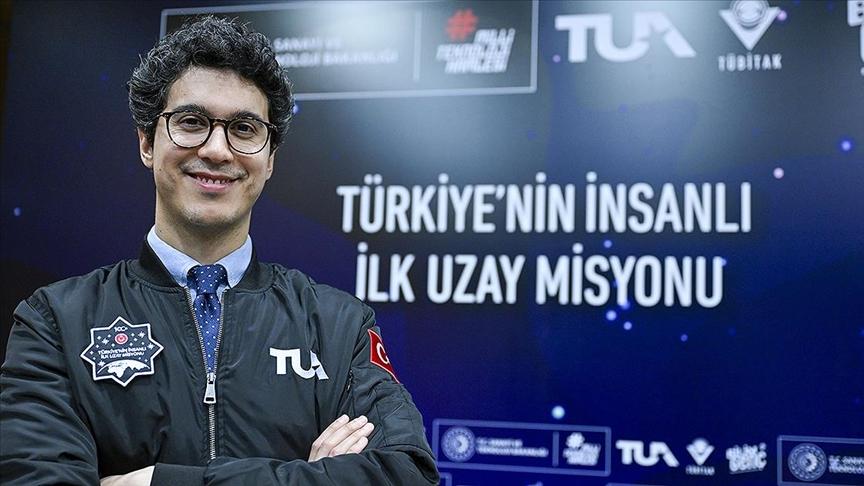
Tuva Cihangir Atasever
Name Surname | Tuva Cihangir Atasever | ||||||||
|---|---|---|---|---|---|---|---|---|---|
Birth | 12 August 1992 | ||||||||
Place of Birth | Ankara, Türkiye | ||||||||
Nationality | Republic of Türkiye | ||||||||
Profession(s) | Electrical and Electronics Engineer Astronaut | ||||||||
Field of Expertise | Avionics systems, space technologies, photonics, microgravity research | ||||||||
Companies Worked for | Blue Dot VR (Co-founder, CEO), HyperSight Inc. (Co-founder), ROKETSAN A.Ş. (Avionics Systems Engineer) | ||||||||
Affiliated Space Agency | Türkiye Space Agency (TUA) | ||||||||
Organizations that Provided Astronaut Training | technical training at NASA and SpaceX facilities Axiom Space (USA) | ||||||||
Astronaut Number | Türkiye's second astronaut to reach space | ||||||||
Astronaut Selection Year | 2022 (selected as backup astronaut) | ||||||||
Mission Type | Suborbital scientific research flight | ||||||||
Mission Name | Galactic 07 | ||||||||
Spacecraft | VSS Unity | ||||||||
Mission Operator | Virgin Galactic | ||||||||
Launch Date | 8 June 2024 | ||||||||
Launch Site | Spaceport America, New Mexico, USA | ||||||||
Achieved Altitude | Approximately 90 kilometers | ||||||||
Flight Duration | ~70 minutes | ||||||||
Microgravity Duration | ~3 minutes | ||||||||
Number of Experiments Conducted | 7 scientific experiments | ||||||||
Role in the Mission | Astronaut / Experiment Lead | ||||||||
Purpose of the Mission | To test the feasibility of biomedical and physical experiments in a microgravity environment | ||||||||
Post-Flight Title | Türkiye's second citizen to go to space | ||||||||
Tuva Cihangir Atasever (born 12 August 1992, Ankara) is a Turkish electrical and electronics engineer and the second person from Türkiye to travel to space. He completed his space mission on 8 June 2024 with a suborbital research flight aboard Virgin Galactic’s VSS Unity, thereby earning the distinction of being the second person from Türkiye to reach space. Throughout his engineering career, Atasever has worked on defense and space projects. Before being selected for Türkiye’s astronaut program in 2022, he worked as an engineer at ROKETSAN and co-founded several technology startups.
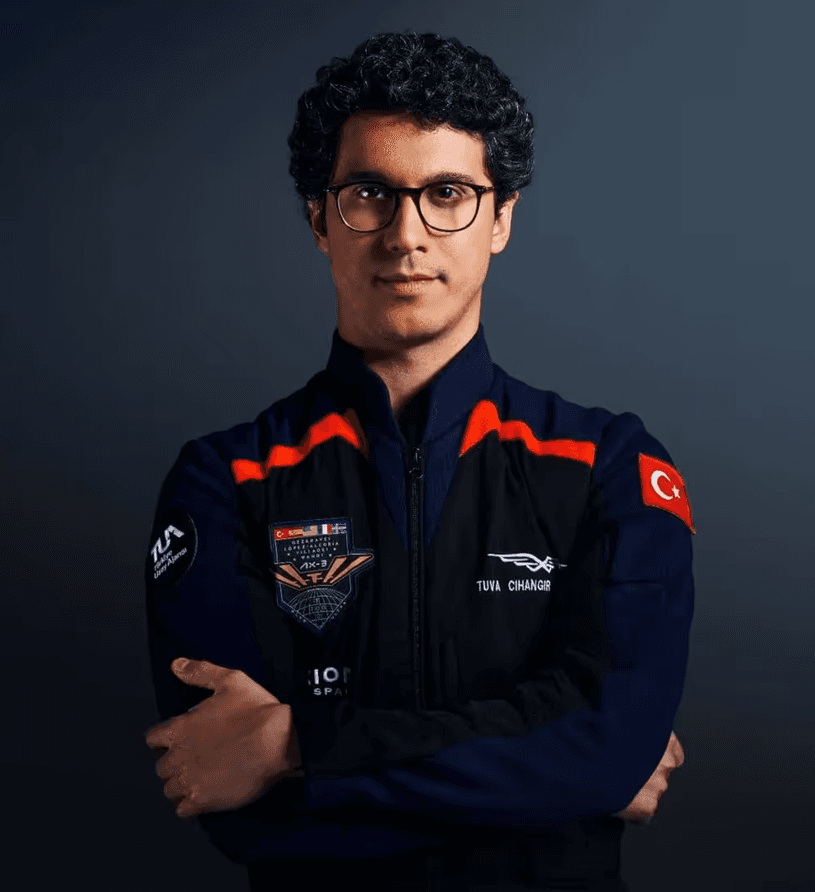
Tuva Cihangir Atasever (Axiom Space)
After completing primary and secondary education, Tuva C. Atasever pursued his undergraduate studies in the Department of Electrical and Electronics Engineering at Bilkent University, graduating in 2014. Following his undergraduate degree, he traveled to the United States and completed a master’s degree in photonics at the University of California, Irvine in 2016. Due to his interest in space sciences, he participated in and completed the Space Studies Program in 2018, organized by the International Space University (ISU) in collaboration with Delft University of Technology and the European Space Agency’s ESTEC.
After completing his master’s, Atasever turned to technology entrepreneurship and became a co-founder of two startups. As CEO of Blue Dot VR, which he founded in 2016, he designed interactive experiences using virtual reality (VR) technology to help users develop empathy regarding social and environmental issues. In 2017, he joined HyperSight Inc., an augmented reality (AR)-focused company, as a co-founder, where he worked on developing next-generation AR applications.
Following his experience in technology startups, Atasever transitioned into the defense and space industry, beginning his career at ROKETSAN A.Ş. as an avionics systems engineer. In this role, he was responsible for the avionics subsystems of the Micro Satellite Launch Vehicle (MUFA) and the Space Probe Rocket (USR) projects. During his approximately five-year tenure at ROKETSAN, he served as the payload integration manager for the Space Probe Rocket project, overseeing the selection of scientific and commercial payloads, defining their technical requirements, and integrating them onto the launch vehicle. Through these roles, he made significant technical contributions to space technologies and launch systems.
As part of Türkiye’s first astronaut program, Atasever applied to the astronaut selection process launched by the Türkiye Space Agency (TUA) in May 2022. After successfully passing multiple stages of evaluation, he was selected as one of Türkiye’s first two astronauts. On 29 April 2023, during the TEKNOFEST event in Istanbul, the President announced that Atasever would serve as the backup astronaut alongside the primary astronaut, Alper Gezeravcı. In the period following his selection, Atasever participated in a comprehensive astronaut training program organized by Axiom Space, receiving instruction in basic astronaut skills, life support systems, payload operations, and survival techniques. He also took part in international astronaut training sessions at facilities operated by SpaceX and NASA.
Atasever was assigned as a backup mission specialist for Axiom Mission 3 (Ax-3), a commercial spaceflight to the International Space Station (ISS). This mission formed part of the historic visit to the ISS by Türkiye’s first astronaut, Alper Gezeravcı, during 2023–24. As backup astronaut, Atasever underwent training and preparation for the Ax-3 mission. After the primary crew successfully completed their mission, he shifted focus to an alternative spaceflight opportunity planned for him. In accordance with an agreement between TUA and Axiom Space, Atasever was granted a suborbital spaceflight under the Turkish Space Science Mission following the Ax-3 mission.
On 8 June 2024, Tuva C. Atasever participated in the Galactic 07 suborbital research flight aboard Virgin Galactic’s VSS Unity spacecraft. The flight began with a carrier aircraft and the VSS Unity vehicle taking off at 17:30 Türkiye time from the Spaceport America facility in New Mexico, USA. During the approximately 1 hour and 10 minute flight, VSS Unity was carried to an altitude of 14 km by the carrier aircraft before igniting its rocket motor to reach an altitude of approximately 90 kilometers. This altitude, near the Kármán line, officially made Atasever the second Turkish citizen to reach space.
Virgin Galactic #Galactic07 Recap (YouTube-Virgin Galactic)
At the peak of the flight, after the rocket motor was shut down, Atasever experienced approximately 3 minutes of microgravity. During this brief period, he conducted seven distinct scientific experiments. The experiments carried out during the suborbital flight were multidisciplinary studies on the effects of the space environment on human biology and materials. Specifically, experiments integrated into the mission included measuring changes in fluid distribution within the astronaut’s body and intracranial pressure, real-time monitoring of exposure to space radiation, and testing the feasibility of administering insulin injections in microgravity. For this purpose, sensors and devices were integrated into Atasever’s specially designed flight suit: a near-infrared spectroscopy-based sensor to monitor cerebral circulation, a dosimeter to record ionizing radiation exposure, and mechanisms to test insulin delivery under pressure-free conditions. Additionally, four further studies conducted by Turkish scientists analyzed biological samples—blood, urine, and saliva—collected before and after the flight to investigate epigenetic changes, immune system responses, and metabolic effects. These experimental efforts aim to expand Türkiye’s knowledge base in space medicine and biology and to develop health precautions applicable to future long-duration space missions.
Astronaut 027 Tuva Atasever: Journey to Space (YouTube-Virgin Galactic)
Following the suborbital flight, Atasever stated, “Our flight was highly successful; we achieved all our scientific objectives”, emphasizing that the mission’s scientific goals were fully accomplished. With this historic flight, Tuva Cihangir Atasever has marked a significant milestone in Türkiye’s space research program, contributing academic and technical expertise to the nation’s space endeavors through both his engineering background and the experiments he conducted.
Conducted in collaboration between the Türkiye Space Agency (TUA) and Axiom Space, this experiment transported two specialized insulin pens in a sealed container to space. Their dosage delivery efficiency was tested under microgravity conditions. This study is recognized as the first step toward evaluating diabetes treatment methods for astronauts in future space missions.
Developed by ODTÜ İVMER, IvmeRad was integrated into the astronaut’s flight suit to measure in real time the dose of ionizing radiation he was exposed to during the mission. These data will be used to understand the impact of space radiation on human health.
Led by the National Nanotechnology Research Center (UNAM) at Bilkent University, this experiment analyzed extracellular vesicles in biological samples collected from the astronaut before and after the flight. The study aims to understand how microgravity affects cell communication and to develop adaptation therapies for long-duration space missions.
Conducted in collaboration between Harvard University and Health Sciences University, this experiment used a near-infrared spectroscopy device worn on the astronaut’s head to examine blood flow distribution and cerebrospinal fluid dynamics in the prefrontal cortex. The study provides critical data on how the space environment affects brain physiology.
Using biological samples collected from the astronaut, this experiment investigated the effects of microgravity on gene expression. The goal is to contribute to the development of strategies for preserving human health during long-duration space missions.
The astronaut’s metabolic profile was analyzed through biological samples collected before and after the flight. This experiment provides key insights into how microgravity affects human metabolism.
This experiment examined the effects of microgravity on the astronaut’s immune system cells. The study provides critical data on how immune function changes in space and helps identify potential health risks in advance.
Tuva Cihangir Atasever Uzayda Ne Yapacak? (YouTube-TÜBİTAK Bilim Genç
Axiom Space. "Axiom Space Partners with Virgin Galactic to Send Second Turkish Astronaut to Space." Press release, May 13, 2024. https://www.axiomspace.com/release/g07.
Axiom Space. "Tuva Atasever." Axiom Space Astronauts. Accessed May 8, 2025. https://www.axiomspace.com/astronaut/tuva-atasever.
BilimUp. "Tuva Cihangir Atasever’in Uzayda Gerçekleştireceği 7 Deney." May 7, 2024. https://www.bilimup.com/tuva-cihangir-ataseverin-uzayda-gerceklestirecegi-7-deney.
Karadeniz Teknik University. "Türkiye'nin Uzay Misyonu'na Üniversitemizden Anlamlı Katkı." June 7, 2024. https://www.ktu.edu.tr/tr/haber/turkiyenin-uzay-misyonuna-universitemizden-anlamli-katki.
NTV. "Türkiye'nin 2'nci Uzay Misyonu Tamamlandı: Tuva Cihangir Atasever'in İçinde Bulunduğu Araç Dünya'ya İniş Yaptı." June 8, 2024. https://www.ntv.com.tr/galeri/turkiye/turkiyenin-2nci-uzay-misyonu-tamamlandi-tuva-cihangir-ataseverin-icinde-bulundugu-arac-dunyaya-inis-yapti%2COti366UIcUK1WmWM4so_eQ.
TÜBİTAK. "Türkiye’nin İkinci Uzay Yolculuğu Başarıyla Tamamlandı." June 9, 2024. https://tubitak.gov.tr/tr/haber/turkiyenin-ikinci-uzay-yolculugu-basariyla-tamamlandi.
Türkiye Uzay Agency. "İkinci Astronotumuz Yörünge Altı Araştırma Uçuşunu Başarıyla Gerçekleştirdi." TUA Haberler, June 10, 2024. https://www.tua.gov.tr/tr/haberler/ikinci-astronotumuz-yorunge-alti-arastirma-ucusunu-basariyla-gerceklestirdi.
YouTube. "Tuva Cihangir Atasever'in Uçuş Öncesi Röportajı – Türkiye’nin İnsanlı Uzay Görevi." Video. Accessed May 8, 2025. https://www.youtube.com/watch?v=8r6-E9n_9b4.
YouTube. "Tuva Cihangir Atasever’in Yörünge Altı Araştırma Uçuşu – Anlık Yayın." Video. Accessed May 8, 2025. https://www.youtube.com/watch?v=w6aYy-BdK2k.
YouTube. "Tuva Cihangir Atasever’in Yörünge Altı Uçuşunun İlk Anları." Video. Accessed May 8, 2025. https://www.youtube.com/watch?v=D5ZiSGEElIM.

Tuva Cihangir Atasever
Name Surname | Tuva Cihangir Atasever | ||||||||
|---|---|---|---|---|---|---|---|---|---|
Birth | 12 August 1992 | ||||||||
Place of Birth | Ankara, Türkiye | ||||||||
Nationality | Republic of Türkiye | ||||||||
Profession(s) | Electrical and Electronics Engineer Astronaut | ||||||||
Field of Expertise | Avionics systems, space technologies, photonics, microgravity research | ||||||||
Companies Worked for | Blue Dot VR (Co-founder, CEO), HyperSight Inc. (Co-founder), ROKETSAN A.Ş. (Avionics Systems Engineer) | ||||||||
Affiliated Space Agency | Türkiye Space Agency (TUA) | ||||||||
Organizations that Provided Astronaut Training | technical training at NASA and SpaceX facilities Axiom Space (USA) | ||||||||
Astronaut Number | Türkiye's second astronaut to reach space | ||||||||
Astronaut Selection Year | 2022 (selected as backup astronaut) | ||||||||
Mission Type | Suborbital scientific research flight | ||||||||
Mission Name | Galactic 07 | ||||||||
Spacecraft | VSS Unity | ||||||||
Mission Operator | Virgin Galactic | ||||||||
Launch Date | 8 June 2024 | ||||||||
Launch Site | Spaceport America, New Mexico, USA | ||||||||
Achieved Altitude | Approximately 90 kilometers | ||||||||
Flight Duration | ~70 minutes | ||||||||
Microgravity Duration | ~3 minutes | ||||||||
Number of Experiments Conducted | 7 scientific experiments | ||||||||
Role in the Mission | Astronaut / Experiment Lead | ||||||||
Purpose of the Mission | To test the feasibility of biomedical and physical experiments in a microgravity environment | ||||||||
Post-Flight Title | Türkiye's second citizen to go to space | ||||||||
No Discussion Added Yet
Start discussion for "Tuva Cihangir Atasever" article
Education and Higher Learning
Entrepreneurship and Engineering Career
Astronaut Selection and Space Mission
The Seven Scientific Experiments Conducted in Space
UZİKAT (Insulin Pen Test in Space)
IvmeRad – Wearable Radiation Dosimeter
YUVA (Vesicle Analysis in Suborbital Flight)
BEACON (Brain Imaging Experiment)
MESSAGE (Molecular Genetic Analysis Experiment)
METABOLOM (Metabolic Profile Analysis)
MIYELOID (Immune System Cell Analysis)