

 Recently Added:
This article was automatically translated from the original Turkish version.
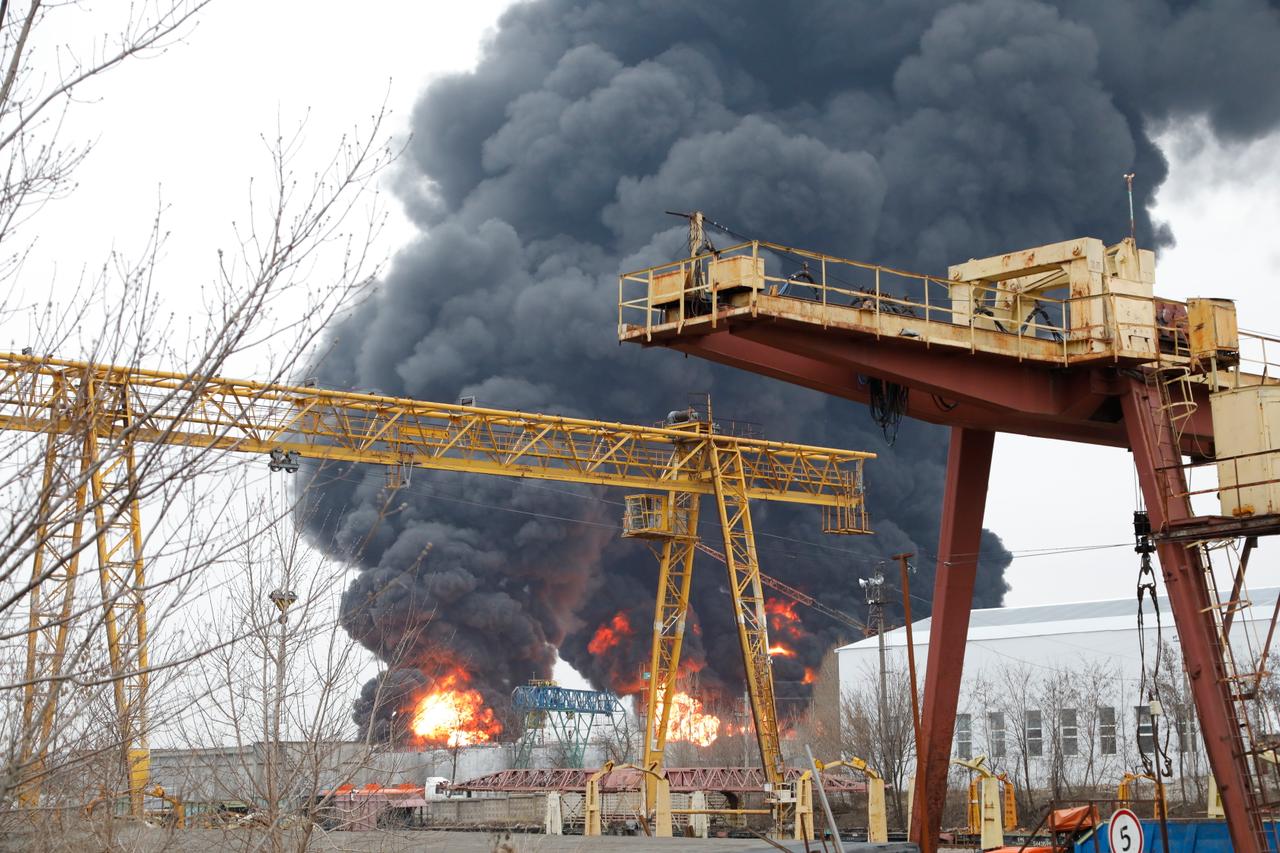
Ukraine's Attacks on Russia's Energy Infrastructure are a series of drone and missile strikes conducted by Ukraine's Armed Forces and affiliated units against numerous oil refineries, chemical plants, and energy infrastructure facilities on Russian Federation territory throughout September 2026. The attacks targeted refineries in various regions of Russia, including Ryazan, Saratov, Syzran, Nijnekamsk (Tatarstan) and Slavyansk-on-Kuban (Krasnodar Krai), chemical plants in Tolyatti and Berezniki, and gas processing facilities in the Yamalo-Nenets Autonomous Okrug. These strikes coincided with peace negotiations led by U.S. special envoys Steve Witkoff and Jared Kushner, who visited Moscow and Kyiv, during which discussions were held on halting mutual attacks on energy infrastructure between Russia and Ukraine.
Since the start of the war, Ukraine has conducted long-range drone strikes aimed at weakening Russia’s oil and gas industries as a funding source for its military operations. From 2022 through September 2026, Ukraine has struck over 300 oil facilities in Russia.【1】 Since the beginning of 2026, Ukraine's Armed Forces have targeted more than 70 Russian oil refineries, resulting in dozens of facilities being taken offline.【2】 As a result of these attacks, Russia's oil refining capacity has dropped to its lowest level since 2002.【3】
Due to the fuel crisis, Russia has banned diesel fuel exports until 31 January 2027. Russia is one of the world’s largest diesel exporters, accounting for 11% of the global market.【4】 In August 2026, Moscow’s daily diesel exports fell to approximately 150,000 barrels, below 81% of its five-year average due to the export ban.【5】
Ukraine previously proposed, through American intermediaries, a ceasefire over its airspace and a mutual halt to attacks on energy infrastructure. Russian President Vladimir Putin stated on 29 June 2026 that he rejected this initiative. Putin explained that the reason for rejecting the proposal was Russia’s need to carry out retaliatory strikes deep into Ukrainian territory that are “stronger, more precise and, frankly, more destructive.” However, he acknowledged that attacks on Russian infrastructure were “creating problems” and causing fuel shortages.【6】
5 September 2026 Putin ordered a three-day pause in attacks on Ukrainian targets to allow U.S. special envoys Steve Witkoff and Jared Kushner to visit Moscow and Kyiv.【7】 During this period, Russia did not halt its attacks on regions outside Kyiv; on 5 September, at least three people were killed and more than 20 injured in nationwide strikes.【8】
4 September 2026 Ukrainian drones targeted the tourist city of Sochi in Krasnodar Krai and the nearby settlement of Sirius. The attack struck the Adler oil storage facility owned by Rosneft, triggering a fire. Additional strikes were carried out near the Krilya Baltiki beach in Sirius, where S-300 or S-400 air defense systems were reportedly stationed. The targeted area is reported to be only dozens of kilometers from Putin’s Bocarov Ruchey residence.
During the same week, Ukrainian drones also targeted the Avangard defense factory in Sterlitamak, Republic of Bashkortostan, which produces explosives and ammunition components. On 4 September, Moscow Mayor Sergey Sobyanin reported that 35 drones approaching the city were shot down by air defenses. In response, the Russian Federal Air Transport Agency temporarily suspended flights at Vnukovo, Domodedovo, and Zhukovsky airports for the third consecutive night.【9】
6 September 2026 morning saw Ukrainian drones strike the oil refinery in Ryazan and target various sites in Rostov Oblast.【10】 In Bataysk, Rostov Oblast, air defense systems were activated, while in the regional center Rostov-on-Don, drones reportedly circled the city for four hours. Rostov Oblast Governor Yuri Slyusar confirmed that three residential buildings were damaged and one child was hospitalized; he also stated that around 30 Ukrainian drones were destroyed over the region.【11】
The General Staff of Ukraine’s Armed Forces confirmed attacks on an airfield, a radar station, and two Pantsir-S1 air defense systems in Rostov Oblast.
The General Staff also confirmed the attack on the Ryazan refinery and stated in its official release: “Ukrainian Defense Forces units struck a series of (Russian) targets. In particular, an oil refinery in Ryazan... was hit”.【12】
The Russian Ministry of Defense reported that on the night of 6 September, its air defense forces destroyed 258 Ukrainian fixed-wing drones. These drones were reportedly shot down over the regions of Belgorod, Bryansk, Volgograd, Voronezh, Kaluga, Kursk, Lipetsk, Oryol, Rostov, Ryazan, Saratov, Tambov and Tula, as well as over Krasnodar Krai, the Republic of Crimea, and the Azov and Black Sea areas. The Russian Federal Air Transport Agency (Rosaviatsiya) temporarily closed the airports of Gelendzhik, Tambov, Sochi, Penza, Saratov and Kaluga overnight.【13】
Ryazan Oblast Governor Pavel Malkov reported that over 50 drones were shot down over the region, with debris from fallen drones damaging a residential building in Ryazan city and another in Sapozhkovsky District, igniting a fire at a facility and injuring one person. It was reported that this attack marked the third strike on the Ryazan refinery in 2026. The Russian Ministry of Defense did not comment on these details.【14】
The Ryazan refinery, with an annual crude oil processing capacity of approximately 13.1 million tons, accounts for about 5% of Russia’s total refining capacity and produced 2.2 million tons of gasoline, 3.4 million tons of diesel, and 4.3 million tons of fuel oil in 2025. The facility had previously been hit by drone strikes on 15 May and 29 July 2026, forcing it to halt production. Rostov-on-Don Mayor Aleksandr Skryabin had previously warned that air defense systems were active in the city; it was also reported that the Rostov-on-Don airport had been struck and fires had broken out near the facility.【15】
7 September 2026 Ukrainian President Volodymyr Zelensky announced on his Telegram account that Ukraine’s armed forces had launched attacks on oil refineries in Russia’s Perm region, Tatarstan and Ryazan.【16】 The strikes targeted oil processing facilities in Perm, including a refinery owned by the Russian company Lukoil. Zelensky also stated that a facility in Kursk Oblast from which Russian drones were launched and a target in the Black Sea had been hit, but provided no further details on these targets.【17】
In his social media statement, Zelensky asserted that Ukraine’s armed forces were “continuing to respond fairly” to Russian attacks.【18】
The attacks followed visits by U.S. special envoys Jared Kushner and Steve Witkoff to Moscow and Kyiv over the weekend to continue peace talks. Some U.S. officials linked Ukraine’s refinery strikes to rising gasoline prices in the United States; Energy Secretary Chris Wright stated this was “the single biggest factor.” Treasury Secretary Scott Bessent said Ukraine aimed to destroy Russian energy assets and refined products, creating global price pressure.【19】
10 September 2026 Ukraine launched its deepest strike since the war’s beginning, targeting two Arctic gas condensate facilities in Western Siberia, approximately 3,000 kilometers from the border. Ukraine’s Armed Forces announced it used FP-1 drones produced by the Ukrainian company Fire Point to strike critical gas processing facilities in the Novy Urengoy and Purovsky regions.【20】
Yamalo-Nenets Autonomous Okrug Governor Dmitriy Artyuhov stated on his Telegram account that the attacks were intercepted and that debris from the downed drones caused a fire. No deaths or injuries were reported.
The FP-1 drone has a wingspan of approximately 6 meters, can fly at speeds of 140–180 kilometers per hour, and has a production cost of under $60,000. Before this attack, the FP-1’s longest recorded flight was approximately 2,500 kilometers during a July strike on a refinery in Omsk, Western Siberia.【21】
The Yamalo-Nenets region holds approximately 80% of Russia’s natural gas production, two-thirds of its gas reserves, and 13% of the country’s oil reserves. The region’s gas reserves total 26.5 trillion cubic meters, while global annual gas demand is approximately 4.2 trillion cubic meters. Novy Urengoy, vital to Russia’s gas and oil industry, is known as the country’s “gas capital.” Kremlin representative for the Urals region Artem Joga stated that the 10 September attack was Russia’s first ever strike on its Arctic territory. Zelensky, in his social media statement, described the long-range strike as “fully justified.”【22】
According to two industry sources cited by Reuters, the Rosneft-owned Ryazan oil refinery ceased operations following the 6 September attack. According to the sources, the refinery’s primary units, CDU-6 and another primary unit, CDU-4, were shut down after the strike. The CDU-6 unit, which caught fire during the attack, has an annual processing capacity of 8 million metric tons (approximately 160,000 barrels per day), nearly half of the refinery’s total capacity. CDU-4 can process 4 million tons annually. The refinery’s third primary unit, CDU-3, has been under maintenance since mid-May. According to sources, repairs to the damaged units could take several weeks. Rosneft did not respond to requests for comment on the attack.【23】
Located approximately 200 kilometers southeast of Moscow, the Ryazan refinery had previously been hit by drone strikes on 15 May and 29 July 2026; repairs after those attacks lasted until mid-July and two to three weeks respectively. According to industry sources, in 2024 the refinery processed 13.1 million tons of crude oil, accounting for approximately 4.9% of Russia’s total refining capacity; it produced 2.2 million tons of gasoline, 3.4 million tons of diesel fuel, and 4.3 million tons of fuel oil that year.【24】
Early morning of 11 September 2026 Ukrainian drones targeted the city of Saratov, triggering fires at the city’s oil refinery and a logistics center owned by the e-commerce giant Ozon.【25】 The Ukrainian General Staff confirmed the attack on the Rosneft-owned refinery, stating that damage assessment was ongoing.
According to Kyiv Independent, the Saratov refinery has an annual crude oil processing capacity of approximately 4.8 million metric tons.【26】 According to Militarnyi, as of 2024 the facility processed approximately 5.8 million tons of crude oil annually, accounting for 2.2% of Russia’s total refining volume.【27】 The refinery is described as one of Russia’s largest industrial facilities, producing gasoline, diesel fuel, fuel oil, road and roofing bitumen, vacuum gas oil, and technical sulfur. The facility had also been struck on 8 September, just days before the 11 September attack. A previous strike in July had forced the shutdown of a primary crude oil processing unit with a daily capacity of 20,000 tons.【28】
According to Radio Free Europe/Radio Liberty (RFE/RL), satellite images showed the Ozon logistics center completely destroyed by the attack. The logistics center is reported to cover an area of 100,000 square meters.【29】
The Saratov Ozon center, operational since 2024, covers more than 100,000 square meters and has the capacity to store over 30 million products and process up to 900,000 orders per day. Ozon officially confirmed that its logistics center and delivery hub were hit in the attack. Due to the fire, the facility temporarily stopped accepting new orders and deliveries in Saratov and surrounding areas.【30】
The long-range drone manufacturer Fire Point confirmed that the FP-1 drones used in the attack belonged to it. In a social media statement, it said: “Last night, Ukraine’s Defense Forces used FP-1 drones to destroy another Ozon depot complex in Saratov. Eighty-five thousand square meters were erased. Over 30 million products were permanently taken off inventory.” According to RFE/RL, this was the seventh Ozon logistics center damaged or destroyed since Ukraine struck the center in Chapayevsk, Samara Oblast, on 22 August. When attacks on logistics centers owned by Ozon’s rival Wildberries are included, the total number reaches 33.【31】
On 11 September, Zelensky stated in his statement that a business and an oil industry facility in Saratov and Volgograd regions had been hit; he also confirmed strikes on targets in the Black Sea, Dagestan, Udmurtia, Tula, Nizhny Novgorod, Perm and Samara regions. Explosions were reported in Kaspiysk, a port city in Russia’s Dagestan Republic, but no immediate information on the outcome of the attack was available.【32】
12 September 2026 Zelensky announced that Ukrainian forces had struck two major chemical industry plants in Russia’s Samara and Perm regions. Drone strikes on the Samara region caused a fire at the KuibyshevAzot chemical plant in Tolyatti. The plant is reported to supply approximately 50% of Russia’s caprolactam production and 75% of industrial tire cord production.【33】
The General Staff of Ukraine’s Armed Forces confirmed a direct strike on the nearby Tolyattikauchuk facility. The plant produces synthetic rubber, monomers, and high-octane gasoline additives required for tactical and ballistic missile solid propellants.【34】
The 12 September attack disabled the plant’s BK-2, BK-3 and BK-4 workshops. These workshops produce the full butyl rubber manufacturing cycle and isobutane-isobutylene fractions. Butyl rubber is a key material for military wheeled vehicle tires, and synthetic rubber is also used as a polymeric binder in composite solid rocket propellants. The isobutane-isobutylene fraction is an essential feedstock for synthesizing methyl tert-butyl ether, which is used as a high-octane fuel additive. The shutdown of the BK workshops has completely halted the ether synthesis line. As a result, the disruption of the Tolyattikauchuk plant is assessed to have simultaneously deprived Russia’s defense industry of both rocket propellant and high-octane gasoline components.【35】
In the Perm region, long-range drones struck the Azot facility in Berezniki on Friday, 11 September. The plant produces critical industrial precursors for military explosives: nitric acid and ammonium nitrate. During the same period, Ukraine’s Security Service (SBU) conducted an operation targeting five military and logistics facilities in Taganrog, Rostov Oblast; these included a first-person-view (FPV) drone production workshop, two drone storage depots, a fuel storage tank, a P-18 radar station, and a Pantsir-S2 air defense system.【36】
On the same night, Russia launched attacks on various regions of Ukraine. During the 11–12 September night attacks, at least 11 people were killed and 96 injured across Ukraine. The heaviest damage occurred in the Odessa region, with additional impacts in Dnipropetrovsk, Donetsk, Zaporizhzhia, Kyiv, Sumy, Kharkiv and Kherson regions. According to Ukraine’s Air Force, Russia used 129 drones of various types, along with Iskander-M/KN-23 ballistic missiles, eight Kalibr cruise missiles, and six guided Kh-59/69 missiles; approximately half of the drones were jet-powered. Ukraine’s air defenses destroyed or neutralized a total of 110 aerial targets, including six Kalibr missiles, two Kh-59/69 missiles, one S-8000 Banderol cruise missile, and 101 drones.【37】
In Odessa, a multi-story residential building was damaged, with at least 35 people injured, including a five-month-old baby and a 17-year-old. In Dnipropetrovsk region, two people were killed and at least 22 injured. In Zaporizhzhia region, 45 towns and villages were targeted in the past 24 hours, resulting in two deaths and 11 injuries. In Donetsk region, four people were killed: two in Sloviansk, one in Kramatorsk, and one in Yasnohirka; five were injured. In Kyiv region, drone strikes on Brovary, Obukhiv, Bucha, Boryspil and Vyshhorod districts killed one person and injured three, including a child; fifteen facilities were damaged. In Sumy region, a 68-year-old man was killed and a 64-year-old person injured. More than 50 attacks were carried out against 25 settlements in the region. In Kharkiv region, a 32-year-old man was killed and a 19-year-old person injured. In Kherson region, 18 people were injured and 15 residential buildings and various civilian infrastructure facilities were damaged.
Ukraine’s Defense Forces confirmed on the same night the attack on Russia’s Tolyattikauchuk plant in Samara region, stating that the strike caused a fire and that damage assessment was ongoing. According to earlier reports by Ukrainska Pravda, Ukrainian forces also struck the Machine Manufacturing Plant in Snizhne, Donetsk region under Russian occupation, which produces gas turbine engine components (compressor and turbine disks and blades).【38】
On 12 September, Commander of Ukraine’s Unmanned Systems Forces Robert "Brovdi" Browdi announced ongoing attacks on Russia’s so-called “shadow fleet”, used to transport oil in violation of international sanctions. According to Browdi, since the operation began approximately ten weeks ago, Ukrainian forces have attacked a total of 285 vessels belonging to Russia’s “shadow fleet” operating in the Azov and Black Seas. The highest number of attacks occurred in July, with 215 vessels targeted; in August, 54; and between 1–11 September, an additional 16 vessels were struck. Browdi claimed these attacks have nearly brought “shadow fleet” traffic in the Azov Sea and Kerch Strait to a halt.【39】
On the night of 12–13 September, Ukrainian drones targeted the Nijnekamsk petrochemical and oil refining complex in the Republic of Tatarstan and triggered a fire at the oil refinery in the Krasnodar Krai town of Slavyansk-on-Kuban.【40】【41】
In Nijnekamsk, residents reported hearing loud explosions and air defense fire following low-flying drones, located approximately 1,200 kilometers from the Ukrainian border. Russia’s Emergency Situations Response and Elimination Unified System (RSChS) issued regional drone alerts throughout Tatarstan overnight. Regional official Radmir Belyayev confirmed a fire at one of the city’s enterprises; the facility is widely reported by monitoring groups to be the Tatneft-owned TANECO refining complex.【42】
Nijnekamsk hosts one of Russia’s most critical fuel and chemical production centers. The complex includes the Tatneft-owned TANECO refinery, one of Russia’s five largest, with an annual crude oil processing capacity of over 16 million metric tons, as well as the adjacent TAIF-NK refinery, which processes more than 7 million tons of crude oil and gas condensate annually. The industrial center also includes Nijnekamskneftekhim, a subsidiary of Sibur and one of Europe’s largest producers of synthetic rubber and polymers. This facility holds a dominant share of the domestic market for synthetic rubber and industrial plastics used in both civilian and defense manufacturing sectors.【43】
Ukraine’s Main Intelligence Directorate (HUR), under the Active Operations and Unmanned Systems Directorates, confirmed that its operators, in coordination with Ukraine’s Armed Forces, struck the “Slavyansk-ECO” oil refinery in Slavyansk-on-Kuban, Krasnodar Krai. The HUR statement said: “As a result of the operation, a key oil refining facility fueling the war against Ukraine and the company’s tank farm were struck.”【44】
The General Staff of Ukraine’s Armed Forces also confirmed that Ukrainian Defense Forces units struck the “Slavyanski” oil refinery in Slavyansk-on-Kuban, Krasnodar Krai, and the “TANECO” oil refinery in Nijnekamsk, Tatarstan, as well as command centers and storage facilities for Russian attack drones. The Slavyansk refinery, operated by Slavyansk-ECO with an annual crude oil processing capacity of approximately 4 million tons, had previously halted operations after Ukrainian drone strikes in late April and June caused fires in its atmospheric distillation units.【45】
On the night of 14–15 September, Ukraine’s Defense Forces struck the Syzran Oil Refinery in Samara Oblast and the Atlant Aero facility in Taganrog, Rostov Oblast.【46】 According to the Special Operations Forces (SOF), this attack was a special operation conducted jointly by SOF’s Deep Strike units, the Unmanned Systems Forces (USF), and the Security Service of Ukraine (SSU).【47】
After direct hits on the Syzran refinery, fires were recorded, and the facility’s AVT-6 primary crude oil distillation unit and tank farm were struck. The Syzran Oil Refinery Joint Stock Company, owned by Rosneft, has an annual processing capacity of approximately 8.9 million tons of crude oil, producing gasoline, diesel, aviation fuel, and other petroleum products, and contributing to the Russian Armed Forces’ needs.【48】 The refinery had previously been hit by a drone strike on 4 August.
Samara Oblast Governor Vyacheslav Fedorishchev reported that over 40 Ukrainian drones were shot down over the region, damaging an industrial facility and numerous residential buildings, but no casualties were reported.【49】
Explosions and fires were recorded at the Atlant Aero facility in Taganrog. Atlant Aero specializes in manufacturing components for the “Molniya” attack-reconnaissance drones and “Orion” drones. According to the General Staff, the facility plays a direct role in meeting the Russian Armed Forces’ unmanned systems needs.【50】 According to Kyiv Post, earlier reports had indicated the strike targeted the Beriev Taganrog Aviation Scientific-Technical Complex; however, the General Staff later clarified that the explosions and fires occurred at the “Atlant Aero” facility.【51】
In Rostov Oblast, a large-scale missile strike resulted in “multiple ground impacts” and various fires, according to Governor Yuri Slyusar. Slyusar reported damage to two apartment buildings, three standalone homes, an educational institution, commercial buildings, agricultural warehouses, a supermarket, and an Ozon logistics center; no casualties were reported based on preliminary information.
Zelensky, in his social media statement, stated that Russia continues to attack Ukraine’s energy sector, logistics networks, and critical infrastructure, and that Ukraine’s responses are “concrete”. Zelensky confirmed the attacks on Taganrog and Syzran and added that Ukrainian forces had struck an unmanned aerial vehicle preparation and launch facility in Oryol Oblast and targets in the Black Sea, without providing further details.
U.S. President Donald Trump, speaking to journalists on the sidelines of the Irish Open golf tournament on Sunday, 13 September 2026, said Zelensky must stop targeting diesel fuel in Russia. Trump stated: “Mr. Zelensky has only one thing to do. He must stop disabling diesel fuel in Russia.” He added: “We spoke with Mr. Zelensky about this. There are many other targets. Don’t hit diesel fuel, because it’s harming the world.”【53】
These remarks followed a record surge in U.S. diesel prices, which exceeded $6 per gallon on Friday, 11 September. According to a report by the International Energy Agency (IEA) published on Friday, net diesel and fuel oil exports from Gulf countries in August had fallen to only one-quarter of pre-war levels since the conflict with Iran began in February. The IEA report noted that disruptions to Russia’s refining system and intensified Ukrainian attacks had nearly halted product exports, contributing to these losses.【54】
U.S. President Trump claimed that Ukraine and Russia had agreed to halt attacks on each other’s energy targets, but both Zelensky and the Kremlin characterized this as a proposal, not a binding agreement. Zelensky stated: “A strong U.S. proposal for mutual cessation of attacks on critical infrastructure currently exists. If this can serve as the first step toward ending Russia’s attacks on our critical infrastructure and our retaliatory strikes, Ukraine is ready to support de-escalation.” Zelensky added the condition that any agreement must be “reliable and long-term,” and that Russia must not resume targeting gasoline and diesel prices once the pressure eases.【55】
Zelensky previously stated in a social media post that the proposal requires the support of Ukraine’s allies: “If our partners guarantee they will not attack our electrical grid, other energy facilities, critical infrastructure, and food supply routes, then of course we are ready to halt our attacks in response.”
Trump, however, claimed in a social media post that Ukraine had accepted not to attack Russian energy targets and that Russia had likewise accepted. Kremlin Spokesperson Dmitriy Peskov welcomed the proposal as a “very good idea” but did not confirm any agreement, instead stating that Russia was in contact with the U.S. side and would continue dialogue. On Tuesday morning, 15 September, Russia struck two gasoline stations in Kyiv; on the same day, Zelensky announced that Ukrainian forces had struck a refinery in Syzran, Samara Oblast.【56】
15 September 2026 Russia announced it supported U.S. President Trump’s idea of an energy ceasefire between Moscow and Kyiv. In a press briefing, Peskov stated that Moscow is in contact with Washington on the initiative and views it generally as a very good idea. Peskov emphasized that an energy ceasefire and measures to ensure safe refinery operations would not solve the core global problem; safeguarding refineries and increasing oil product production would not resolve global issues, as the real problem lies in the export of petroleum products to global markets. Peskov noted that Russia has taken comprehensive measures to protect its refineries and other energy facilities, and that its domestic market is “nearly saturated.”【57】
Peskov also called for the lifting of sanctions on energy supplies, arguing this would increase the availability of petroleum products on global markets and lower prices. Peskov stated that broader international access to petroleum products would require secure commercial shipping conditions for oil tankers, and that Kyiv is unwilling to provide such guarantees, affecting Russian and other foreign vessels and resulting in loss of life among people of various nationalities. In response to a question about the possible resumption of Russian gas exports to Europe, Peskov said such exports could be considered if economically advantageous and sufficient volumes were available.【58】
Al Jazeera. "How Ukraine’s Deepest Attack in Russia, on Arctic Gas, Signals New Reach." Accessed September 16, 2026.https://www.aljazeera.com/news/2026/9/10/how-ukraines-deepest-attack-in-russia-on-arctic-gas-signals-new-reach
Anadolu Ajansı. "Russia Backs Trump's Idea of Energy Ceasefire with Ukraine." Accessed September 16, 2026.https://www.aa.com.tr/en/asia-pacific/russia-backs-trumps-idea-of-energy-ceasefire-with-ukraine/4057956
Anadolu Ajansı. “Zelenskiy: ‘Rusya'nın Çeşitli Bölgelerindeki Petrol Rafinerilerini ve İHA Tesislerini Vurduk.’” Anadolu Ajansı Enerji Terminali. Accessed September 16, 2026.https://www.aa.com.tr/tr/enerjiterminali/petrol/zelenskiy-rusyanin-cesitli-bolgelerindeki-petrol-rafinerilerini-ve-iha-tesislerini-vurduk/59475
Associated Press. “Trump Calls on Ukraine to Halt Strikes on Russian Diesel Fuel, Citing a Global Shortage.” AP News. Accessed September 16, 2026.https://apnews.com/article/russia-ukraine-war-drones-odesa-refinery-border-crossing-17bb6a0401abc3eaa7d4586150a41d7d
CNN. "Trump Says Ukraine and Russia Agreed to Stop Targeting Energy Sites, but Kyiv Calls It a ‘Proposal for a Mutual Halt’." Accessed September 16, 2026.https://edition.cnn.com/2026/09/13/europe/russia-poland-ukraine-border-area-attack-intl
Euronews. "At Least 11 Killed in Russian Attacks on Ukraine as Kyiv Strikes Russia's ‘Shadow Fleet’." Accessed September 16, 2026.https://www.euronews.com/my-europe/2026/09/12/at-least-11-killed-in-russian-attacks-on-ukraine-as-kyiv-strikes-russias-shadow-fleet
Kyiv Independent. “Ukrainian Drones Hit Oil Refinery, Ozon Warehouse as Russia's Saratov Comes Under Attack.” Accessed September 16, 2026.https://kyivindependent.com/ukrainian-drones-reportedly-strike-saratov-oil-refinery-ozon-warehouse/
Kyiv Independent. “Ukrainian Drones Strike Russia's Ryazan Oil Refinery, Rostov Air Defenses.” Accessed September 16, 2026.https://kyivindependent.com/ukrainian-drones-reportedly-target-ryazan-oil-refinery-cities-across-russia/
Kyiv Independent. “Ukrainian Forces Strike Russia's Syzran Oil Refinery, Drone Production Facility in Taganrog, Military Confirms.” Accessed September 16, 2026.https://kyivindependent.com/ukrainian-forces-reportedly-strike-russias-syzran-oil-refinery/
Kyiv Post. “Drones Target Nizhnekamsk Hub and Slavyansk Refinery in Russia.” Accessed September 16, 2026.https://www.kyivpost.com/post/84383
Kyiv Post. “Ryazan Oil Refinery and Rostov Targeted in Drone Wave.” Accessed September 16, 2026.https://www.kyivpost.com/post/83861
Kyiv Post. “Ukraine Strikes Russian Refinery, Drone Plant and Ozon Facility in Massive Overnight Attack.” Accessed September 16, 2026.https://www.kyivpost.com/post/84536
Militarnyi. “Ukrainian Defense Forces Strike Tolyattikauchuk Facilities Producing Rocket Fuel and Gasoline Components.” Accessed September 16, 2026.https://militarnyi.com/en/news/ukrainian-defense-forces-strike-tolyattikauchuk-facilities-producing-rocket-fuel-and-gasoline-components/
Militarnyi. “Ukrainian Drones Attack Oil Refinery and Ozon Depot in Saratov.” Militarnyi. Accessed September 16, 2026.https://militarnyi.com/en/news/ukrainian-drones-attack-oil-refinery-and-ozon-depot-in-saratov/
New York Post. “Ukraine Strikes Russian Oil Refineries After Kushner, Witkoff Visit Moscow and Kyiv.” Accessed September 16, 2026.https://nypost.com/2026/09/07/world-news/ukraine-strikes-russian-oil-refineries-after-kushner-witkoff-visit-moscow-and-kyiv/
News.ru. “Атака ВСУ на Рязань 6 сентября: где был удар, что с НПЗ и Ozon, жертвы.” Accessed September 16, 2026.
Reuters. “Russia's Ryazan Oil Refinery Has Stopped Operations After Sept. 6 Drone Attack, Sources Say.” Accessed September 16, 2026.https://www.reuters.com/business/energy/russias-ryazan-oil-refinery-has-stopped-operations-after-sept-6-drone-attack-2026-09-10/
The Moscow Times. “В Кремле отказались обещать прекращение ударов по энергетике Украины в случае остановки атак на российские НПЗ.” Accessed September 16, 2026.
Ukrainska Pravda. "Ukraine Confirms Attack on Russian Oil Refinery and Drone Production Facility." Accessed September 16, 2026.https://www.pravda.com.ua/eng/news/2026/09/15/8053511/
Ukrainska Pravda. "Ukraine's General Staff Confirms Strikes on Two Russian Oil Refineries." Accessed September 16, 2026.https://www.pravda.com.ua/eng/news/2026/09/13/8053195/
[1]
CNN. “Trump Says Ukraine and Russia Agreed to Stop Targeting Energy Sites, but Kyiv Calls It a ‘Proposal for a Mutual Halt.’” CNN. Erişim 16 Eylül 2026. https://edition.cnn.com/2026/09/13/europe/russia-poland-ukraine-border-area-attack-intl
[2]
The Moscow Times. “В Кремле отказались обещать прекращение ударов по энергетике Украины в случае остановки атак на российские НПЗ.” The Moscow Times. Erişim 16 Eylül 2026. https://ru.themoscowtimes.com/2026/09/14/v-kremle-otkazalis-obeschat-prekraschenie-udarov-po-energetike-ukraini-v-sluchae-ostanovki-atak-na-rossiiskie-npz-a206019
[3]
The Moscow Times. “В Кремле отказались обещать прекращение ударов по энергетике Украины в случае остановки атак на российские НПЗ.”
[4]
The Moscow Times. “В Кремле отказались обещать прекращение ударов по энергетике Украины в случае остановки атак на российские НПЗ.”
[5]
CNN. “Trump Says Ukraine and Russia Agreed to Stop Targeting Energy Sites, but Kyiv Calls It a ‘Proposal for a Mutual Halt.’”
[6]
The Moscow Times. “В Кремле отказались обещать прекращение ударов по энергетике Украины в случае остановки атак на российские НПЗ.”
[7]
The Kyiv Independent. "Ukrainian Drones Strike Russia's Ryazan Oil Refinery, Rostov Air Defenses." The Kyiv Independent. Accessed September 16, 2026.https://kyivindependent.com/ukrainian-drones-reportedly-target-ryazan-oil-refinery-cities-across-russia/
[8]
The Kyiv Independent. “Ukrainian Drones Strike Russia's Ryazan Oil Refinery, Rostov Air Defenses.”
[9]
Kyiv Post. “Ryazan Oil Refinery and Rostov Targeted in Drone Wave.” Kyiv Post. Erişim 16 Eylül 2026. https://www.kyivpost.com/post/83861
[10]
Kyiv Post. “Ryazan Oil Refinery and Rostov Targeted in Drone Wave.”
[11]
The Kyiv Independent. “Ukrainian Drones Strike Russia's Ryazan Oil Refinery, Rostov Air Defenses.”
[12]
The Kyiv Independent. “Ukrainian Drones Strike Russia's Ryazan Oil Refinery, Rostov Air Defenses.”
[13]
News.ru. “Атака ВСУ на Рязань 6 сентября: где был удар, что с НПЗ и Ozon, жертвы.” News.ru. Erişim 16 Eylül 2026. https://news.ru/russia/ataka-vsu-na-ryazan-6-sentyabrya-gde-byl-udar-chto-s-npz-i-ozon-zhertvy
[14]
News.ru. “Атака ВСУ на Рязань 6 сентября: где был удар, что с НПЗ и Ozon, жертвы.”
[15]
Kyiv Post. “Ryazan Oil Refinery and Rostov Targeted in Drone Wave.”
[16]
Anadolu Ajansı. “Zelenskiy: ‘Rusya'nın Çeşitli Bölgelerindeki Petrol Rafinerilerini ve İHA Tesislerini Vurduk.’” Accessed September 16, 2026.
[17]
New York Post. “Ukraine Strikes Russian Oil Refineries after Kushner, Witkoff Visit Moscow and Kyiv.” New York Post. Erişim 16 Eylül 2026. https://nypost.com/2026/09/07/world-news/ukraine-strikes-russian-oil-refineries-after-kushner-witkoff-visit-moscow-and-kyiv/
[18]
Anadolu Ajansı. “Zelenskiy: ‘We Struck Oil Refineries and Drone Facilities in Various Regions of Russia.’”
[19]
New York Post. “Ukraine Strikes Russian Oil Refineries after Kushner, Witkoff Visit Moscow and Kyiv.”
[20]
Al Jazeera. “How Ukraine’s Deepest Attack in Russia, on Arctic Gas, Signals New Reach.” Al Jazeera. Erişim 16 Eylül 2026. https://www.aljazeera.com/news/2026/9/10/how-ukraines-deepest-attack-in-russia-on-arctic-gas-signals-new-reach
[21]
Al Jazeera. “How Ukraine’s Deepest Attack in Russia, on Arctic Gas, Signals New Reach.”
[22]
Al Jazeera. “How Ukraine’s Deepest Attack in Russia, on Arctic Gas, Signals New Reach.”
[23]
Reuters. “Russia's Ryazan Oil Refinery Has Stopped Operations after Sept. 6 Drone Attack, Sources Say.” Reuters. Accessed September 16, 2026.
[24]
Reuters. “Russia's Ryazan Oil Refinery Has Stopped Operations after Sept. 6 Drone Attack, Sources Say.”
[25]
The Kyiv Independent. “Ukrainian Drones Hit Oil Refinery, Ozon Warehouse as Russia's Saratov Comes under Attack.” The Kyiv Independent. Accessed September 16, 2026.
[26]
The Kyiv Independent. “Ukrainian Drones Hit Oil Refinery, Ozon Warehouse as Russia's Saratov Comes under Attack.”
[27]
Militarnyi. “Ukrainian Drones Attack Oil Refinery and Ozon Depot in Saratov.” Militarnyi. Erişim 16 Eylül 2026. https://militarnyi.com/en/news/ukrainian-drones-attack-oil-refinery-and-ozon-depot-in-saratov/
[28]
Militarnyi. “Ukrainian Drones Attack Oil Refinery and Ozon Depot in Saratov.”
[29]
The Kyiv Independent. “Ukrainian Drones Hit Oil Refinery, Ozon Warehouse as Russia's Saratov Comes under Attack.”
[30]
Militarnyi. “Ukrainian Drones Attack Oil Refinery and Ozon Depot in Saratov.”
[31]
The Kyiv Independent. “Ukrainian Drones Hit Oil Refinery, Ozon Warehouse as Russia's Saratov Comes under Attack.”
[32]
The Kyiv Independent. “Ukrainian Drones Hit Oil Refinery, Ozon Warehouse as Russia's Saratov Comes under Attack.”
[33]
Kyiv Post. “Drones Target Nizhnekamsk Hub and Slavyansk Refinery in Russia.” Kyiv Post. Erişim 16 Eylül 2026. https://www.kyivpost.com/post/84383
[34]
Kyiv Post. “Drones Target Nizhnekamsk Hub and Slavyansk Refinery in Russia.”
[35]
Militarnyi. “Ukrainian Defense Forces Strike Tolyattikauchuk Facilities Producing Rocket Fuel and Gasoline Components.” Militarnyi. Erişim 16 Eylül 2026. https://militarnyi.com/en/news/ukrainian-defense-forces-strike-tolyattikauchuk-facilities-producing-rocket-fuel-and-gasoline-components/
[36]
Kyiv Post. “Drones Target Nizhnekamsk Hub and Slavyansk Refinery in Russia.”
[37]
Euronews. “At Least 11 Killed in Russian Attacks on Ukraine as Kyiv Strikes Russia's ‘Shadow Fleet.’” Euronews. Accessed September 16, 2026.
[38]
Euronews. “At Least 11 Killed in Russian Attacks on Ukraine as Kyiv Strikes Russia's ‘Shadow Fleet.’”
[39]
Euronews. “At Least 11 Killed in Russian Attacks on Ukraine as Kyiv Strikes Russia's ‘Shadow Fleet.’”
[40]
Kyiv Post. “Drones Target Nizhnekamsk Hub and Slavyansk Refinery in Russia.”
[41]
Ukrainska Pravda. "Ukraine's General Staff Confirms Strikes on Two Russian Oil Refineries." Accessed September 16, 2026.
[42]
Kyiv Post. “Drones Target Nizhnekamsk Hub and Slavyansk Refinery in Russia.”
[43]
Kyiv Post. “Drones Target Nizhnekamsk Hub and Slavyansk Refinery in Russia.”
[44]
Kyiv Post. “Drones Target Nizhnekamsk Hub and Slavyansk Refinery in Russia.”
[45]
Kyiv Post. “Drones Target Nizhnekamsk Hub and Slavyansk Refinery in Russia.”
[46]
The Kyiv Independent. “Ukrainian Forces Strike Russia's Syzran Oil Refinery, Drone Production Facility in Taganrog, Military Confirms.” The Kyiv Independent. Accessed September 16, 2026.
[47]
Ukrainska Pravda. “Ukraine Confirms Attack on Russian Oil Refinery and Drone Production Facility.” Ukrainska Pravda. Erişim 16 Eylül 2026. https://www.pravda.com.ua/eng/news/2026/09/15/8053511/
[48]
The Kyiv Independent. “Ukrainian Forces Strike Russia's Syzran Oil Refinery, Drone Production Facility in Taganrog, Military Confirms.”
[49]
Kyiv Post. “Ukraine Strikes Russian Refinery, Drone Plant and Ozon Facility in Massive Overnight Attack.” Kyiv Post. Erişim 16 Eylül 2026. https://www.kyivpost.com/post/84536
[50]
Ukrainska Pravda. “Ukraine Confirms Attack on Russian Oil Refinery and Drone Production Facility.”
[51]
The Kyiv Independent. “Ukrainian Forces Strike Russia's Syzran Oil Refinery, Drone Production Facility in Taganrog, Military Confirms.”
[53]
Associated Press. “Trump Calls on Ukraine to Halt Strikes on Russian Diesel Fuel, Citing a Global Shortage.” AP News. Erişim 16 Eylül 2026. https://apnews.com/article/russia-ukraine-war-drones-odesa-refinery-border-crossing-17bb6a0401abc3eaa7d4586150a41d7d
[54]
Associated Press. “Trump Calls on Ukraine to Halt Strikes on Russian Diesel Fuel, Citing a Global Shortage.”
[55]
CNN. “Trump Says Ukraine and Russia Agreed to Stop Targeting Energy Sites, but Kyiv Calls It a ‘Proposal for a Mutual Halt.’” CNN. Erişim 16 Eylül 2026. https://edition.cnn.com/2026/09/13/europe/russia-poland-ukraine-border-area-attack-intl
[56]
CNN. “Trump Says Ukraine and Russia Agreed to Stop Targeting Energy Sites, but Kyiv Calls It a ‘Proposal for a Mutual Halt.’”
[57]
Anadolu Ajansı. "Russia Backs Trump's Idea of Energy Ceasefire with Ukraine." Accessed September 16, 2026.
[58]
Anadolu Ajansı. "Russia Backs Trump's Idea of Energy Ceasefire with Ukraine."

Ukraine targeted Russian oil refineries, chemical facilities, and energy infrastructure with drones and missiles across various regions throughout September 2026. The attacks focused on the refineries in Ryazan, Saratov, Syzran, Nizhnekamsk, and Slavyansk-on-Kuban, as well as chemical plants in Tolyatti and Berezniki; on 10 September, Ukrainian forces also launched strikes against gas facilities in the Arctic region. These attacks coincided with peace negotiations during which U.S. special envoys visited Moscow and Kyiv, as well as with U.S. President Trump’s proposal to the parties to halt mutual attacks on energy facilities. Kremlin spokesperson Peskov noted that the proposal was described as “a good idea,” but did not commit to Russia ceasing its attacks on Ukraine’s energy infrastructure.
No Discussion Added Yet
Start discussion for "Ukraine's Attacks on Russia's Energy Infrastructure (September 2026)" article
September 16, 2026
Background
September 16, 2026
Attacks of 3–4 September 2026
September 16, 2026
6 September 2026 – Ryazan and Rostov Attacks
September 16, 2026
7 September 2026 – Attacks on Perm, Tatarstan and Ryazan Refineries
September 16, 2026
10 September 2026 – Attack on Arctic Gas Facilities and Shutdown of Ryazan Refinery
September 16, 2026
11 September 2026 – Attack on Saratov Refinery and Ozon Depot
September 16, 2026
12 September 2026 – Attacks on Tolyatti and Berezniki Chemical Plants
September 16, 2026
Night of 11–12 September – Russia’s Attacks on Ukraine and “Shadow Fleet” Operation
September 16, 2026
Night of 12–13 September – Attacks on Nijnekamsk and Slavyansk-on-Kuban Refineries
September 16, 2026
Night of 14–15 September – Attack on Syzran Refinery and Atlant Aero Facility in Taganrog
September 16, 2026
Efforts to Halt Mutual Attacks on Energy Infrastructure
September 16, 2026
Major Facilities Attacked