


This article was automatically translated from the original Turkish version.
+2 More
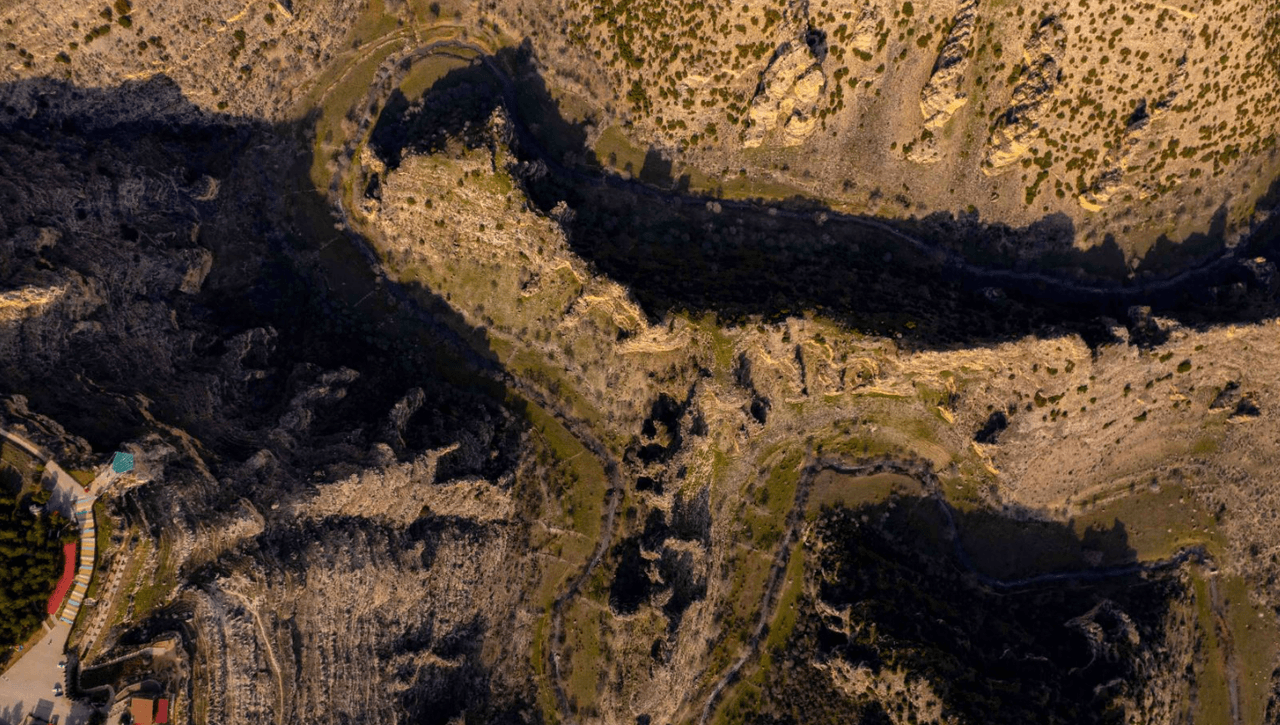
Ulubey Canyon is located within the boundaries of the Ulubey district in place province in Türkiye’s Aegean Region Uşak. The canyon system was formed over thousands of years by the erosive activity of the Ulubey and Banaz rivers and consists of one main canyon connected to numerous large side canyons. It is regarded as the second largest canyon in the world after the Grand Canyon in Arizona, USA USA.

Ulubey Canyon (Culture Portal)
The canyon was shaped within the region’s geological building and tectonic activity. Located in the southern and southwestern parts of Ulubey district, this canyon system was formed by the erosion of sedimentary rock layers, featuring steep cliffs that draw attention. The Ulubey and Banaz rivers flowing along the canyon floor have carved these deep valleys over thousands of years of erosion.
The canyon is rich in flora and fauna. The canyon floor and its surroundings, influenced by a microclimate, provide a environment conducive to both natural habitats and agriculture. It is clearly stated that various fruit and vegetables can be cultivated in the region. Particularly, the agricultural areas on the canyon slopes demonstrate the interaction between the ecosystem and human activity.
The area surrounding the canyon is significant not only for its natural features but also for its historical and archaeological heritage. The ancient city of Pepouza, associated with the Montanist sect of Christianity, lies within Ulubey Canyon and adds archaeological depth to the region. Additionally, ancient irrigation channels, caves, and rock-cut tombs constitute the main structures forming the canyon’s historical fabric.
The Clandras Aqueduct, located in the east section of the canyon, is an architectural structure from antiquity that transported water to Pepouza. This arch is not only a functional element but also a valuable example of ancient engineering.
Ulubey Canyon was declared a Nature Park in 2013 and has since been developed for nature tourism. A viewing terrace offering panoramic views of the canyon opened in 2015. This structure was built with a 135-square-meter glass floor at a height of 150 meters and is equipped with 30 mm thick bulletproof glass. The glass panels have a load capacity of 801.2 kg/m² and are accompanied by a 302-square-meter café.
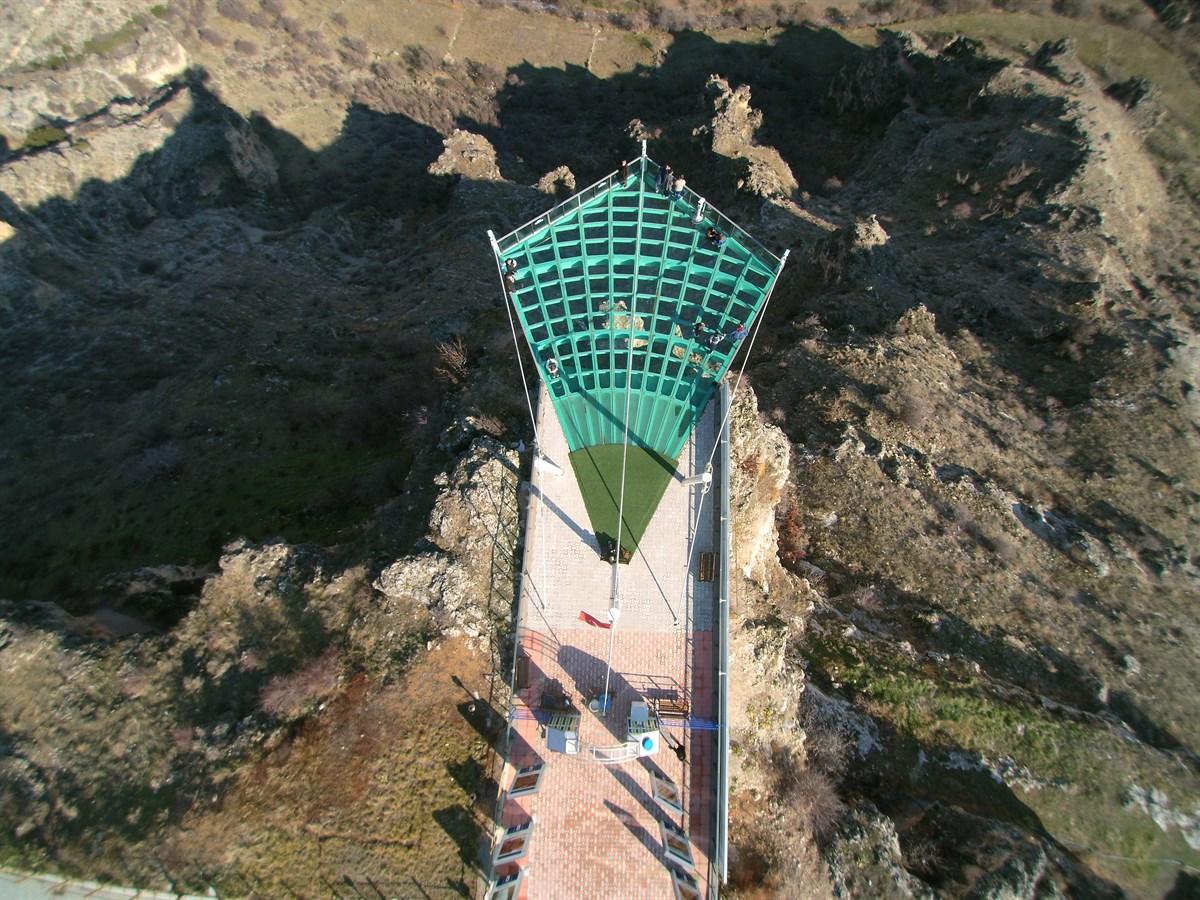
Glass Terrace (Subgovernorship of Ulubey, Republic of Türkiye)
Numerous nature-based activities can be conducted within the canyon. These include hiking, camping and caravan tourism, rock climbing, sal sports, photo safaris, and balloon tours. As of 2025, hot air balloon tours have also begun. Within the canyon, local stalls sell region-specific Uşak and kilim products, while cafés and restaurants serve regional cuisine.

Ulubey Canyon Facilities (Culture Portal)
The canyon, located 29 kilometers from the center of Uşak, is accessible by public transportation operating along day. For accommodation, options include tent areas, bungalow houses, and hotels in Uşak city center.
Some sections of the Dokuzsele Stream, which flows through Ulubey Canyon, are closed to tourism due to pollution. However, according to statements by local authorities, these areas are planned to be opened to tourism once wastewater treatment facilities are completed. New projects are being developed with the goal of preserving the canyon’s natural values and promoting sustainable tourism principles.
Ministry of Culture and Tourism of the Republic of Türkiye. “Ulubey Kanyonu – Uşak.” *Türkiye Kültür Portalı*. Accessed April 22, 2025. https://www.kulturportali.gov.tr/turkiye/usak/gezilecekyer/ulubey-kanyonlari
T.C. Uşak Provincial Directorate of Culture and Tourism. "Ulubey Kanyonları ve Cam Teras (Ulubey Canyons and Glazier Terrace)." T.C. Kültür veTurizm Bakanlığı Uşak İl Müdürlüğü. Accessed April 22, 2025. https://usak.ktb.gov.tr/TR-295250/ulubey-kanyonlari-ve-cam-teras-ulubey-canyons-and-glazi-.html
T.C.Ulubey Kaymakamlığı Governorship. "Ulubey Kanyonları ve Cam Teras." Ulubey District Governorship Official Website. Accessed April 22, 2025. http://www.ulubey.gov.tr/ulubey-kanyonlari-ve-cam-teras
Uşak Belediyesi. “Ulubey Kanyonları.” Accessed April 22, 2025. https://www.usak.bel.tr/icerik/ulubey-kanyonlari

Geological Structure and Formation Process
Biodiversity and Agricultural Potential
Historical and Archaeological Value
Tourism Potential and Facilities
Recent Developments and Environmental Sensitivity